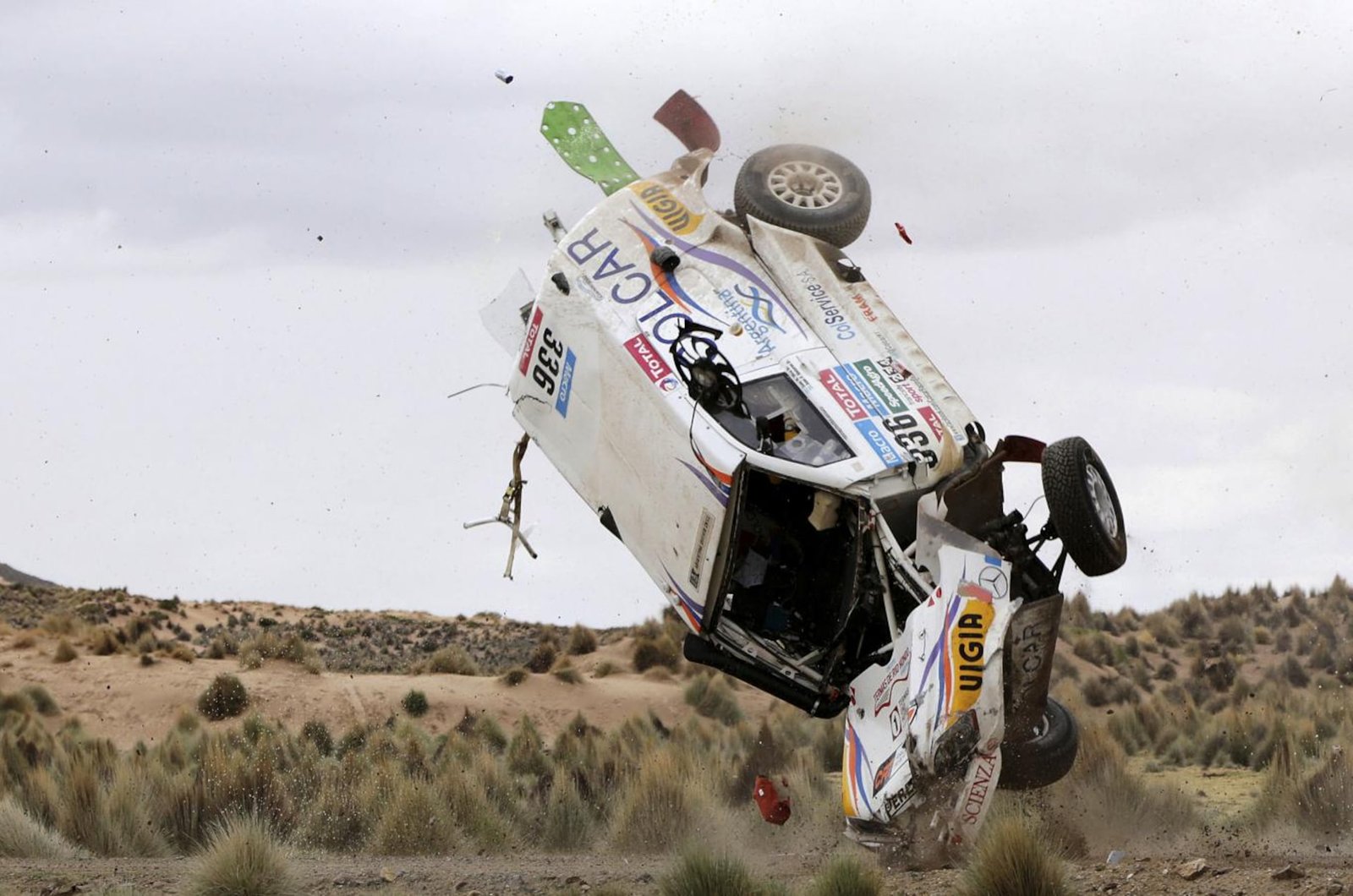
When people hear the name Rally Dakar, many immediately imagine the most extreme motorsport event on Earth. A race through endless deserts, brutal terrain, and prototype machines worth billions of rupiah, pushing beyond the limits at speeds of more than 170 km/h across landscapes that seem almost impossible to conquer.
With such conditions, it is no surprise that Rally Dakar has earned its reputation as one of the greatest tests of human courage, endurance, and engineering. Throughout its history, the race has created legendary motorsport icons, including names like Carlos Sainz and Marc Coma, who became symbols of bravery and determination in one of the world’s toughest competitions.
However, behind the heroic image of Dakar lies a much darker story.
Rally Dakar is not only known as the most extreme off-road race in the world, but also as one of the most controversial motorsport events in history. Since its first edition in 1978, the race has witnessed dozens of deaths, tragic accidents, and controversies that have continued to raise questions about its existence.
As Dakar became more popular, one question continued to emerge:
Are the risks faced by competitors still worth the sporting value that this legendary race provides?
And why do tragedies continue to happen even as safety technology continues to improve?
This is the dark side of Rally Dakar — a part of its history that cannot be separated from the legacy of the world’s toughest race.
The Deadly Reality Behind Dakar’s Extreme Conditions
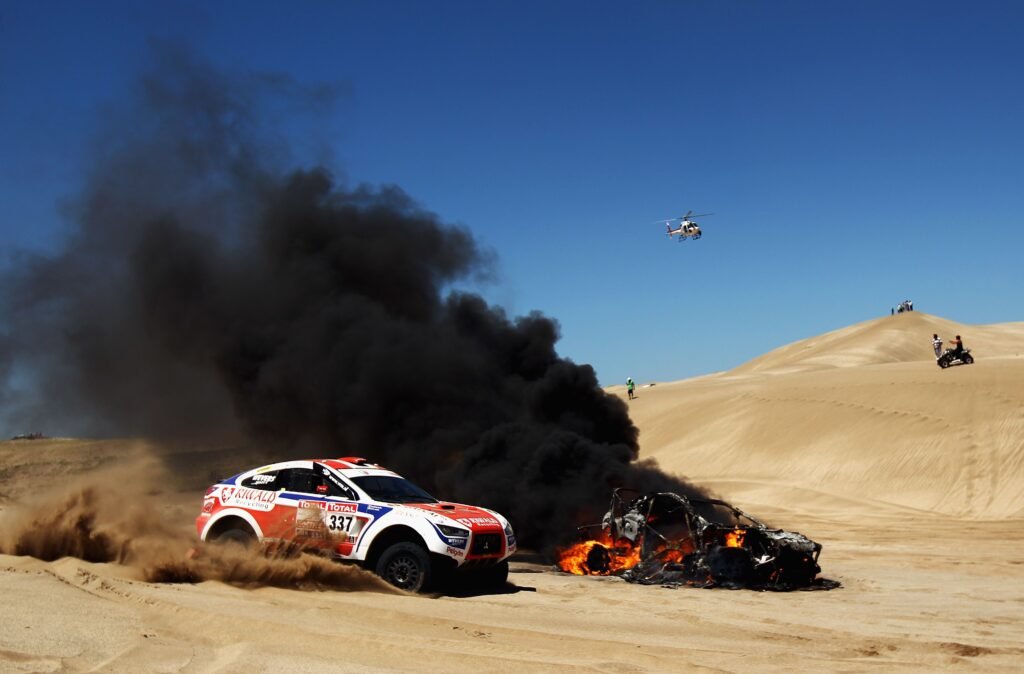
Since the first Rally Dakar in 1978, the event has claimed the lives of many participants. The majority of fatalities have come from the motorcycle category, which remains the most dangerous class compared to cars and trucks.
Unlike car drivers who are protected by roll cages, six-point harnesses, and impact-absorbing structures, motorcycle riders rely mainly on helmets, protective gear, and racing suits.
Although modern safety equipment can reduce the severity of injuries, it still has major limitations. When a rider crashes into a large rock or is thrown from a motorcycle at extremely high speed, the impact energy can easily exceed what protective equipment can handle.
One of the biggest dangers of Dakar is the constantly changing environment.
Desert winds can reshape sand dunes within hours, turning previously safe routes into dangerous traps. Riders often have to jump over dunes without knowing what is waiting on the other side. It could be another vehicle, a hidden rock, or even a small cliff.
These unpredictable conditions mean accidents can happen instantly, leaving competitors with almost no time to react.
But the danger does not only come from the terrain.
Fatigue is another major factor behind Dakar’s deadly history.
During a single stage, competitors can spend more than 8 to 10 hours inside their vehicles or riding motorcycles while constantly reading navigation systems and controlling their machines through extreme terrain.
The situation becomes even harder under desert temperatures that can exceed 40 degrees Celsius. Dehydration quickly affects concentration, slows reaction times, and turns small mistakes into potentially fatal incidents.
The Tragic Fate of Rally Dakar’s Founder
One of the most tragic stories in Dakar history is that even the person who created the race became one of its victims.
Rally Dakar was founded by Thierry Sabine, a French racer whose idea came after he became lost in the Libyan desert during a rally in 1977.
That experience convinced Sabine that the desert was the ultimate challenge for motorsport. A year later, his dream became reality with the birth of the Paris-Dakar Rally.
Sabine’s vision was simple: create a race that tested not only speed, but also courage, physical endurance, navigation skills, and survival instincts.
However, his dream ended in tragedy.
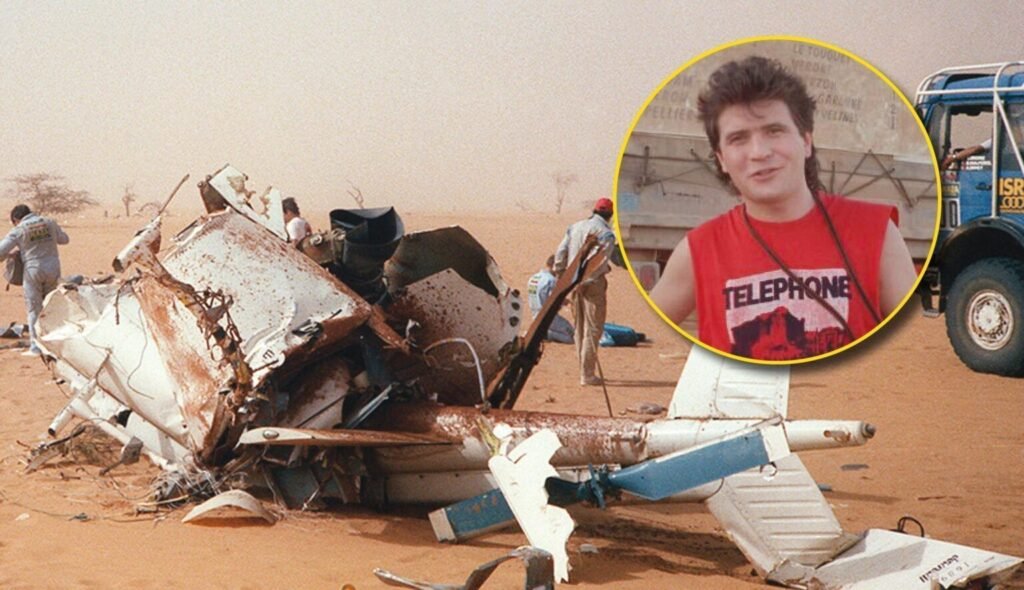
On January 14, 1986, while monitoring the race from a helicopter in Mali, Sabine and several others were caught in a sudden sandstorm that dramatically reduced visibility.
After the storm passed, the helicopter was found crashed near Gourma-Rharous, Mali.
Everyone onboard died, including Thierry Sabine, French singer Daniel Balavoine, and the helicopter pilot.
The accident became one of the darkest moments in motorsport history. The creator of the world’s most extreme race had lost his life while watching over the competition he created.
The Forgotten Victims: Local Communities Along The Route
The tragedies of Dakar were not limited to competitors.
During the 1980s, when the race still crossed Africa, rally vehicles frequently passed through remote villages at extremely high speeds.
Unlike modern motorsport events with strict safety barriers and marshals around every corner, early Dakar stages often took place on open roads shared with local communities.
As a result, several civilians became victims of accidents involving race vehicles.
Over the years, reports emerged of local residents being killed after being hit by competitors, while other incidents involved damage to civilian vehicles or livestock accidentally entering the racing route.
Although organizers continued improving safety measures, critics argued that these actions often came after tragedies had already happened.
Some journalists and activists described the old Paris-Dakar era as a symbol of inequality between Western countries and Africa.
They argued that expensive racing machines crossing poor villages often left behind dust and danger, while local communities received little direct benefit.
However, this view was not shared by everyone. Many host governments and local communities considered Dakar a source of tourism promotion and economic activity.
Nevertheless, concerns about civilian safety and social impact remain some of the biggest controversies in Dakar’s history.
When Politics Became Another Threat
Entering the early 2000s, Rally Dakar faced a new kind of danger.
Previously, the biggest threats came from deserts, weather, and physical endurance. But now, political instability and security issues became major concerns.
The traditional Paris-Dakar route crossed several countries in North and West Africa, including Morocco and Mali, before reaching Dakar, Senegal.
However, some areas became increasingly affected by armed groups and terrorist organizations.
Because of this, organizers had to consider not only crash risks but also human threats.
Several stages were modified or canceled due to security concerns, while military escorts were sometimes required to protect the race convoy.
The situation reached its peak in 2008.
Preparations were complete, vehicles had already arrived in Lisbon, Portugal, and thousands of mechanics, journalists, and competitors were ready for the long journey to Dakar.
But just one day before the start, organizers made an unprecedented decision:
Rally Dakar 2008 was canceled.
The cancellation came after the French government issued a serious warning about possible terrorist attacks, especially in Mauritania.
The threat was linked to extremist groups connected to Al-Qaeda, following the murder of four French tourists in the region.
For organizers, continuing the race would mean risking thousands of lives.
For the first time since its creation in 1978, Dakar was canceled not because of weather or technical problems, but because of terrorism threats.
The event became a turning point in Dakar’s history.
From 2009 onward, Rally Dakar left Africa and moved to South America.
The Legacy of The World’s Toughest Race
After nearly five decades, Rally Dakar has built a reputation as the ultimate off-road challenge.
Thousands of kilometers of desert, impossible terrain, and unpredictable conditions have created unforgettable stories about human courage and technological innovation.
For many competitors, simply finishing Dakar is considered a greater achievement than winning many other races.
But behind its glory, Dakar’s history is also filled with tragedy.
Many competitors have lost their lives chasing the dream of completing the world’s toughest race.
And perhaps the greatest irony of all is that the man who created this legendary event became one of its victims.
Rally Dakar will forever remain a symbol of human determination — but also a reminder of the enormous risks hidden behind one of motorsport’s greatest adventures.

Adhe is part of the 88 Eight Box Editorial Team, covering JDM culture, motorsport, automotive technology, and industry news. The team focuses on delivering original automotive stories, reviews, and insights for enthusiasts worldwide.