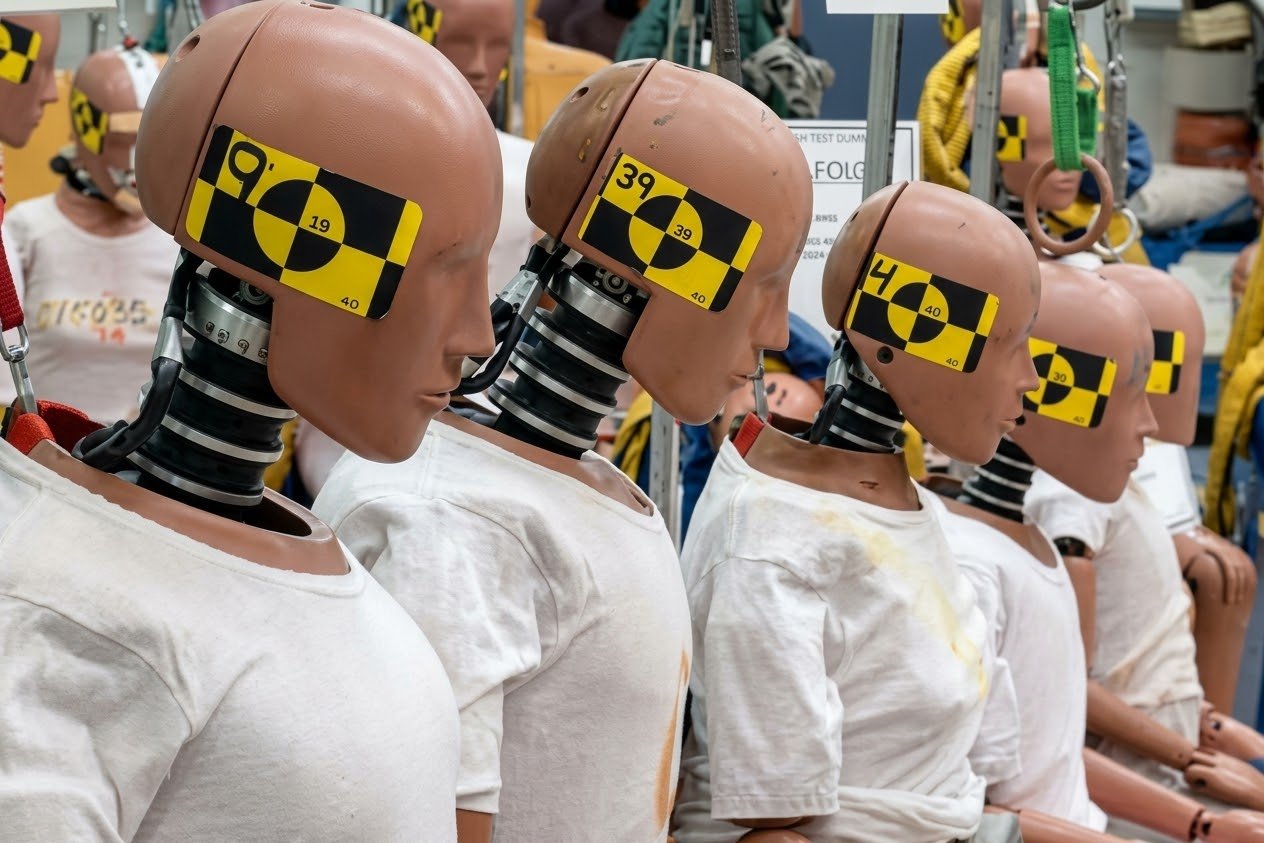
When shopping for a new car in the United States, consumers will often encounter two major names in vehicle safety testing: the National Highway Traffic Safety Administration (NHTSA) and the Insurance Institute for Highway Safety (IIHS). Both organizations evaluate vehicle safety, but they use different testing methods, rating systems, and criteria.
NHTSA is best known for its 5-Star Safety Ratings, which award vehicles between one and five stars. IIHS, meanwhile, uses ratings such as Good, Acceptable, Marginal, and Poor, along with its prestigious TOP SAFETY PICK and TOP SAFETY PICK+ awards.
These differences go beyond how scores are presented. Both organizations examine crash protection and safety technologies to help consumers understand how well a vehicle may protect its occupants.
But what exactly separates NHTSA from IIHS? How do their crash tests work, and does a car with a five-star NHTSA rating automatically qualify as one of the safest vehicles according to IIHS?
1. WHAT IS NHTSA?
The National Highway Traffic Safety Administration (NHTSA) is a US government agency operating under the Department of Transportation. Its responsibilities include improving road safety, overseeing vehicle safety standards, investigating safety-related defects, and providing vehicle safety information to consumers.
One of its best-known initiatives is the New Car Assessment Program (NCAP), which produces the NHTSA 5-Star Safety Ratings.
Through this program, NHTSA evaluates vehicles in specific crash scenarios and presents the results using a one-to-five-star scale, with five stars representing the highest rating.
NHTSA’s traditional crash-rating program focuses on three major areas: frontal crash protection, side-impact crash protection, and rollover resistance.
These ratings help consumers understand how a vehicle performs in particular crash scenarios. However, they do not guarantee that occupants will avoid injury in a real-world collision.
2. WHAT IS IIHS?

The Insurance Institute for Highway Safety (IIHS) is an independent, nonprofit research and educational organization supported by auto insurers and insurance associations. Unlike NHTSA, it is not a government agency.
Founded in 1959, IIHS works to reduce deaths, injuries, and property damage caused by motor vehicle crashes through research, safety evaluations, and public education.
IIHS is particularly well known for testing vehicles in challenging crash scenarios that go beyond conventional frontal-impact assessments. One example is the small overlap front crash test, which simulates a collision in which only a small portion of a vehicle’s front end strikes an obstacle.
IIHS also evaluates headlight performance, crash-prevention technologies, rear-seat occupant protection, and the ease of installing child safety seats.
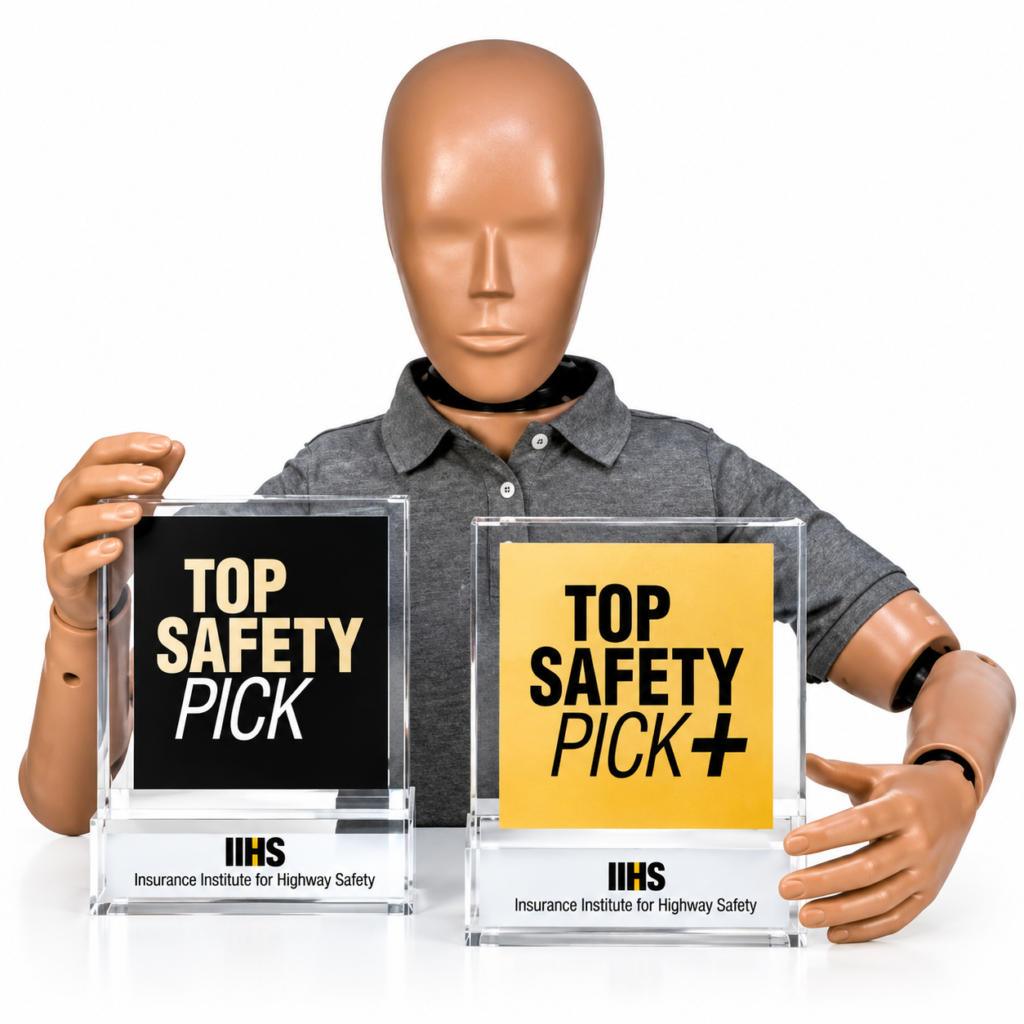
To recognize vehicles that meet its safety requirements, IIHS presents two major awards: TOP SAFETY PICK and TOP SAFETY PICK+.
3. THE KEY DIFFERENCES BETWEEN NHTSA AND IIHS
| Category | NHTSA | IIHS |
|---|---|---|
| Organization | US government agency | Independent nonprofit research organization supported by insurers |
| Main rating system | One to five stars | Good, Acceptable, Marginal, Poor |
| Frontal crash testing | Full-width frontal impact against a fixed barrier in its traditional primary test | Small overlap and moderate overlap frontal tests |
| Side-impact testing | Moving barrier and side-pole impact tests | Side-impact test using a barrier designed to represent a modern SUV |
| Rollover resistance | Evaluated through stability measurements and dynamic testing | Does not provide a directly comparable rollover-resistance rating |
| Crash-prevention technology | Evaluates selected driver-assistance technologies through NCAP | Tests the effectiveness of crash-prevention systems in specific scenarios |
| Headlight performance | Not a primary category in the traditional star-rating system | Dedicated headlight ratings |
| Safety awards | 5-Star Safety Ratings | TOP SAFETY PICK and TOP SAFETY PICK+ |
Although both organizations assess vehicle safety, their ratings cannot be directly converted into one another. A five-star NHTSA rating is not equivalent to an IIHS TOP SAFETY PICK+ award because their test coverage and rating criteria differ.
4. HOW DOES NHTSA TEST VEHICLE SAFETY?
Frontal crash test
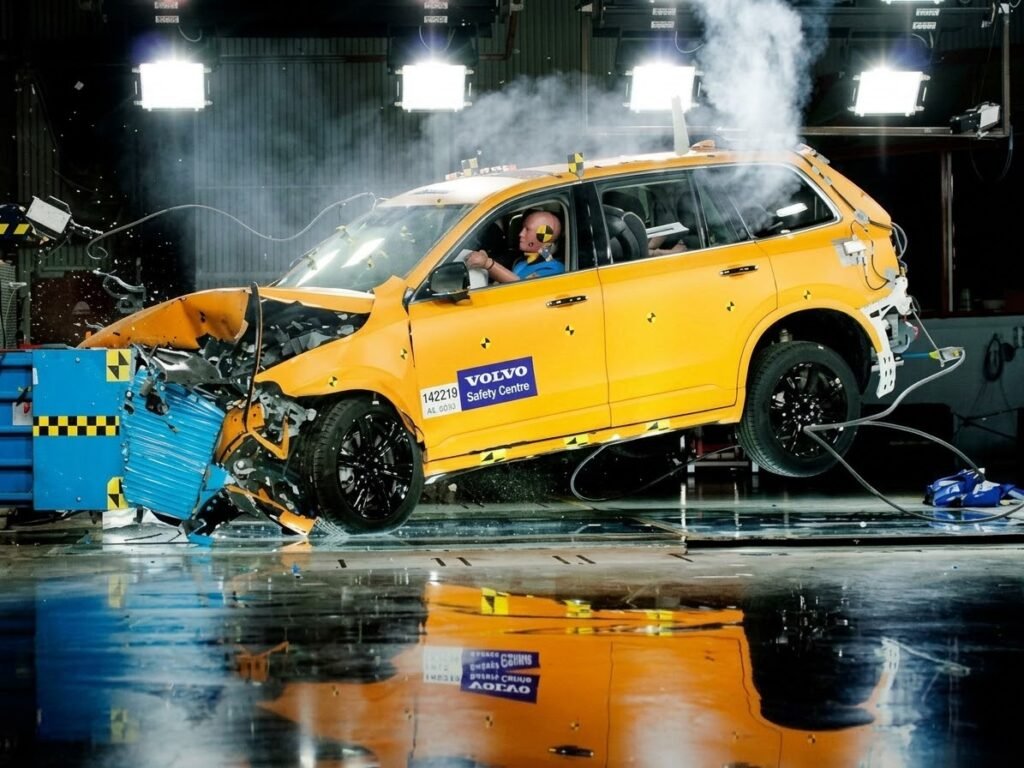
In its traditional frontal crash test, NHTSA directs a vehicle into a fixed barrier at 35 mph (approximately 56 km/h).
The test is designed to represent a frontal collision between two vehicles of similar weight. Crash-test dummies representing an average-sized adult male driver and a small adult female front passenger are used to measure potential injury risks.
Sensors inside the dummies record forces and movements affecting body regions such as the head, neck, chest, pelvis, and legs. These measurements help researchers estimate the risk of serious injury under the tested conditions.
One important detail is that NHTSA recommends comparing frontal crash ratings between vehicles of similar size and weight. Its frontal ratings are intended for comparisons within the same vehicle class, with a weight difference of approximately 250 pounds (113 kilograms) or less.
This matters because crash outcomes involving vehicles of substantially different masses cannot be understood simply by comparing their star ratings.
Side-impact crash test
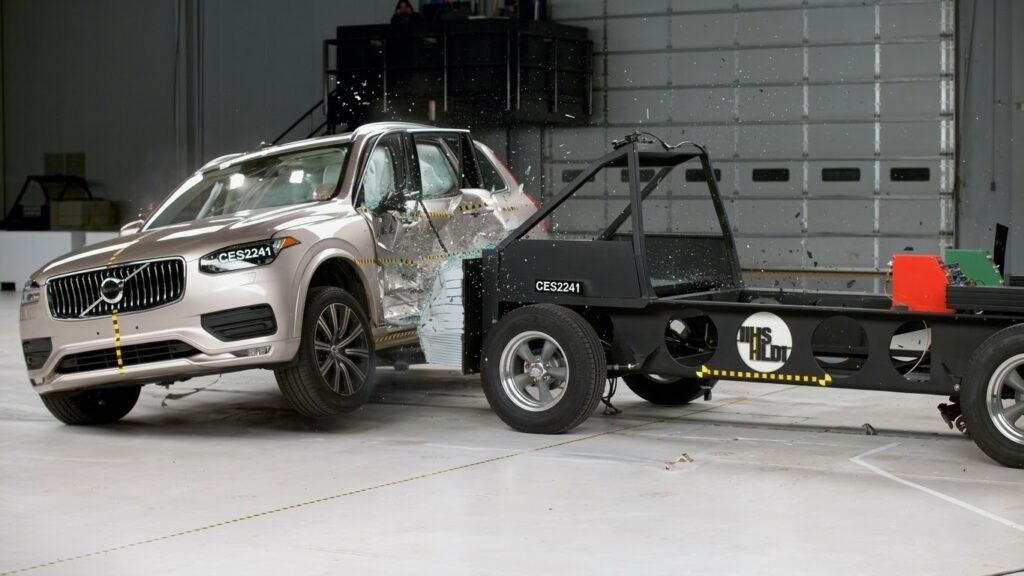
In NHTSA’s side barrier crash test, a moving barrier weighing approximately 3,015 pounds (1,368 kilograms) strikes a stationary vehicle at 38.5 mph (approximately 62 km/h).
Crash-test dummies are placed in the driver’s seat and the rear seat on the impact side. Sensors measure potential injuries to several body regions, including the head, chest, abdomen, and pelvis.
NHTSA also conducts a side-pole impact test. In this scenario, a vehicle is propelled sideways at a 75-degree angle toward a narrow pole approximately 10 inches (25 centimetres) in diameter at 20 mph (approximately 32 km/h).
This test represents situations in which a vehicle loses control and its side strikes a narrow object, such as a tree or utility pole.
Rollover resistance test
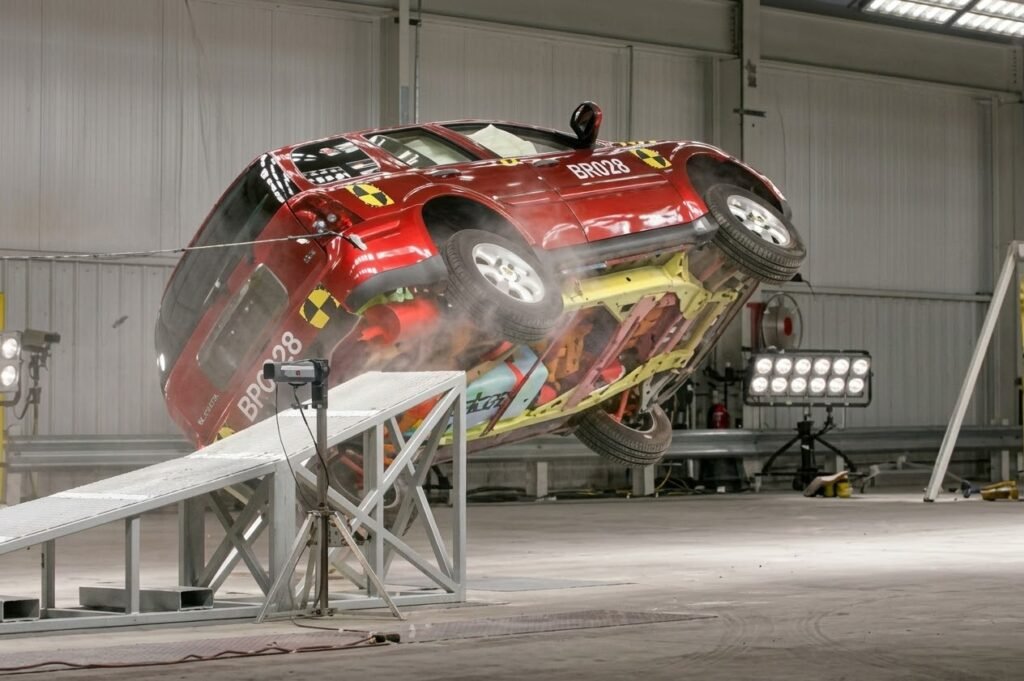
One important feature of NHTSA’s program is its evaluation of rollover resistance, or a vehicle’s tendency to tip or roll over under certain conditions.
The assessment includes the Static Stability Factor (SSF), a measurement based on a vehicle’s geometry that helps estimate its susceptibility to rollover. NHTSA also uses dynamic testing to determine whether a vehicle is prone to lifting its inside wheels during extreme manoeuvres.
This is particularly relevant to SUVs and other vehicles whose centre of gravity and dimensions can influence rollover risk.
NHTSA evaluates rollover resistance alongside frontal and side-impact protection in its traditional safety-rating program.
How does NHTSA award its stars?
NHTSA assigns ratings to individual crash-test categories and calculates an overall vehicle score for vehicles with the relevant test results. The traditional overall rating combines frontal crash protection, side-impact protection, and rollover resistance.
More stars generally indicate better performance within NHTSA’s testing framework. However, a single number cannot explain every aspect of a vehicle’s safety performance.
A vehicle with a high rating may still have particular safety limitations. NHTSA can also display warning symbols in vehicle-rating information to highlight certain identified safety concerns, even when a vehicle has a high star rating.
5. HOW DOES IIHS TEST VEHICLE SAFETY?
Unlike NHTSA’s traditional emphasis on frontal crashes, side impacts, and rollover resistance, IIHS uses a broader collection of tests to examine different crash scenarios and safety features.
Small overlap front crash test
The small overlap front test is one of IIHS’s signature evaluations.
A vehicle travels at 40 mph (approximately 64 km/h) toward a rigid barrier, with only 25 per cent of the vehicle’s front width overlapping the barrier during impact.
This simulates a collision involving a small section of the vehicle’s front end, such as when a car strikes a tree, pole, or the corner of another vehicle.
Because much of the impact energy is concentrated in a relatively narrow area, structural components outside the main crash-energy absorption zones can experience substantial loads. The design of the passenger compartment, seat belts, and airbags becomes particularly important.
IIHS tests both the driver and passenger sides of the front end separately. The overall rating reflects the lower result of the two tests.
Moderate overlap front crash test
In this test, the vehicle also strikes a barrier at 40 mph (approximately 64 km/h), but 40 per cent of the vehicle’s front width overlaps the barrier.
The scenario represents a frontal collision in which the vehicles’ front ends overlap only partially rather than meeting perfectly head-on.
IIHS updated this test in 2022 to include a rear-seat dummy positioned behind the driver. This change expanded the assessment beyond driver protection to examine the risk of injury to rear-seat occupants.
Sensors measure the dummy’s responses and movements during the crash, helping researchers evaluate the vehicle’s structure, seat belts, and airbags.
As a result, two cars that appear equally robust may perform differently when subjected to more specific crash scenarios.
Side-impact crash test
IIHS updated its side-impact test in 2021 to better represent collisions involving modern SUVs.
In this test, a 4,200-pound (approximately 1,905-kilogram) moving barrier strikes the side of a stationary vehicle at 37 mph (approximately 60 km/h).
The barrier is designed with a height and shape resembling the front end of a modern SUV. The aim is to evaluate how effectively the vehicle’s body structure, occupant-restraint systems, and airbags reduce injury risks during a side impact.
Dummies representing a small adult female or a 12-year-old child are placed in the front and rear seats on the impact side.
IIHS assesses structural intrusion into the passenger compartment, potential injuries, and dummy movement, including the possibility of the occupants’ heads striking hard surfaces or the barrier.
The barrier’s weight and test conditions differ from those used by NHTSA. Therefore, the results should not be treated as measurements of identical scenarios.
6. IIHS ALSO TESTS HEADLIGHTS AND ACTIVE SAFETY TECHNOLOGY
Another important difference is IIHS’s evaluation of technologies designed to prevent crashes or reduce their severity before an impact occurs.
Its assessments include several key areas.
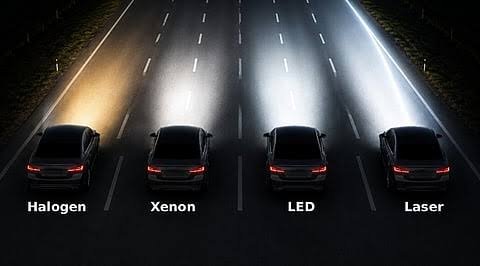
Headlights: Testing evaluates illumination on straight roads and curves. Performance can vary depending on the headlight system fitted, so a result for one configuration may not apply to every trim level of the same model.
Vehicle-to-vehicle front crash prevention: These tests assess forward collision warning and automatic emergency braking (AEB) systems in scenarios involving a vehicle ahead. Newer IIHS testing also includes motorcycles and large trucks in selected scenarios.
Pedestrian front crash prevention: This evaluation examines whether a system can detect pedestrians and issue warnings or apply braking to prevent a collision or reduce its severity.
Seat-belt reminders and child-seat installation: IIHS also publishes evaluations of seat-belt reminder systems and the ease of using LATCH, the US system of lower anchors and tethers for installing child safety seats.
However, not every individual test automatically determines whether a vehicle earns a TOP SAFETY PICK award. The award has its own set of requirements, separate from the full range of evaluations published by IIHS.
7. WHAT DO GOOD, ACCEPTABLE, MARGINAL, AND POOR MEAN?
IIHS uses four main rating categories for many of its vehicle safety tests:
- GOOD: The highest performance category in the assessment.
- ACCEPTABLE: Performance that meets the relevant standard, although there is room for improvement.
- MARGINAL: Limited performance indicating more significant weaknesses.
- POOR: The lowest performance category.
These ratings are assigned according to the criteria for each individual test. A vehicle rated GOOD in a side-impact test does not automatically receive the same rating in a frontal crash test.
IIHS also publishes annual safety awards for vehicles that meet a defined combination of requirements.
For the 2026 TOP SAFETY PICK award, vehicles must earn GOOD ratings in the small overlap front, moderate overlap front, and side tests. Headlights must receive an ACCEPTABLE or GOOD rating across applicable configurations, while pedestrian front crash prevention must meet the minimum required performance level.
For the 2026 TOP SAFETY PICK+ award, the requirements for crash-prevention technology are more demanding. The standard pedestrian front crash-prevention system must earn a GOOD rating, while vehicle-to-vehicle front crash prevention must achieve at least an ACCEPTABLE rating. The principal requirements for the three crash tests and headlights also apply.
These awards are not simply based on averaging test scores. A vehicle must satisfy the specific combination of criteria established by IIHS for the relevant model year.
Requirements can change over time. For 2026, IIHS requires a GOOD rating in the moderate overlap front test for both awards, and qualifying crash-prevention systems must be standard equipment.
8. HOW IS NHTSA UPDATING ITS TESTING PROGRAM?
NHTSA is also updating its New Car Assessment Program to keep pace with modern vehicle safety technology.
In an update announced in November 2024, the agency introduced plans to expand the evaluation of driver-assistance technologies, including pedestrian automatic emergency braking, lane-keeping assistance, blind-spot warning, and blind-spot intervention.
NHTSA also updated procedures for technologies already covered by its program. These changes reflect a broader approach to modern vehicle safety: protecting occupants after a collision remains essential, but preventing crashes in the first place is increasingly important.
On May 7, 2026, NHTSA announced that certain configurations of the 2026 Tesla Model Y had become the first vehicle to pass four new advanced driver-assistance system tests.
This announcement concerned pass/fail evaluations under the NCAP program. It did not mean that every individual technology assessment had automatically become a new star-rating category.
NHTSA has also outlined a longer-term update to its rating program. Its 2024 decision projected implementation of an updated combined rating system in the fourth quarter of 2027, beginning with 2028 model-year vehicles.
Consumers should therefore check the specific categories and results published for each vehicle rather than assuming that every planned change already applies uniformly to all 2026 models.
9. WHICH IS BETTER: NHTSA OR IIHS?
There is no need to choose one over the other because the two organizations provide different perspectives on vehicle safety.
NHTSA offers an accessible star-rating system covering major crash categories and rollover resistance. Its ratings are useful for consumers who want a straightforward way to compare certain aspects of vehicle safety.
IIHS provides more detailed assessments of different crash scenarios, including small overlap impacts, rear-seat protection in certain frontal tests, headlight performance, and crash-prevention technologies. Its TOP SAFETY PICK awards also help identify vehicles that meet a combination of safety requirements in a given year.
However, both sets of results must be interpreted in context. Crash outcomes are strongly influenced by vehicle mass, so vehicles from different classes should not be compared using a single number alone. Model year, headlight configuration, standard versus optional equipment, and production date can also affect which results apply to a particular vehicle.
A vehicle without published test results is not necessarily unsafe. It may simply have not been tested or rated in the relevant category.
Consumers should also check vehicle recalls separately. A strong crash-test rating does not mean a model is free from other safety defects or recall campaigns.
10. HOW TO COMPARE VEHICLE SAFETY BEFORE BUYING A CAR
For a more complete picture, the best approach is to consult both organizations.
First, check the vehicle’s NHTSA ratings to see how it performs in frontal crash, side-impact, and rollover assessments. Next, examine its detailed IIHS results, including whether it has earned TOP SAFETY PICK or TOP SAFETY PICK+ status and whether the award applies to the specific model year and configuration being considered.
Then, check whether headlights and crash-prevention technologies are standard equipment or available only on certain trims. Differences in equipment can affect the safety results that apply to the vehicle you actually purchase.
Finally, make sure the specifications match the vehicle being considered. Cars carrying the same model name may have different safety equipment or structural specifications across markets, model years, and trim levels.
It is also important to remember that NHTSA and IIHS test vehicles for the US market. Their results do not automatically apply to versions sold in other countries, including Indonesia, if the specifications, safety equipment, or vehicle structures differ.
LOOK BEYOND THE STAR RATING
NHTSA and IIHS both play important roles in improving vehicle safety, but they use different approaches. NHTSA provides star ratings covering frontal crash protection, side-impact protection, and rollover resistance, while IIHS offers more detailed assessments of different crash scenarios and safety technologies.
Because their testing coverage and rating systems differ, a five-star NHTSA rating is not automatically equivalent to an IIHS TOP SAFETY PICK+ award.
The most sensible way to evaluate a vehicle is to use NHTSA and IIHS results together, then examine the details behind each rating. Vehicle safety cannot be reduced to a single number because occupant protection, crash prevention, headlight performance, and rollover risk are different aspects of overall safety.
What do you think? When choosing a car, do you trust NHTSA’s star ratings, IIHS safety awards, or a combination of both? Share your thoughts in the comments.

Adhe is part of the 88 Eight Box Editorial Team, covering JDM culture, motorsport, automotive technology, and industry news. The team focuses on delivering original automotive stories, reviews, and insights for enthusiasts worldwide.