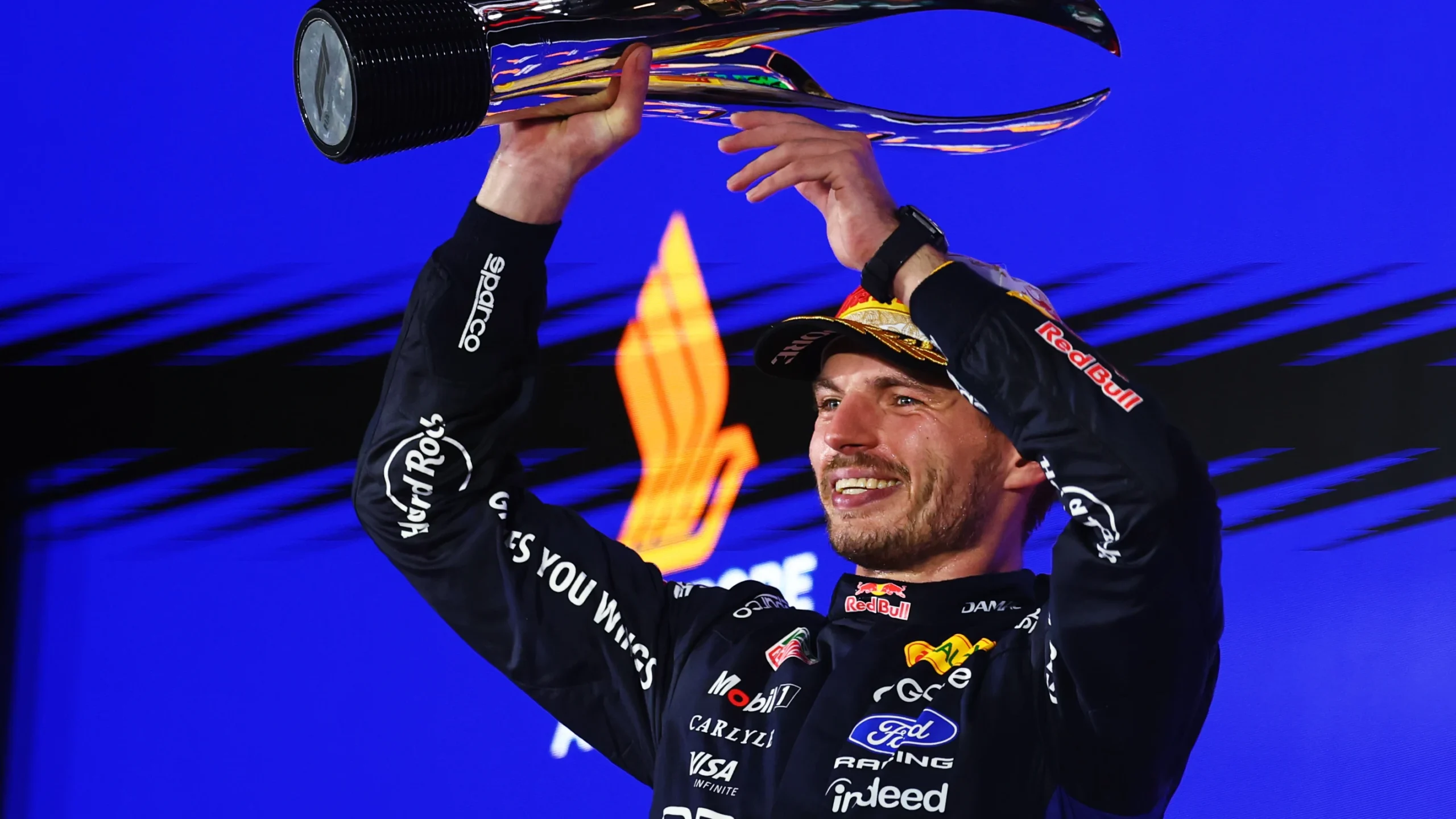

Max Verstappen delivered a commanding performance under the Marina Bay floodlights to secure his first Singapore Grand Prix victory, finishing ahead of Charles Leclerc and championship leader Kimi Antonelli. The Red Bull driver controlled the 62-lap race despite radio problems, while Lewis Hamilton’s late tyre troubles cost Ferrari a potential double podium.
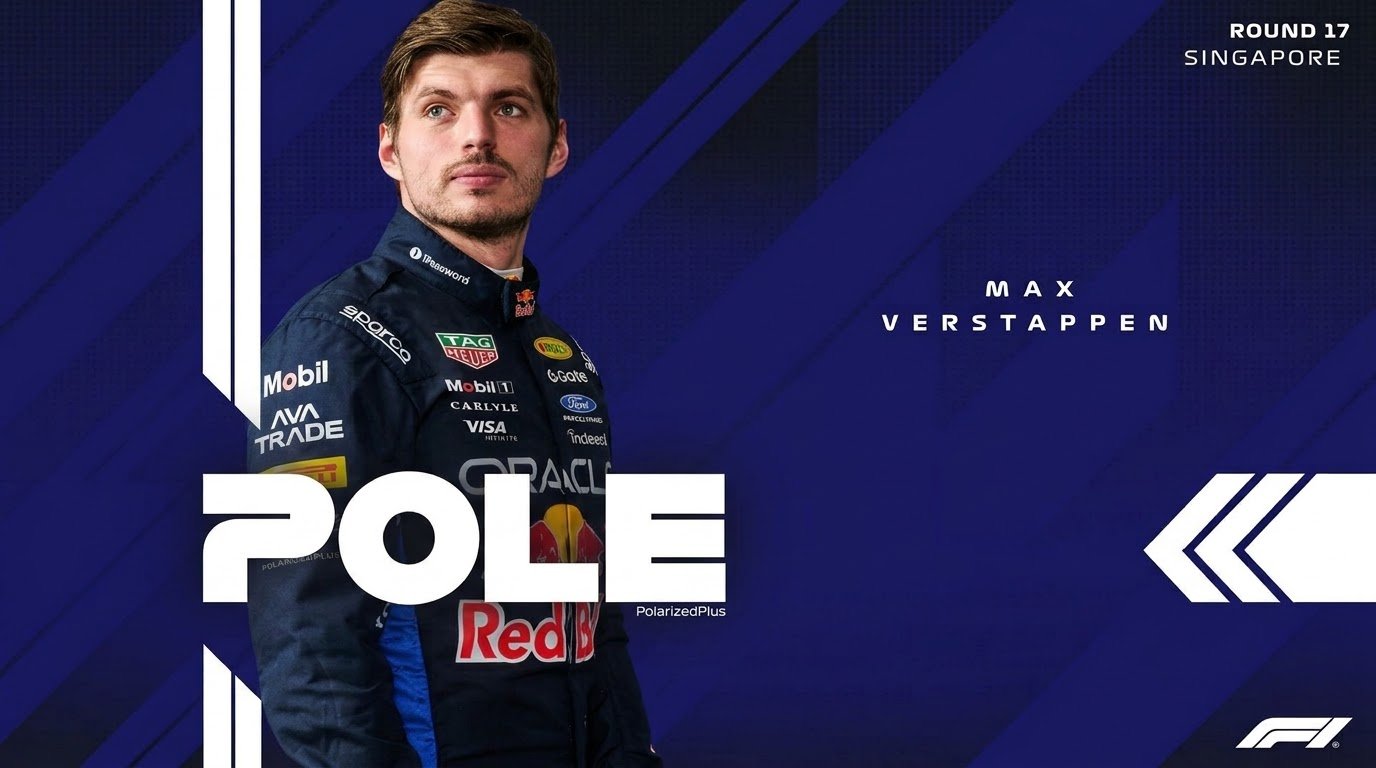
Max Verstappen continued his resurgence in the 2026 Formula 1 season by converting pole position into a commanding victory at the Singapore Grand Prix on Sunday, October 11.
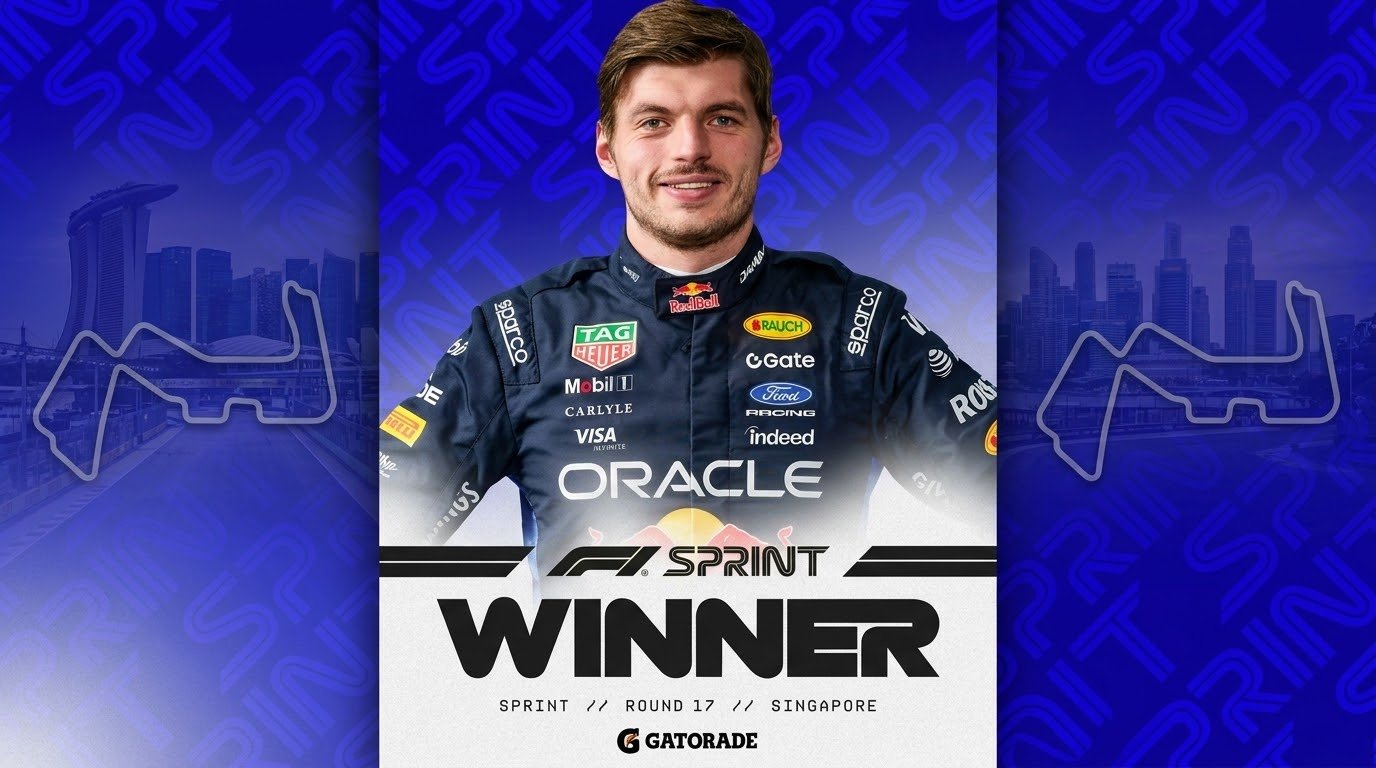
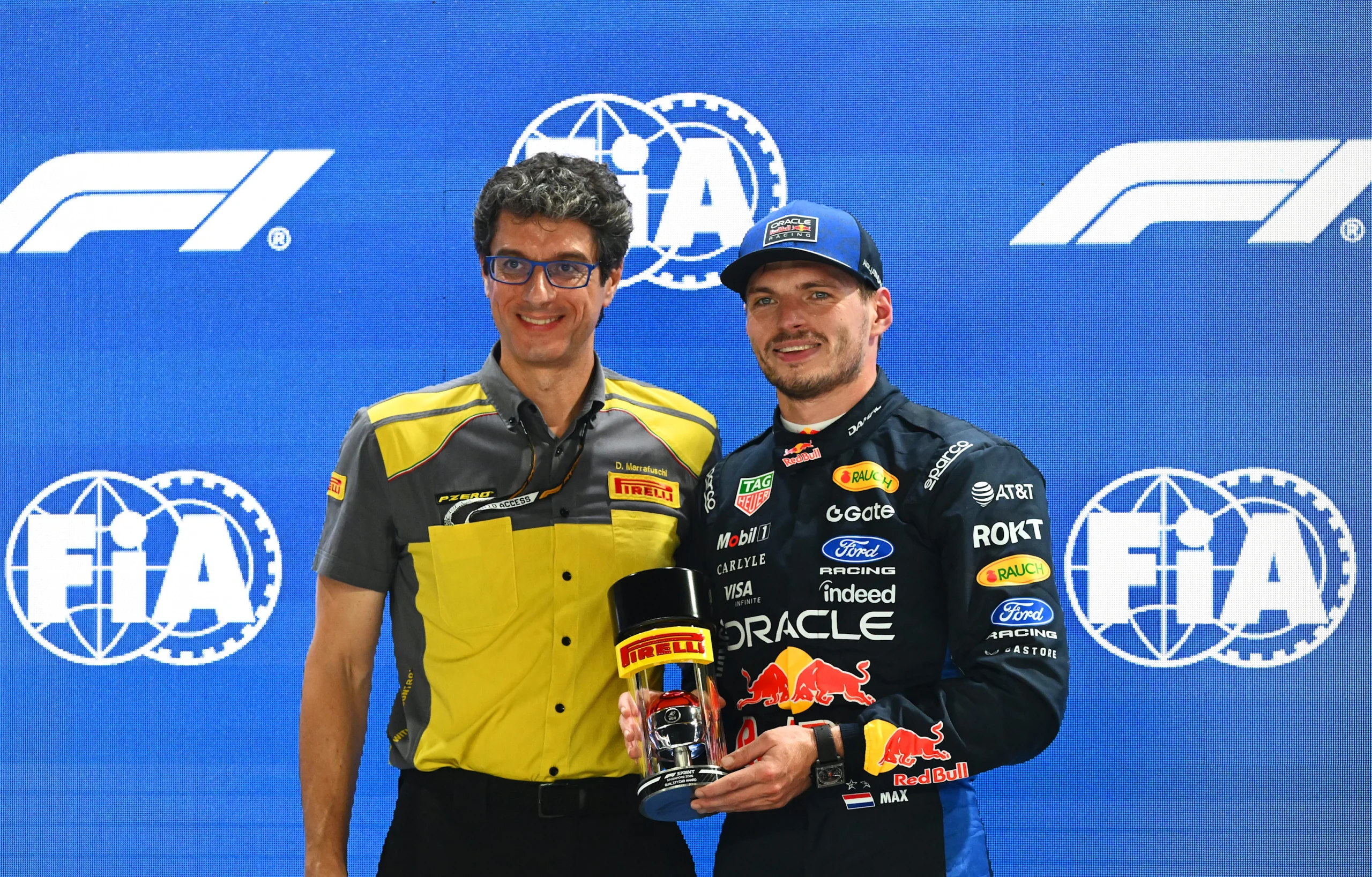
The Red Bull driver led every lap of the race to claim his 73rd career Grand Prix victory and celebrate his 250th Grand Prix start in style. It was also his first-ever Formula 1 Grand Prix win at the Marina Bay Street Circuit, completing a remarkable weekend in which he won Saturday’s Sprint before securing pole position for Sunday’s main event.
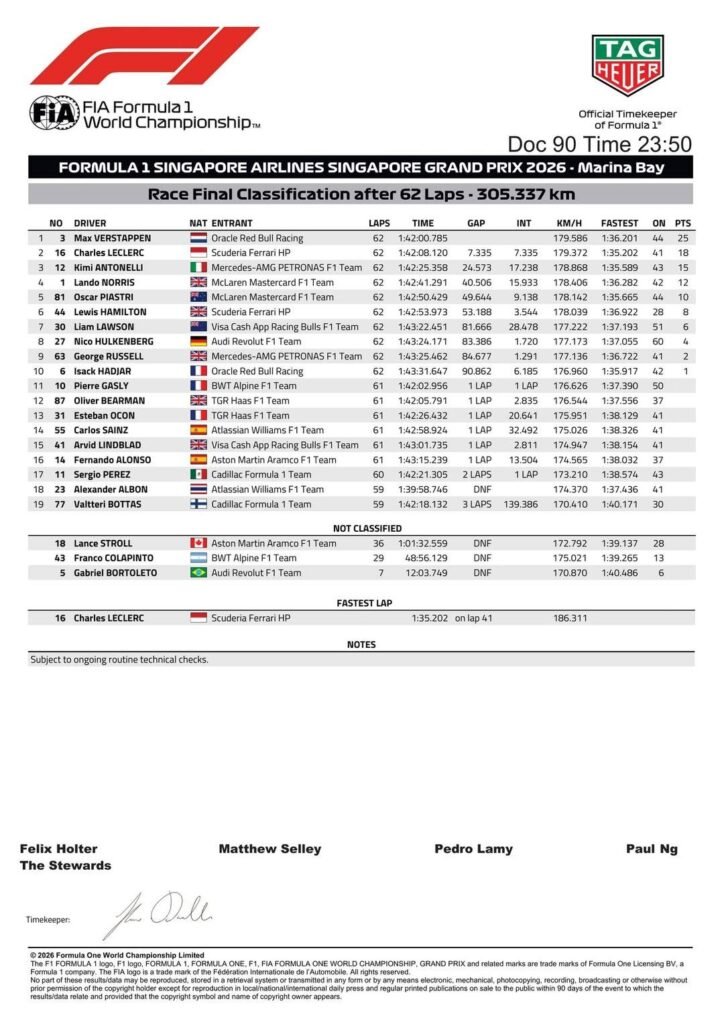
Charles Leclerc finished second for Ferrari, crossing the line 7.335 seconds behind Verstappen, while Mercedes driver Kimi Antonelli completed the podium in third. The result further strengthened Antonelli’s position at the top of the Drivers’ Championship, extending his advantage over teammate George Russell to 102 points.
Behind the leading trio, McLaren’s Lando Norris and Oscar Piastri finished fourth and fifth respectively, while Ferrari’s Lewis Hamilton dropped to sixth after struggling with tyre degradation during the closing stages.
Liam Lawson secured seventh for Racing Bulls, followed by Audi’s Nico Hulkenberg. Russell recovered from a power-unit penalty to finish ninth, while Red Bull’s Isack Hadjar completed the top 10 after starting from the pit lane.
VERSTAPPEN HOLDS OFF LECLERC AT THE START
The Singapore Grand Prix began under hot and humid conditions, with teams expecting a demanding 62-lap contest around Marina Bay’s unforgiving street circuit.
Several starting-position changes added another challenge to the race. Russell dropped to 19th following a power-unit penalty, while Hadjar was required to start from the pit lane after changes involving additional power-unit components. Aston Martin drivers Fernando Alonso and Lance Stroll also started from the pit lane following changes to their cars.
Verstappen started from pole position on soft tyres, while Hamilton selected the medium compound from third on the grid. The mixed tyre choices set up an intriguing strategic battle from the opening laps.
When the lights went out, Leclerc made an aggressive launch and immediately challenged Verstappen approaching Turn 1. The Ferrari driver appeared poised to draw alongside the Red Bull, but Verstappen positioned his car to defend the inside line and retained the lead.
Hamilton maintained third, with Antonelli close behind in fourth. Norris and Piastri also negotiated the opening corners without repeating the collision that had disrupted their Singapore Sprint.
Further back, Lawson gained a position to move into seventh, while Hulkenberg and Carlos Sainz fought their way into the leading 10. Russell, meanwhile, began his recovery from the back of the grid and climbed to 15th by Lap 5.
Leclerc remained within striking distance during the opening stages, at one point closing to approximately six-tenths of a second behind Verstappen. However, the Dutchman gradually increased his pace and began building a more comfortable advantage.
By Lap 15, Verstappen had extended the gap to approximately 2.6 seconds. Red Bull’s race strategy was working as intended, with the team encouraging its driver to maintain a consistent pace while protecting his tyres.
BORTOLETO’S GEARBOX PROBLEM TRIGGERS THE FIRST VIRTUAL SAFETY CAR
The first significant disruption occurred when Gabriel Bortoleto encountered an apparent gearbox problem and stopped his Audi near the pit-lane exit.
Race control deployed the Virtual Safety Car (VSC) while marshals worked to recover the stranded car. The incident temporarily neutralised the race, although the interruption did not fundamentally change the battle at the front.
The situation became more serious when the damaged Audi caught fire. Marshals extinguished the flames, and the pit-lane entrance was briefly closed as the incident was brought under control.
Bortoleto’s retirement was the first of three mechanical retirements during the Grand Prix. Franco Colapinto later stopped with a suspected driveline problem, while Stroll retired after an apparent clutch issue.
Despite the disruption, Verstappen continued to control the race after the VSC period ended. His main challenge was managing the soft tyres while keeping Leclerc far enough behind to prevent Ferrari from mounting a successful undercut.
Hamilton, meanwhile, began losing ground on his medium tyres. Antonelli remained close enough to threaten, while the McLarens stayed within reach of the Ferrari.
FERRARI’S STRATEGY GAMBLE PUTS HAMILTON UNDER PRESSURE
Ferrari became the first major contender to commit to a pit stop, bringing Hamilton into the pits on Lap 19 for a fresh set of soft tyres.
The decision gave Hamilton a more aggressive tyre compound for the second phase of the race. He rejoined behind Lawson before passing the Racing Bulls driver on Lap 21 to regain sixth place.
Antonelli followed with a pit stop on Lap 24, switching to medium tyres before returning to the circuit behind Hamilton. Leclerc stopped one lap later, also opting for the medium compound.
However, Leclerc emerged only marginally ahead of Hamilton, creating a complicated situation for Ferrari. Hamilton appeared to have better pace on his newer soft tyres and wanted to make use of that advantage, while Leclerc was attempting to maintain his position and manage his own race.
The resulting strategy debate became one of the defining stories of the evening.
Ferrari ultimately did not immediately swap its drivers, leaving Hamilton behind Leclerc despite the former’s fresher tyres. Hamilton reported losing valuable time while following his teammate, while Leclerc demonstrated that Ferrari remained competitive by setting a new fastest lap.
Verstappen continued to extend his advantage as the leading contenders completed their first scheduled stops. When the Red Bull driver finally entered the pits on Lap 33, he switched from soft to medium tyres and returned to the track still in first place.
His lead meant that the pit stop failed to provide Ferrari with the opportunity it needed to challenge for victory.
STROLL’S RETIREMENT CHANGES THE STRATEGIC PICTURE
The second major strategic turning point came when Stroll’s Aston Martin stopped at Turn 15 with a suspected clutch problem.
Race control introduced another VSC, creating an opportunity for teams to change tyres with a reduced time loss compared with a normal green-flag pit stop.
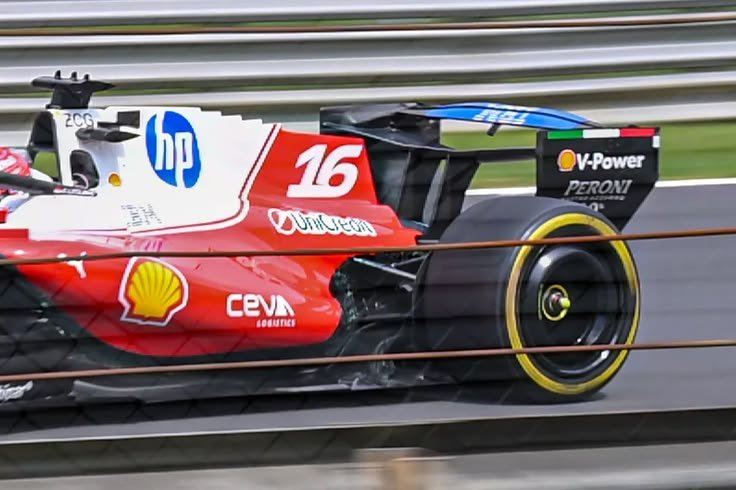
Ferrari called both Hamilton and Leclerc into the pits, but Hamilton missed the pit entry. Leclerc successfully stopped, leaving Hamilton to remain on track and attempt to finish the race without another tyre change.
The missed opportunity proved costly.
Ferrari team principal Fred Vasseur subsequently explained that the team had intended to bring both cars in, with the potential to preserve their positions behind Verstappen. Hamilton later accepted responsibility, confirming that he had missed the entry and chosen to stay out rather than sacrifice track position.
Russell was also affected by the timing of the VSC. Having started 19th, the Mercedes driver entered the pits for his first stop just as the neutralisation ended, preventing him from benefiting fully from the reduced-speed period.
He rejoined further down the order and was forced to continue his recovery through the midfield.
Meanwhile, Leclerc returned to the circuit on fresher tyres and began closing the gap to Hamilton. The Ferrari driver eventually passed his teammate on Lap 46 to take second place.
Although Leclerc appeared considerably stronger on his newer rubber, Verstappen remained comfortably ahead. The Red Bull driver was approximately 15 seconds clear at one stage, leaving Ferrari needing a dramatic late-race development to threaten the victory.
RADIO PROBLEMS FAIL TO DERAIL VERSTAPPEN
Verstappen’s commanding pace did not mean his race was entirely trouble-free.
The Dutchman experienced radio communication problems that made it difficult for him to communicate normally with race engineer Gianpiero Lambiase. Red Bull resorted to alternative methods, including pit-board messages and simplified communications, to keep its driver informed.
The issue became another test of Verstappen’s composure during the second half of the race.
His advantage allowed Red Bull to avoid taking unnecessary risks, while the team continued to monitor tyre performance and the possibility of further safety-car interruptions.
Even when Leclerc gained ground following the later pit-stop sequence, Verstappen had enough pace in reserve to maintain control.
His performance was particularly significant given the difficulty he had previously experienced at Marina Bay, where he had never won a Grand Prix before this weekend.
The victory also completed a clean sweep of the Singapore weekend’s major competitive milestones for Verstappen, who had already won the rain-affected Sprint and secured his first pole position at the circuit.
ANTONELLI CLAIMS ANOTHER PODIUM AS HAMILTON FALLS BACK
Behind Verstappen and Leclerc, the fight for the final podium position intensified during the closing laps.
Antonelli had spent much of the race fighting among the leading group. The Mercedes driver also received warnings for exceeding track limits, while he briefly reported unusual behaviour from his car. His team reassured him that there appeared to be no serious concern.
As the race progressed, Hamilton’s older tyres began to lose performance. Norris closed in on the Ferrari, with Antonelli also looking for an opportunity to move forward.
Hamilton went wide while attempting to defend his position, allowing Antonelli to capitalise and move into the fight for third. The Italian eventually passed Hamilton to take the final podium position.
Norris subsequently overtook Hamilton as well, dropping the Ferrari driver to fifth before Piastri completed another pass to secure fifth place for himself on the final lap.
Hamilton eventually finished sixth, unable to recover the time lost through his tyre strategy and the missed VSC pit entry.
After the race, the seven-time world champion apologised to Ferrari over team radio, taking responsibility for the decision that contributed to the disappointing result.
His pace on the fresh soft tyres earlier in the race suggested Ferrari had the potential for a stronger finish. However, the combination of the strategy decision, the missed pit entry and late tyre degradation prevented the team from converting that performance into a double podium.
RUSSELL RECOVERS TO NINTH AS HADJAR SCORES FOR RED BULL
Russell’s recovery drive produced a valuable result despite his difficult starting position.
The Mercedes driver had started 19th following his power-unit penalty and steadily worked his way through the field. He passed several midfield rivals, including an overtake on Esteban Ocon, before continuing to fight for points after his pit stop.
The VSC timing prevented Russell from gaining as much as he might have hoped, but he eventually secured ninth place.
Hadjar also recovered from a pit-lane start to take the final point-scoring position in 10th. The Red Bull driver had been eliminated in Q1 during qualifying after experiencing problems with his car, making his eventual recovery another positive outcome for the team.
Lawson finished seventh for Racing Bulls, while Hulkenberg brought Audi home in eighth. Their results added valuable points for their respective teams.
Pierre Gasly narrowly missed the top 10 for Alpine in 11th, followed by Haas teammates Oliver Bearman and Esteban Ocon. Sainz finished 14th for Williams, ahead of Racing Bulls rookie Arvid Lindblad in 15th.
Alonso finished 16th for Aston Martin, with Sergio Perez 17th for Cadillac. Alex Albon was classified 18th despite retiring in the closing stages, while Cadillac’s Valtteri Bottas completed the classification in 19th.
Bortoleto, Colapinto and Stroll were the three drivers who failed to finish the race.
2026 SINGAPORE GRAND PRIX: FINAL RESULTS
ANTONELLI STRENGTHENS HIS CHAMPIONSHIP LEAD
Although Verstappen took the headlines with another victory, Antonelli’s third-place finish carried major implications for the championship.
The Mercedes driver extended his lead over Russell to 102 points, reaching 340 points in the Drivers’ Championship. Russell remained second on 238 points, followed by Hamilton on 229.
Verstappen climbed to 221 points, while Leclerc stood on 215. Norris and Piastri occupied sixth and seventh with 201 and 138 points respectively.
The result continued Antonelli’s remarkable consistency in his championship campaign, adding another podium to a season in which he has established himself as the leading contender for the title.
Attention will now turn to the United States Grand Prix at the Circuit of The Americas in Austin, where Antonelli’s championship prospects will once again be a major talking point.
For Verstappen, meanwhile, Singapore offered further evidence that Red Bull has rediscovered competitive form late in the season. His consecutive Grand Prix victories, combined with his Sprint success in Singapore, suggest the team has made meaningful progress after a more difficult period earlier in the year.
VERDICT: VERSTAPPEN DELIVERS WHEN IT MATTERS
Verstappen’s Singapore victory was built on a combination of a strong qualifying performance, an uncompromising defence at Turn 1 and the ability to control his pace throughout a demanding night race.
Ferrari had the speed to challenge, particularly through Leclerc, but could not turn its competitive position into a serious threat to the leader. Hamilton’s strategy problems further complicated the team’s evening, while Antonelli once again demonstrated the consistency needed to remain in control of the championship.
The result also underlined the importance of tyre management and pit-stop execution at Marina Bay, where overtaking opportunities are limited and even a small strategic error can have a significant impact on the final classification.
For Verstappen, the significance went beyond the 25 points. Winning at a circuit that had previously eluded him, on his 250th Grand Prix start, made this one of the standout performances of his 2026 campaign.
What do you think was the biggest story of the Singapore Grand Prix: Verstappen’s dominant victory, Ferrari’s costly strategy decisions, or Antonelli’s growing control of the championship? Share your thoughts in the comments.

Adhe is part of the 88 Eight Box Editorial Team, covering JDM culture, motorsport, automotive technology, and industry news. The team focuses on delivering original automotive stories, reviews, and insights for enthusiasts worldwide.