An in-depth automotive guide to common diesel engine failures, their causes, warning signs, and practical solutions.
Diesel-powered cars are widely appreciated for their strong low-end torque, fuel efficiency under many driving conditions, and ability to handle heavy workloads. However, diesel engines also have several disadvantages, particularly when maintenance is neglected or the vehicle is frequently operated under unsuitable conditions.
Modern diesel engines rely on sophisticated fuel injection systems, turbochargers, and electronic engine management. Depending on the vehicle, they may also use exhaust gas recirculation (EGR), diesel particulate filters (DPFs), and other emissions-control technologies. Although these systems improve performance and reduce harmful emissions, they can introduce additional maintenance requirements and potential repair costs.
Not every diesel engine suffers from the same problems. Reliability depends on engine design, vehicle age, maintenance history, fuel quality, and driving conditions.
Here are eight common diesel engine problems, why they occur, and how to prevent or repair them.
1. DIFFICULT ENGINE STARTING
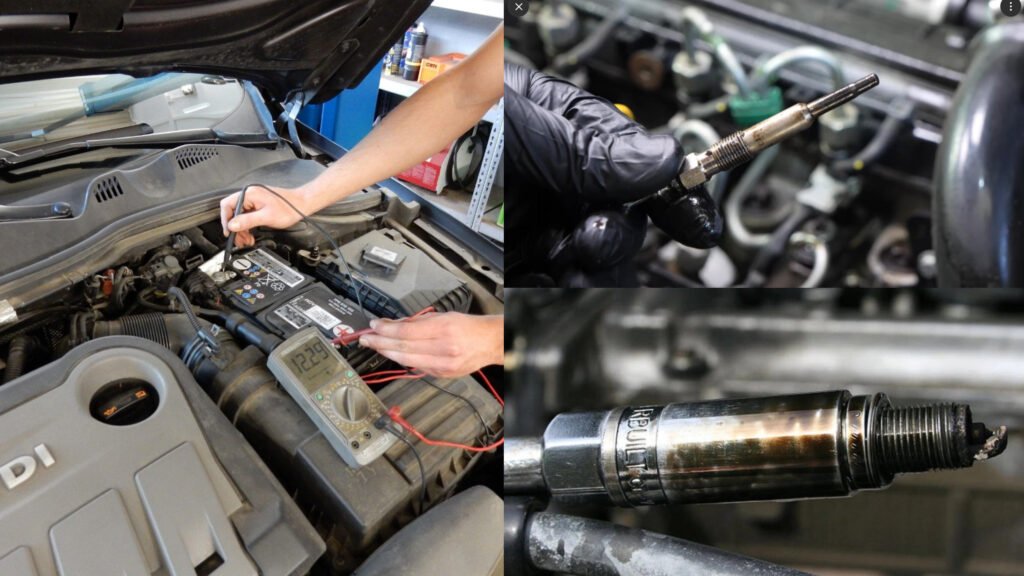
One common complaint among diesel vehicle owners is difficulty starting the engine, particularly in cold weather or after the vehicle has been sitting unused for an extended period.
Unlike gasoline engines, which use spark plugs to ignite the air-fuel mixture, diesel engines rely on the heat generated by compressing air inside the cylinders. Many diesel engines use glow plugs to provide additional heat during cold starts.
Common causes:
- A weak battery that cannot supply sufficient power to the starter motor.
- Faulty glow plugs or a defective glow plug control module.
- A clogged fuel filter or air entering the fuel system.
- Insufficient fuel pressure during startup.
- Low compression caused by internal engine wear.
Warning signs:
The engine cranks slowly, takes several attempts to start, or produces excessive exhaust smoke immediately after starting. In some cases, the engine may crank normally but fail to fire.
NGK identifies difficult starting and abnormal running as potential symptoms of glow plug problems, although similar symptoms can originate from other components.
How to fix it:
Start by checking battery condition, electrical connections, and starter motor performance. If these components are functioning correctly, inspect the glow plugs and their control system.
If the problem persists, a technician should examine fuel delivery, injection pressure, and engine compression where necessary.
Replacing glow plugs without confirming the cause may waste money if the real problem is a weak battery or a fuel system fault.
2. CLOGGED FUEL FILTERS AND DAMAGED FUEL INJECTORS
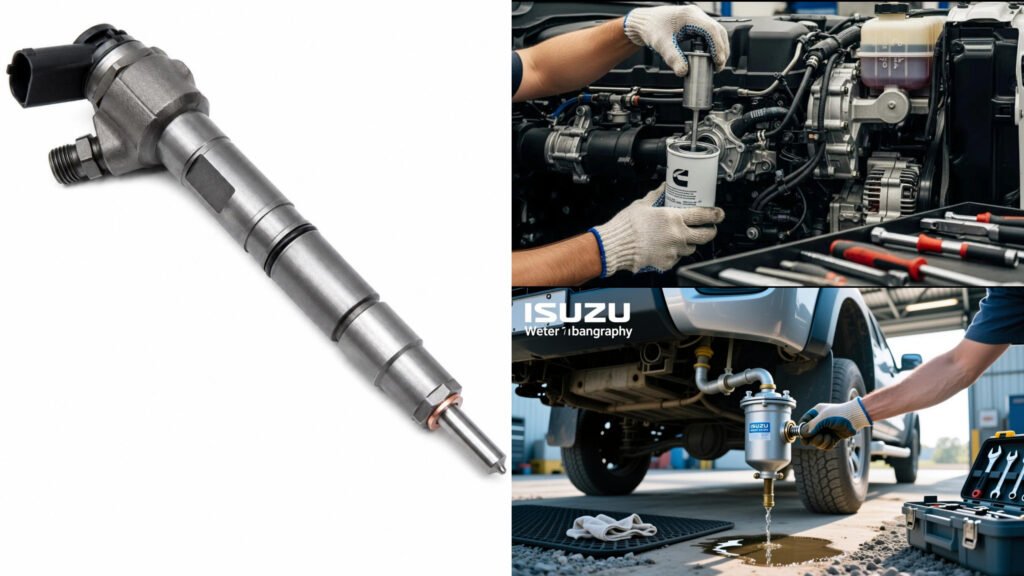
Diesel fuel systems require effective filtration, especially in modern engines equipped with high-pressure common-rail injection.
Fuel filters remove contaminants before they reach sensitive components. Some systems also incorporate water separators to prevent water from entering the injection equipment.
When the filter becomes clogged, fuel flow may be restricted. Water or dirt entering the system can also contribute to corrosion, wear, and damage to the high-pressure pump or injectors.
Bosch identifies fuel contamination and inadequate filtration as important factors that can contribute to injector failure.
Common symptoms:
- Reduced engine power and poor acceleration.
- Rough idling or engine hesitation.
- Increased fuel consumption.
- Difficulty starting.
- Excessive or unusual exhaust smoke.
These symptoms do not automatically indicate failed injectors. A clogged filter, fuel pressure problem, faulty sensor, or air leak can produce similar behavior.
How to fix it:
Replace the fuel filter according to the manufacturer’s maintenance schedule. Drain water from the fuel-water separator when required and follow the manufacturer’s recommended procedure.
Use diesel fuel that meets the vehicle’s specifications and avoid questionable fuel sources.
If injector failure is suspected, a qualified technician can check fuel pressure, injector correction values, and return-flow measurements before deciding whether cleaning, repair, or replacement is necessary.
Early diagnosis matters because repairing high-pressure fuel pumps and injectors can be expensive.
3. CLOGGED DIESEL PARTICULATE FILTERS (DPFs)
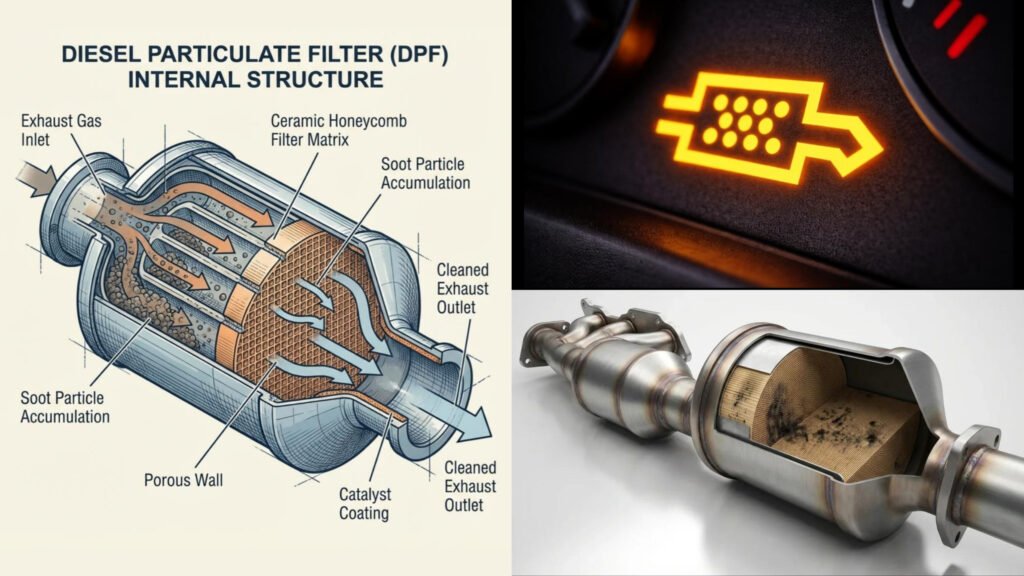
A diesel particulate filter captures soot from exhaust gases to reduce particulate emissions. It is fitted to many modern diesel vehicles, but not every diesel engine has one.
The accumulated soot must periodically be burned off through a process called regeneration. Depending on the system, regeneration may occur passively under suitable exhaust temperatures or actively through engine management.
Problems develop when regeneration repeatedly fails to complete. Frequent short journeys, prolonged low-speed driving, certain engine faults, and incorrect engine oil specifications can contribute to DPF problems.
The RAC and The AA identify incomplete regeneration as a common reason for DPF warning lights and filter blockage.
Common symptoms:
- A DPF warning light appears on the dashboard.
- Engine power decreases.
- Fuel consumption increases.
- The engine enters reduced-power or limp mode.
- Regeneration occurs more frequently than expected.
How to fix it:
Consult the owner’s manual when a DPF warning appears. Some manufacturers recommend continuing to drive under specific conditions to allow regeneration to complete, provided the vehicle has no additional warnings or serious symptoms.
If the warning remains, engine power drops significantly, or multiple warning lights appear, arrange a professional inspection.
Depending on the diagnosis, the filter may require a controlled service regeneration, specialist cleaning, or replacement. If another engine problem is preventing regeneration, that underlying fault must also be corrected.
Removing the DPF is not an appropriate maintenance solution because it compromises emissions control and may violate local regulations.
Important: DPF-related problems apply only to vehicles equipped with this system.
4. CARBON BUILDUP IN THE EGR VALVE AND INTAKE SYSTEM
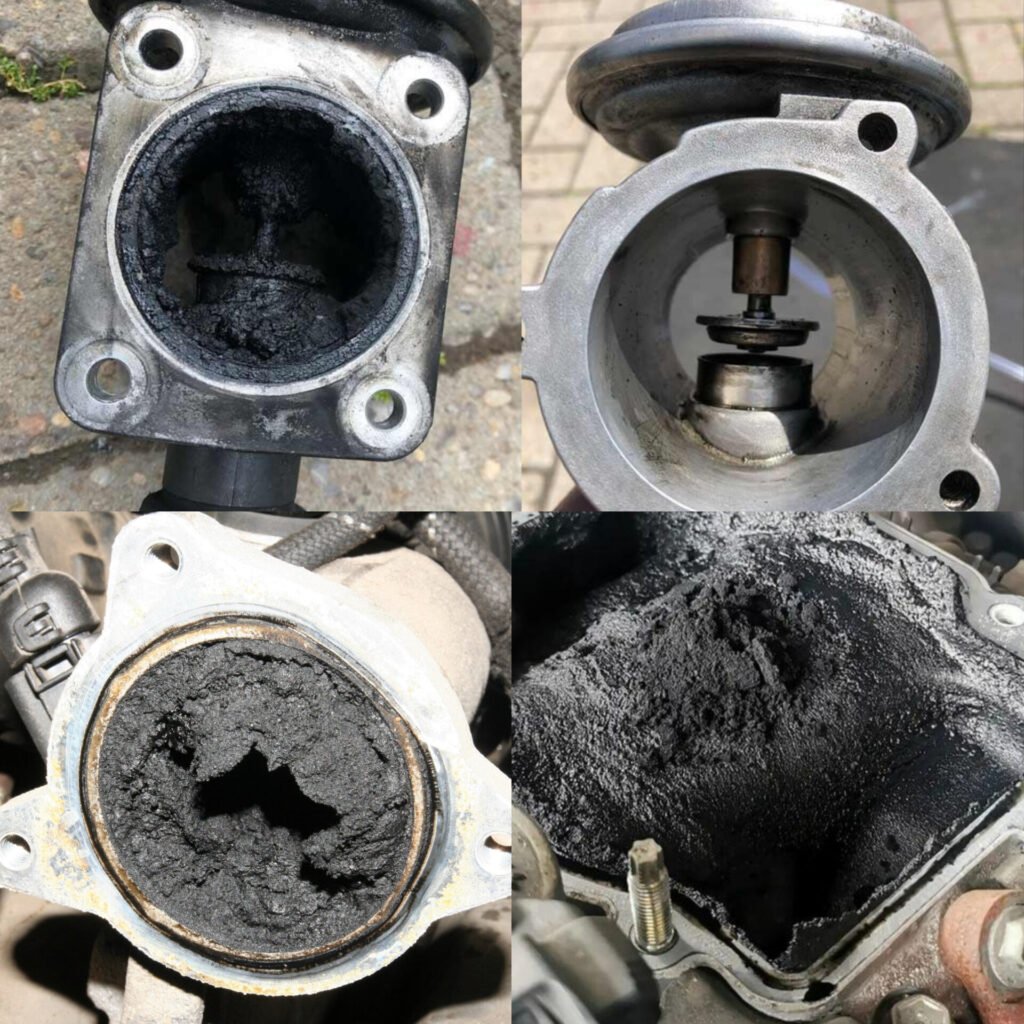
The exhaust gas recirculation (EGR) system returns a controlled portion of exhaust gas to the intake to reduce nitrogen oxide (NOx) emissions.
Over time, soot and oil mist can contribute to deposits inside the EGR valve and intake passages. Excessive buildup may restrict airflow or prevent the valve from operating correctly.
HELLA identifies EGR faults as potential causes of engine warning lights, rough idling, reduced performance, and abnormal exhaust smoke.
Common symptoms:
- Rough or unstable idling.
- Reduced acceleration.
- Increased exhaust smoke.
- Engine warning lights.
- Hesitation during acceleration.
How to fix it:
A technician should inspect the EGR valve, intake passages, sensors, electrical connections, and vacuum controls where applicable.
If carbon deposits are responsible and the components remain serviceable, appropriate cleaning may restore normal operation. A defective valve or actuator may need replacement.
The technician should also investigate why the deposits accumulated excessively. Cleaning the EGR valve alone may not provide a lasting solution if another engine fault remains.
Disabling the EGR system is not a proper repair because it can increase emissions and interfere with engine management.
5. TURBOCHARGER PROBLEMS
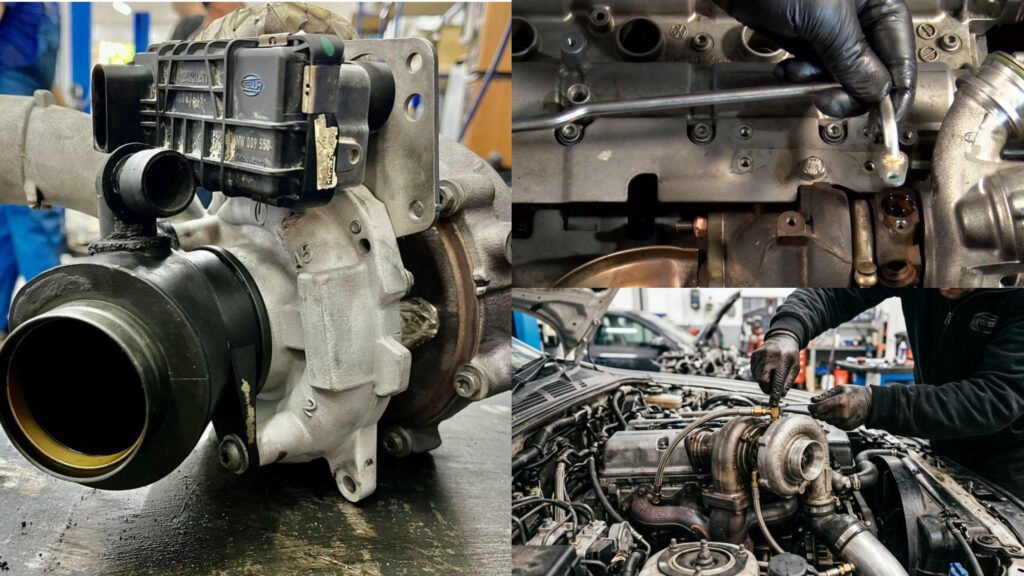
Many modern diesel engines use turbochargers to force additional air into the cylinders, improving power and efficiency.
However, turbochargers operate at extremely high rotational speeds and depend on adequate lubrication and clean oil. Problems with oil supply, contaminated oil, foreign objects, or excessive operating temperatures can damage internal components.
Garrett Motion identifies inadequate lubrication, oil contamination, and foreign-object damage as important causes of turbocharger failure.
Common symptoms:
- Reduced engine power, particularly during acceleration.
- Unusual whistling, grinding, or mechanical noises.
- Increased oil consumption.
- Excessive exhaust smoke.
- Leaking or damaged turbocharger hoses.
These symptoms do not necessarily mean the turbocharger itself has failed. A blocked air filter, leaking intercooler hose, faulty sensor, or exhaust restriction can also reduce engine performance.
How to fix it:
Maintain the correct engine oil level and use oil that meets the manufacturer’s specifications. Replace the oil and filter at the recommended intervals.
Inspect the turbocharger’s oil supply and return lines, air hoses, intercooler connections, and exhaust system.
If the turbocharger is damaged, the underlying cause must be corrected before a replacement is installed. Otherwise, the new unit may suffer the same failure.
Stop driving and seek professional assistance if there is a sudden increase in oil consumption, severe mechanical noise, or heavy smoke accompanied by signs of uncontrolled engine speed.
6. CLOGGED AIR FILTERS AND LEAKING INTAKE HOSES
Not every loss of diesel engine performance is caused by a major mechanical failure.
The air filter prevents dust and other particles from entering the engine. When it becomes excessively dirty, airflow may be restricted. In turbocharged engines, leaking hoses or intercooler connections can also prevent the engine from receiving the expected boost pressure.
Common symptoms:
- Sluggish acceleration.
- Reduced engine power.
- Increased fuel consumption.
- Unusual hissing noises from the intake system.
- Underboost warnings on vehicles equipped with relevant monitoring systems.
How to fix it:
Inspect the air filter according to the manufacturer’s service schedule. Vehicles operating in dusty environments may require more frequent inspections.
If replacing or servicing the filter does not solve the problem, check intake hoses, turbocharger connections, the intercooler, and relevant airflow or pressure sensors.
Do not replace the turbocharger based solely on reduced engine power. A simple air leak can sometimes produce similar symptoms at a much lower repair cost.
7. ENGINE OVERHEATING
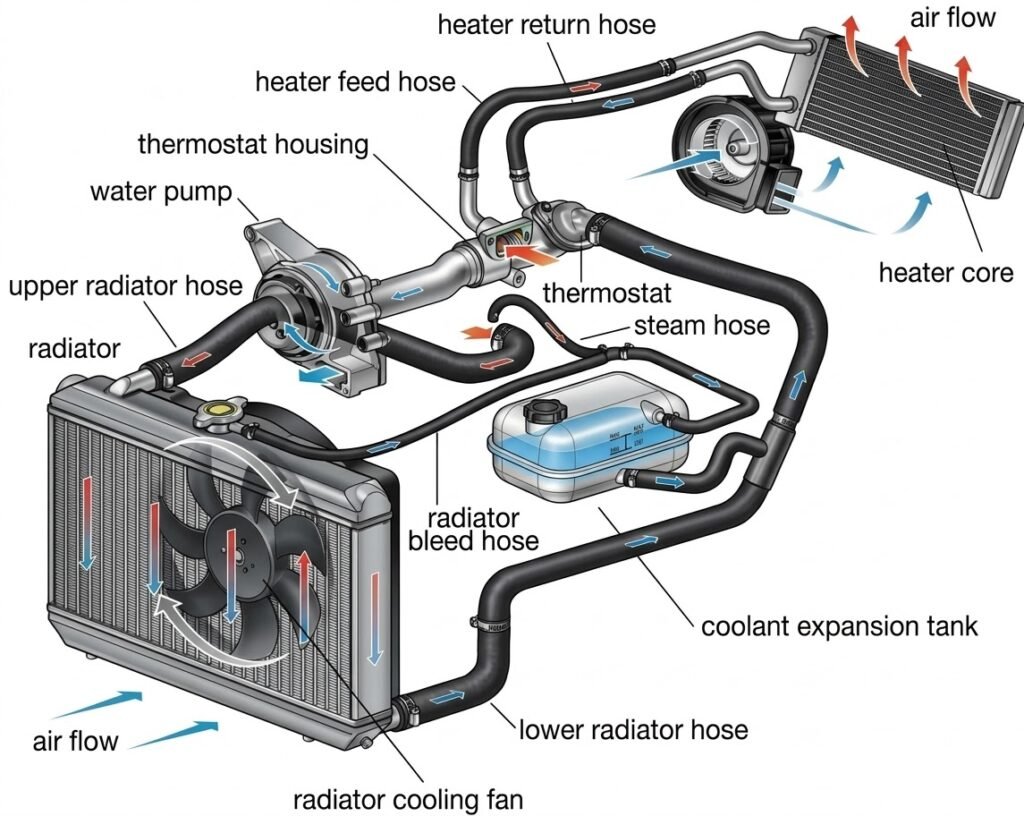
Overheating is not exclusive to diesel engines, but it can cause serious damage if ignored.
The cooling system relies on components such as the radiator, water pump, thermostat, cooling fan, and coolant passages to maintain a suitable operating temperature.
A failure in any of these components can prevent the engine from dissipating heat effectively.
Common causes:
- Low coolant levels caused by leaks.
- A blocked or damaged radiator.
- A faulty water pump.
- A malfunctioning thermostat.
- Cooling fan or temperature sensor problems.
Common symptoms:
- The temperature gauge rises above its normal range.
- An engine temperature warning appears.
- Coolant leaks become visible.
- Steam emerges from the engine compartment.
- Engine performance deteriorates as temperatures rise.
How to fix it:
If the temperature gauge reaches the danger zone or an overheating warning appears, stop in a safe location and follow the manufacturer’s shutdown instructions. Do not continue driving in an attempt to reach your destination.
Never open a hot radiator or pressurized coolant reservoir because escaping coolant can cause severe burns.
Once the system is safe to inspect, a technician should check for leaks, test the cooling system, and examine the water pump, thermostat, radiator, and cooling fan.
Simply adding coolant will not provide a permanent solution if the underlying leak or circulation problem remains.
8. POOR LUBRICATION AND ENGINE OIL LEAKS
Engine oil reduces friction, protects moving components from wear, and helps manage heat. In turbocharged diesel engines, proper lubrication is particularly important because the turbocharger depends on a reliable supply of clean oil.
Delayed oil changes, incorrect oil specifications, contaminated oil, and lubrication system faults can increase component wear.
Garrett Motion identifies inadequate lubrication and oil contamination as significant contributors to turbocharger damage.
Common symptoms:
- The engine oil level drops repeatedly.
- Oil leaks appear around the engine.
- Exhaust smoke increases alongside excessive oil consumption.
- Unusual mechanical noises develop.
- The oil pressure warning light illuminates.
How to fix it:
Check the oil level regularly according to the owner’s manual and use oil that meets the manufacturer’s viscosity and performance requirements.
Diesel vehicles equipped with DPFs may require specific low-SAPS engine oils to protect the emissions system.
If the oil level keeps dropping, inspect for external leaks and investigate possible internal oil consumption or turbocharger problems.
If the oil pressure warning illuminates while the engine is running, stop the engine as soon as it is safe to do so. Continuing to drive with inadequate oil pressure can cause severe engine damage.
Adding oil without identifying the cause is not a substitute for proper diagnosis.
WHAT ARE THE MAIN DISADVANTAGES OF DIESEL CARS?
Although diesel engines can be durable, several factors may make ownership more complicated.
1. Potentially expensive fuel system repairs
High-pressure pumps and precision injectors can be costly to repair or replace, particularly when contaminated fuel damages multiple components.
2. Additional emissions-system maintenance
Vehicles equipped with DPFs, EGR systems, and other emissions-control equipment require those systems to be maintained properly. Repairs can become expensive when faults are ignored.
3. Driving conditions can affect reliability
Diesel cars that are used almost exclusively for short journeys may struggle to complete DPF regeneration, depending on their emissions-system design and operating conditions.
4. Diagnosis can be complicated
Symptoms such as poor acceleration, excessive smoke, and difficult starting can originate from several different systems. Accurate diagnosis is important to avoid unnecessary parts replacement.
5. Maintenance requirements vary between engines
Not all diesel engines use the same technology. Older designs may have fewer emissions-control components, while newer engines can incorporate more sophisticated fuel injection and exhaust-treatment systems.
These differences mean that the age, design, service history, and intended use of a vehicle should all be considered when evaluating its reliability.
HOW TO PREVENT COMMON DIESEL ENGINE PROBLEMS
The most effective way to reduce the risk of expensive repairs is to follow a consistent maintenance routine.
- Follow the manufacturer’s service schedule. Replace engine oil, oil filters, fuel filters, and air filters at the specified intervals.
- Use the correct engine oil. Viscosity alone is not enough; the oil must also meet the required performance specifications.
- Use suitable diesel fuel. Avoid contaminated fuel and follow the manufacturer’s fuel requirements.
- Monitor warning lights. Investigate persistent DPF, engine, oil pressure, and temperature warnings promptly.
- Maintain the cooling system. Check coolant levels and have leaks repaired rather than repeatedly topping up the system.
- Pay attention to changes in engine behavior. Unusual smoke, noises, fuel consumption, or acceleration problems can indicate an emerging fault.
- Follow the correct DPF regeneration procedure. If the vehicle has a DPF, follow the instructions in the owner’s manual and address recurring regeneration problems.
- Diagnose faults before replacing parts. Use appropriate diagnostic tests to identify the actual cause instead of relying on symptoms alone.
Diesel cars are not inherently unreliable, and they do not automatically develop every problem described in this article. Their durability depends on engineering design, maintenance, fuel quality, and operating conditions.
The most important problems to understand include starting difficulties, fuel filter and injector faults, DPF blockage where applicable, EGR carbon buildup, turbocharger failure, intake restrictions, cooling system faults, and lubrication problems.
Regular servicing and early diagnosis can prevent some minor faults from developing into expensive repairs. However, maintenance cannot eliminate every failure, particularly when components reach the end of their service life.
For prospective buyers, the best choice depends on how the vehicle will be used. Diesel engines can be well suited to long-distance driving, towing, and applications that benefit from strong low-speed torque. Drivers who mainly make short urban trips should also consider gasoline, hybrid, and other available powertrain options before making a decision.
What has your experience with diesel cars been like? Have you experienced problems with fuel injectors, turbochargers, DPFs, or cooling systems or has your diesel engine remained reliable for years? Share your experience in the comments.

Adhe is part of the 88 Eight Box Editorial Team, covering JDM culture, motorsport, automotive technology, and industry news. The team focuses on delivering original automotive stories, reviews, and insights for enthusiasts worldwide.