Why Rally Cars Can Fly, Land Hard, and Keep Racing Without Breaking
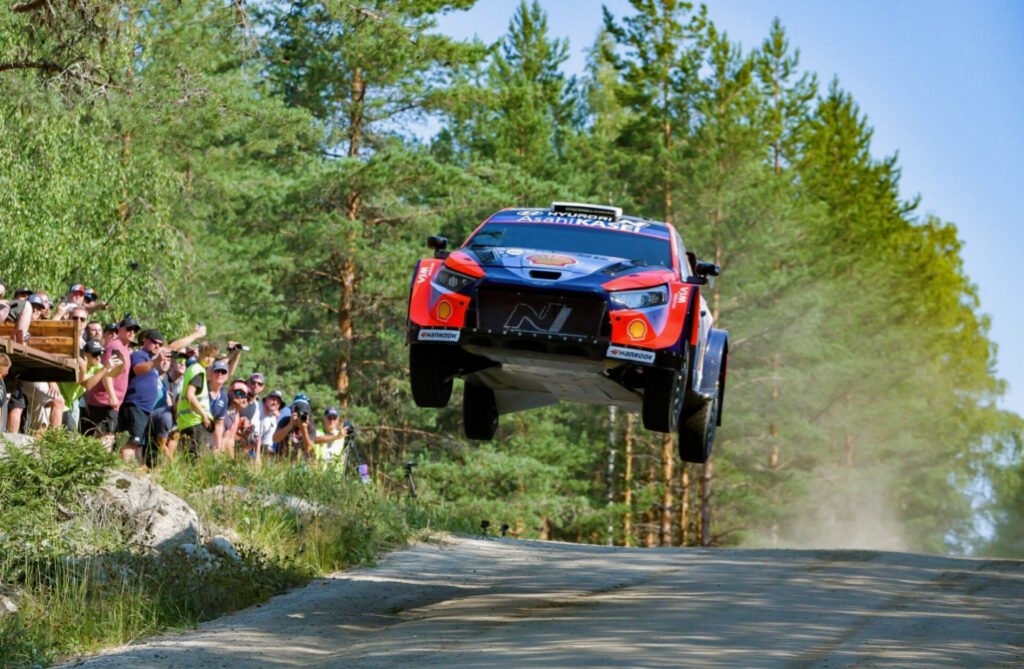
A rally car flying through the air is one of the most common and spectacular sights in motorsport. This is especially true at Rally Finland, an event famous for its long and high-speed jumps that often make rally cars look like they are breaking the laws of gravity.
However, the most incredible part is not when the car is in the air. The real engineering miracle happens when the car lands.
Despite returning to the ground with massive impact forces, rally cars can continue racing without suffering major damage. There are no broken suspension components, no wheels being ripped off, and no twisted chassis after a hard landing.
Even after a huge jump, drivers can immediately apply the throttle and attack the next corner as if nothing happened.
So how can a car jump several meters into the air, land at high speed, and remain completely stable?
The answer lies in one of the most advanced systems in a rally car: the suspension.
Rally Suspension Is Not Designed for Comfort — It Is a Racing Weapon
When people talk about rally cars, they usually focus on the turbocharged engine, all-wheel-drive system, or the incredible skills of the driver.
But behind all of those elements, there is one component that determines whether the car can survive until the finish line or fail before the stage ends.
That component is the suspension.
Unlike road cars, where suspension is mainly designed for comfort, rally suspension is built as a weapon to conquer extreme conditions.
A rally suspension system must handle:
- Rocky surfaces
- Deep holes
- Uneven terrain
- Sudden grip changes
- High-speed jumps
- Massive landing impacts
The hardest challenge is absorbing the entire weight of the car when it lands after a jump.
Because of this, modern rally suspension has become one of the most sophisticated technologies in motorsport.
How Rally Suspension Handles Extreme Landing Forces
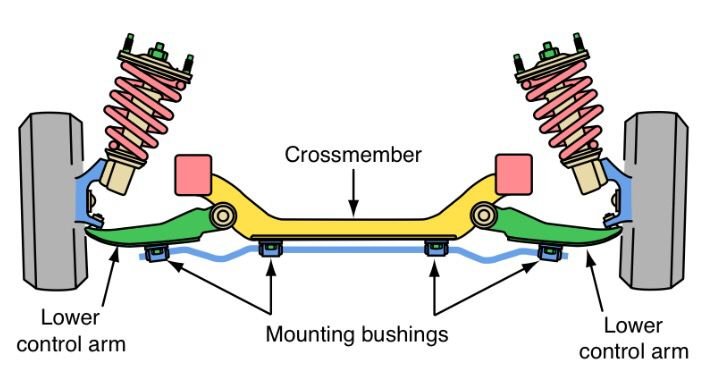
When a rally car jumps, it creates a huge amount of kinetic energy.
If that energy is transferred directly into the chassis, the result would be catastrophic. Suspension parts could break, the body structure could be damaged, and the car could instantly lose control.
That is why the main job of rally suspension is to transform impact energy into controlled movement.
When the wheels hit the ground, the force is not transferred directly into the vehicle.
Instead, it is managed through the hydraulic system inside the damper or shock absorber.
The oil inside the damper is forced through precision valves, creating controlled resistance.
The impact energy is converted into:
- Hydraulic fluid movement
- Heat
- Controlled damping force
This is the reason rally cars can survive brutal landings without destroying their suspension components.
Hydraulic Bump Stop: The Technology That Saves Rally Cars During Jumps
One of the most important technologies in modern rally suspension is the Hydraulic Bump Stop (HBS).
In simple terms, HBS is an additional damping system that works when the suspension approaches the end of its compression travel.
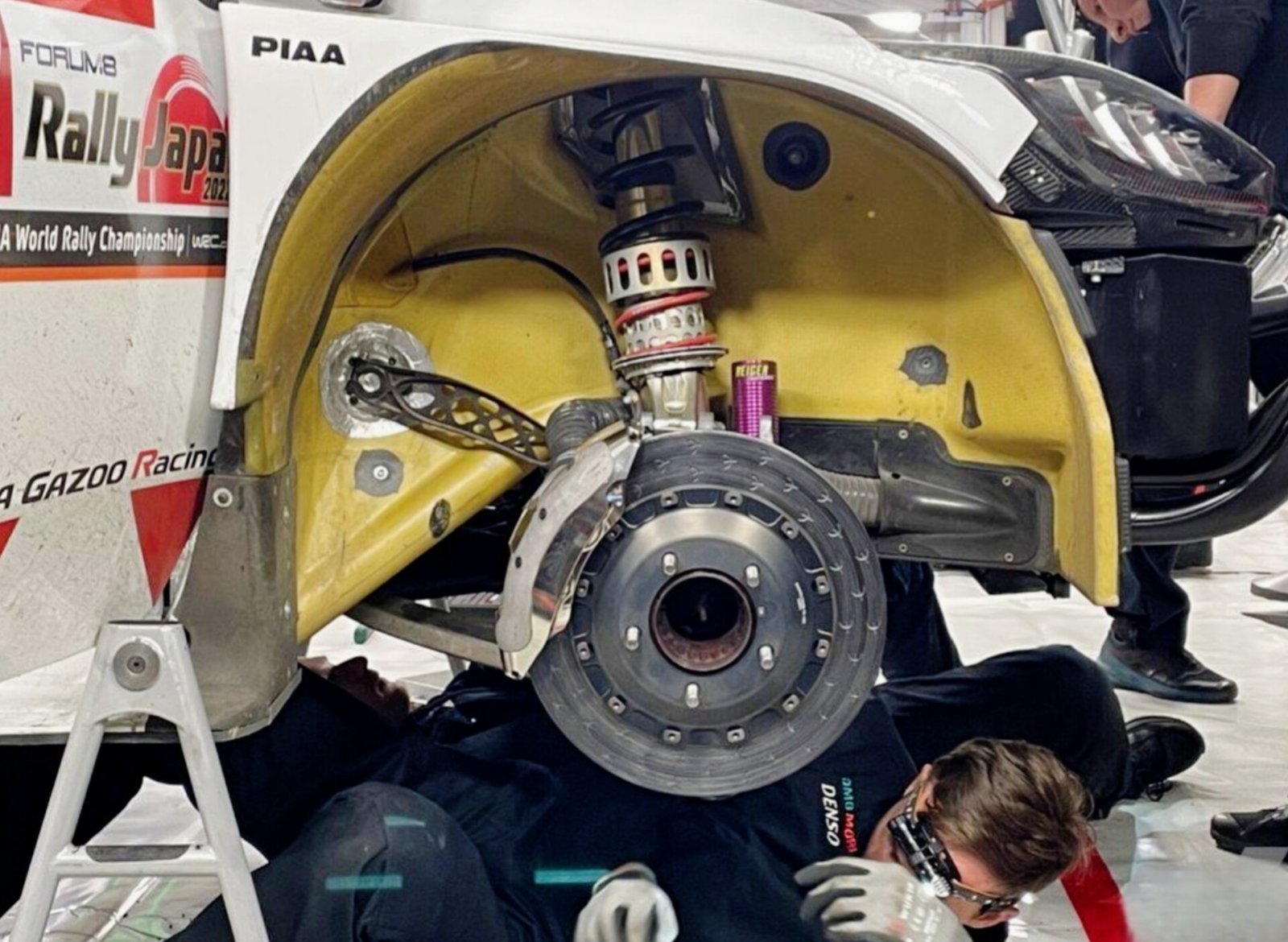
Rally cars already have extremely long suspension travel, usually around 200–300 mm, depending on regulations and vehicle design.
However, if all impact energy was handled only by the main damper and spring, the suspension could still experience bottoming out.
Bottoming out happens when the suspension reaches its maximum movement and mechanical parts hit their limits.
When this happens:
- Suspension components can bend
- Chassis loads increase dramatically
- Mounting points can be damaged
- Vehicle stability can be lost
This is where the Hydraulic Bump Stop becomes critical.
As the suspension approaches full compression, the HBS gradually increases hydraulic resistance.
The harder the impact, the stronger the damping force becomes.
Instead of a violent mechanical hit, the energy is absorbed progressively.
The result is a smoother landing, better traction, and much lower stress on the chassis and suspension components.
Rally Dampers: Complex Systems Built for Extreme Conditions
Modern rally dampers are far more advanced than normal shock absorbers.
Inside a rally damper, there are highly engineered components such as:
- Pistons
- Shim stacks
- Oil passages
- Compression valves
- Rebound valves
- Pressurized gas systems
- Adjustable damping settings
The damper has two main responsibilities:
- Control how quickly the suspension compresses when hitting an obstacle.
- Control how quickly the suspension returns after the impact.
The balance is extremely difficult.
If compression damping is too soft, the car can easily bottom out during landing.
If it is too stiff, the tires can lose contact with the surface because the car becomes too aggressive and bouncy.
The same applies to rebound damping.
If rebound is too fast, the car can bounce like a ball.
If rebound is too slow, the wheels may not return to the ground quickly enough, causing a loss of grip.
A rally damper must be:
- Soft enough for rough terrain
- Strong enough for massive impacts
- Fast enough to keep tires connected to the ground
High-Speed Damping: Suspension That Changes Character
One of the most impressive features of modern rally suspension is its ability to respond differently depending on the speed of suspension movement.
When the car passes through small bumps, the damper can operate in a softer mode to maintain stability.
However, during a huge jump landing, the damper shaft moves extremely quickly.
At that moment, the high-speed compression valve reacts more aggressively to control the impact.
This is why rally suspension feels almost magical.
It is not always hard, and it is not always soft.
The suspension changes its behavior depending on the type of impact it receives from the track.
The Biggest Enemy of Rally Suspension: Heat
Even the most advanced rally suspension system has one major enemy: heat.
A damper is basically an energy conversion device.
When oil is forced through small valves under extreme pressure, friction inside the fluid creates heat.
The harder the suspension works, the more heat it produces.
The problem begins when damper oil becomes too hot.
As temperature rises, oil viscosity can change, making the fluid thinner.
This can cause:
- Reduced damping performance
- Less consistent suspension behavior
- Loss of vehicle control
- Cavitation problems
Cavitation occurs when air bubbles form inside the fluid system, reducing the damper’s ability to control movement.
To solve this problem, rally cars use external reservoirs.
External Reservoir: Keeping Dampers Stable Under Extreme Stress
External reservoirs serve several important purposes.
1. Increasing Oil Capacity
A larger oil volume allows the system to manage heat more effectively and prevents overheating.
2. Separating Oil and Pressurized Gas
Nitrogen gas is often used to maintain system pressure and reduce the risk of aeration, where air mixes with the oil.
3. Allowing More Advanced Valve Systems
The additional space provides room for more complex damping adjustments.
Because of this technology, rally dampers can maintain consistent performance despite:
- Extreme speeds
- Repeated impacts
- High temperatures
- Rough terrain
Conclusion: Rally Suspension Is an Energy Management Machine
The reason rally cars can fly through the air, land violently, and continue racing is not only because of powerful engines or skilled drivers.
The true secret lies in their advanced suspension systems.
A combination of:
- Hydraulic Bump Stops
- Precision hydraulic dampers
- External reservoirs
- Advanced valve systems
- Thermal management technology
allows rally cars to transform destructive impact forces into controlled movement.
A rally suspension system is not just a spring and shock absorber.
It is a highly advanced engineering system designed to convert extreme kinetic energy into controlled hydraulic movement.
So when a rally car launches three meters into the air and lands perfectly at full speed, behind that spectacular moment is a suspension system working in milliseconds to protect both the car and the driver.

Adhe is part of the 88 Eight Box Editorial Team, covering JDM culture, motorsport, automotive technology, and industry news. The team focuses on delivering original automotive stories, reviews, and insights for enthusiasts worldwide.