More Than Just a Race, WEC Has Become the World’s Biggest Automotive Technology Laboratory
For decades, the FIA World Endurance Championship (WEC) has been recognized as one of the toughest racing competitions in the world. The challenge is not only about speed, but also about proving whether a manufacturer’s technology can survive the most extreme conditions.
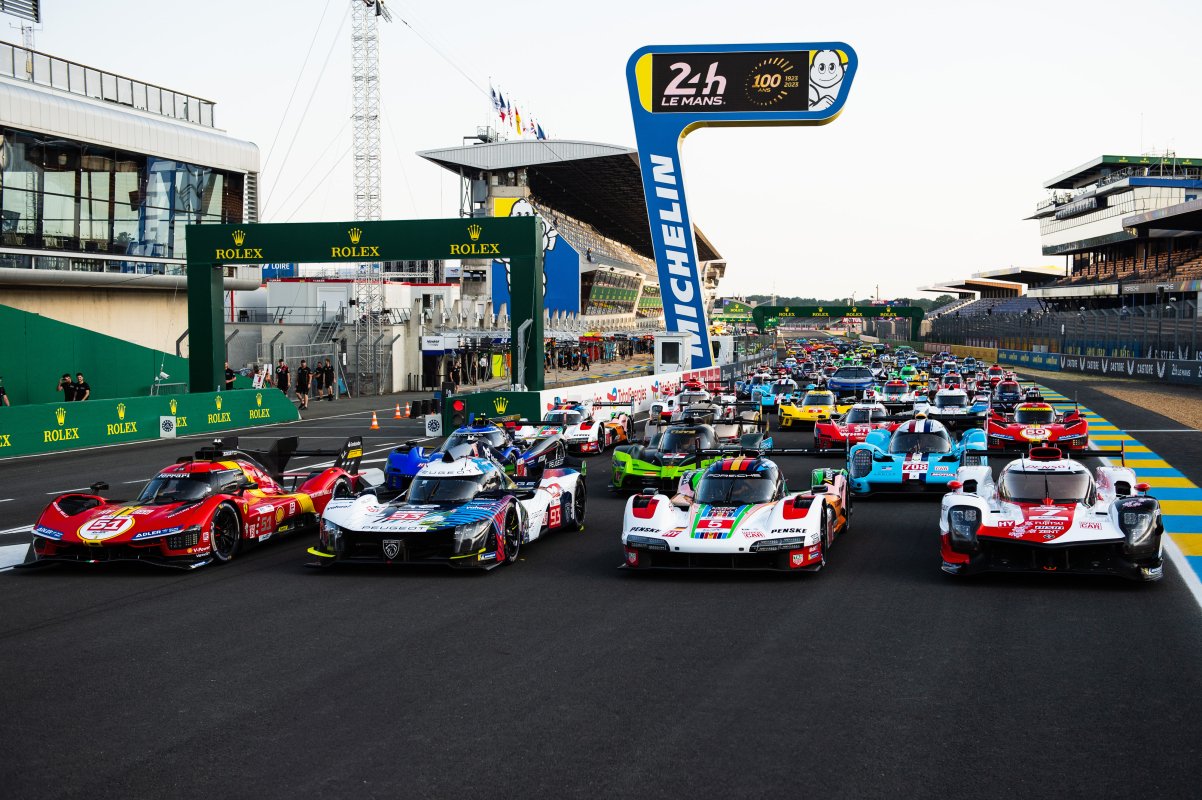
Unlike traditional racing, endurance racing demands a perfect balance between performance, efficiency, and durability. At legendary circuits such as Circuit de la Sarthe, home of the 24 Hours of Le Mans, where the track stretches for more than 13 kilometers, engineers are not only chasing maximum speed but also fuel efficiency, component reliability, and hybrid system performance that must operate continuously for an entire day.
In the modern era, WEC has transformed into a massive testing ground for the automotive industry. Many technologies that are now found in production cars were developed through endurance racing, including high-performance hybrid systems, lightweight carbon fiber materials, and advanced aerodynamic simulations using CFD (Computational Fluid Dynamics).
Every WEC race is no longer just about crossing the finish line first. It is also about collecting millions of pieces of data that are analyzed in real time to improve vehicle performance.
The electronic systems inside these cars work simultaneously to manage power delivery, braking, and energy recovery within milliseconds.
That is why modern Hypercar and the previous generation LMP1 machines are often considered the peak of automotive engineering. These cars are not simply racing machines, but masterpieces of technology that combine internal combustion engines, electric motors, advanced electronics, and extreme aerodynamic solutions.
Among the many incredible machines that have competed in WEC, there are several cars that truly changed the direction of endurance racing technology.
Here are the 4 most advanced WEC cars ever created.
1. Toyota GR010 Hybrid – The Symbol of the New Hypercar Era
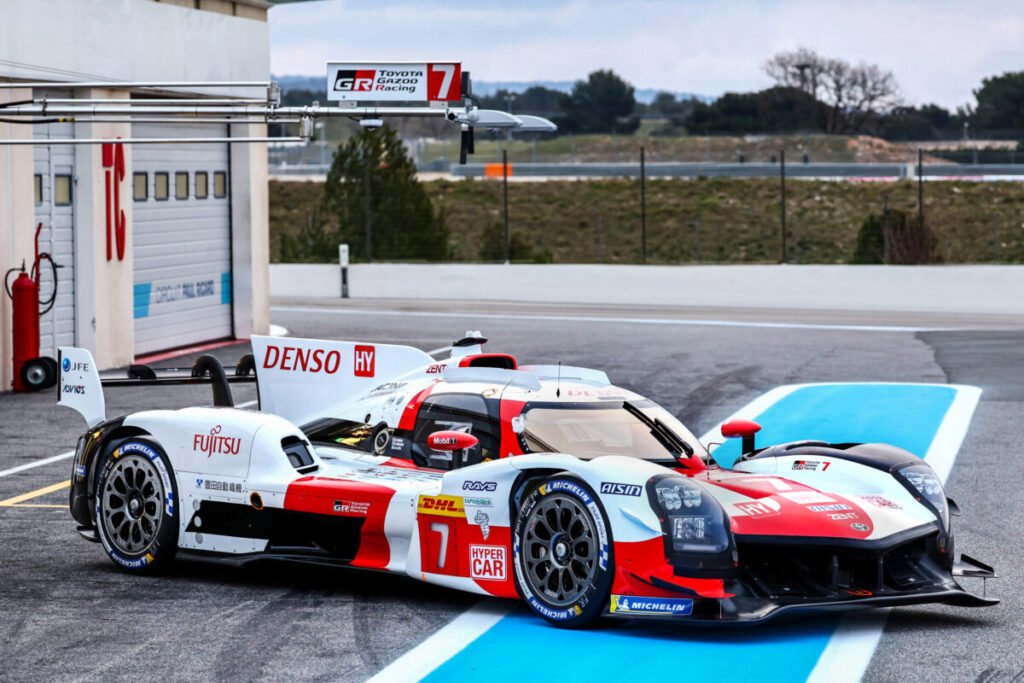
When discussing the most advanced modern WEC cars, the Toyota GR010 Hybrid is almost always one of the first names mentioned.
This car is not only the successor to the legendary Toyota TS050 Hybrid that dominated the LMP1 era, but also represents the beginning of a new chapter under the FIA Hypercar regulations.
Toyota introduced the GR010 Hybrid in the 2021 season as a response to new regulations that focused on reducing development costs while maintaining extreme performance.
Under its aerodynamic bodywork, the GR010 Hybrid uses a 3.5-liter twin-turbo V6 engine producing around 680 horsepower.
The combustion engine is combined with a front electric motor producing approximately 272 horsepower, which activates according to FIA regulations and creates an electronically controlled AWD system.
This combination gives the car incredible traction when accelerating out of corners.
However, the real intelligence of the GR010 Hybrid is not only found in its power output.
The car features an advanced Energy Management System that constantly calculates thousands of parameters during every lap.
The computer decides when to use combustion power, when to deploy electric assistance, and when to recover energy through regenerative braking.
All of these processes happen within milliseconds without requiring direct input from the driver.
This technology immediately proved its effectiveness on the track. Since its debut in 2021, the Toyota GR010 Hybrid helped Toyota Gazoo Racing achieve six FIA WEC victories during that season and win the legendary 24 Hours of Le Mans 2021.
2. Ferrari 499P – Ferrari’s Return With Formula 1 Technology
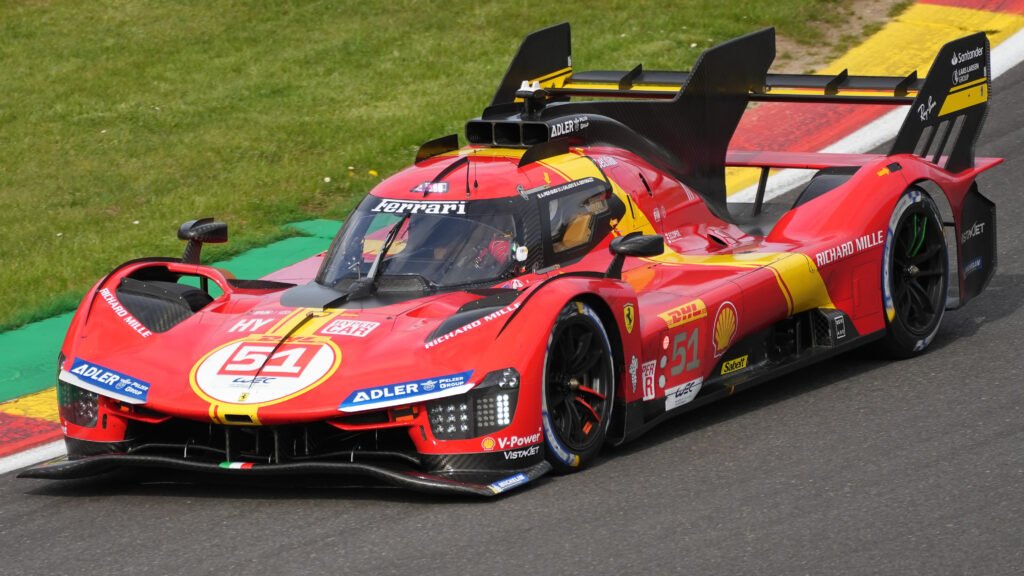
After almost 50 years away from the top category of endurance racing, Ferrari returned to the highest level of WEC competition in 2023 with the Ferrari 499P.
Ferrari’s comeback was not just about building a new race car. The manufacturer also brought decades of hybrid technology experience from Formula 1.
The Ferrari 499P uses a 3.0-liter twin-turbo V6 engine with a 120-degree cylinder angle configuration.
Ferrari chose this design because the wider engine angle allows a lower center of gravity, improving stability during high-speed cornering.
The engine is combined with a front electric motor, creating an AWD system that activates according to Hypercar regulations.
The biggest advantage of the Ferrari 499P lies in its energy management system.
Using experience gained from Formula 1 hybrid technology, the car’s computer continuously calculates when electric power should assist acceleration, when the battery should recharge, and when the combustion engine should become the main power source.
The vehicle is equipped with numerous sensors monitoring every important component, including battery temperature, turbo pressure, and overall system performance.
All information is transmitted directly to the pit wall through advanced telemetry systems, allowing engineers to make strategic decisions before problems occur.
The technology delivered immediate results.
During its debut at the 24 Hours of Le Mans 2023, Ferrari 499P ended Toyota’s dominance by winning the overall race.
The success continued into the 2024 season, establishing the Ferrari 499P as one of the fastest and most successful Hypercars in a very short period.
3. Porsche 963 – The Power of Hybrid Technology and Software
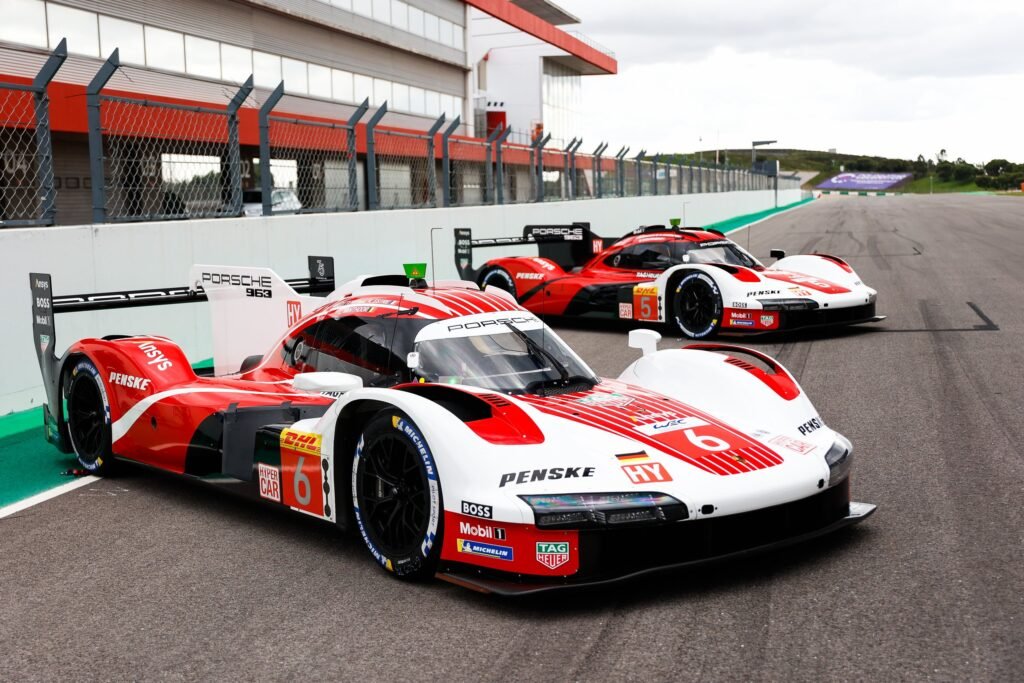
When the LMDh regulations were introduced, many believed that standardized hybrid components would reduce the uniqueness of each manufacturer.
However, Porsche proved the opposite with the Porsche 963.
This car became an example of how standardized technology could be combined with manufacturer-specific engineering to create world-class performance.
The Porsche 963 uses a chassis developed by Multimatic, one of the most experienced racing chassis manufacturers in the world.
Behind the cockpit sits a 4.6-liter twin-turbo V8 engine derived from Porsche’s RS Spyder racing program and further developed using knowledge gained from the Porsche 918 Spyder hybrid project.
The engine produces around 680 horsepower according to LMDh regulations.
The hybrid system of the Porsche 963 comes from a collaboration between three major technology companies:
- Bosch, responsible for the electric motor and electronic systems.
- Williams Advanced Engineering, developing the high-performance battery.
- Xtrac, supplying the transmission system.
Although these hybrid components are shared by all LMDh competitors, Porsche created its own software and electronic control strategies.
This became the biggest advantage of the Porsche 963.
The onboard computer can determine when to deploy electric power, when to recover energy through regenerative braking, and how to adjust torque distribution depending on track conditions.
The results were impressive.
The Porsche 963 achieved multiple championship successes, including consecutive IMSA manufacturer, team, and driver titles in 2024 and 2025, as well as winning the WEC World Championship title for drivers in 2024.
Porsche proved that modern racing success is not only about engine power, but also about the intelligence of software controlling every vehicle system.
4. Peugeot 9X8 – The Revolutionary Wingless Hypercar
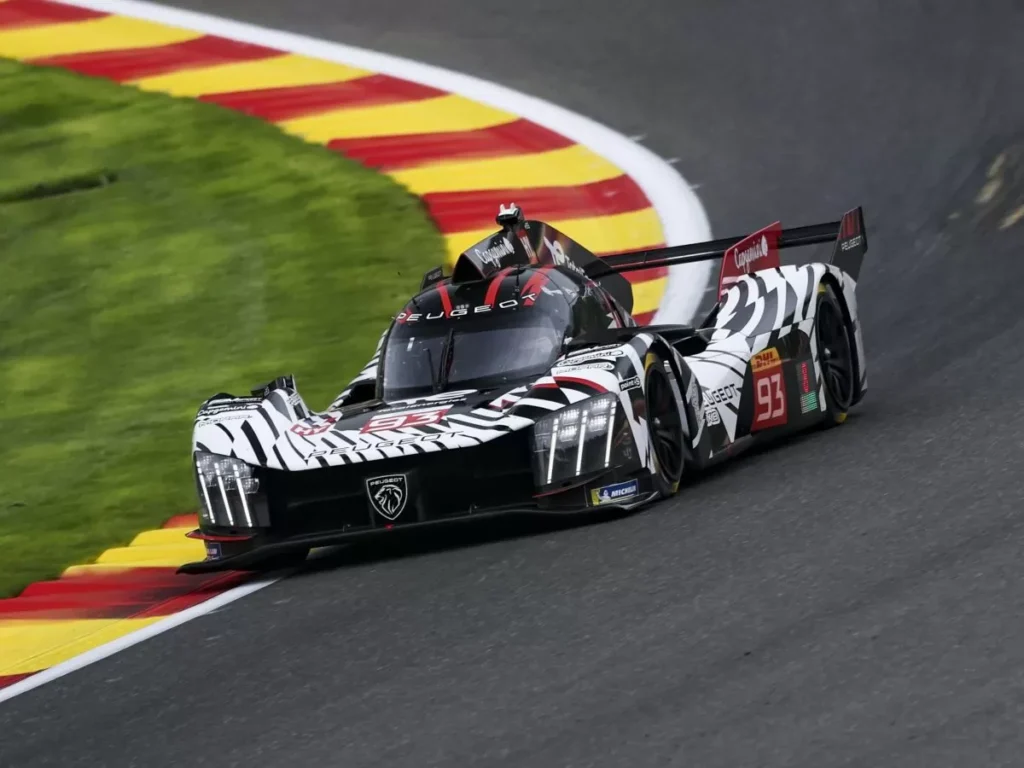
Among all modern WEC Hypercars, perhaps no car is more unique than the Peugeot 9X8.
When it was first revealed, many people thought the car looked unfinished because it was completely different from traditional prototype racing machines.
The reason was simple: Peugeot removed the conventional rear wing.
This decision was not made just for attention. Instead, Peugeot Sport engineers developed a completely different aerodynamic philosophy.
The Peugeot 9X8 relies heavily on ground effect technology, where most of the downforce comes from the car’s floor design, diffuser, and airflow underneath the vehicle rather than a large rear wing.
This concept required extremely complex aerodynamic calculations because the car had to maintain stability without the traditional aerodynamic device used for decades.
In terms of power, the Peugeot 9X8 uses a 2.6-liter twin-turbo V6 engine mounted at the rear.
The engine is paired with a front electric motor producing around 272 horsepower, creating a four-wheel-drive hybrid system according to Hypercar regulations.
The car also uses a high-voltage battery developed together with Saft, allowing it to store energy recovered during braking and send it back to the electric motor during acceleration.
Although its early performance was not as strong as Toyota or Ferrari, the Peugeot 9X8 remains one of the most innovative cars in WEC history.
It proved that challenging traditional concepts can open new directions for future racing technology.
WEC Is Shaping the Future of Automotive Technology
The Toyota GR010 Hybrid, Ferrari 499P, Porsche 963, and Peugeot 9X8 represent four different approaches to the future of endurance racing.
Toyota demonstrated hybrid efficiency, Ferrari brought Formula 1 experience, Porsche showed the power of software, while Peugeot challenged decades of aerodynamic philosophy.
Not every innovation immediately produces victory, but every breakthrough created in WEC has the potential to influence the future of road cars.
Because in the end, endurance racing is not only about who reaches the finish line first.
It is about who can create the most advanced technology capable of surviving the toughest challenges in motorsport.

Adhe is part of the 88 Eight Box Editorial Team, covering JDM culture, motorsport, automotive technology, and industry news. The team focuses on delivering original automotive stories, reviews, and insights for enthusiasts worldwide.