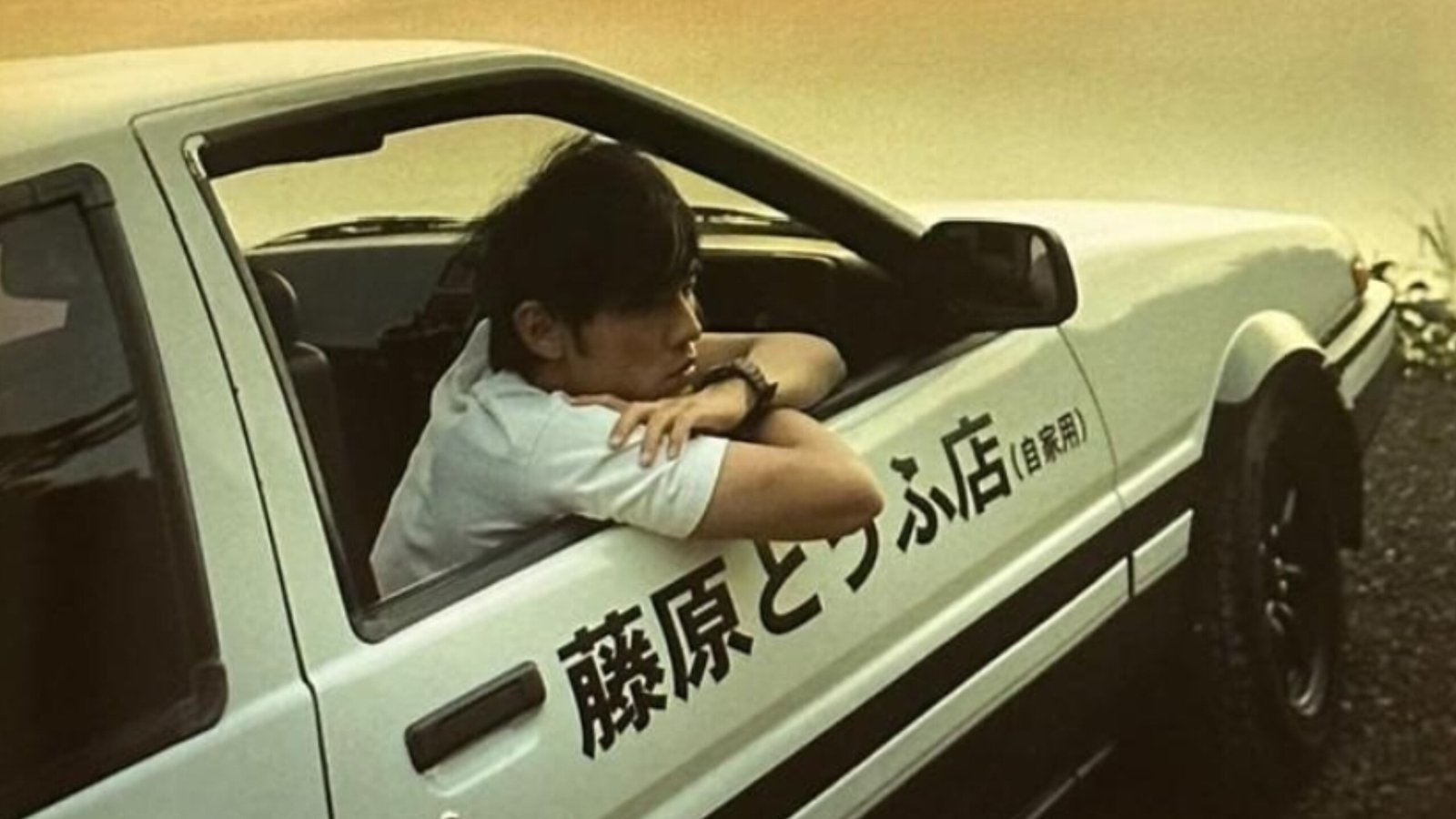
Before Japanese JDM culture became a worldwide phenomenon like it is today, a movie titled Initial D (2005) successfully introduced Japanese street racing culture, drifting, and classic Japanese performance cars to millions of automotive enthusiasts around the world.
Adapted from the popular manga created by Shuichi Shigeno, the live-action version of Initial D became one of the most influential automotive movies because it did not only deliver exciting racing scenes, but also showed the philosophy that a skilled driver can defeat a more powerful machine.
The movie was directed by Andrew Lau and Alan Mak, with Taiwanese actor and musician Jay Chou playing the main character, Takumi Fujiwara.
The Story of Takumi Fujiwara and the Underrated Toyota AE86
The story of Initial D follows Takumi Fujiwara, a quiet young man who helps his father, Bunta Fujiwara, run their tofu delivery business.
Every morning before sunrise, Takumi delivers tofu using the family’s old car, a Toyota Sprinter Trueno AE86. To most people, the AE86 is simply an outdated vehicle with a small engine that cannot compete against modern sports cars.
However, years of driving through the mountain roads of Mount Akina unknowingly transformed Takumi into an extraordinary driver. He became highly skilled at handling sharp corners, narrow roads, and extreme driving conditions.
His abilities eventually attract the attention of the street racing community when he defeats high-performance cars with a vehicle that appears to have no major advantages.
Toyota AE86: The Simple Car That Became a Legend
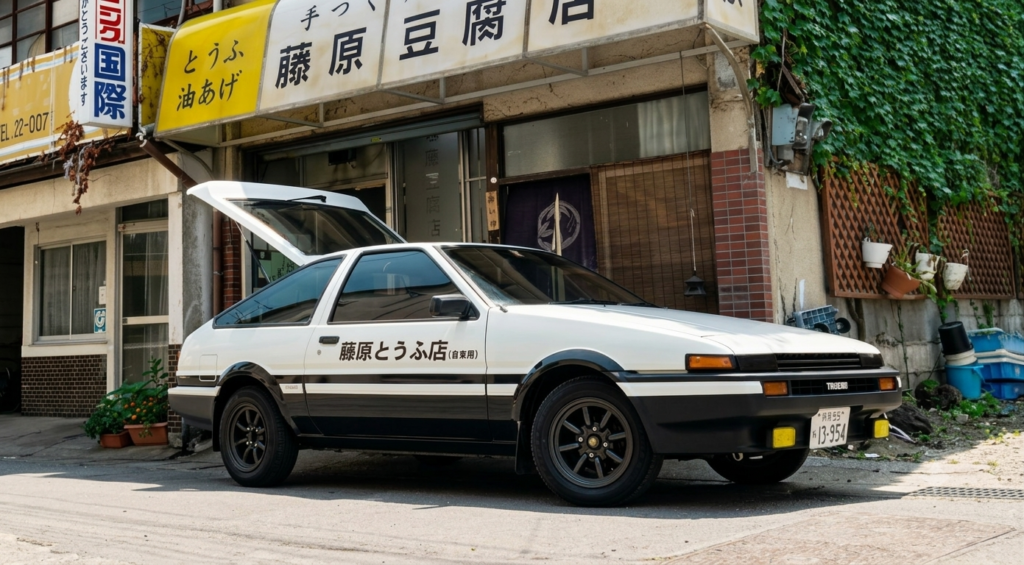
The true star of the movie is, of course, Takumi’s Toyota AE86.
The car uses a 4A-GEU 1.6-liter engine and produces around 130 horsepower in its standard form. That figure is far lower compared to other Japanese sports cars from the same era.
However, the AE86 has several advantages:
- Lightweight body weighing around 900 kg
- Rear-wheel-drive (RWD) layout
- Balanced weight distribution
- Highly responsive chassis
Initial D showed that speed is not always determined by engine power. With the right driving technique, a simple car can defeat vehicles that are far more expensive and powerful.
The success of the movie even increased the value of the Toyota AE86, turning it into one of the most desirable Japanese classic cars among collectors.
Battling Against High-Powered JDM Machines
One of the biggest attractions of Initial D is Takumi’s battles against legendary Japanese performance cars.
Mazda RX-7 FD3S — The Dangerous Rival from Keisuke Takahashi
The Mazda RX-7 FD is one of the most iconic cars featured in the movie.
Unlike the AE86, which relies on balance and driving technique, the RX-7 FD uses more advanced technology with a 13B-REW Twin Turbo Rotary engine producing around 255 horsepower.
With its aggressive design, lightweight construction, and exceptional cornering ability, the RX-7 FD represents the golden era of Japanese sports cars in the 1990s.
Mazda RX-7 FC3S — Ryosuke Takahashi’s Strategic Machine
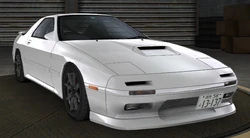
The RX-7 FC owned by Ryosuke Takahashi represents another side of racing.
Ryosuke does not rely only on speed, but also on deep analysis of:
- Road conditions
- Opponent performance
- Racing strategy
This car represents the idea that racing is not only about horsepower, but also intelligence and preparation.
Nissan Silvia S13 — The Icon of Japanese Drift Culture
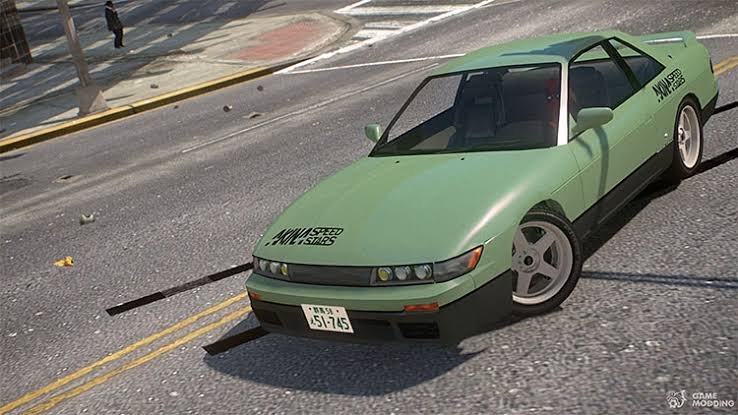
The Nissan Silvia S13 is also an important part of the movie.
Powered by the SR20DET turbo engine and featuring a rear-wheel-drive layout, the Silvia became one of Japan’s most popular drift cars because it was easy to modify and offered excellent balance.
The Racing Scenes That Introduced Touge Culture to the World
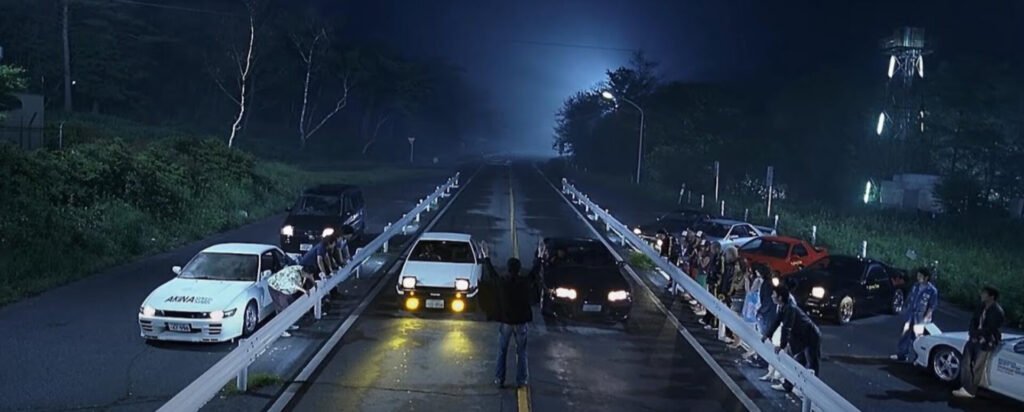
One of the reasons Initial D became so popular was its portrayal of touge racing, a form of mountain road racing in Japan.
The movie showcases various driving techniques, including:
- Weight transfer
- Braking drift
- Four-wheel drift
- Maintaining momentum through corners
Unlike racing movies that focus only on straight-line speed, Initial D highlights the battle between the driver, the character of the car, and the conditions of the road.
A Major Influence on Global JDM Culture
After its release in 2005, Initial D helped introduce Japanese automotive culture to a new generation of fans around the world.
The movie increased appreciation for legendary cars such as:
- Toyota AE86
- Mazda RX-7
- Nissan Silvia
- Nissan Skyline GT-R
- Mitsubishi Lancer Evolution
For many automotive enthusiasts, Initial D is not just a movie about racing. It is a story about the relationship between humans and machines, and how an ordinary car can become a legend in the hands of the right driver.
Initial D (2005) remains one of the most influential automotive movies ever created. The film proved that the fastest car is not always the one with the most horsepower.
The Toyota AE86 driven by Takumi Fujiwara became a symbol that driver skill, understanding of the machine, and the courage to attack every corner can overcome raw engine power.
More than just a racing movie, Initial D is one of the works that helped transform JDM culture into a global automotive phenomenon.

Adhe is part of the 88 Eight Box Editorial Team, covering JDM culture, motorsport, automotive technology, and industry news. The team focuses on delivering original automotive stories, reviews, and insights for enthusiasts worldwide.