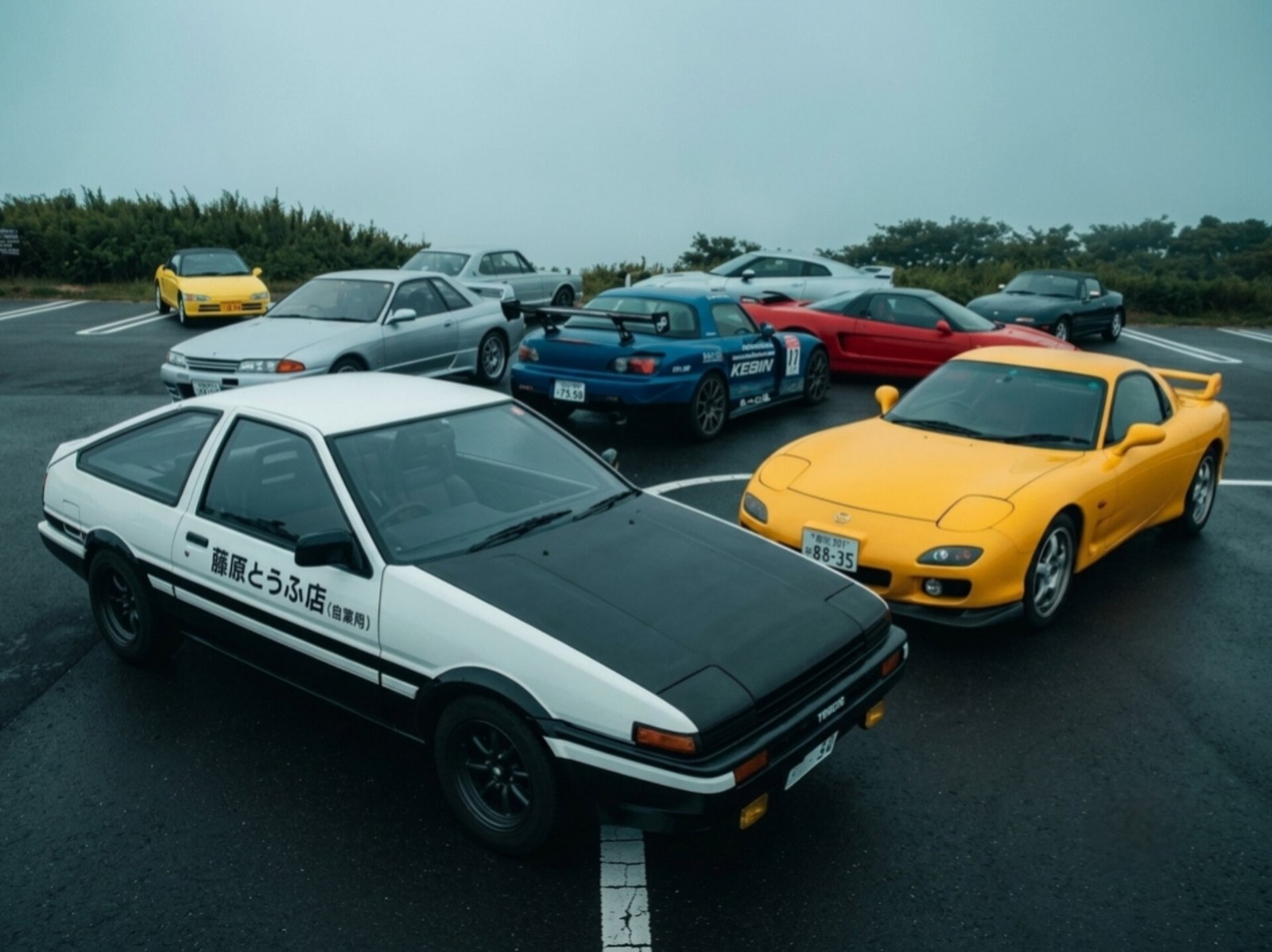
For decades, Japanese Domestic Market (JDM) cars were known as affordable performance machines that offered impressive technology, reliability, and tuning potential without the expensive price tags of European sports cars.
However, the automotive world has changed dramatically. Cars that were once considered affordable tuner vehicles are now becoming some of the most desirable collector cars in the world. Legendary models such as the Nissan Skyline GT-R R34, Toyota Supra MK4, Mazda RX-7 FD, Honda NSX, Mitsubishi Lancer Evolution, and Subaru Impreza WRX STI have experienced massive price increases, with some examples now reaching six-figure prices.
The question is, why have JDM cars become so expensive?
The answer comes from a combination of rarity, engineering excellence, cultural influence, and growing demand from collectors around the world.
The End of an Era: Japan’s Golden Age of Performance Cars
To understand why JDM cars became valuable, we have to look back at the 1990s—an era often considered the golden age of Japanese automotive engineering.
During this period, Japanese manufacturers were competing to create advanced performance cars that could challenge European brands while maintaining reliability and everyday usability.
Companies such as Nissan, Toyota, Honda, Mazda, Mitsubishi, and Subaru developed vehicles featuring:
- Advanced turbocharged engines,
- Lightweight chassis designs,
- Sophisticated suspension systems,
- Advanced all-wheel-drive technology,
- High-revving naturally aspirated engines,
- Motorsport-inspired engineering.
This period produced some of the most iconic Japanese cars ever built.
The goal was not only to create fast cars, but also machines that delivered a unique driving experience.
Limited Production Made Them Rare
One of the biggest factors behind rising JDM prices is limited availability.
Unlike modern mass-produced vehicles, many legendary JDM models were produced in relatively small numbers.
Over the years, many examples disappeared because of the following :
- Accidents,
- Racing use,
- Poor maintenance,
- Extreme modifications,
- Engine failures,
- Rust and aging problems.
As the number of original examples decreased, demand continued to grow.
For collectors, owning a rare and well-preserved JDM car became increasingly attractive.
A clean, original example is no longer just a used car—it is a piece of automotive history.
Nissan Skyline GT-R R34: The Ultimate JDM Icon
Few cars represent the JDM movement better than the Nissan Skyline GT-R R34.
Produced between 1999 and 2002, the R34 GT-R became famous for its combination of performance, technology, and motorsport heritage.
The car was powered by the legendary RB26DETT 2.6-liter twin-turbo inline-six engine, which gained a reputation for incredible strength and tuning capability.
The R34 also featured advanced technology for its era, including:
- ATTESA E-TS all-wheel-drive system,
- Super-HICAS four-wheel steering,
- Multi-function display showing engine and performance data.
Its popularity exploded after appearing in movies, video games, and racing culture.
Today, an original R34 GT-R in excellent condition can command extremely high prices, especially rare variants such as the V-Spec II Nür.
Toyota Supra MK4: The Legend of the 2JZ Engine
The Toyota Supra MK4 (A80) became one of the most famous Japanese performance cars ever created.
Produced from 1993 to 2002, the Supra gained worldwide recognition thanks to its powerful and durable 2JZ-GTE twin-turbo engine.
The 2JZ engine became legendary because it could handle enormous power upgrades with proper modifications.
Many enthusiasts have built Supra models producing hundreds or even over 1,000 horsepower.
Its appearance in popular culture, especially street racing movies and video games, turned the Supra into a global icon.
Today, original low-mileage Supra MK4 models are highly sought after by collectors.
Mazda RX-7 FD: Rotary Engineering at Its Finest
The Mazda RX-7 FD represents one of the most unique approaches to sports car engineering.
Instead of using a traditional piston engine, Mazda equipped the RX-7 with the 13B-REW twin-turbo rotary engine.
The RX-7 was praised for:
- Lightweight construction,
- Perfect balance,
- Sharp handling,
- High-revving engine character,
- Unique rotary sound.
However, maintaining rotary engines requires specialized knowledge, and many RX-7s were modified or neglected over the years.
As fewer clean examples remain, the value of original FD models has increased significantly.
Honda NSX: Japan’s Answer to Ferrari
The Honda NSX changed the perception of Japanese sports cars.
Introduced in 1990, the NSX was developed with input from Formula 1 legend Ayrton Senna during its testing phase.
Honda created a lightweight aluminum sports car that could compete with European supercars while offering greater reliability and everyday usability.
The NSX featured:
- Aluminum body construction,
- Mid-mounted V6 engine,
- High-revving VTEC technology,
- Precise handling characteristics.
Over time, collectors began appreciating the NSX as one of the most important Japanese supercars ever built.
The Fast & Furious Effect: How Movies Changed Everything
Popular culture played a massive role in increasing the value of JDM cars.
The success of The Fast and the Furious franchise introduced millions of people worldwide to Japanese performance cars.
The Toyota Supra MK4 driven by Brian O’Conner became one of the most recognizable movie cars in history.
Meanwhile, Nissan Skyline GT-R models gained legendary status among younger generations through films, video games, and internet culture.
These appearances created emotional connections between fans and the cars.
For many people, owning a JDM legend means owning a piece of automotive nostalgia.
The Import Market Increased Demand
Another major factor is international demand.
Countries such as the United States have strict import regulations. Under the 25-year import rule, many vehicles can only be legally imported after reaching a certain age.
As iconic Japanese cars became eligible for import, demand increased dramatically.
Collectors who had dreamed of owning these vehicles for decades finally had the opportunity to purchase them legally.
The result was a significant increase in prices.
Original Cars Became More Valuable Than Modified Ones
During the tuning boom, many JDM cars were heavily modified.
Owners upgraded:
- Turbochargers,
- Engines,
- Suspension systems,
- Exhaust systems,
- Body kits.
While these modifications created exciting performance machines, collectors today often prefer cars that remain close to factory specifications.
The most valuable examples usually have:
- Original engines,
- Factory paint,
- Complete service history,
- Low mileage,
- Original interior.
In the collector market, originality has become a major selling point.
JDM Cars Became Investment Assets
The modern collector market has changed the way people view JDM cars.
Previously, these vehicles were purchased mainly for driving and modification.
Today, many collectors see them as long-term investments.
Auction houses and private collectors around the world have increased interest in Japanese classics, pushing prices higher.
Cars that once cost tens of thousands of dollars can now be worth several times more depending on rarity and condition.
Why Modern Cars Cannot Fully Replace JDM Legends
Modern performance cars are faster, safer, and more technologically advanced.
However, many enthusiasts believe classic JDM cars provide something different:
- A stronger mechanical connection,
- More driver involvement,
- Unique engine character,
- Simpler driving experience,
- A direct connection between driver and machine.
These cars represent an era when engineering creativity was at its peak.
More Than Just Cars
The rising value of JDM cars is not caused by a single factor. It is the result of rarity, legendary engineering, motorsport influence, popular culture, nostalgia, and collector demand.
Cars like the Nissan Skyline GT-R R34, Toyota Supra MK4, Mazda RX-7 FD, and Honda NSX have transformed from affordable Japanese performance cars into global automotive treasures.
They are no longer simply vehicles built to be driven—they are symbols of an unforgettable era in automotive history.
For enthusiasts around the world, JDM represents more than speed. It represents passion, innovation, and the golden age of Japanese performance engineering.

Adhe is part of the 88 Eight Box Editorial Team, covering JDM culture, motorsport, automotive technology, and industry news. The team focuses on delivering original automotive stories, reviews, and insights for enthusiasts worldwide.