Used engine oil does not have to become environmental waste. Through specialized recycling processes, it can be transformed into fresh lubricating oil, industrial fuel, and other useful products. Here is how the process works and what drivers should do with their old oil.
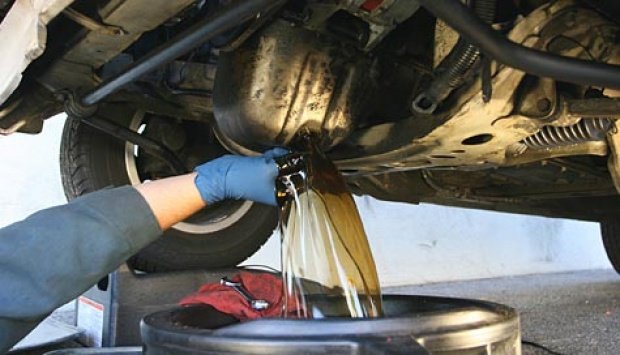
Every time a car or motorcycle gets an oil change, a small but important environmental challenge is created. The drained oil may look like nothing more than a few liters of black liquid, but it contains a mixture of degraded lubricants, microscopic metal particles, combustion byproducts, and other contaminants accumulated during normal engine operation.
Pouring it onto the ground, into a storm drain, or down a household sink can cause serious pollution. Fortunately, used engine oil can be collected and processed into valuable materials rather than simply discarded.
According to the U.S. Environmental Protection Agency (EPA), recycling used oil can reduce soil and water pollution while conserving petroleum resources. Depending on its condition and the technology available, the recovered oil can be re-refined into new lubricants or processed for other industrial applications.
So, how does used engine oil actually become a reusable product?
WHY USED ENGINE OIL NEEDS TO BE RECYCLED
Engine oil performs several essential jobs. It lubricates moving components, helps remove heat, carries contaminants toward the oil filter, and protects internal engine surfaces against wear and corrosion.
However, oil gradually deteriorates during use. High temperatures, oxidation, combustion byproducts, moisture, and metallic wear particles can change its chemical properties and reduce the effectiveness of its additives.
This is why simply filtering out visible dirt cannot restore used engine oil to its original performance.
Used oil can also contain hazardous substances and heavy metals. Because petroleum-based oil breaks down slowly and can persist in the environment, improper disposal may contaminate soil, waterways, and potentially drinking-water sources.
Recycling offers a better alternative by recovering useful oil fractions and separating them from contaminants. It also reduces the need to extract and process additional crude oil to manufacture lubricant base stocks.
HOW USED ENGINE OIL IS RECYCLED
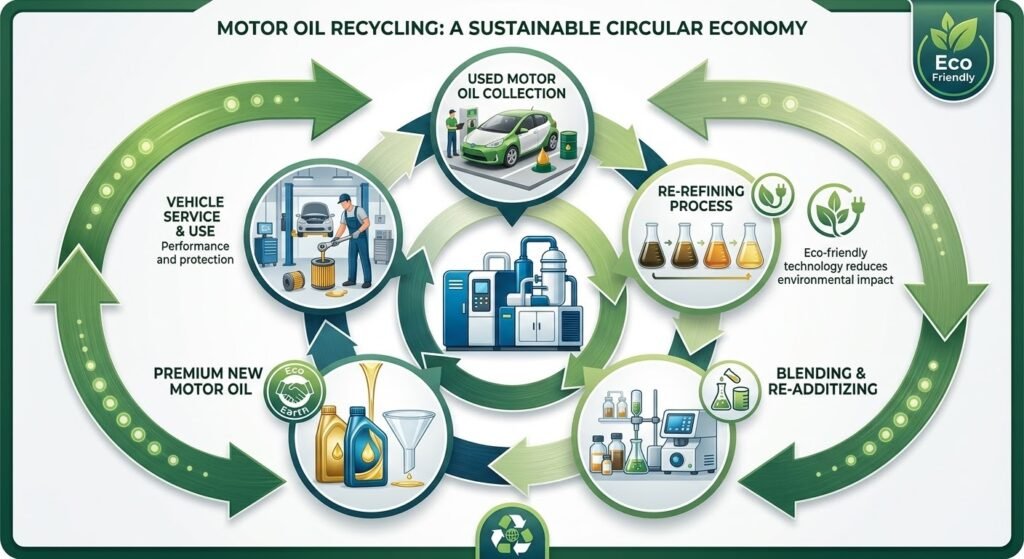
Industrial recycling facilities use different technologies depending on the incoming oil, the desired end product, and local regulations. When the objective is to produce new lubricating oil, the process generally involves several major stages.
1. COLLECTION AND INSPECTION
The process begins at vehicle service centers, workshops, fleet maintenance facilities, and other locations where used lubricants are generated.
The oil is collected in suitable containers or storage tanks and transported to an appropriate processing facility.
Before treatment, the incoming material is inspected to determine whether it is suitable for the intended recycling process. Oil contaminated with excessive water, coolant, cleaning solvents, fuels, or other chemicals may require special handling or may be unsuitable for conventional lubricant re-refining.
Keeping different waste streams separate at this stage is important because contamination can complicate processing, increase costs, and create additional hazardous residues.
2. SETTLING, FILTRATION, AND DEWATERING
Once accepted, the used oil undergoes preliminary treatment to remove some of the contaminants accumulated during its service life.
Large particles and settled sludge can be separated through screening, filtration, settling tanks, or mechanical equipment such as centrifuges.
Water is also removed. Some water separates naturally from the oil under suitable conditions, while emulsified water may require additional treatment.
This stage reduces the burden on the equipment used in subsequent refining operations. However, the resulting liquid is still not ready to be used as engine oil.
According to Australia’s Department of Climate Change, Energy, the Environment and Water, pre-treatment can include dewatering, filtration, and demineralization before the oil undergoes further processing.
3. REMOVING HEAVIER CONTAMINANTS
For re-refining, some facilities use additional separation techniques to remove asphaltic materials, heavier residues, and other unwanted compounds.
One possible technique is propane de-asphalting, which separates desirable lubricating-oil components from heavier contaminated material through differences in their solubility.
Not every recycling plant uses this method. The exact process depends on the facility’s design and the quality of the incoming oil.
The objective is to recover the useful lubricating-oil fraction while separating materials that could interfere with the quality of the final product.
4. VACUUM DISTILLATION
Vacuum distillation is one of the central stages in modern used-oil re-refining.
The pre-treated oil is heated and introduced into a distillation system operating at reduced pressure. Lower pressure allows oil fractions to vaporize at lower temperatures than they would under normal atmospheric pressure.
This helps separate lubricating-oil fractions according to their boiling characteristics while reducing the risk of unwanted thermal degradation.
Water and lighter compounds are generally removed earlier in the process, while vacuum distillation separates the oil into fractions that can be used to manufacture different base-oil grades.
Heavy material that does not vaporize remains as a residue and must be managed appropriately. Some recovered side streams may also have industrial uses, depending on their characteristics and applicable standards.
The result is a more refined base-oil stream, but further treatment is needed before it becomes a finished lubricant.
5. HYDROTREATING AND FINAL PURIFICATION
After distillation, many modern re-refining processes use hydrotreating or hydrofinishing.
In this stage, the oil reacts with hydrogen under controlled temperature and pressure in the presence of a catalyst. The process helps remove remaining chemical impurities, including certain sulfur- and nitrogen-containing compounds, and improves the stability and quality of the base oil.
Further separation and purification may be used to achieve the required specifications.
The result is re-refined base oil that can serve as a raw material for new lubricants. This is a major difference between industrial re-refining and simply draining, settling, or filtering old oil.
6. ADDITIVES, BLENDING, AND QUALITY TESTING
Base oil alone is generally not enough to make a finished automotive lubricant.
Manufacturers blend it with carefully selected additives to provide the necessary characteristics, such as wear protection, oxidation resistance, detergency, corrosion protection, and viscosity performance.
The finished formulation must then undergo quality control and meet the applicable performance specifications for its intended use.
Re-refined oil is not automatically suitable for every engine simply because it has passed through a recycling facility. Its suitability depends on the final product’s specifications and certifications.
The EPA explains that re-refined lubricating oils are subject to stringent refining, formulation, and performance standards comparable to those applied to lubricants made from virgin base stocks.
Drivers should therefore choose finished engine oil that meets the viscosity grade and performance requirements specified by their vehicle manufacturer.
WHAT HAPPENS IF USED OIL CANNOT BECOME ENGINE OIL AGAIN?
Re-refining is not the only possible destination for used lubricants.
Depending on the oil’s condition, the available facilities, and applicable environmental requirements, properly processed used oil may be used as an industrial burner fuel, incorporated into certain petroleum-related products, or directed toward other approved industrial applications.
For example, the Australian government’s used-oil recycling guidance identifies applications including industrial burner oil, bitumen-based products, and re-refined base oil for lubricants.
However, these routes are not identical in environmental value. Re-refining recovers material for use as a lubricant again, while energy recovery consumes the oil as fuel. Where technically feasible, keeping the material in a lubricant-recycling loop can preserve more of its original value.
The process also generates residues, sludge, contaminated filter media, and potentially wastewater. These materials do not disappear just because the oil has been recycled. They must be treated, recovered, or disposed of through appropriate channels.
CAN RECYCLED ENGINE OIL BE AS GOOD AS NEW OIL?
Yes, properly re-refined base oil can be used to manufacture high-quality lubricants. The key is the quality of the refining process and the finished product, not simply whether the oil originally came from crude petroleum or a recycling facility.
The California Department of Resources Recycling and Recovery (CalRecycle) explains that re-refined lubricants can meet the same stringent refining and performance standards as products made from virgin oil.
Testing for finished lubricants can include characteristics related to cold starting, pumpability, corrosion protection, engine wear, and viscosity at high temperatures.
Nevertheless, not every product marketed as recycled oil necessarily meets the requirements of every vehicle. Consumers should check the product label, the relevant industry specifications, and the owner’s manual before purchasing or using it.
HOW TO RECYCLE USED ENGINE OIL AT HOME
Drivers do not need industrial equipment to contribute to the recycling process. Their most important responsibility is to collect used oil safely and get it to the appropriate destination.
First, collect the oil in a clean, leak-proof container. A suitable container with a secure lid helps prevent spills during storage and transport. Avoid using containers that may leak or that are intended for unrelated chemicals.
Second, keep the oil separate from other fluids. Never deliberately mix it with coolant, brake cleaner, solvents, gasoline, or other waste chemicals. Such contamination can make recycling more difficult and may require different treatment.
Third, store it safely. Keep the container closed, upright, protected from rain, and away from children, pets, drains, and sources of ignition. Clean up spills promptly using appropriate materials, and do not wash the oil into a drain.
Fourth, contact a vehicle workshop or an appropriate waste collection service. Ask whether it accepts used engine oil and where the material will be sent. Availability varies by location, so confirm the collection arrangements before transporting the oil.
Finally, remember the oil filter. Used oil filters retain residual lubricant and may contain reusable metal. Many collection programs accept them separately after suitable draining. Follow the receiving facility’s instructions rather than automatically placing them in ordinary household rubbish.
The EPA recommends checking with automotive maintenance facilities, waste collectors, and local waste-management authorities to find suitable recycling locations.
Importantly, do not attempt to manufacture new engine oil by heating or chemically treating used oil at home. Industrial re-refining requires specialized equipment, controlled operating conditions, pollution controls, and testing to manage both the recovered product and the hazardous residues.
USED OIL IS A RESOURCE WORTH RECOVERING
Recycling used engine oil is more complicated than filtering dirty liquid. Turning it into a lubricant requires separation, purification, refining, formulation, and quality testing. Other recycling routes also require appropriate treatment and environmental safeguards.
When handled correctly, the process helps recover valuable petroleum resources, reduce the volume of oil entering the environment, and create useful products from material that would otherwise be wasted.
For everyday drivers, the solution is straightforward: collect used oil carefully, keep it separate from other waste fluids, and make sure it reaches an appropriate collection or recycling facility.
A responsible oil change should not end when the drain plug is tightened. It should also include making sure the old oil has a safe destination.
What do you usually do with used engine oil after an oil change? Share your experience in the comments.

Adhe is part of the 88 Eight Box Editorial Team, covering JDM culture, motorsport, automotive technology, and industry news. The team focuses on delivering original automotive stories, reviews, and insights for enthusiasts worldwide.