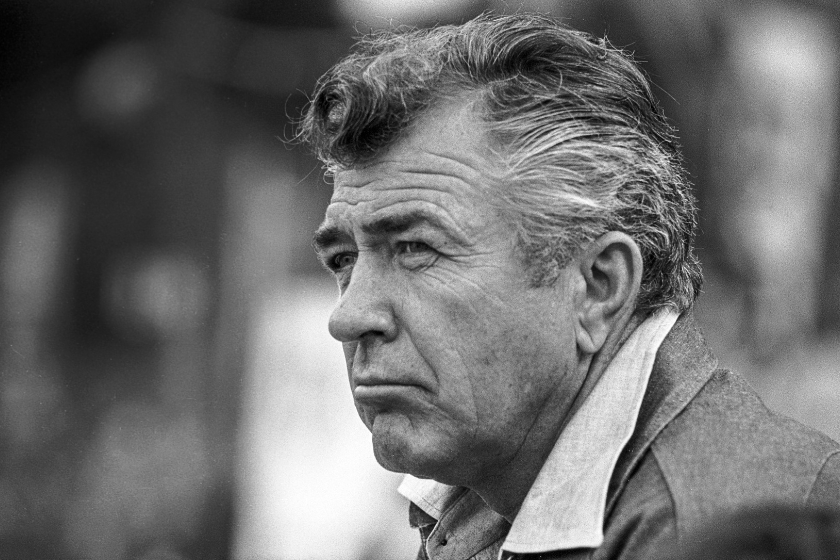
Carroll Shelby was more than just a racing driver. He was a visionary, engineer, entrepreneur, and the man who helped change the direction of the global automotive industry.
From a small-town boy in Texas to the man who helped America defeat Ferrari on the biggest stage in motorsport, Shelby’s journey remains one of the most incredible stories in automotive history.
His name lives on through legendary machines such as the Shelby Cobra, the Ford GT40, and the historic victory over Ferrari at the 24 Hours of Le Mans.
But before becoming a legend, Shelby had to overcome countless challenges.
A Childhood Built Around Speed
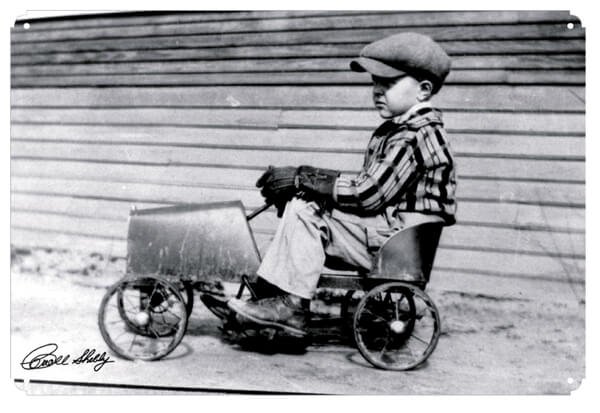
Carroll Hall Shelby was born on January 11, 1923, in Leesburg, Texas, a small town far away from America’s automotive centers.
He was the son of a postal delivery driver. From a young age, Shelby often joined his father while delivering letters and packages from one place to another. Those experiences introduced him to vehicles, roads, and the fascination of machines.
His father also took him to watch dirt-track racing events that became popular during the 1930s. The sound of engines, the smell of fuel, and the excitement of competition immediately captured Shelby’s imagination.
Remarkably, Shelby already had a driver’s license at the age of 14. That same year, he received his first driving lesson the hard way after taking his father’s Ford and driving it at excessive speed on public roads.
Shelby grew up during one of America’s most difficult periods, the Great Depression. As he entered adulthood, another major challenge arrived: World War II.
From Combat Pilot to Racing Driver
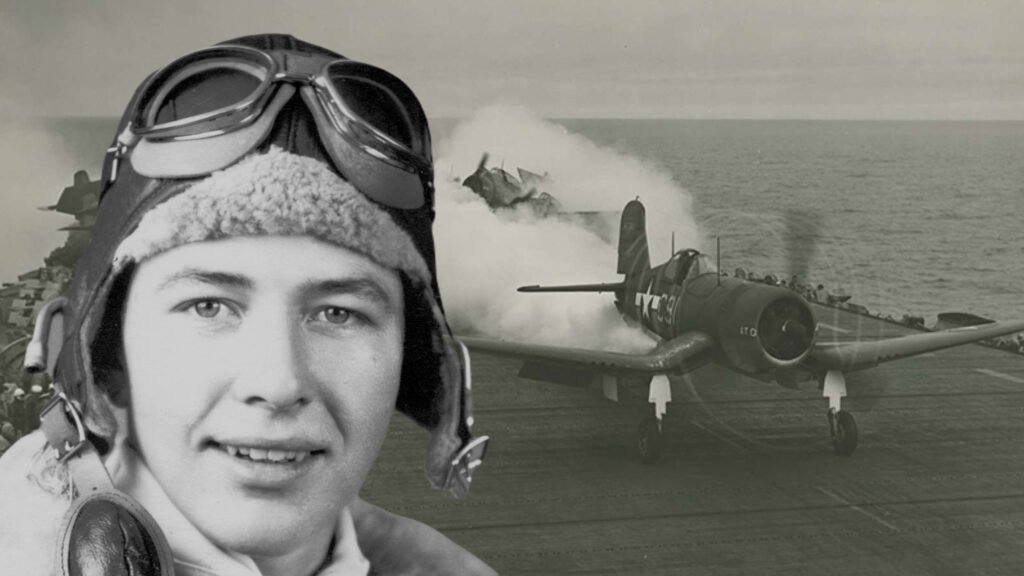
After graduating from high school, Shelby joined the military because he wanted to fight against Nazi Germany. He entered the United States Army Air Forces and successfully became a fighter pilot.
His experience flying fast aircraft only increased his passion for speed and performance.
After the war ended, Shelby married his high school sweetheart. However, civilian life was not easy. He had to search for work and find a way to support his family.
His passion for speed eventually led him into motorsport.
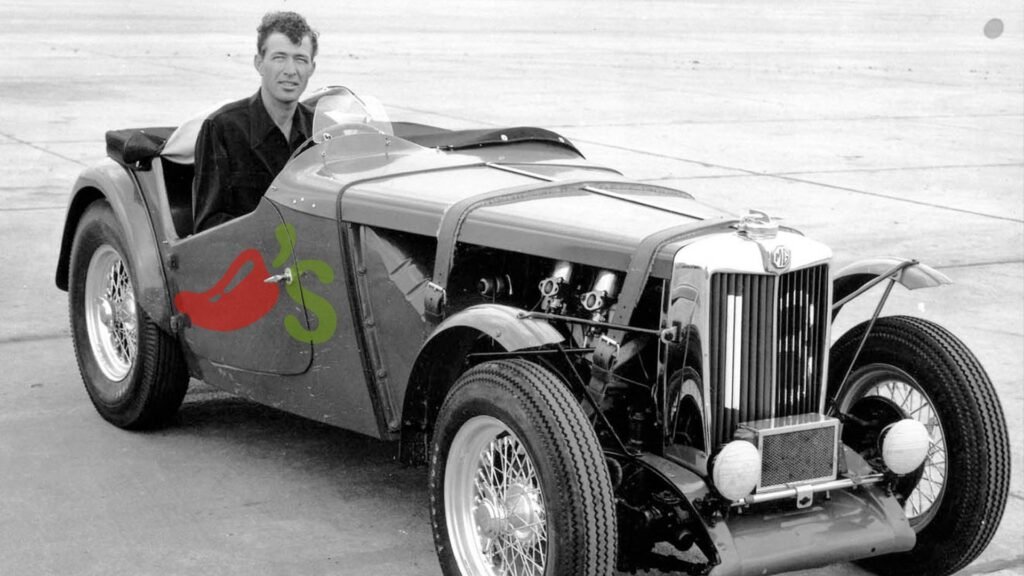
Shelby began racing with an MG sports car built by a friend. In a race in Oklahoma, he immediately showed his natural talent by taking victory.
His next major car was a Jaguar, and once again he won.
However, racing in America during that era was far from glamorous. Prize money was small, and Shelby still needed his chicken farming business to support his family.
As his reputation grew, wealthy owners began asking Shelby to drive their race cars.
His racing career was rising, and his business was also successful.
Then disaster struck.
A Newcastle disease outbreak destroyed his chicken farm, killing around 20,000 birds. The business that had once brought him significant profits collapsed almost overnight.
With few opportunities available, Shelby decided to dedicate himself completely to racing.
Becoming a World-Class Racer
In 1953, Shelby entered nine competitions and won five of them. He also achieved two runner-up finishes.
But being a racing driver in America during the 1950s was not a guaranteed path to wealth.
At one point, Shelby even returned home with a prize consisting of half a truckload of canned soybeans, which later became food for his family.
His determination eventually paid off.
His incredible performances attracted the attention of Aston Martin, and Shelby became a factory driver for the British manufacturer.
One of the most dangerous moments of his career came during the Carrera Panamericana in Mexico, one of the toughest and most dangerous races of its time.
During the event, Shelby’s car crashed after losing control under heavy braking. He was thrown from the vehicle and suffered serious injuries, including a broken elbow.
In the 1950s, motorsport was extremely dangerous. Many drivers lost their lives every year.
But Shelby refused to quit.
With his arm still in a cast, he returned to racing at Riverside. His injured arm was even strapped to his body so he could continue controlling the car.
Against all expectations, Shelby won the race.
The Rivalry With Ferrari
While becoming a successful driver, Shelby also began studying how performance cars were built.
He visited Ferrari’s factory as a customer, but he felt that Enzo Ferrari did not treat him with respect. Shelby believed he was viewed as nothing more than an ordinary buyer.
That experience stayed with him.
He made a promise: one day, he would defeat Ferrari.
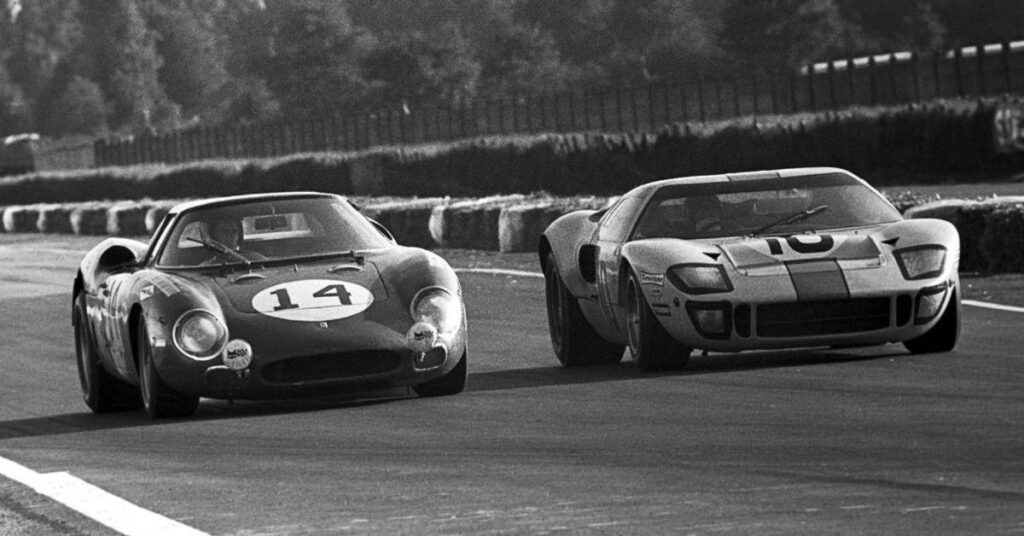
That opportunity arrived in 1959 at the 24 Hours of Le Mans.
Driving for Aston Martin, Shelby competed against Ferrari in the world’s most prestigious endurance race.
With eight hours remaining, Shelby was still several laps behind Ferrari.
Then his heart condition returned while he was driving.
Despite the pain, Shelby continued racing with the help of nitroglycerin pills placed under his tongue.
Ferrari had pushed its cars extremely hard from the beginning, and eventually mechanical problems began to appear.
Aston Martin closed the gap.
In the end, Aston Martin won Le Mans, giving Shelby one of the greatest achievements of his racing career.
However, his worsening heart condition forced him to retire from professional racing.
Doctors even warned that he might not have many years left.
But Shelby was not finished.
He was about to begin the most important chapter of his life.
The Birth of the Shelby Cobra
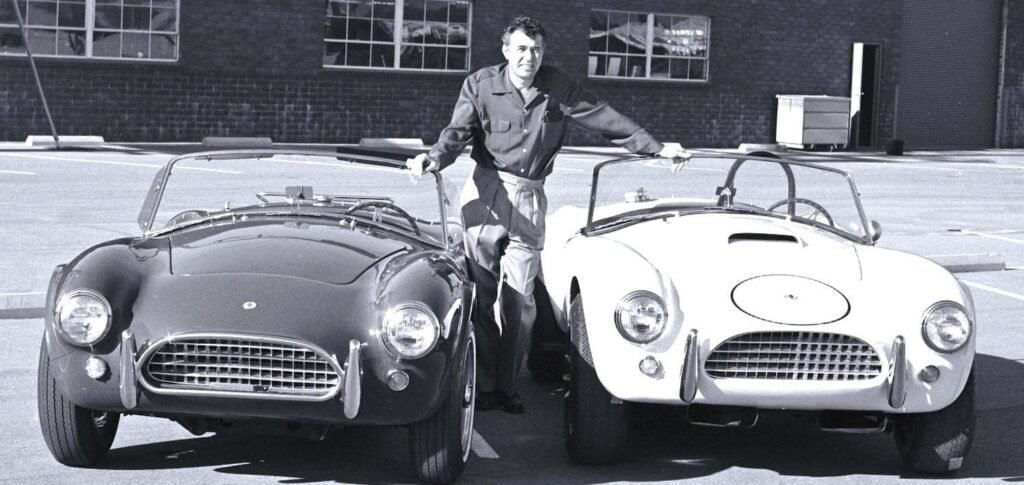
After losing his racing career, facing health problems, and struggling financially, Shelby had one dream: to build his own sports car.
His target was clear: defeat the Chevrolet Corvette.
The biggest problem was money.
But Shelby possessed something equally valuable: the ability to convince people.
He approached AC Cars in Britain with an idea to combine their lightweight chassis with a powerful American engine.
Then he visited Ford Motor Company and successfully convinced them to supply a V8 engine.
In 1962, the combination of British chassis engineering and American V8 power created a legendary machine: the Shelby Cobra.
The car immediately attracted attention.
Lightweight, aggressive, and brutally powerful, the Cobra proved that American performance cars could challenge European sports cars.
Shelby later established Shelby American in California and recruited some of the best engineers in the business, including Phil Remington, who played a major role in developing Shelby’s legendary cars.
Cobra vs Corvette
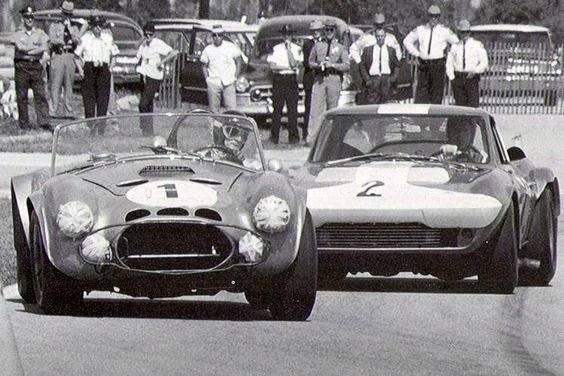
Shelby knew the Cobra needed to defeat Corvette directly to prove itself.
The first major battle came at Riverside in 1962.
Many people doubted that Cobra could compete against the established Corvette.
But from the beginning of the race, Shelby’s creation immediately moved to the front.
Although Corvette eventually won after Cobra suffered mechanical problems, everyone realized that Shelby had created something special.
Soon after, Cobra began winning major races and became one of America’s most iconic racing machines.
Ford GT40 and the Mission to Defeat Ferrari
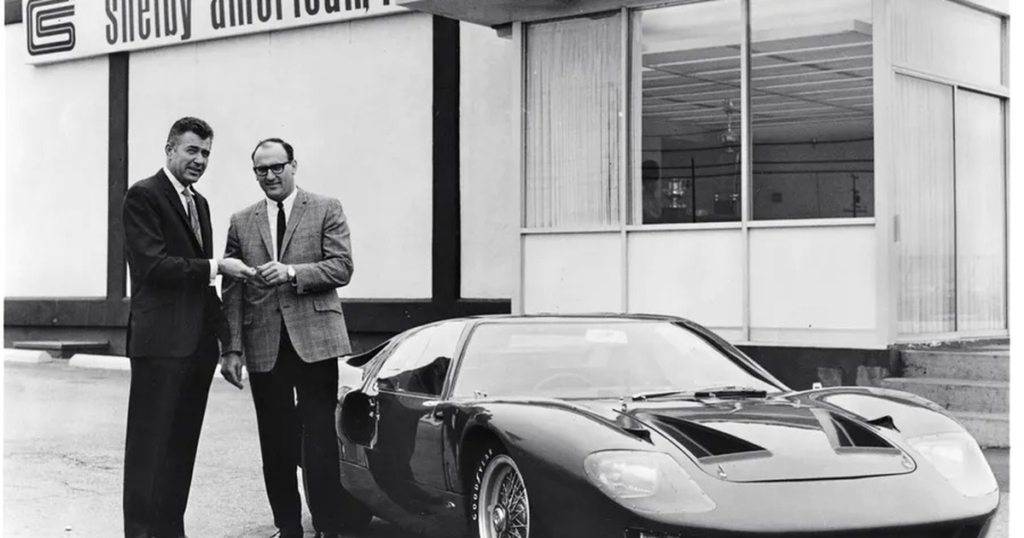
Shelby’s success caught the attention of Henry Ford II.
At the time, Ford had one huge ambition: defeat Ferrari at Le Mans.
Ford had previously attempted to buy Ferrari, but the deal collapsed after Ferrari chose to work with Fiat instead.
Angered by the failure, Henry Ford II launched an unlimited-budget project to create a racing car capable of destroying Ferrari’s dominance.
That project became the Ford GT40.
Shelby was recruited to help develop the car.
His main focus was improving reliability, especially solving the overheating problems that had damaged the GT40’s early performances.
By 1965, the GT40 began showing its potential by winning at Daytona and Sebring.
But Le Mans remained unfinished business.
Ford failed again, but Shelby refused to give up.
Ford’s Historic Victory at Le Mans
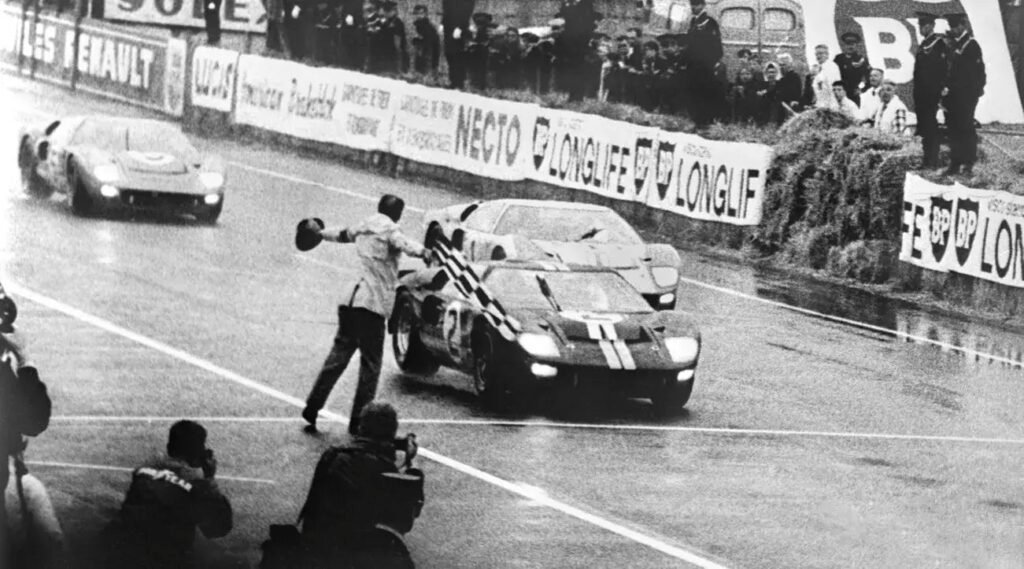
In 1966, the Ford GT40 finally reached its peak.
After dominating Daytona and Sebring, Ford arrived at Le Mans ready for revenge against Ferrari.
Three Ford cars survived until the end of the race.
A dramatic moment came when Henry Ford II ordered his drivers to finish together.
However, racing officials calculated the finishing order based on distance covered from the starting position. As a result, Bruce McLaren was declared the winner instead of Ken Miles, who crossed the finish line ahead.
Despite the controversy, Ford had achieved the impossible.
Ferrari’s dominance was finally broken.
Shelby had fulfilled his promise.
He defeated Ferrari not with words, but through engineering and determination.
Carroll Shelby’s Legacy
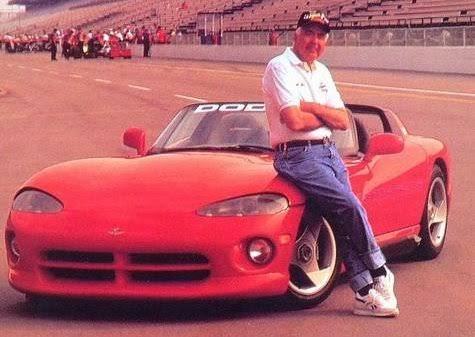
After the Ford program ended, Shelby continued working in the automotive world.
In the 1990s, he helped Chrysler develop the Dodge Viper, a modern interpretation of the same philosophy behind the Cobra: a lightweight body combined with a powerful engine.
Ford later reunited with Shelby through modern Shelby Mustang projects.
Carroll Shelby passed away on May 10, 2012.
He left behind a legacy far greater than just fast cars.
Shelby proved that innovation, courage, and determination could change history.
Carroll Shelby remains one of the most influential figures in automotive history because he did not simply build cars — he created legends.
What makes Shelby unique is his ability to turn failure into motivation. He experienced bankruptcy, serious injuries, heart problems, and countless setbacks, yet he continued moving forward.
The Shelby Cobra and Ford GT40 were not just machines. They represented rebellion, ambition, and the belief that impossible goals could become reality.
Shelby’s story also proves that the automotive world is not only about technology. It is about the people behind the machines.
Without Shelby’s vision and determination, racing history might have been completely different.
Carroll Shelby was not just a car builder.
He was a symbol of courage, passion, and the endless pursuit of greatness.
What do you think?
Was Carroll Shelby the most influential figure in American automotive history?
Which creation do you consider more iconic: the Shelby Cobra or the Ford GT40?
Was Ford’s victory over Ferrari at Le Mans 1966 the greatest moment in racing history?
Share your thoughts in the comments below. We would love to hear your opinion about Carroll Shelby’s incredible legacy.

Adhe is part of the 88 Eight Box Editorial Team, covering JDM culture, motorsport, automotive technology, and industry news. The team focuses on delivering original automotive stories, reviews, and insights for enthusiasts worldwide.