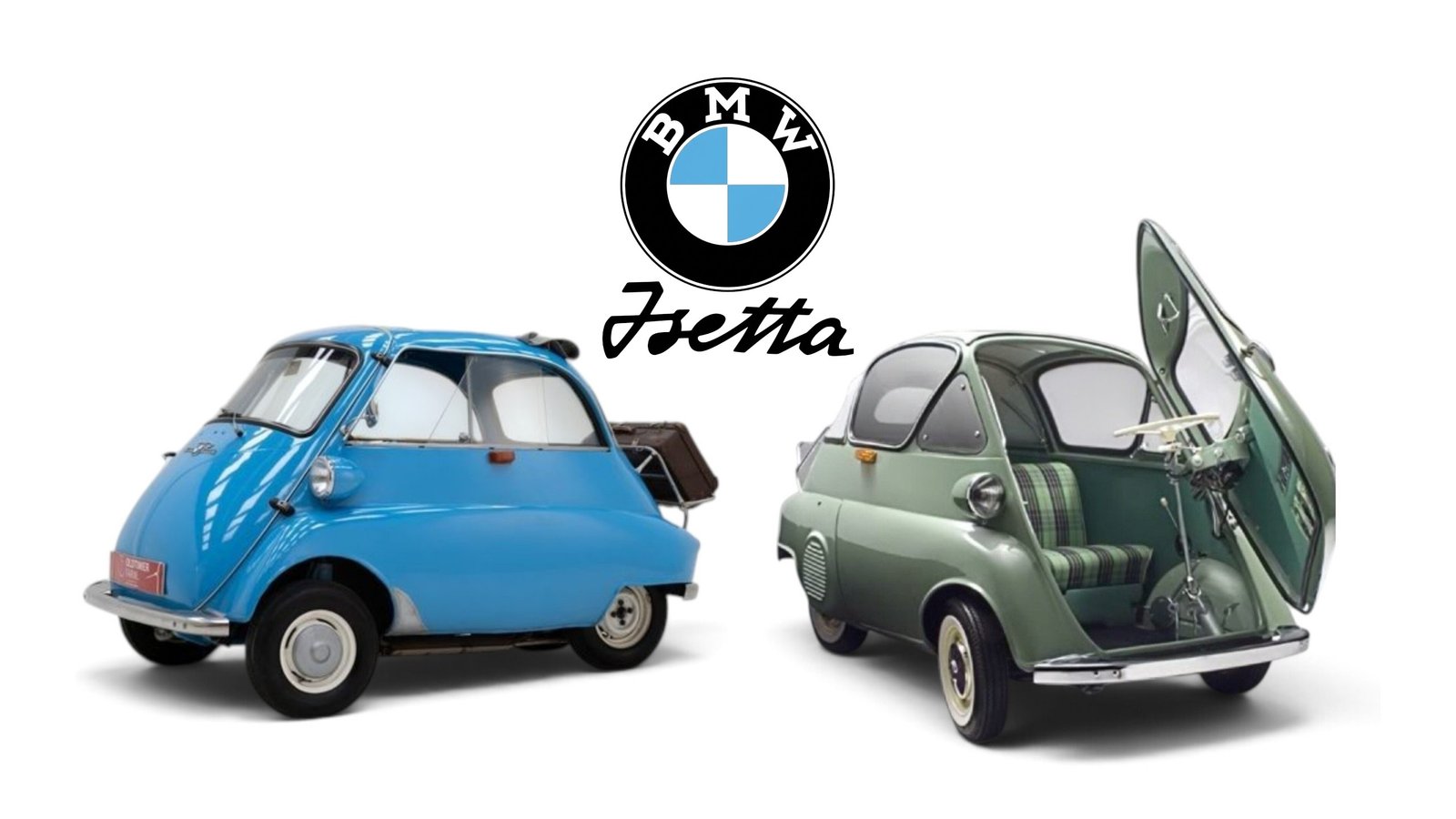
Today, BMW is known worldwide as a symbol of luxury, performance, and engineering excellence. The German automaker is famous for powerful engines, premium sedans, and cutting-edge technology.
But decades ago, BMW was fighting for survival. Surprisingly, the vehicle that helped save the company was not a high-performance sports car or a luxurious grand tourer. It was a tiny, unusual-looking vehicle with a front-opening door: the legendary BMW Isetta.
Often called a bubble car, the Isetta became much more than just a small city car. It was a financial lifeline for BMW after World War II and later became part of one of the most dramatic stories of the Cold War.
Born in Italy, Not Germany
Although the Isetta carries the BMW badge, the original idea did not come from Munich. The small car was first created by Italian manufacturer Iso SpA, a company owned by Renzo Rivolta.
In the early 1950s, Europe was still recovering from the destruction of World War II. Many people needed affordable transportation that was economical, practical, and easy to maintain.
Iso developed a small vehicle called Isetta, meaning “little Iso.” The concept was simple: combine the fuel efficiency of a scooter with the comfort and protection of a small car.
Its most distinctive feature was its unusual front entrance. Instead of traditional side doors, the entire front section of the vehicle opened forward, allowing passengers to step directly into the cabin.
The design was strange, but it perfectly matched the needs of post-war Europe.
BMW Found a Lifeline During a Financial Crisis
By the mid-1950s, BMW was facing a serious financial crisis. The company’s expensive models, such as the BMW 501 luxury sedan and the BMW 507 sports car, were costly to build and attracted only a limited number of buyers.
BMW needed a vehicle that could generate sales quickly and appeal to everyday customers.
After seeing the Iso Isetta at the 1954 Geneva Motor Show, BMW executives recognized its potential. The company purchased the production rights, tooling, and license from Iso SpA.
However, BMW did not simply put its badge on the Italian car. The engineers from Munich redesigned many technical aspects to improve reliability and performance.
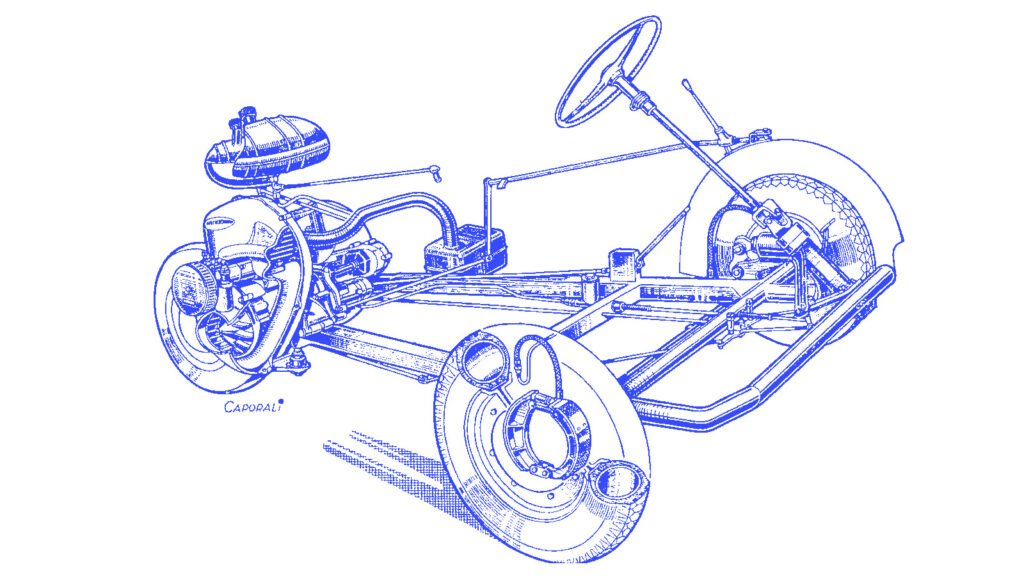
The original two-stroke engine was replaced with a 247 cc single-cylinder four-stroke engine borrowed from the BMW R25/3 motorcycle. BMW also improved the suspension and chassis components to create a more refined driving experience.
In April 1955, the BMW Isetta 250 officially entered production.
The Tiny Car That Kept BMW Alive
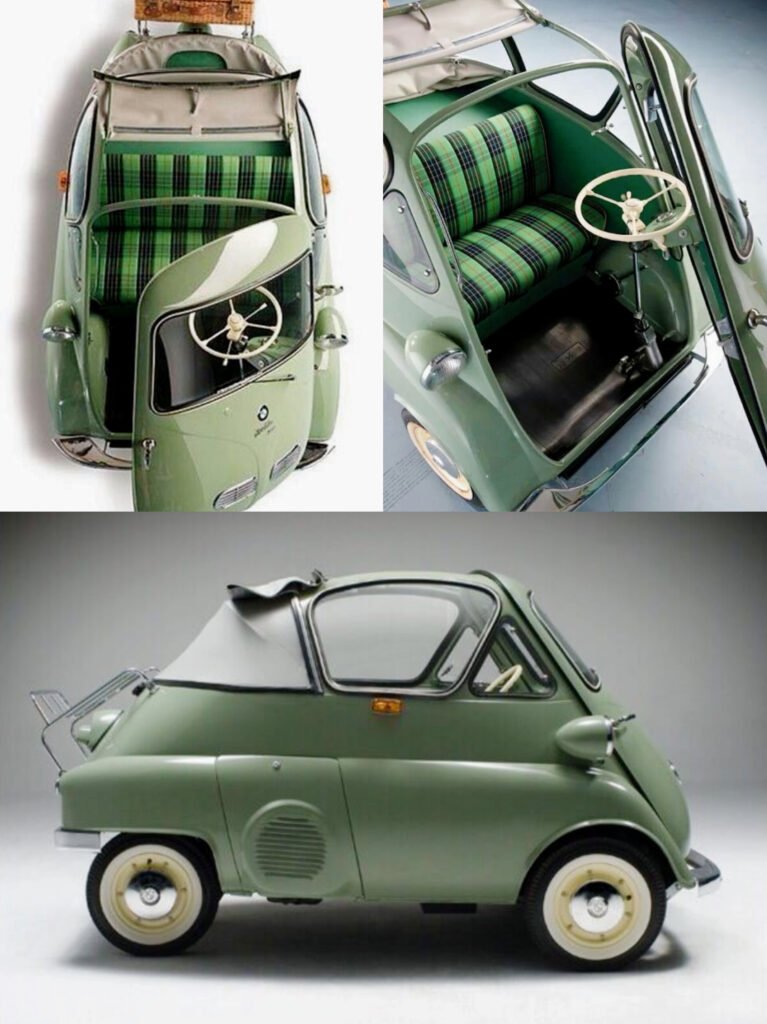
The BMW Isetta quickly became a success. Its compact size made it perfect for narrow European streets, while its extremely low fuel consumption made it attractive during an era when affordability was a major concern.
The BMW Isetta 250 produced around 12 horsepower from its 247 cc engine. While the performance was modest, speed was never its purpose. The Isetta was designed for efficiency, simplicity, and affordable mobility.
In 1956, BMW introduced the Isetta 300, featuring a larger 298 cc engine producing around 13 horsepower. This version also received improvements, including sliding side windows.
BMW later expanded the concept with the BMW 600 in 1957. Unlike the original Isetta, the BMW 600 featured a longer wheelbase, four seats, and an additional side door for rear passengers, making it more practical for families.
By the end of production in 1962, BMW had sold more than 161,000 units of the Isetta. The profits from this small car provided crucial financial support that helped BMW recover and fund future projects, including the legendary Neue Klasse range that introduced the BMW 1500 and laid the foundation for BMW’s modern success.
The BMW Isetta’s Cold War Escape Story
Beyond saving BMW financially, the Isetta also became part of an incredible chapter in Cold War history.
After the Berlin Wall was built in 1961, separating East and West Berlin, many East German citizens searched for creative ways to escape to freedom.
One of the most famous escape stories involved a modified BMW Isetta 300 owned by Klaus-Günter Jacobi.
Jacobi secretly transformed the tiny car by creating a hidden compartment behind the driver’s seat. He reduced the fuel tank size and modified the rear area to create enough space for a person to hide.
In May 1964, the modified Isetta successfully carried Jacobi’s friend, Manfred Koster, from East Berlin into West Berlin without being discovered by border guards.
The idea seemed almost impossible hiding a person inside one of the smallest cars ever built, but it worked.
The BMW Isetta later became known as an unlikely escape vehicle, helping at least nine people cross from East Germany to the West through similar modifications.
This tiny bubble car proved that a vehicle does not need a powerful engine or luxury features to change automotive history. The BMW Isetta was not just a microcar — it was a symbol of innovation, survival, and creativity.
In many ways, the Isetta represents one of BMW’s most important chapters. A car that looked too small to make a difference ended up playing a massive role in keeping one of the world’s most famous automotive brands alive.
What do you think? Does the BMW Isetta deserve to be called one of the most important cars in BMW history? Share your thoughts in the comments below.
BMW Isetta Specifications
| Category | Specification |
|---|---|
| Engine | Single-cylinder 4-stroke, air-cooled |
| Displacement | 298 cc |
| Maximum Power | 13 hp @ 5,800 rpm |
| Maximum Torque | 18.4 Nm @ 4,600 rpm |
| Transmission | 4-speed manual |
| Drivetrain | Rear-Wheel Drive (RWD) |
| Top Speed | 85 km/h |
| Cruising Speed | Around 74 km/h |
| Fuel Tank Capacity | 13 liters |
| Fuel Economy | Around 3 liters/100 km (approximately 33 km/l) |
| Curb Weight | 350 kg |
| Dimensions (L x W x H) | 2,285 mm x 1,380 mm x 1,340 mm |
| Wheelbase | 1,500 mm |
| Seating Capacity | 2 occupants |
Why the BMW Isetta Still Matters Today
Looking at the BMW lineup today, it is almost impossible to imagine a small car like the Isetta carrying the future of the company. However, its importance goes far beyond performance numbers or luxury features.
The Isetta represents BMW’s ability to adapt during difficult times. It showed that innovation does not always come in the form of bigger engines, faster speeds, or expensive technology. Sometimes, the right idea at the right moment can completely change a company’s future.
The BMW Isetta may look strange, slow, and completely different from the image BMW has built today. But that is exactly what makes it special.
This little “fridge on wheels” is a reminder that automotive legends are not always created by horsepower or racing victories. Some are born from necessity, creativity, and the courage to try something different.
Without the Isetta, the BMW story might have taken a very different direction. It was not just a small car, it was a symbol of survival.
What do you think? Should the BMW Isetta be considered one of the most important cars in BMW history, or is it simply a quirky classic that became famous because of its unusual design?
Share your comments.

Adhe is part of the 88 Eight Box Editorial Team, covering JDM culture, motorsport, automotive technology, and industry news. The team focuses on delivering original automotive stories, reviews, and insights for enthusiasts worldwide.