Being beaten by McLaren once again has started to put Mercedes under pressure. The rival team appears to have finally found the formula to challenge and even defeat the W17, a car that looked almost untouchable earlier in the season.
Mercedes has only managed to win two of the last six races. Two of those victories were taken away from them by Lando Norris and McLaren, with both wins coming purely through performance rather than luck at the Hungarian and Dutch Grands Prix. This situation is very different from Ferrari’s victories in Barcelona and Britain, where fortunate circumstances played a bigger role.
McLaren’s wins are far more concerning for Mercedes because they came from a car that looked genuinely stronger. At the Dutch Grand Prix, Norris was able to take advantage after Kimi Antonelli suffered a late-race issue, with the final lap becoming a major warning sign for Mercedes that their rivals are closing the gap.
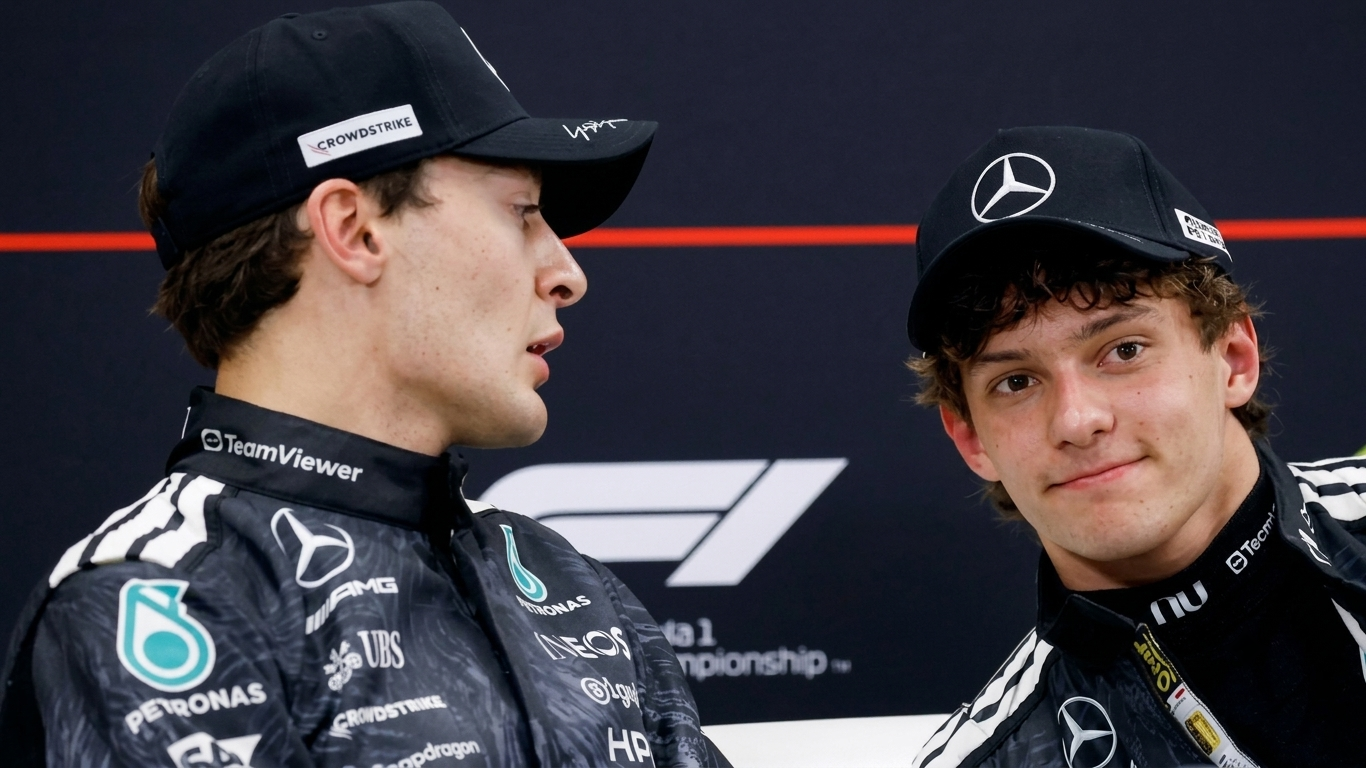
Antonelli himself admitted that the W17 is no longer the fastest car on the grid. The young Mercedes driver believes McLaren has now moved ahead thanks to a series of aggressive upgrades introduced throughout the season.
The development of the MCL40 has been one of the biggest factors behind McLaren’s improvement. After introducing major changes to the floor and bodywork package at the Hungarian Grand Prix, McLaren continued its development program with another aerodynamic upgrade in the Netherlands.
The latest package was still focused on increasing downforce while improving airflow efficiency around the rear of the car. McLaren revised areas around the rear bodywork and introduced a unique winglet design featuring three upwash elements to improve rear-wing efficiency.
The result was a significant increase in downforce without creating excessive drag on the straights. The Dutch Grand Prix upgrade complemented the Hungarian package, which mainly focused on extracting more performance from the underfloor area.
With both upgrades combined, McLaren hoped the MCL40 would become more stable through high-speed corners, an area where the team has been particularly strong this season.
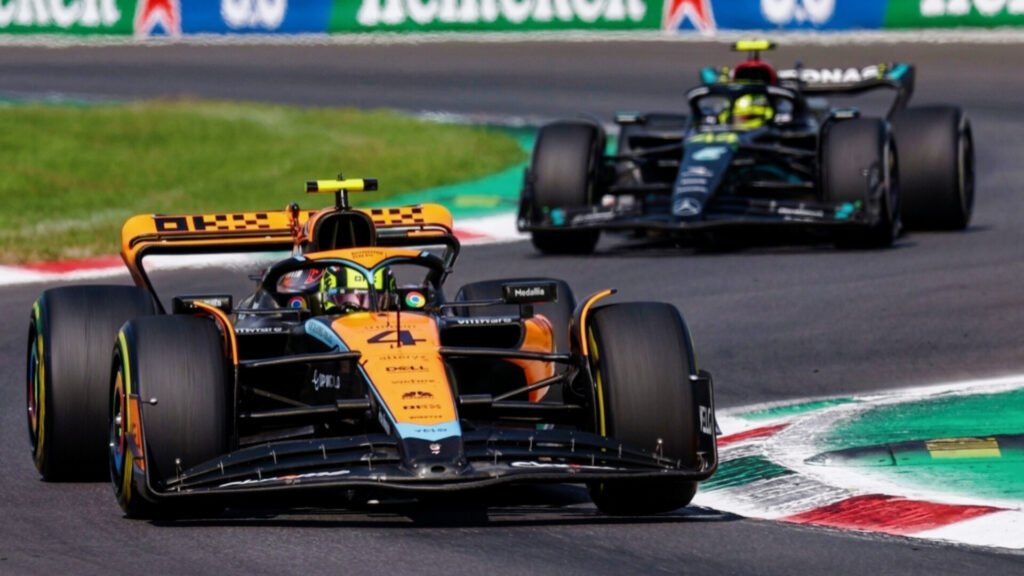
One of McLaren’s biggest advantages is its well-planned development strategy. Almost every upgrade introduced by the team has delivered a positive impact on performance.
This is different from Ferrari, which has frequently brought new components but has not always seen a clear improvement from one race to another.
This development efficiency is one of the reasons Mercedes has started to come under threat. So far, Mercedes has introduced only one major upgrade package for the W17, while McLaren has already delivered three significant updates in Miami, Hungary, and the Netherlands.
At first glance, fewer upgrades should mean Mercedes has more remaining budget cap space. However, Mercedes team principal Toto Wolff revealed that the team no longer has enough financial flexibility to accelerate the development of the W17.
Mercedes cannot simply copy Ferrari’s aggressive upgrade approach. According to Wolff, teams plan their budget allocation throughout the season and upgrades must be introduced at the right moment to maximize championship points rather than as an emotional reaction to rivals.
Mercedes has chosen a more conservative development strategy. The team calculated when upgrades would provide the biggest return instead of spending aggressively throughout the season.
However, the question remains: how can Mercedes be running out of budget when they have introduced fewer upgrades than their rivals?
The answer is that the number of upgrades does not always represent the amount of money spent. Every component has different development costs, and some parts are far more expensive than others.
Red Bull, for example, has become one of the biggest spenders this season because they redesigned expensive components such as the sidepods and floor multiple times. Ferrari, despite introducing more upgrades, has been able to control costs because most of its changes are detailed refinements to an already strong base car.
In Mercedes’ case, there is speculation that the team spent a large portion of its budget early in the season to create a dominant W17. The original plan may have been to establish such a strong advantage that fewer upgrades would be needed later, allowing the team to focus resources on the 2027 car.
However, reliability problems during the middle of the season and McLaren’s rapid progress changed the situation. Mercedes is now facing a closer fight while having limited resources left to further improve the W17.
Toto Wolff rejected suggestions that Mercedes had managed its budget poorly. He insisted that the team’s performance comes from its strong organization and facilities, allowing them to operate efficiently within the budget cap.
However, another possibility is that Mercedes is playing a longer-term financial strategy.
Starting in 2027, Formula 1’s budget cap regulations will change. Due to inflation adjustments, the cost cap will increase to around $215 million per season. In addition, power unit regulations will introduce a separate allowance of up to around $90 million per year.
The FIA has also provided an additional $6 million allowance because of potential chassis changes caused by future engine regulation adjustments. That extra allowance will be divided into two stages: $3 million between 2026 and 2027, and another $3 million between 2027 and 2028.
From 2027, teams will also be allowed to carry over up to $2 million of unused budget from the previous season.
Mercedes could be viewing these changes as a long-term opportunity. Instead of spending heavily to fight McLaren in 2026, they may prefer to preserve financial flexibility and gain a larger development advantage for the 2027 and 2028 seasons.
In other words, Mercedes may not actually be out of money. They may simply be managing their resources based on a bigger strategic plan.
This is also why McLaren team principal Andrea Stella appeared skeptical when hearing Wolff’s comments. Stella understands that future budget cap flexibility could become a major advantage for teams that manage their finances carefully.
However, Mercedes is not completely stopping development of the W17. The team has already confirmed that Kimi Antonelli will receive a new power unit at the Italian Grand Prix. Although the upgrade will result in a grid penalty, Monza’s long straights should allow Mercedes to maximize the strength of its engine performance.
Bradley Lord, a Mercedes representative, also confirmed that the team has prepared several new components for the second half of the 2026 season. However, the development process will be more carefully controlled because of the budget limitations.
For now, Mercedes remains in a strong position. Although they have lost twice to McLaren recently, those defeats came at circuits that perfectly suited the characteristics of the MCL40.
The upcoming races could favor Mercedes again, especially tracks with long straights and slower corners.
The strengths and weaknesses of both cars are almost opposite. McLaren excels in high-speed corners but struggles more on straights and slow-speed sections. Those weaknesses are exactly where Mercedes has been strongest this season.
Because of that, it is still too early to say McLaren can maintain this momentum until the end of the year. For Norris and McLaren, the realistic target is to keep applying pressure, challenge Mercedes consistently, and potentially overtake Ferrari for second place in the constructors’ championship.
But one thing is already clear: McLaren is no longer just a challenger. They have become a serious threat to Mercedes.
Mercedes is not facing a crisis yet, but McLaren’s rapid development should be taken as a serious warning. The W17 is still a strong package, but Formula 1 can change quickly when a rival team finds the right development direction. Mercedes’ decision to save resources for the future could be a smart long-term move, but it also carries the risk of allowing McLaren to build too much momentum.
What do you think? Is Mercedes making the right decision by protecting its budget for the future, or should they spend more now to fight McLaren and defend their position? Share your thoughts in the comments below.

Adhe is part of the 88 Eight Box Editorial Team, covering JDM culture, motorsport, automotive technology, and industry news. The team focuses on delivering original automotive stories, reviews, and insights for enthusiasts worldwide.