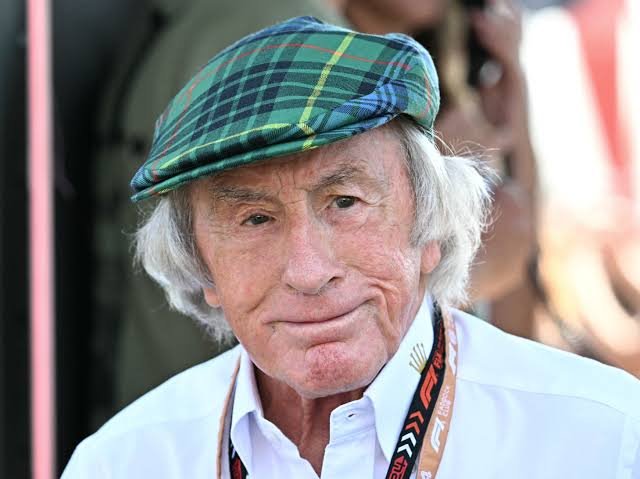
Sir Jackie Stewart is more than a three-time Formula 1 World Champion. The Scottish racing legend is one of the most influential figures in motorsport history, remembered not only for his extraordinary achievements behind the wheel but also for his relentless campaign to make racing safer.
Known as The Flying Scot, Stewart dominated Formula 1 during the late 1960s and early 1970s, winning world championships in 1969, 1971, and 1973. However, his legacy extends far beyond his 27 Grand Prix victories. Having experienced the dangers of an era when fatal accidents were tragically common, Stewart challenged the sport’s long-standing acceptance of death as an unavoidable consequence of racing.
His efforts helped transform Formula 1’s approach to driver protection, circuit design, and emergency medical services, laying important groundwork for the safety standards that protect today’s drivers.
At 87 years old in 2026, Stewart remains an influential voice in motorsport. His perspective offers a unique reminder of just how dramatically Formula 1 has evolved since the days when simply surviving a Grand Prix could be an achievement in itself.
FROM SCOTLAND TO THE WORLD STAGE
Born John Young Stewart on June 11, 1939, in Dumbarton, Scotland, Jackie Stewart did not initially appear destined for an academic career. He struggled with undiagnosed dyslexia during his school years and left formal education at the age of 15.
Instead, he found his calling in motorsport.
Stewart initially developed his driving skills through competitive shooting and local motorsport connections before establishing himself in racing. His natural talent quickly became apparent, particularly in the junior categories, where precision, consistency, and mechanical sympathy helped distinguish him from his rivals.
His breakthrough came in 1963 when he competed in British Formula 3 under the guidance of Ken Tyrrell. Stewart immediately demonstrated his potential, winning seven consecutive races and establishing himself as one of Britain’s most promising young drivers.
His performances attracted attention from Formula 1 teams, and in 1965, he joined BRM.
Stewart made an immediate impression in his debut season, winning the Italian Grand Prix at Monza and finishing third in the World Drivers’ Championship. He followed that achievement with another victory at the 1966 Monaco Grand Prix, confirming that he had the ability to compete consistently at the highest level.
However, while his talent was undeniable, the dangers of Formula 1 would soon become an increasingly important part of his story.
THREE WORLD CHAMPIONSHIPS AND A REMARKABLE RACING CAREER
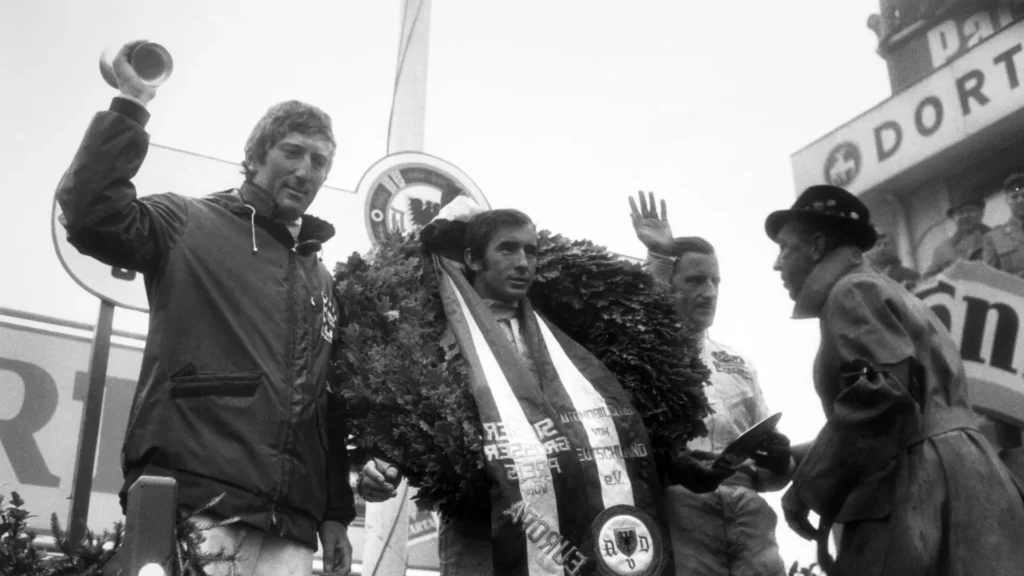
Stewart’s first Formula 1 World Championship arrived in 1969, driving the Matra-Ford MS80 entered by Ken Tyrrell’s team.
The car proved highly competitive, and Stewart made the most of its performance. He won six of the season’s 11 championship rounds, securing his first world title with an impressive combination of speed, consistency, and tactical intelligence.
His success continued in 1971, when he claimed his second championship with Tyrrell.
By then, Stewart had developed a reputation for extracting the maximum performance from his machinery without taking unnecessary risks. His smooth driving style and ability to judge changing track conditions made him particularly effective on circuits where experience and precision were essential.
The 1972 season proved more difficult. Stewart suffered from a stomach ulcer that affected his preparation and performance, ultimately finishing second in the championship behind Emerson Fittipaldi.
Nevertheless, he returned to the top in 1973.
Driving for Tyrrell, Stewart won five races and secured his third World Drivers’ Championship, cementing his position among the greatest drivers of his generation.
His career statistics remain impressive:
- World Championships: 3 — 1969, 1971, and 1973.
- Grand Prix victories: 27.
- Podium finishes: 43.
- Pole positions: 17.
- Fastest laps: 15.
- Grand Prix starts: 99.
Stewart’s 27 victories established a new benchmark for Grand Prix success during his era. His record remained unbeaten until Alain Prost surpassed it in 1987.
What made Stewart particularly remarkable was the era in which he competed. Unlike modern drivers, he raced without today’s sophisticated crash structures, advanced cockpit protection, or comprehensive medical response systems.
Every victory was achieved against a backdrop of significantly greater physical danger.
THE 1968 GERMAN GRAND PRIX: A MASTERCLASS IN ADVERSE CONDITIONS
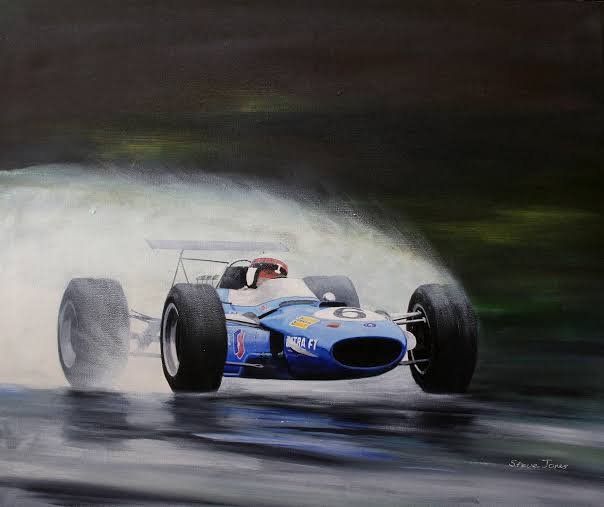
One of Stewart’s most celebrated performances came at the 1968 German Grand Prix at the Nürburgring Nordschleife.
The legendary circuit measured approximately 22.8 kilometres in the configuration used during that period. It featured blind crests, challenging elevation changes, fast corners, and sections bordered by trees and other unforgiving obstacles.
The weather made an already demanding circuit even more dangerous.
Heavy rain and dense fog severely reduced visibility, leaving drivers struggling to identify braking points and judge the available grip. In such conditions, even a minor mistake could have catastrophic consequences.
Stewart, driving a Matra-Ford MS10, delivered an extraordinary performance.
He won the race by more than four minutes, demonstrating remarkable control and confidence in conditions that overwhelmed much of the field.
The victory became one of the defining moments of his career and reinforced his reputation as a driver capable of combining exceptional speed with intelligent risk management.
However, the Nürburgring also represented everything Stewart increasingly believed needed to change about Formula 1.
Its length, limited visibility, and lack of modern safety infrastructure made it exceptionally dangerous. For Stewart, the challenge was not simply to master such circuits but to question whether drivers should continue competing under conditions that exposed them to unnecessary risks.
THE SPA-FRANCORCHAMPS CRASH THAT CHANGED HIS LIFE
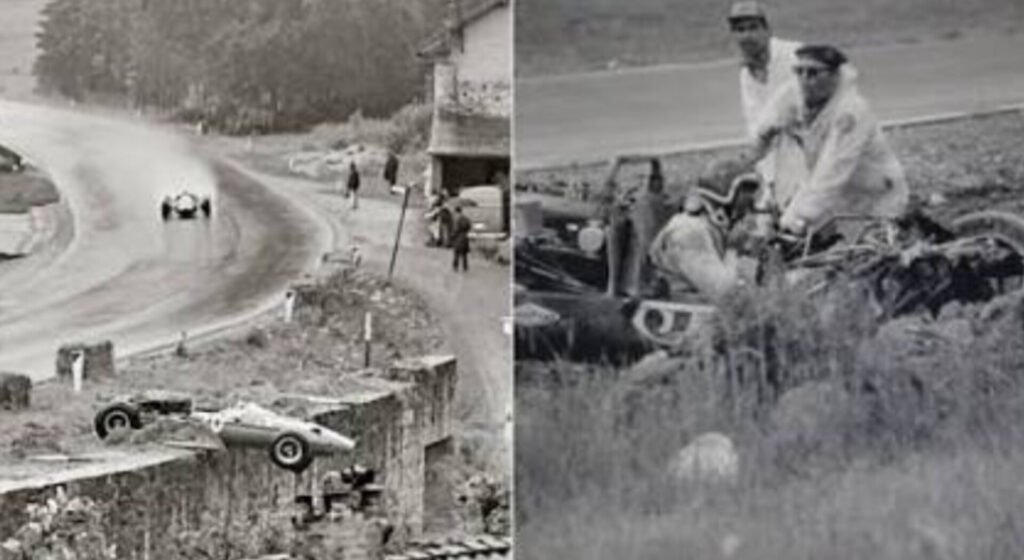
Stewart’s determination to improve motorsport safety was shaped by a frightening experience at the 1966 Belgian Grand Prix.
The race took place at the original Spa-Francorchamps circuit, a public-road layout measuring approximately 14 kilometres through the Ardennes countryside.
Heavy rain created treacherous conditions during the opening lap, causing several drivers to crash.
Stewart lost control of his BRM and left the track, becoming trapped inside his damaged car. Fuel leaked from the vehicle, creating an additional danger while he struggled to escape.
The rescue effort exposed serious weaknesses in Formula 1’s emergency procedures.
There were no modern medical intervention systems, no comprehensive network of trained rescue crews, and no guarantee that an injured driver would receive immediate assistance.
Fellow drivers Graham Hill and Bob Bondurant, who had also been involved in accidents nearby, helped free Stewart from the wreckage using tools obtained from a spectator.
Even after his rescue, the situation remained alarming. The ambulance transporting him to hospital became delayed after taking a wrong route.
Stewart survived but suffered a broken collarbone.
The experience left a lasting impression on him. He realised that the danger of racing was not determined solely by the speed of the cars or the skill of the drivers. Poor circuit design, inadequate medical facilities, and ineffective rescue procedures could turn survivable accidents into fatal tragedies.
From that point forward, Stewart became one of the most outspoken advocates for improving safety in Formula 1.
JACKIE STEWART’S FIGHT TO MAKE FORMULA 1 SAFER
During the 1960s and early 1970s, Formula 1 was a fundamentally different sport from the championship audiences watch today.
Cars had limited crash protection, circuits frequently used public roads, and barriers offered little defence against high-speed impacts. Trees, buildings, and other solid obstacles often stood dangerously close to the racing surface.
Medical facilities were also inconsistent, and emergency response procedures were far less developed than modern standards.
Fatal accidents were tragically common, affecting drivers, teams, families, and the wider motorsport community.
Stewart refused to accept that such losses were simply part of the sport.
He campaigned for better medical facilities, improved circuit barriers, more effective emergency procedures, and greater use of protective equipment. He also advocated the use of seat belts and full-face helmets, helping promote a more systematic approach to driver protection.
His efforts sometimes placed him at odds with people who believed that demanding safer circuits would undermine the traditional character of Grand Prix racing.
Stewart argued that improving safety did not diminish the courage required to compete at the highest level. Instead, it allowed drivers to demonstrate their abilities without being exposed to avoidable dangers.
His status as a world champion gave his arguments considerable weight. He was not an outsider criticising the sport but a successful driver who understood its technical demands and physical risks firsthand.
Importantly, Stewart was not the only person responsible for Formula 1’s safety revolution. The Grand Prix Drivers’ Association, fellow drivers, medical professionals, engineers, circuit organisers, and other advocates all contributed to the changes that followed.
Nevertheless, Stewart became one of the movement’s most prominent and influential figures.
His contribution helped change the conversation surrounding motorsport safety, turning it from a secondary consideration into a central responsibility for the sport’s governing bodies and organisers.
THE DEATH OF FRANÇOIS CEVERT AND AN ABRUPT RETIREMENT
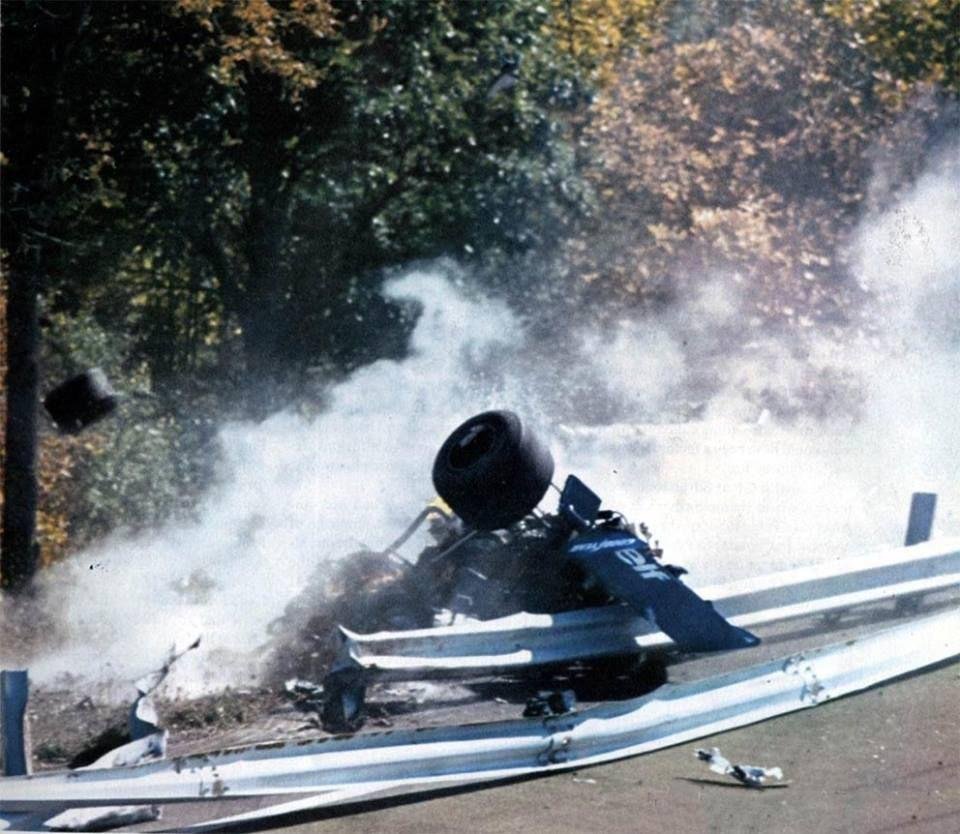
The 1973 season delivered Stewart’s third world championship, but it also brought one of the most painful moments of his career.
His Tyrrell teammate, François Cevert, was killed in an accident during qualifying for the United States Grand Prix at Watkins Glen.
Cevert was not merely a colleague. He was a close friend whom Stewart regarded as a potential successor within the Tyrrell team.
The Frenchman had established himself as one of Formula 1’s most promising young talents, making his death particularly devastating for Stewart and the entire team.
Stewart had already decided that 1973 would be his final season in Formula 1. However, Cevert’s death fundamentally changed the circumstances surrounding his retirement.
Tyrrell withdrew from the United States Grand Prix following the tragedy, and Stewart did not take part in the race.
As a result, he retired after 99 Grand Prix starts rather than reaching the planned milestone of 100.
His departure marked the end of an extraordinary driving career, but it also reflected the personal cost of competing in an era when even the most talented and experienced drivers remained vulnerable to fatal accidents.
For Stewart, the loss of Cevert reinforced the urgency of his campaign for safer racing conditions.
His retirement did not end his involvement in motorsport, nor did it diminish his determination to change the sport that had defined his professional life.
FROM WORLD CHAMPION TO FORMULA 1 TEAM OWNER
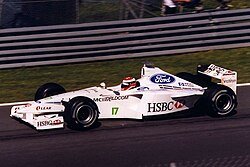
More than two decades after leaving the cockpit, Stewart returned to Formula 1 in a different capacity.
In 1997, he established Stewart Grand Prix with his son, Paul Stewart, entering the championship as a team owner.
Building a competitive Formula 1 operation was a formidable challenge. A new team needed to develop its cars, recruit engineers, secure suppliers, attract sponsors, and compete against established organisations with significantly greater resources and experience.
Stewart Grand Prix made an encouraging debut, with Rubens Barrichello securing a podium finish at the 1997 Monaco Grand Prix.
However, the team’s greatest achievement came two years later.
At the 1999 European Grand Prix at the Nürburgring, Johnny Herbert won a chaotic race affected by changing weather and numerous incidents. Barrichello finished third, giving Stewart Grand Prix two cars on the podium.
The victory was the team’s first and ultimately its only Formula 1 Grand Prix win under the Stewart name.
It was a remarkable achievement for an independent operation competing against some of the sport’s most established manufacturers and teams.
In 1999, Ford acquired Stewart Grand Prix. The organisation subsequently competed as Jaguar Racing from 2000, before undergoing further ownership changes that eventually led to its transformation into Red Bull Racing.
Although Stewart Grand Prix did not win a world championship, its victory at the Nürburgring remains an important part of Stewart’s legacy.
He had already demonstrated his ability to win races as a driver. Through his team, he proved that he could also help build an organisation capable of reaching the top step of the podium.
RACE AGAINST DEMENTIA: A NEW CHALLENGE BEYOND MOTORSPORT
In later years, Stewart directed his attention towards a different challenge.
Together with his family, he established Race Against Dementia, a charitable organisation dedicated to funding research aimed at accelerating progress in the prevention, diagnosis, and treatment of dementia.
The initiative was inspired by a deeply personal experience. His wife, Helen Stewart, was diagnosed with frontotemporal dementia in 2014.
Witnessing the effects of the disease on his family motivated Stewart to use his influence and experience to support scientific research.
Race Against Dementia applies principles familiar from Formula 1, including precision, innovation, collaboration, and the pursuit of faster progress, to help researchers advance their work.
The organisation supports researchers investigating dementia and developing approaches that could improve understanding of the disease and ultimately benefit patients and their families.
For Stewart, this mission represents a different kind of competition.
There are no starting grids, racing laps, or championship trophies. Instead, the objective is to accelerate research and improve the prospects of people affected by dementia.
It is another example of how Stewart has used his public profile to pursue causes beyond his achievements on the racetrack.
His work in this area demonstrates that his commitment to making a difference has continued long after his retirement from competitive racing.
HOW JACKIE STEWART VIEWS MODERN FORMULA 1
Formula 1 has changed dramatically since Stewart’s retirement in 1973.
Modern cars incorporate sophisticated crash structures, reinforced survival cells, the Halo cockpit protection system, advanced fire-suppression equipment, and increasingly comprehensive medical and rescue procedures.
Circuit design has also evolved, with improved barriers, larger run-off areas in many locations, and stricter safety requirements.
These developments cannot eliminate every danger, but they have substantially improved the protection available to drivers.
Stewart’s perspective remains valuable because he experienced both sides of this transformation: the era when basic survival equipment was often inadequate and the modern championship, where safety engineering is an integral part of car design and race organisation.
In an interview reported by Motorsport.com in August 2026, Stewart discussed how improvements in safety have influenced the way modern drivers approach racing.
The central issue is how reduced consequences in many types of accidents can influence a driver’s willingness to take risks.
Modern drivers still face enormous physical and psychological demands, and serious accidents remain possible. However, the protection available today is vastly different from what Stewart and his contemporaries experienced.
His observations highlight an important distinction between the two eras: drivers still need extraordinary skill and courage, but the sport has made significant progress in reducing the risks they must accept to compete.
For Stewart, that transformation represents an essential achievement rather than a loss of Formula 1’s competitive spirit.
JACKIE STEWART’S LEGACY GOES FAR BEYOND THREE WORLD TITLES
Jackie Stewart occupies a special place in Formula 1 history.
His three world championships, 27 Grand Prix victories, 43 podium finishes, and 17 pole positions establish him as one of the most successful drivers of his generation.
Yet those numbers tell only part of his story.
Stewart helped challenge a culture that had long treated fatal accidents as an unavoidable consequence of motor racing. Through his advocacy, he contributed to a broader movement that transformed safety from a secondary concern into one of the sport’s defining priorities.
His achievements as a team owner demonstrated another dimension of his capabilities, while his work with Race Against Dementia has extended his influence into medical research and charitable initiatives.
His career illustrates how a sporting legend can shape an entire discipline beyond the results recorded in championship statistics.
In my opinion, Jackie Stewart’s greatest achievement was not simply winning three Formula 1 World Championships. It was helping change the way motorsport values human life.
His courage was not limited to pushing a racing car to its limits. He also challenged established attitudes, questioned dangerous traditions, and used his influence to demand improvements that would benefit future generations.
That combination of sporting excellence and personal conviction makes Stewart one of the most consequential figures in Formula 1 history.
His legacy is not only measured by the races he won, but also by the lives that modern motorsport safety measures are designed to protect.
What do you think? Does Jackie Stewart deserve to be considered one of the most influential figures in Formula 1 history, not only for his achievements as a driver but also for his contribution to improving motorsport safety?

Adhe is part of the 88 Eight Box Editorial Team, covering JDM culture, motorsport, automotive technology, and industry news. The team focuses on delivering original automotive stories, reviews, and insights for enthusiasts worldwide.