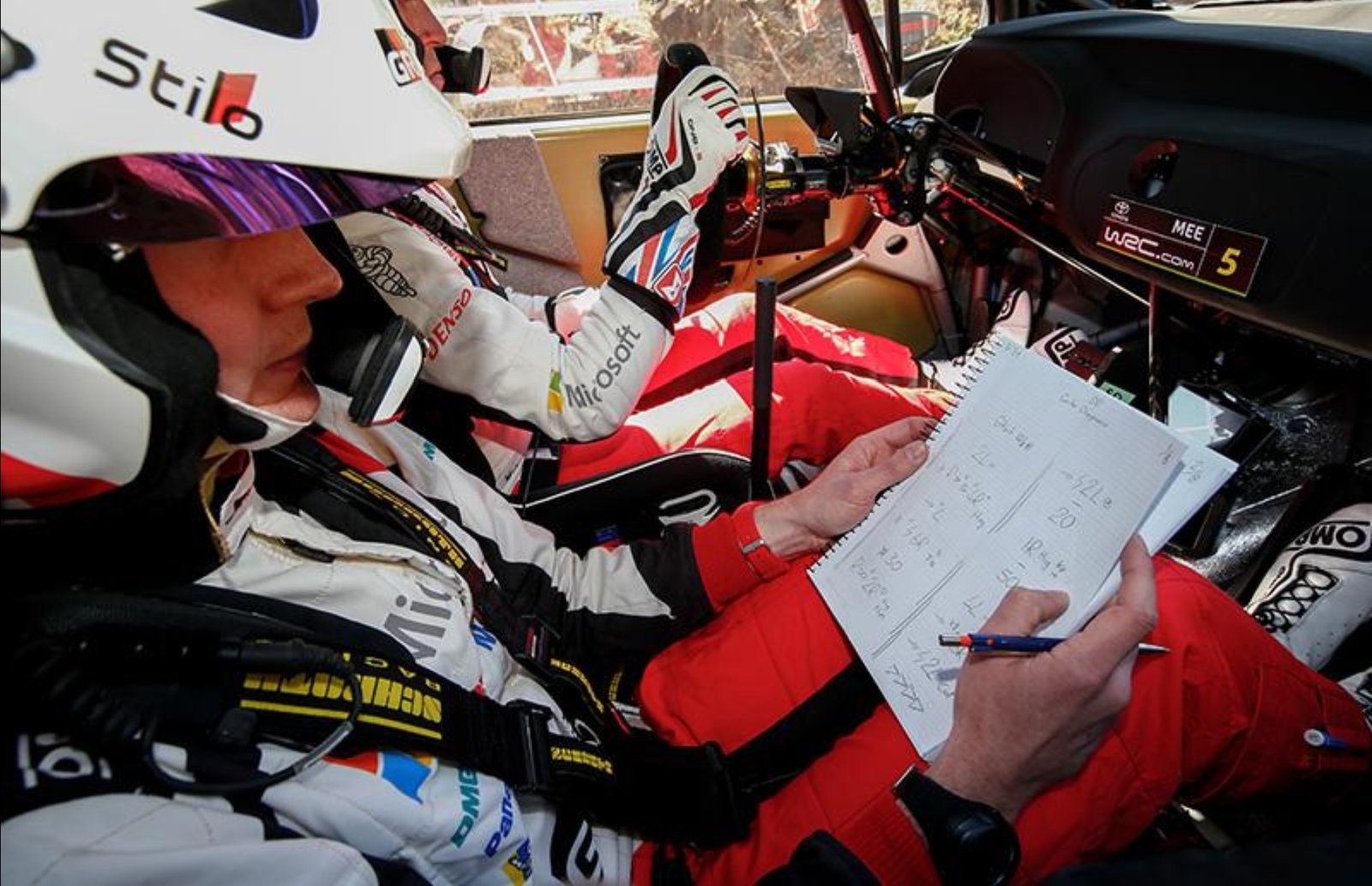
In the World Rally Championship (WRC), the driver is often the person who receives all the attention. However, behind every successful rally driver is another crucial figure who rarely gets the spotlight: the co-driver.
A WRC co-driver is not simply a passenger. They are the driver’s eyes, navigator, strategist, and safety guide, delivering precise information while the car attacks unpredictable roads at extreme speeds.
A single missed word, a delayed call, or a wrong calculation can send a multi-million-dollar rally car off the road.
More Than Just Navigation
Unlike Formula 1, where drivers race on a known circuit, WRC drivers compete on hundreds of kilometers of unfamiliar roads. Every corner, jump, and surface change must be communicated before the driver sees it.
The co-driver’s main responsibility is reading pace notes — a special language created to describe the road ahead.
Examples:
- “Right 5” → A fast right-hand corner
- “Left 2, tightens” → A slower corner that becomes tighter
- “Crest, flat” → A jump where the driver keeps full throttle
- “Hairpin, don’t cut” → A very tight turn with danger on the inside
These instructions allow drivers to attack stages at maximum speed with limited visibility.
Creating Pace Notes: The Driver’s Second Vision
Before every WRC event, teams perform reconnaissance runs called recce.
During recce:
- The driver studies the road.
- The co-driver writes detailed pace notes.
- Every corner, bump, braking zone, and surface change is recorded.
The notes are then refined and memorized before the actual race.
During the rally stage, the co-driver reads these notes continuously while sitting only centimeters away from the driver.
The Ultimate Test of Concentration
Inside a WRC car, the environment is extremely intense:
- Engine noise exceeds 100 decibels.
- The car jumps at high speed.
- The driver experiences heavy G-forces.
- Visibility changes constantly due to dust, rain, snow, or mud.
Despite these conditions, the co-driver must remain calm and deliver information with perfect timing.
A voice that is too early or too late can change the outcome of a corner.
The Relationship Between Driver and Co-Driver
Successful rally partnerships are built on complete trust.
Famous WRC partnerships include:
- Sébastien Loeb and Daniel Elena — one of the most successful driver/co-driver combinations in WRC history.
- Sébastien Ogier and Julien Ingrassia — a partnership that delivered multiple world championships.
These pairs succeeded because communication between them became almost instinctive.
Why Co-Drivers Are Considered Heroes of Rally
A WRC driver controls the machine, but the co-driver helps control the future.
At speeds approaching 200 km/h on narrow gravel roads, forests, and mountain passes, the co-driver must make thousands of decisions without touching the steering wheel or pedals.
They are responsible for:
- Navigation.
- Timing.
- Strategy.
- Driver confidence.
- Avoiding potential crashes.
The Invisible Champion Inside Every Rally Car
Motorsport often celebrates the person behind the wheel, but rally racing is different. Victory is achieved by two people working as one.
The driver provides the speed.
The co-driver provides the knowledge.
Together, they create one of the most unique partnerships in motorsport — a relationship built on trust, precision, and the ability to stay calm while traveling at full speed through some of the most dangerous roads on Earth.

Adhe is part of the 88 Eight Box Editorial Team, covering JDM culture, motorsport, automotive technology, and industry news. The team focuses on delivering original automotive stories, reviews, and insights for enthusiasts worldwide.