Pioneer is bringing back the golden age of Japanese car audio with its new Heritage Collection, combining a cassette-deck-inspired head unit with classic box-style speakers. Designed for enthusiasts who want to modernize their vintage cars without sacrificing period-correct styling, the collection blends 1980s and 1990s nostalgia with modern connectivity and a distinctly retro JDM aesthetic.
The collection consists of two products: the Pioneer SXT-C10PS single-DIN digital media receiver and the TS-X40SXT three-way box speakers. Introduced to the American market through a partnership with RADwood, an automotive event celebrating the cars, fashion, music, and pop culture of the 1980s and 1990s, the collection targets enthusiasts who appreciate the distinctive look of classic car interiors.
For owners of vintage Japanese sports cars, European performance cars, and other vehicles from the era, the appeal is straightforward: enjoy modern entertainment technology without installing a touchscreen that looks completely out of place in an otherwise original dashboard.
PIONEER SXT-C10PS: A RETRO CASSETTE DECK WITH MODERN TECHNOLOGY
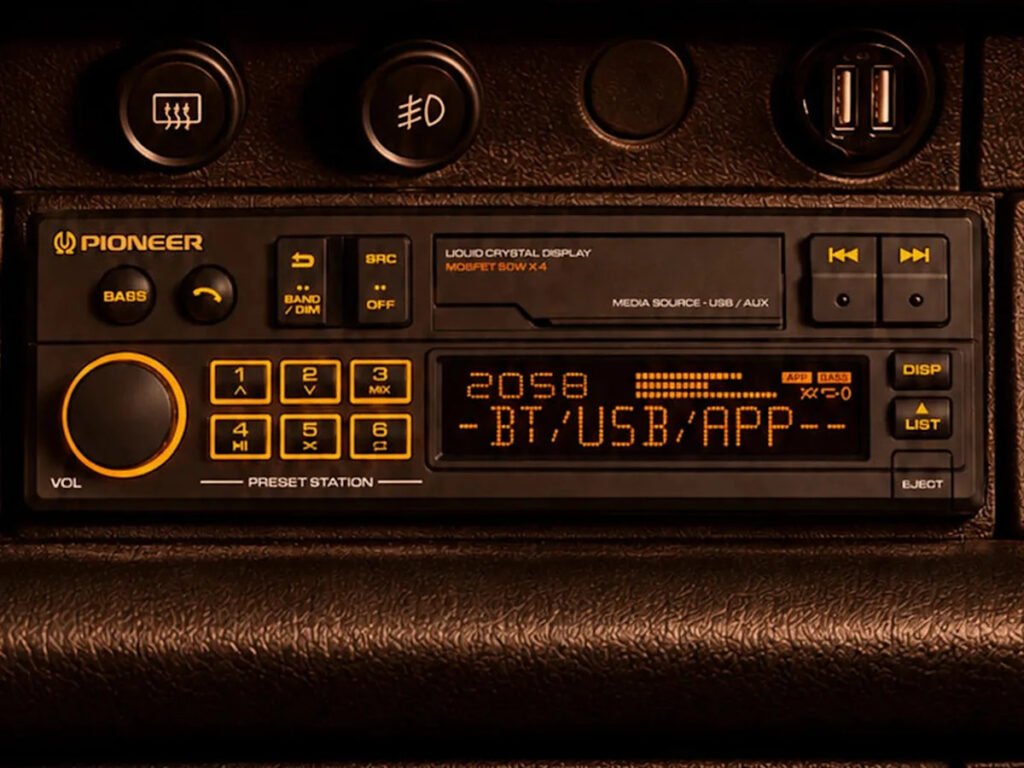
At the heart of the collection is the Pioneer SXT-C10PS, a single-DIN digital media receiver inspired by the company’s classic KEH-series car stereos.
Rather than following the minimalist touchscreen approach found in many modern aftermarket head units, Pioneer has returned to the physical controls that defined car audio decades ago.
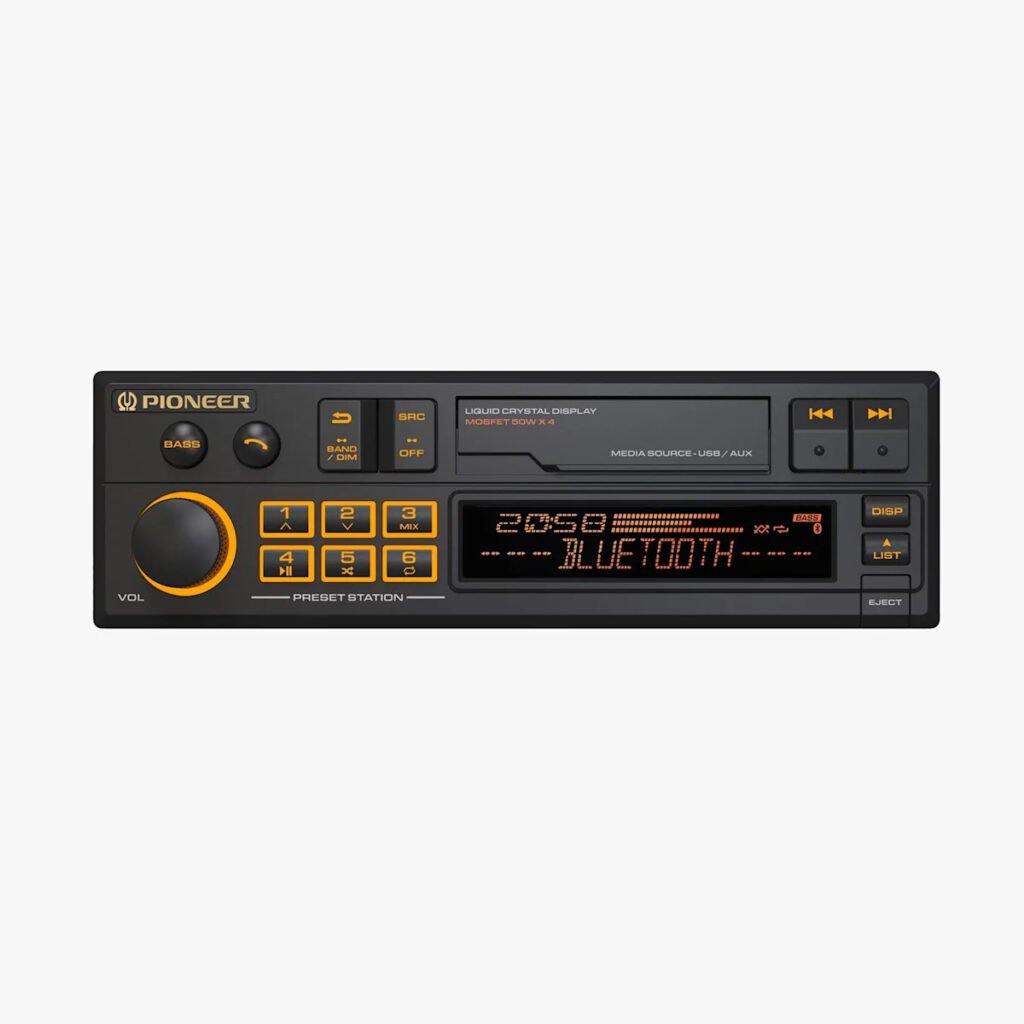
The receiver features a large rotary volume knob, physical preset buttons, a traditional rectangular display, and warm amber illumination. Its restrained appearance is designed to complement the dashboards of cars from the 1980s and 1990s, particularly vehicles whose interiors were built around mechanical controls and relatively simple electronic displays.
The front panel also features a cassette-deck-style cover. However, nostalgia only goes so far: the SXT-C10PS is not an actual cassette player. Instead, the flap conceals modern connectivity, including USB and auxiliary inputs, allowing drivers to connect compatible devices while preserving the stereo’s vintage appearance.
Despite its retro styling, the receiver offers several contemporary features. Bluetooth connectivity enables wireless music streaming and hands-free calling, while HD Radio support provides access to compatible digital radio broadcasts. The unit is also SiriusXM-ready, although satellite radio requires a separately purchased compatible tuner and subscription.
A custom equalizer and dedicated BASS button provide additional control over the listening experience. Rather than relying entirely on a touchscreen interface, drivers can make adjustments through familiar physical controls.
For enthusiasts restoring cars such as the BMW E30, Mercedes-Benz 190E, Porsche 911, or Volkswagen Golf GTI Mk2, the SXT-C10PS offers a way to add modern entertainment features without dramatically changing the appearance of the original dashboard.
TS-X40SXT: THE RETURN OF CLASSIC JAPANESE BOX SPEAKERS
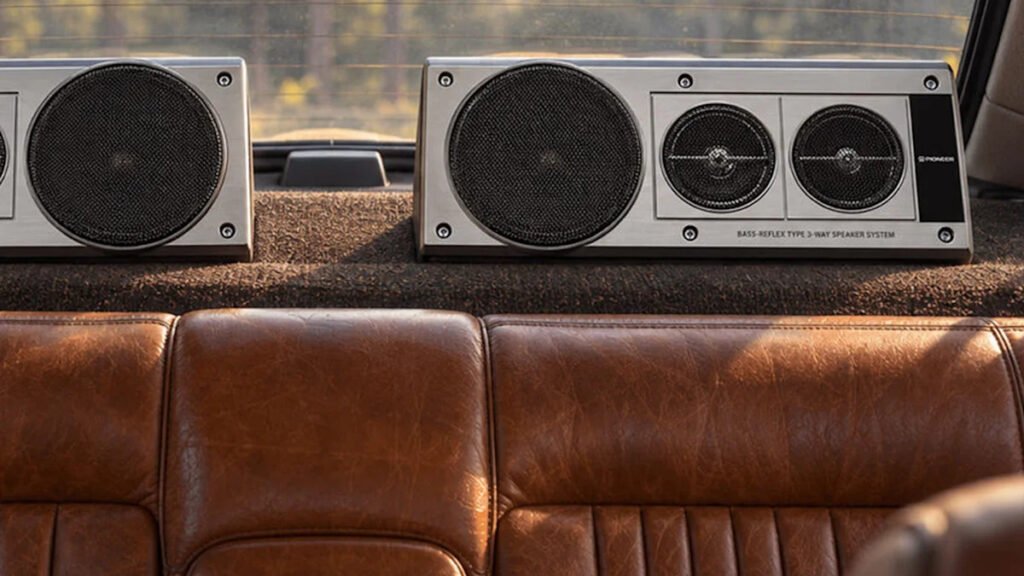
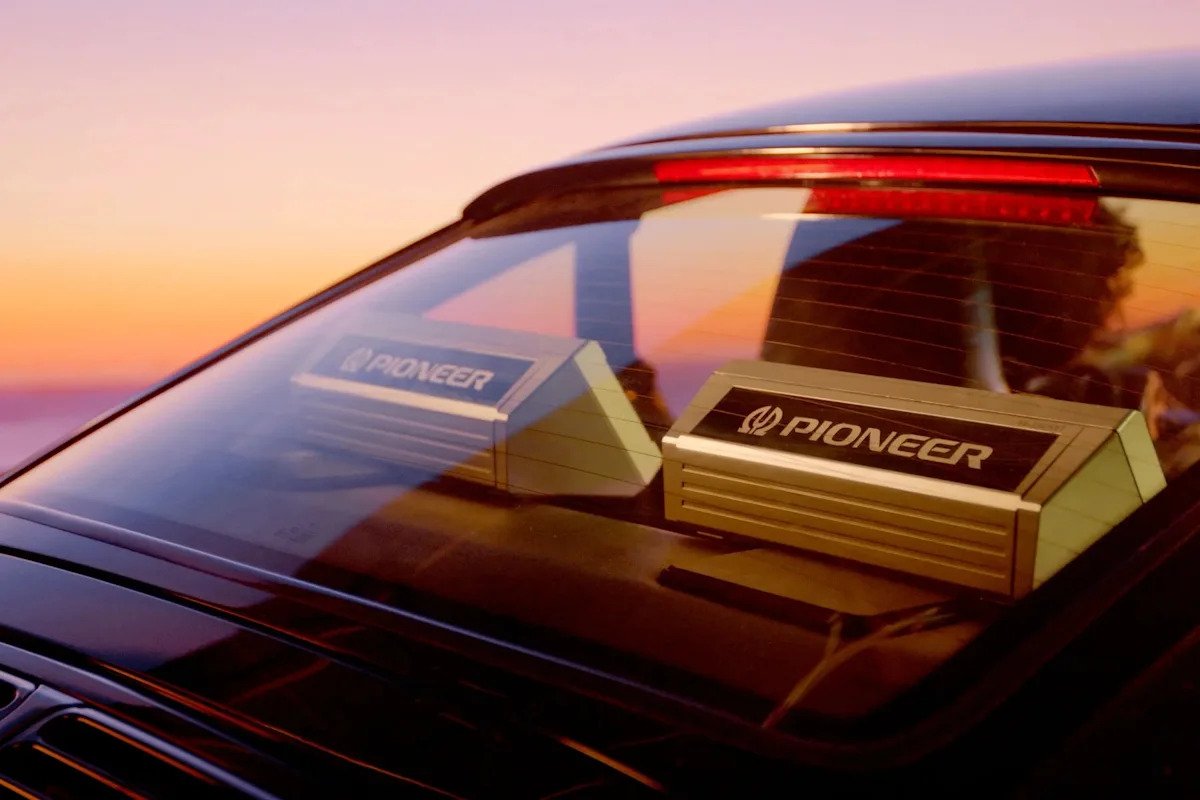
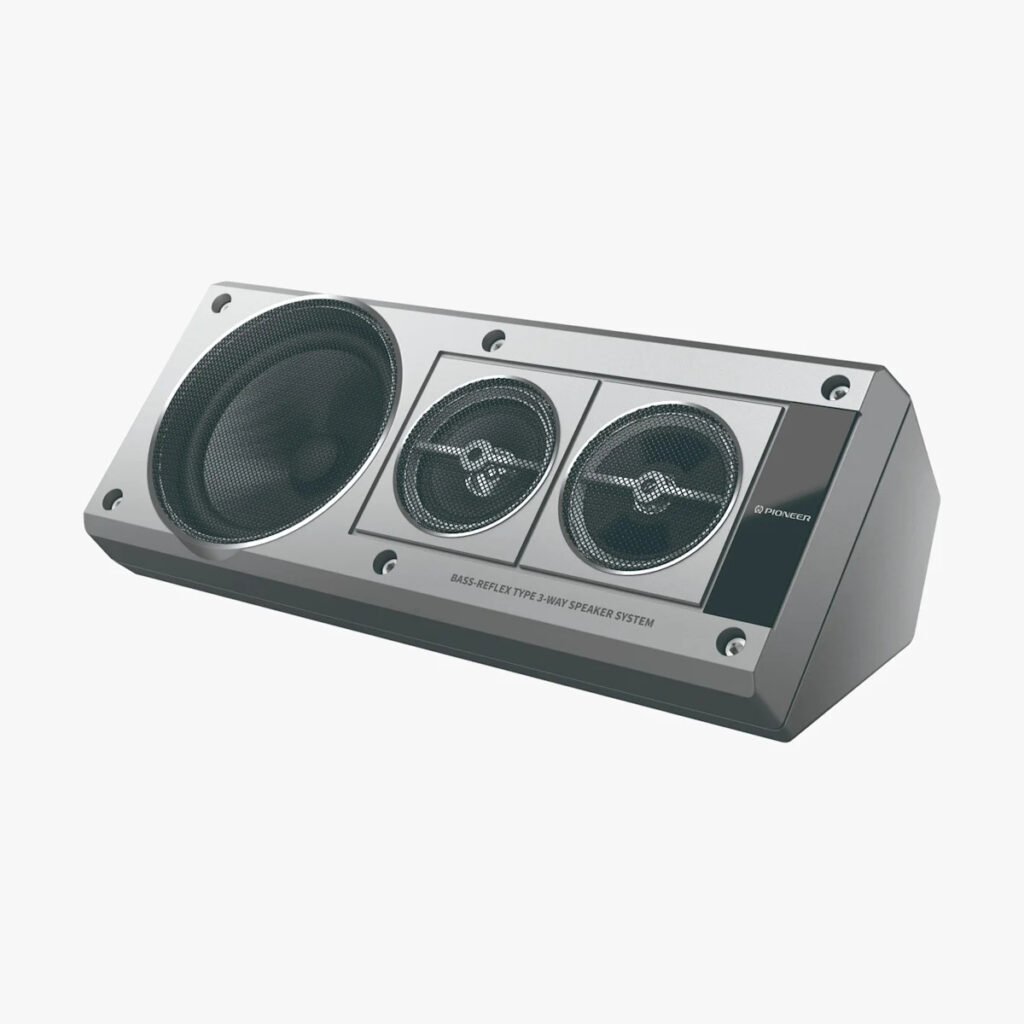
While the head unit offers a subtle reference to vintage car audio, the Pioneer TS-X40SXT speakers make a much more noticeable visual statement.
Their design draws inspiration from the Pioneer TS-X60, a box-style speaker system introduced in 1984. During the 1980s and 1990s, externally mounted speaker enclosures became a recognizable part of Japanese car-audio culture, often appearing on rear parcel shelves and other visible areas of vehicle interiors.
The TS-X40SXT brings that aesthetic into the modern era with a dark silver finish, wire-mesh grilles, rectangular enclosures, and carefully styled details inspired by the original design.
The result is a speaker system that looks right at home in a period-correct Japanese coupe or sedan, particularly a JDM build featuring classic alloy wheels, lowered suspension, and other modifications influenced by the era.
However, these speakers are not simply reissued versions of the original TS-X60. Instead, Pioneer describes the TS-X40SXT as a new design inspired by its predecessor, combining familiar styling with updated acoustic engineering and contemporary speaker materials.
THREE-WAY SPEAKER DESIGN AND TECHNICAL SPECIFICATIONS
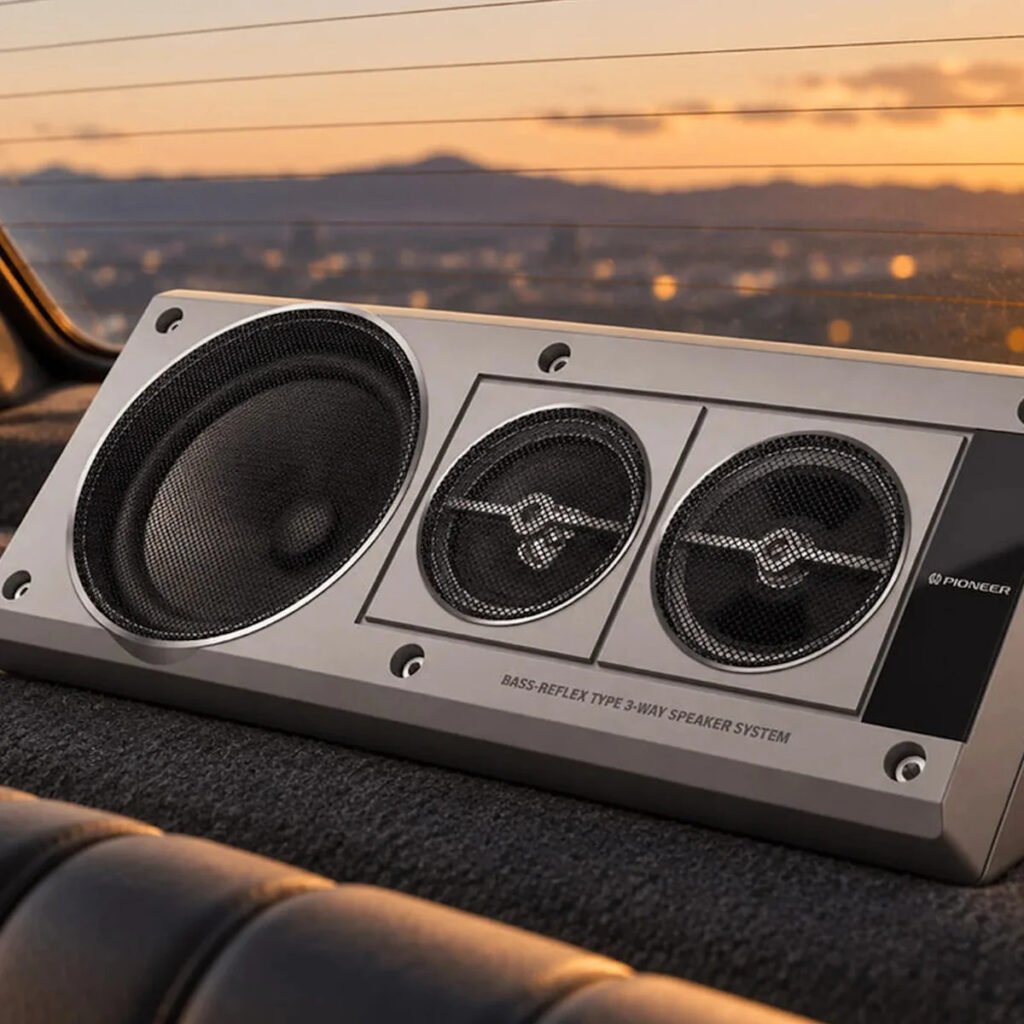
Beneath their vintage-inspired enclosures, the TS-X40SXT speakers use a three-way bass-reflex configuration.
Each speaker contains three drivers designed to reproduce different portions of the audio frequency range.
The 5.25-inch woofer handles low frequencies, while the 2.25-inch midrange driver reproduces the middle frequencies that contribute to the clarity of vocals and musical instruments. A 5/8-inch tweeter handles higher frequencies, adding detail and presence to the overall sound.
Pioneer uses deep-profile cellulose-fiber cones in the woofer and midrange drivers. According to the manufacturer, these lightweight yet rigid cones help deliver responsive bass and clear midrange reproduction.
The enclosure also features a double-slit bass-reflex design. By using ports to support low-frequency output, this arrangement is intended to produce fuller bass than a conventional sealed enclosure of a similar size.
Pioneer specifies a frequency response of 45 Hz to 36 kHz. However, frequency response alone does not determine sound quality. Installation, cabin acoustics, source material, and the rest of the audio system also influence the listening experience.
Pioneer TS-X40SXT Specifications
- Speaker configuration: Three-way bass-reflex system
- Woofer: 5.25 inches (approximately 13 cm)
- Midrange driver: 2.25 inches (approximately 5.7 cm)
- Tweeter: 5/8 inch (approximately 1.7 cm)
- Nominal power handling: 25 watts per speaker
- Maximum power handling: 100 watts per speaker
- Nominal impedance: 4 ohms
- Frequency response: 45 Hz–36 kHz
- Sensitivity: 84 dB
- Dimensions: 321 × 152 × 123 mm per enclosure
- Installation type: Surface-mounted
- Package contents: Two speakers, mounting hardware, and two 5-meter speaker cables
The distinction between nominal and maximum power handling is important. The 25-watt nominal rating represents the speaker’s stated continuous power-handling specification, while the 100-watt figure is its maximum music-power rating. The latter should not be interpreted as a continuous power rating.
With a nominal impedance of 4 ohms, the speakers should also be paired with an amplifier or receiver capable of operating safely at that impedance.
DESIGNED FOR CLASSIC CARS WITHOUT PERMANENT MODIFICATIONS
Another important aspect of the TS-X40SXT is its surface-mounted construction.
Unlike conventional replacement speakers designed to sit inside door panels or concealed factory mounting locations, these units are intended to be mounted visibly on a vehicle’s rear parcel shelf or rear deck.
Pioneer supplies mounting hardware and two 5-meter speaker cables to simplify installation. This arrangement can also help owners avoid cutting original interior panels to accommodate replacement speakers, provided the chosen mounting location is suitable.
That approach should appeal to collectors and restoration enthusiasts who want to preserve a classic car’s original interior. Cutting factory panels to accommodate modern audio equipment can compromise originality, particularly on increasingly desirable collector vehicles.
Each enclosure measures approximately 321 mm wide, 152 mm deep, and 123 mm high. Owners should measure the available mounting area before purchasing, as rear-deck layouts and available space vary between vehicles.
Pioneer also designed the TS-X40SXT to complement the SXT-C10PS receiver, allowing buyers to combine both products into a matching, period-inspired audio system.
HOW MUCH DOES PIONEER’S HERITAGE COLLECTION COST?
Pioneer has announced the following U.S. prices for its Heritage Collection:
- Pioneer SXT-C10PS head unit: $499.99
- Pioneer TS-X40SXT box speakers: $299.99 per pair
Purchasing both products brings the total to $799.98, before applicable taxes and any additional installation expenses.
Pre-orders are available through Pioneer’s U.S. website, with the company planning to expand availability through authorized retailers and dealers in November 2026. Gear Patrol has reported that Pioneer expects pre-orders to begin shipping on November 2, 2026.
These prices apply to the announced U.S. market offering. Availability, pricing, and compatibility may differ in other countries, so international buyers should check local distribution and regional specifications before importing either product.
A NOSTALGIC UPGRADE FOR THE MODERN CLASSIC-CAR SCENE
Pioneer’s Heritage Collection demonstrates that upgrading a classic car does not necessarily require replacing its original visual character with large displays, elaborate digital interfaces, or conspicuous aftermarket equipment.
Instead, the company is drawing inspiration from an era when car-audio systems were as much a part of a vehicle’s identity as its steering wheel, instrument cluster, or alloy wheels.
The SXT-C10PS delivers the familiar appearance of an old-school stereo while adding Bluetooth, USB connectivity, and modern radio features. Meanwhile, the TS-X40SXT brings back the unmistakable shape of Japanese box speakers with updated drivers and a bass-reflex enclosure.
For JDM enthusiasts, that combination could be particularly appealing. An AE86 Corolla, Nissan Silvia, Toyota Supra, Mazda RX-7, or Honda Civic from the era can lose some of its original character when fitted with a head unit that looks decades newer than the rest of the cabin.
Pioneer offers an alternative that respects the original design language rather than trying to make an older car resemble a new one.
There is, of course, a financial consideration. At nearly $800 for the head unit and speaker pair, the complete setup is not an inexpensive way to upgrade a car’s sound system. Buyers who prioritize audio performance over appearance may want to compare conventional receivers and speakers at similar prices before making a decision.
Nevertheless, for enthusiasts who value authenticity and nostalgia as much as sound quality, these products offer something different from a typical aftermarket audio upgrade.
The TS-X40SXT speakers are arguably the stars of the collection. Their boxy design, silver finish, and visible mounting arrangement capture the distinctive look of Japanese car audio in the 1980s, while the SXT-C10PS completes the package without abandoning modern connectivity.
Together, they offer a compelling option for anyone building a period-correct JDM interior, whether for a weekend cruiser, a carefully restored classic, or a modified Japanese sports car.
Would you install Pioneer’s Heritage Collection in a classic Japanese sports car, or would you rather keep the original stereo and invest the money in other modifications? Let us know what you think in the comments.

Adhe is part of the 88 Eight Box Editorial Team, covering JDM culture, motorsport, automotive technology, and industry news. The team focuses on delivering original automotive stories, reviews, and insights for enthusiasts worldwide.