Rowan Atkinson is best known worldwide for playing Mr. Bean, the hilariously awkward character whose everyday activities frequently descend into chaos. However, behind the comedian’s familiar on-screen persona lies a passionate car enthusiast with a genuine interest in motorsport.
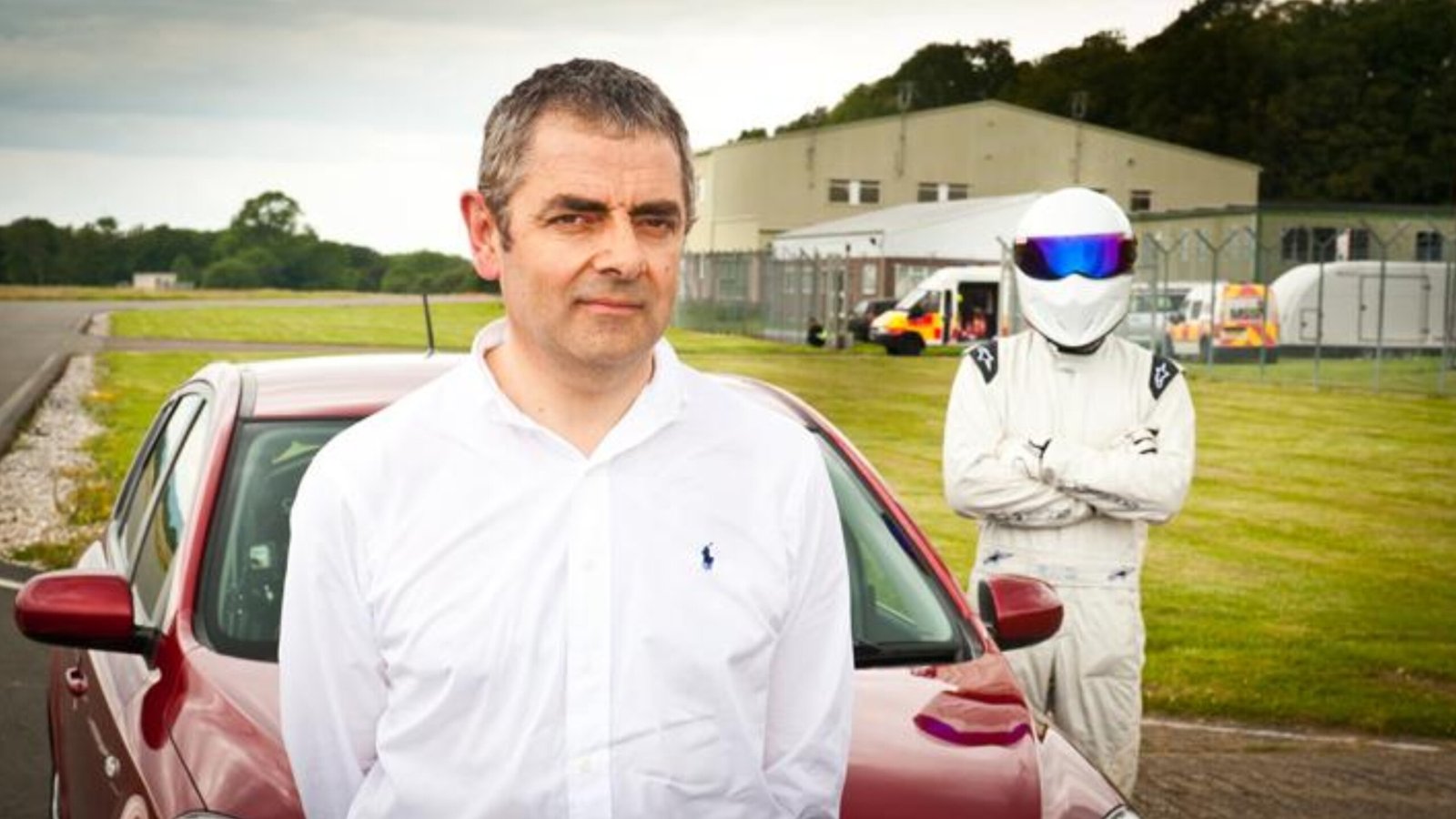
His appearance on Top Gear in 2011 offered a memorable demonstration of his driving ability. Competing in the BBC show’s famous Star in a Reasonably Priced Car segment, Atkinson recorded a lap time of 1 minute 42.2 seconds in a Kia Cee’d, placing him at the top of the celebrity leaderboard at the time.
What made the performance particularly interesting was his apparently calm and controlled driving style. Rather than relying on dramatic movements or aggressive manoeuvres, Atkinson appeared to focus on precision, consistency, and maintaining the car’s momentum.
His performance illustrated a familiar principle in motorsport: “Slow is smooth, smooth is fast.”
ROWAN ATKINSON IMPRESSES JEREMY CLARKSON ON TOP GEAR
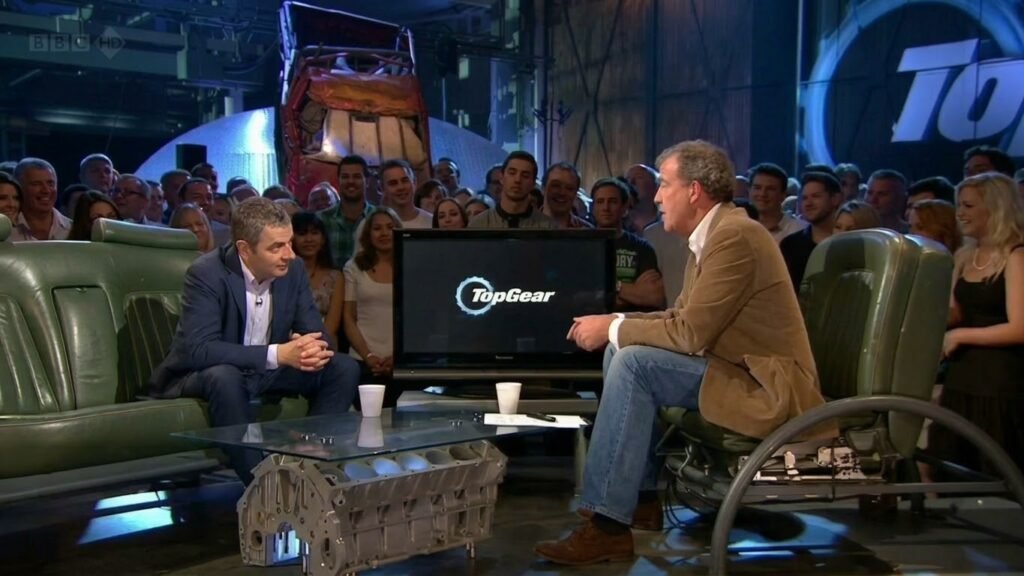
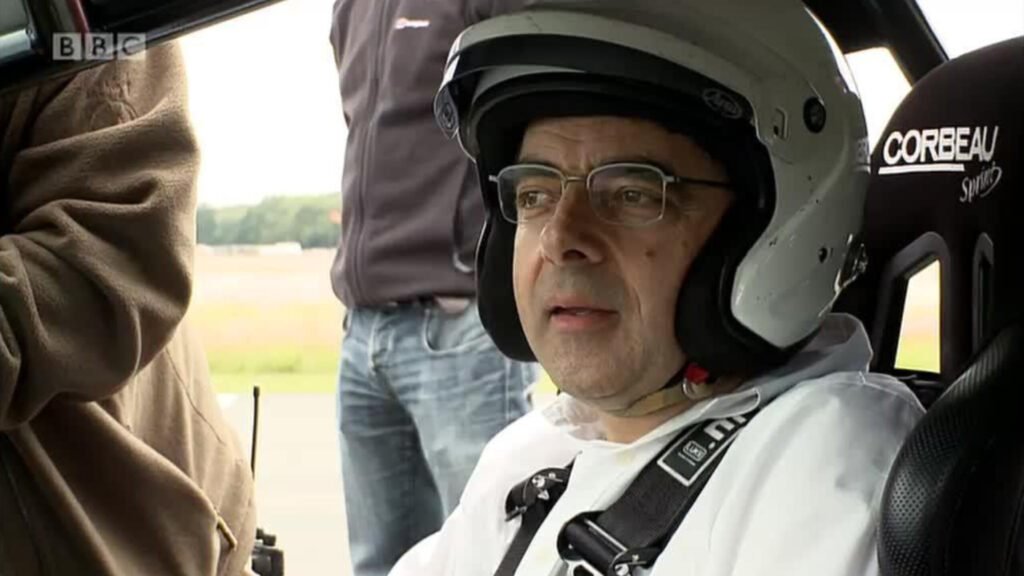
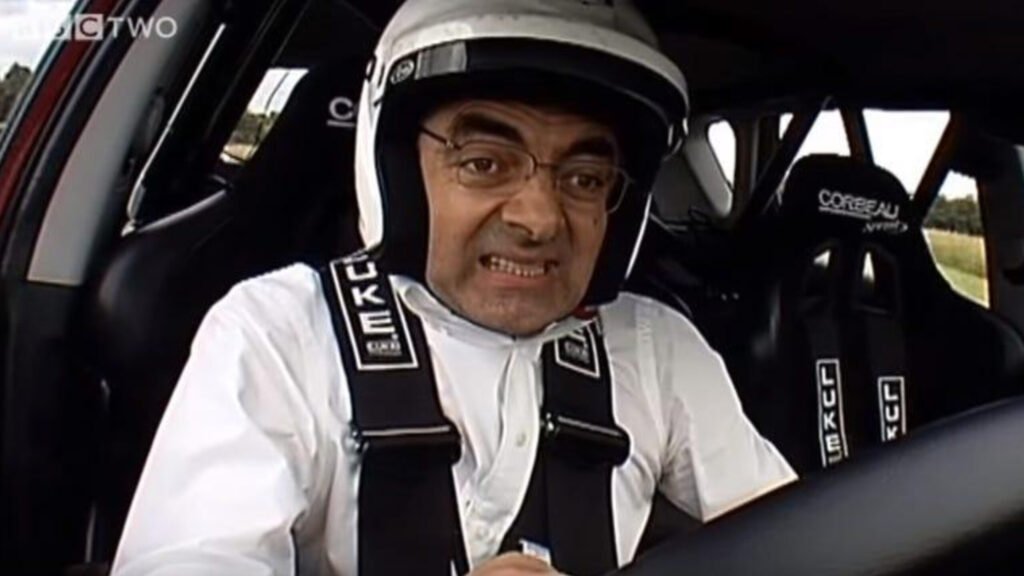
The Star in a Reasonably Priced Car segment challenged celebrities to complete a timed lap of the Top Gear test track at Dunsfold Aerodrome in an affordable production car.
Although the vehicle was far removed from a high-performance supercar, the challenge required a good understanding of braking points, cornering technique, steering inputs, and throttle control.
When Atkinson appeared on the programme during Series 17, Episode 4, his performance surprised viewers and demonstrated that his interest in cars extended well beyond collecting them.
His lap time of 1:42.2 was particularly impressive because he achieved it without relying on the enormous power or sophisticated technology associated with exotic sports cars.
The Kia Cee’d was a relatively ordinary road car, meaning that extracting a competitive lap required the driver to make effective use of the available grip and maintain momentum through the corners.
Atkinson’s achievement did not go unnoticed. His time placed him ahead of the other celebrities on the leaderboard until American actor Matt LeBlanc subsequently recorded a 1:42.1, beating him by just one-tenth of a second.
Nevertheless, Atkinson’s lap remains one of the memorable performances from the segment.
THE MEANING BEHIND “SLOW IS SMOOTH, SMOOTH IS FAST”
The saying “Slow is smooth, smooth is fast” is often associated with precision-based activities, including motorsport. It describes the advantage of making controlled, deliberate inputs rather than constantly correcting mistakes.
In racing, speed is not simply about accelerating as hard as possible or braking as late as possible.
A driver must understand when to brake, how to position the car for a corner, how much steering input is required, and when to begin accelerating again.
Braking too late can force a driver to slow down excessively before turning. Abrupt steering movements can upset the car’s balance, while applying the throttle too aggressively can overwhelm the available tyre grip.
These mistakes can compromise cornering speed and result in slower exits.
A smoother approach allows the driver to manage weight transfer more progressively, maintain stability, and carry as much speed as the available grip permits.
This does not mean driving slowly is inherently faster. Instead, the objective is to eliminate unnecessary movements and make every input count.
Atkinson’s performance demonstrated why precision and consistency can be just as important as aggression when chasing a competitive lap time.
However, there is no verified evidence that Atkinson himself coined the expression or explicitly attributed his driving technique to it. The saying simply provides a useful way to understand the principles behind a controlled lap.
BEHIND MR. BEAN IS A PASSIONATE CAR ENTHUSIAST
Atkinson’s driving ability should not be viewed as a lucky result from a celebrity who happened to perform well on television.
His enthusiasm for cars and motorsport stretches back decades, including participation in competitive racing and historic motorsport events.
According to Goodwood Road & Racing, Atkinson competed in the Renault 5 Turbo UK Cup during the late 1980s before developing a strong interest in historic racing.
He participated in the inaugural Goodwood Revival in 1998, driving an Aston Martin DB2 in the Freddie March Memorial Trophy. He subsequently returned to historic motorsport events, competing in a variety of classic racing cars.
Among the vehicles associated with his racing activities are a 1964 Ford Falcon and an Austin A35.
These experiences help explain why Atkinson is comfortable discussing the technical and practical aspects of driving rather than simply focusing on a car’s performance figures.
Historic racing can be particularly demanding because older vehicles generally lack many of the electronic driver aids found in modern performance cars.
Drivers must develop a feel for the chassis, understand the limitations of the tyres, and manage acceleration and braking carefully.
Although it would be impossible to attribute his Top Gear lap time to any single aspect of his racing background, his experience behind the wheel provides important context for understanding his performance.
THE 1964 FORD FALCON AND THE IMPORTANCE OF THROTTLE CONTROL
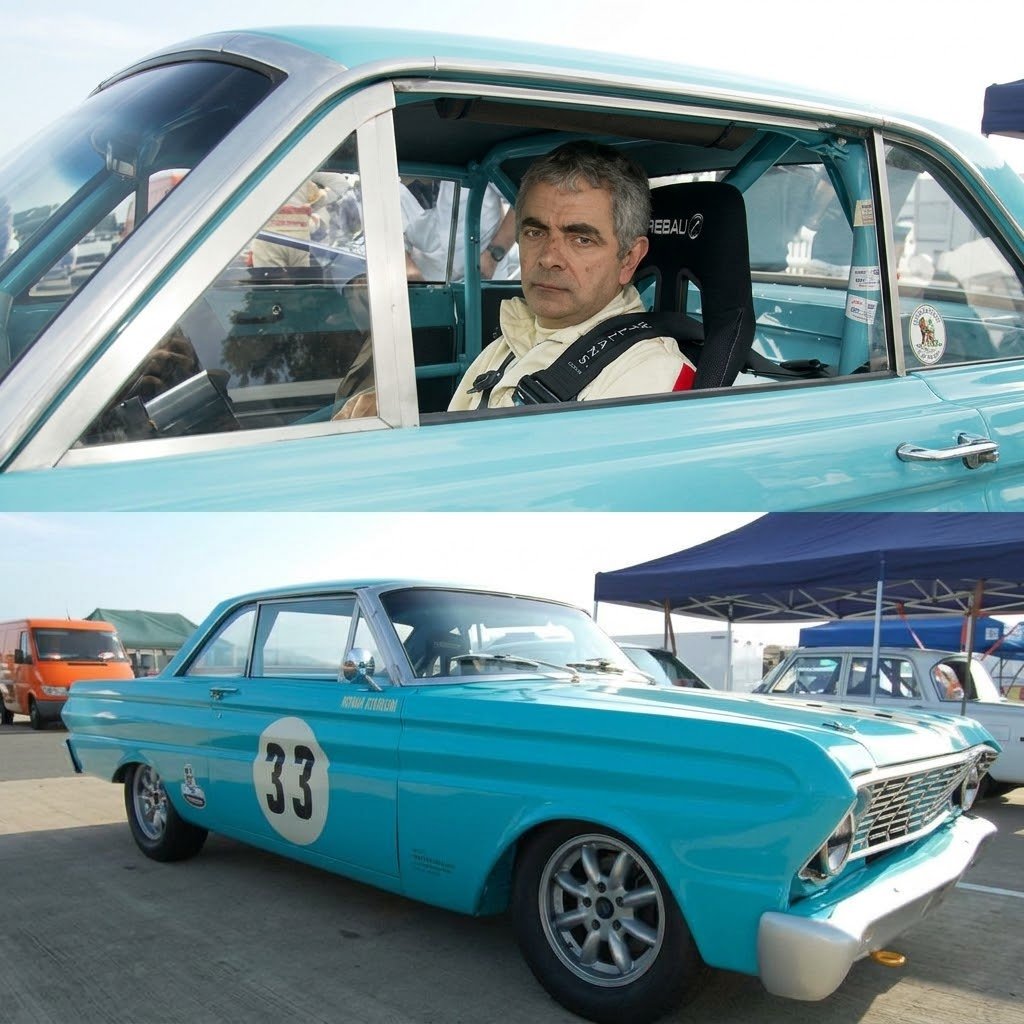
Atkinson discussed his 1964 Ford Falcon during his Top Gear appearance, describing a car powered by a 4.7-litre V8 engine.
Unlike a modern performance car equipped with sophisticated electronic systems, a classic racing car demands a greater degree of mechanical sympathy and driver awareness.
The relationship between the throttle, tyres, suspension, and chassis becomes particularly important when a driver is accelerating out of a corner.
Applying too much power too quickly can overwhelm the rear tyres and cause the car to lose traction. A progressive application of the throttle helps the driver use the available grip more effectively.
The same principle applies to braking and steering. Sudden inputs can disturb the car’s balance, whereas controlled movements help maintain stability.
Experience with historic machinery can therefore help drivers develop a better understanding of how a vehicle responds to their inputs.
Atkinson’s participation in classic racing demonstrates his willingness to learn and compete in cars that require a different approach from modern road vehicles.
However, his experience with the Ford Falcon should not be treated as definitive proof that it directly produced his smooth driving style in the Kia Cee’d. It is better understood as part of his broader motorsport background.
THE McLAREN F1 HE OWNED AND DROVE FOR YEARS
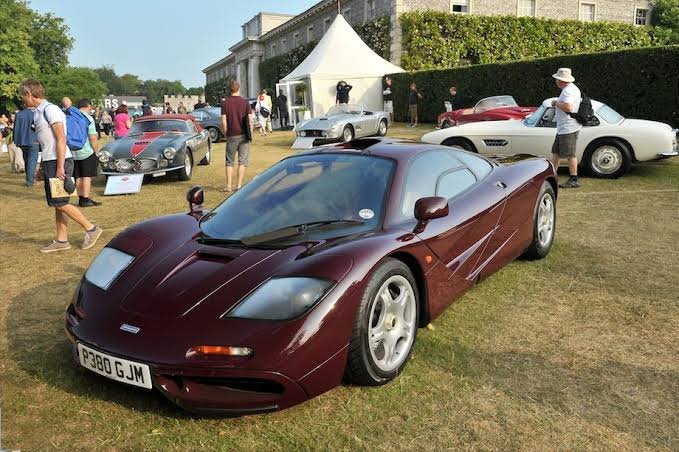
Perhaps the most famous example of Atkinson’s passion for automobiles is his ownership of a McLaren F1.
He purchased the supercar new in 1997 and kept it for approximately 18 years before selling it in 2015.
During that period, he accumulated around 41,000 miles, equivalent to approximately 66,000 kilometres, on a car that has since become one of the most coveted road-going supercars ever produced.
The McLaren F1 was developed under the direction of Gordon Murray and featured a naturally aspirated 6.1-litre BMW V12 engine.
Its lightweight construction, exceptional engineering, and distinctive three-seat layout helped establish it as one of the defining supercars of the 1990s.
Only 64 road-going examples were built, making the model exceptionally rare.
What made Atkinson’s ownership particularly interesting was his attitude towards using the car.
Rather than treating the McLaren exclusively as a collector’s item, he drove it regularly, including on ordinary journeys and family trips.
For him, the appeal was not limited to the car’s exclusivity or financial value. It was also about experiencing the engineering and performance of one of the world’s most remarkable automobiles.
His ownership was not without incident. Atkinson crashed the McLaren in 2011, suffering a shoulder-blade injury and causing extensive damage to the vehicle.
The repair bill was reportedly around £910,000, illustrating just how expensive it can be to repair an exceptionally rare supercar.
The car was subsequently repaired and sold in 2015 for a reported £8 million.
Atkinson’s experience with the McLaren reinforces his reputation as a genuine enthusiast who appreciates cars as machines to be driven and enjoyed, rather than simply displayed.
WHY SMOOTH DRIVING MATTERS ON THE RACETRACK
Atkinson’s Top Gear lap provides a useful lesson for anyone interested in improving their driving technique.
Smoothness is not merely about passenger comfort. On a racetrack, it can help drivers maintain control and preserve momentum.
A well-executed corner generally involves braking at an appropriate point, positioning the car correctly, managing steering inputs, and progressively applying the throttle as the vehicle exits the turn.
Each action affects the car’s weight distribution and the amount of grip available to the tyres.
A driver who makes abrupt corrections may lose time because the car becomes harder to control or cannot maintain the desired racing line.
By contrast, a driver who understands the car’s limits can make smaller, more deliberate adjustments and repeat them consistently.
Nevertheless, smoothness alone does not guarantee a fast lap. A driver must also understand the circuit, select appropriate braking points, judge the available grip, and find the most effective racing line.
The real objective is to combine precision with speed.
Atkinson’s 1:42.2 lap demonstrated that an apparently unhurried driving style can still deliver a competitive result when supported by the right technique and a good understanding of the car.
MORE THAN JUST A COMEDIAN BEHIND THE WHEEL
Rowan Atkinson’s appearance on Top Gear remains a memorable example of how a celebrity’s public image can conceal a very different set of abilities.
As Mr. Bean, he is famous for chaotic behaviour, exaggerated reactions, and seemingly endless mishaps. Behind the wheel, however, Atkinson demonstrated a more measured approach that helped him compete near the top of the celebrity leaderboard.
His experience in historic motorsport, his enthusiasm for engineering, and his long ownership of a McLaren F1 all reinforce the idea that his interest in cars goes far beyond celebrity appearances.
Yet Atkinson has remained modest about his abilities. In an interview with Goodwood published in 2025, he described himself as a “rank amateur” compared with professional drivers competing in historic racing.
That attitude makes his Top Gear performance even more interesting. He did not need to claim professional status to demonstrate that he understood the challenge.
His lap was a reminder that driving quickly is not always about aggression, spectacular manoeuvres, or enormous horsepower. Sometimes, the difference comes down to precision, consistency, and knowing exactly how to work with the car.
The man who made millions laugh as Mr. Bean also proved that he could take driving seriously. His 1:42.2 lap in the Kia Cee’d remains a memorable demonstration of the value of smooth, controlled driving.
What do you think of Rowan Atkinson’s performance on Top Gear? Can smooth driving be just as effective as an aggressive approach when chasing a fast lap? Share your thoughts in the comments.

Adhe is part of the 88 Eight Box Editorial Team, covering JDM culture, motorsport, automotive technology, and industry news. The team focuses on delivering original automotive stories, reviews, and insights for enthusiasts worldwide.