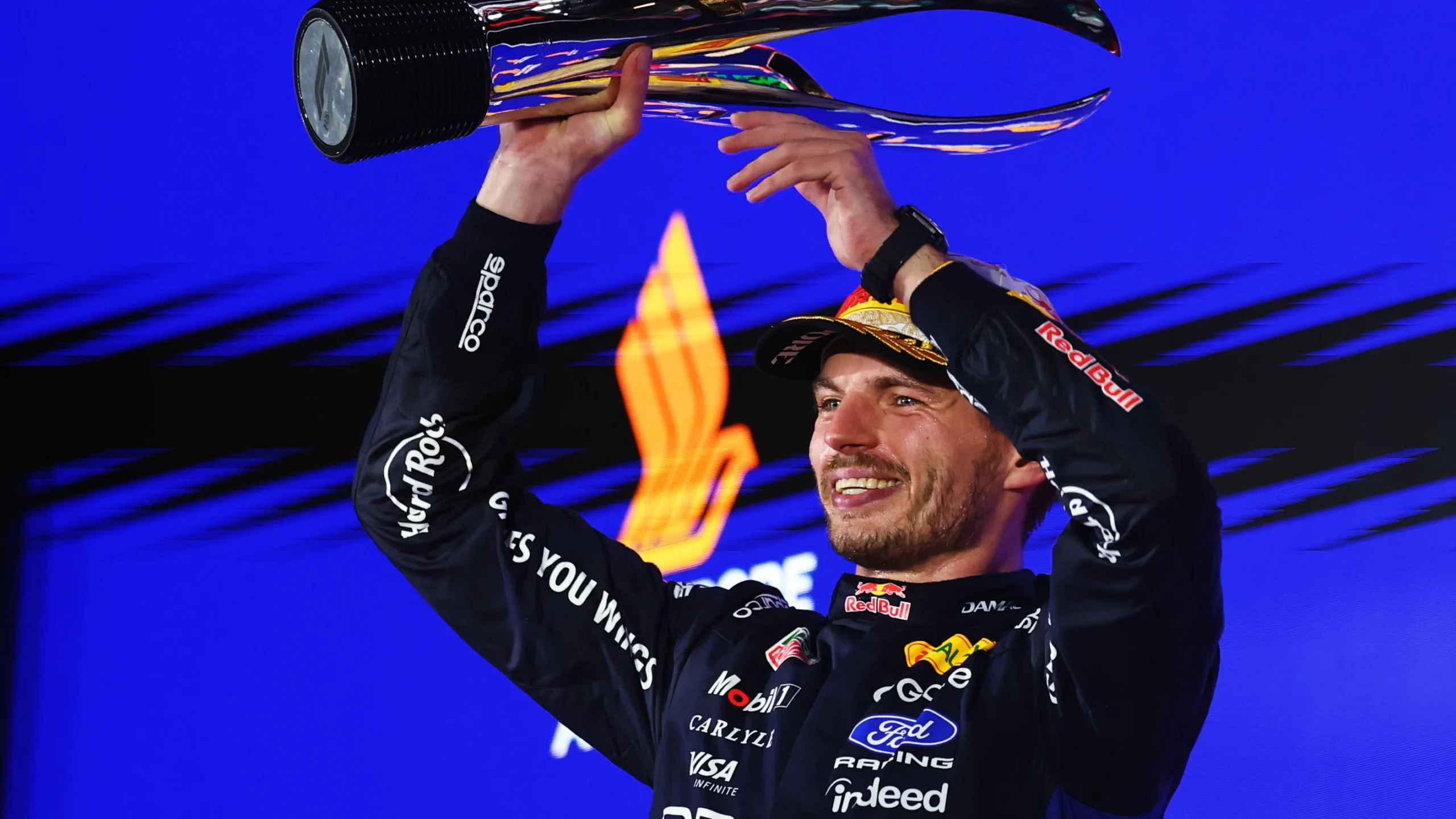
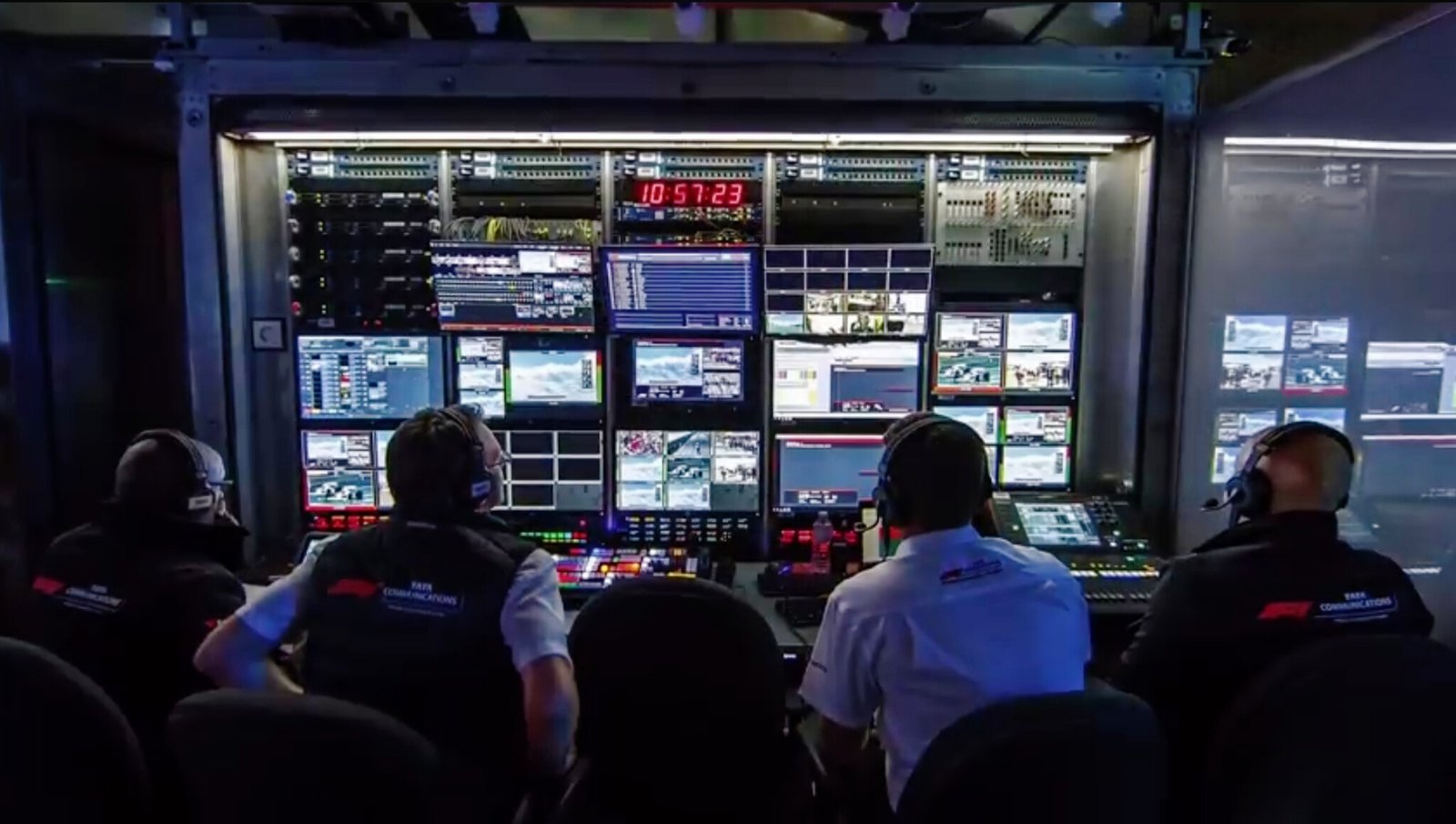
When watching a Formula 1 race, most fans focus on the drivers, the pit stop strategies, and the incredible speed of the cars that can exceed 300 km/h. But have you ever wondered how millions of people around the world can watch every moment of the race from dozens of camera angles in real time?
When a driver makes an overtake into a corner, the camera instantly follows the action. When a crash happens in another part of the circuit, replays from multiple angles appear on the screen only seconds later. Fans can also see live speed data, tyre information, team radio messages, and even experience the race from inside the cockpit through onboard cameras.
Everything looks simple on television. However, behind every Formula 1 broadcast is one of the most advanced and complex sports production systems in the world.
Formula One Management (FOM): The Brain Behind Global F1 Broadcasting
Many people believe that every television broadcaster brings their own cameras and production equipment to every Formula 1 race. In reality, the majority of the official Formula 1 broadcast is produced by Formula One Management (FOM).
FOM is responsible for creating the international broadcast known as the World Feed. This feed is then distributed to television networks and streaming platforms around the world.
This means viewers in Indonesia, the United Kingdom, Japan, the United States, Brazil, and Australia are essentially watching the same main broadcast. The differences usually come from local commentators, languages, advertisements, and additional graphics created by each broadcaster.
Dozens of Cameras Cover Every Corner of the Circuit
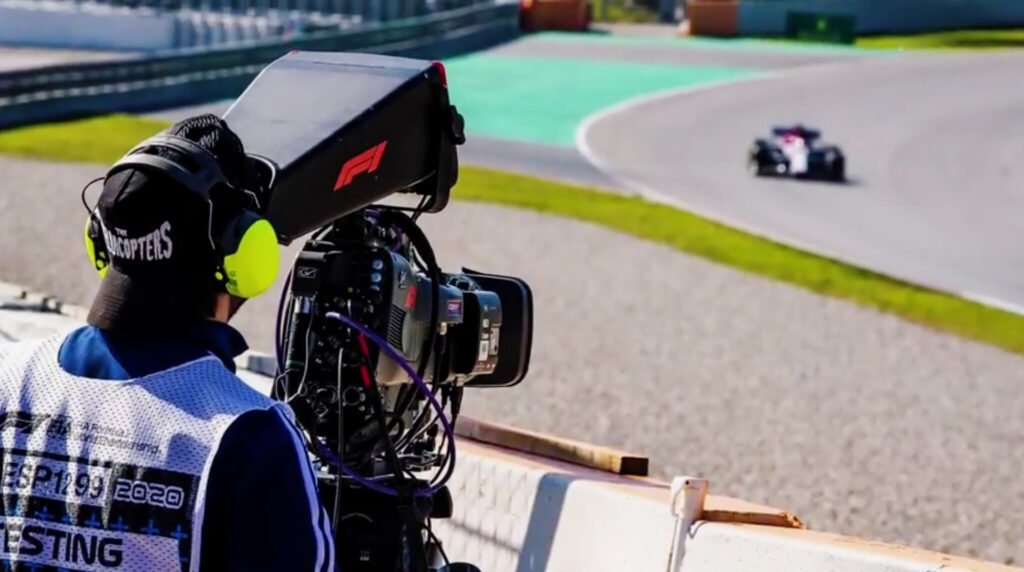
Formula 1 circuits such as Spa-Francorchamps, Silverstone, and Suzuka can stretch for more than five kilometers and feature countless high-speed corners. To make sure no important moment is missed, FOM deploys dozens of cameras around the track.
The broadcast system includes:
- Start and finish line cameras.
- Pit lane cameras to capture team strategies.
- Long-range cameras with powerful telephoto lenses.
- High-speed cameras for detailed slow-motion replays.
- Aerial cameras using helicopters or drones when regulations allow.
- Onboard cameras installed directly on the cars.
All of these cameras operate simultaneously throughout the race. However, the cameras do not automatically follow the action. Behind the scenes, a Broadcast Director decides which camera angle appears on millions of screens worldwide.
The decision-making process happens within seconds. If two drivers are fighting for position while an accident occurs elsewhere on the track, the director must quickly decide which moment is more important for viewers.
The Broadcast Control Room: The Heart of F1 Television Production
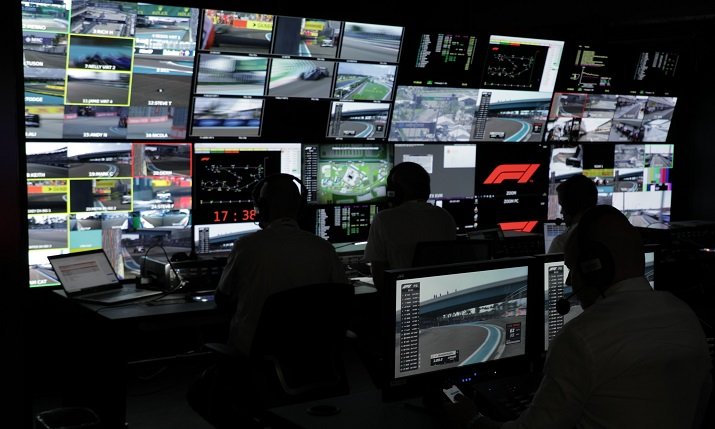
Behind the paddock area is a massive control room that acts as the command center of Formula 1 broadcasting.
Inside are dozens, sometimes hundreds, of screens displaying every available camera angle around the circuit. At the center of the room, the broadcast director and production team monitor the entire race live.
Their job is not only to choose the best images but also to create the story of the race.
They must decide when to follow a battle on track, when to show pit stop strategies, and when to switch to an incident happening elsewhere.
A decision made just a few seconds too late could mean missing the most dramatic moment of the race.
Onboard Camera Technology: Experiencing F1 From the Cockpit
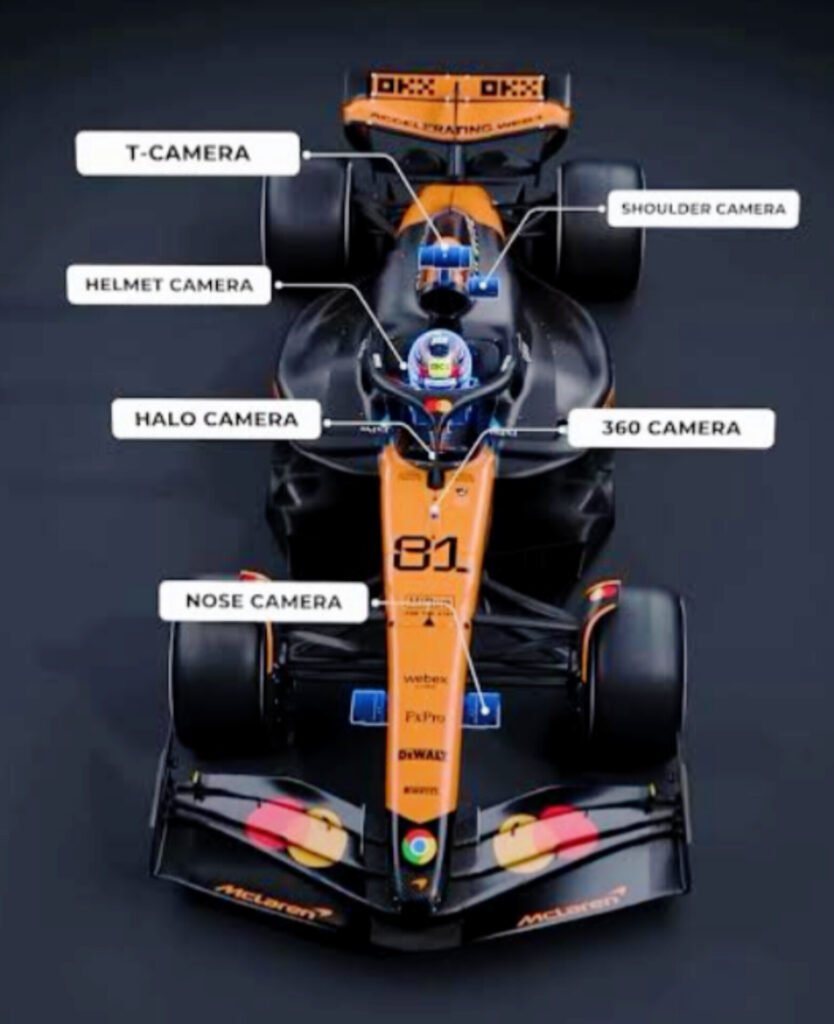
One of the most exciting parts of modern Formula 1 broadcasts is the onboard camera. These small cameras mounted on the cars allow fans to experience the race from the driver’s perspective.
However, transmitting live footage from a car traveling over 300 km/h is a major technological challenge.
The system works through a network of antennas placed around the circuit:
- The onboard camera sends video signals wirelessly.
- Receiver antennas capture the signal as the car passes.
- The data is transmitted to the broadcast center within milliseconds.
This technology must be extremely reliable because even a small interruption could cause viewers to lose one of the most thrilling perspectives in motorsport.
Team Radio, Telemetry, and Replay Teams Working in Seconds
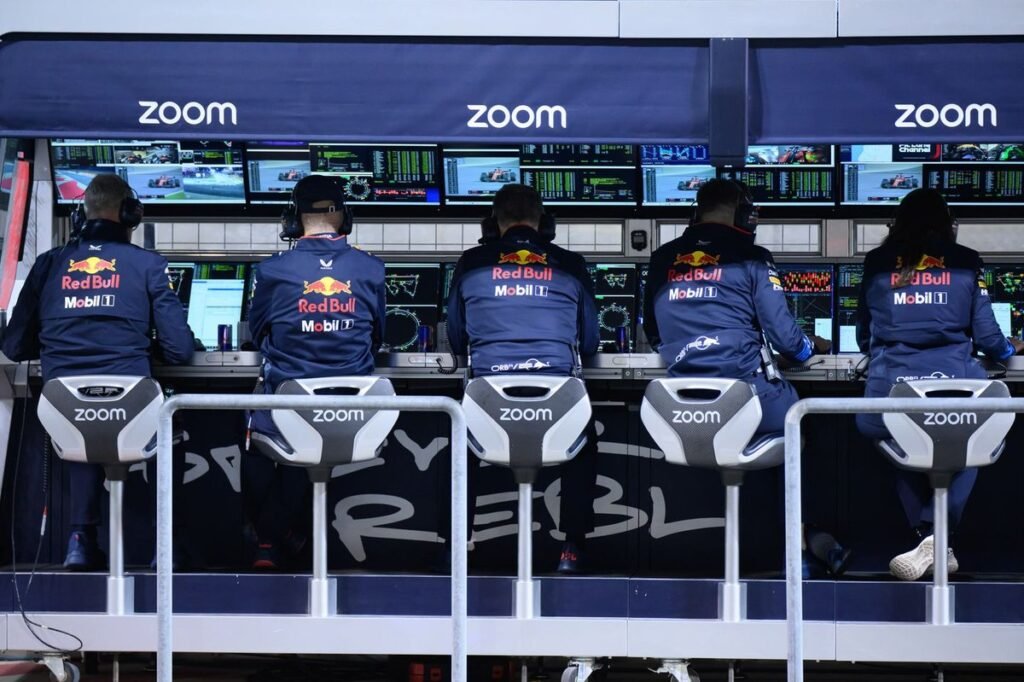
Formula 1 broadcasting is not only about images. Behind the scenes, massive amounts of data and communication systems operate continuously.
Team Radio
Driver communication has become one of the most popular parts of F1 broadcasts. However, not every radio message is shown live.
The production team selects the most important or interesting conversations for viewers. For technical and editorial reasons, there is usually a short delay before radio messages appear on the broadcast.
Telemetry Data and Live Graphics
Every Formula 1 car is equipped with hundreds of sensors that constantly send information, including:
- Vehicle speed.
- Track position.
- Driver gaps.
- Tyre condition.
- Pit stop information.
- Car performance data.
This information is processed by advanced computer systems and transformed into graphics that are easy for viewers to understand.
Replay Team
Whenever an incident occurs, the replay team immediately searches through multiple camera feeds to find the best angles.
Within seconds, they select the most important footage and send it to the director for broadcast.
How F1 Broadcasts Reach Millions Around the World
After the images, audio, data, and graphics are processed, the final broadcast signal is distributed globally through a combination of high-speed fiber optic networks and satellite communication.
The signal travels from the circuit to distribution centers before being delivered to television networks and digital platforms worldwide.
A single Formula 1 race weekend requires hundreds of professionals working behind the scenes, including:
- Camera operators.
- Broadcast engineers.
- Network technicians.
- Replay operators.
- Audio and graphics specialists.
- Producers and directors.
- IT specialists.
- Local television crews from different countries.
Formula 1 Broadcasting: A Perfect Combination of Technology and Human Precision
When watching Formula 1, fans usually focus on the drivers, the cars, and the competition on track. But without the incredible work of the broadcast teams behind the scenes, millions of people would never experience the intensity of wheel-to-wheel racing in real time.
Formula 1 broadcasting is not simply about showing a race. It is a combination of advanced communication technology, real-time data systems, high-speed cameras, and human decision-making under extreme pressure.
Behind every overtake, every crash, and every victory we see on screen, hundreds of people work together to make the Formula 1 experience feel as close as possible to being at the circuit itself.
Formula 1 is not only about who is fastest on the track — it is also about how technology brings that speed to the entire world.

Adhe is part of the 88 Eight Box Editorial Team, covering JDM culture, motorsport, automotive technology, and industry news. The team focuses on delivering original automotive stories, reviews, and insights for enthusiasts worldwide.