
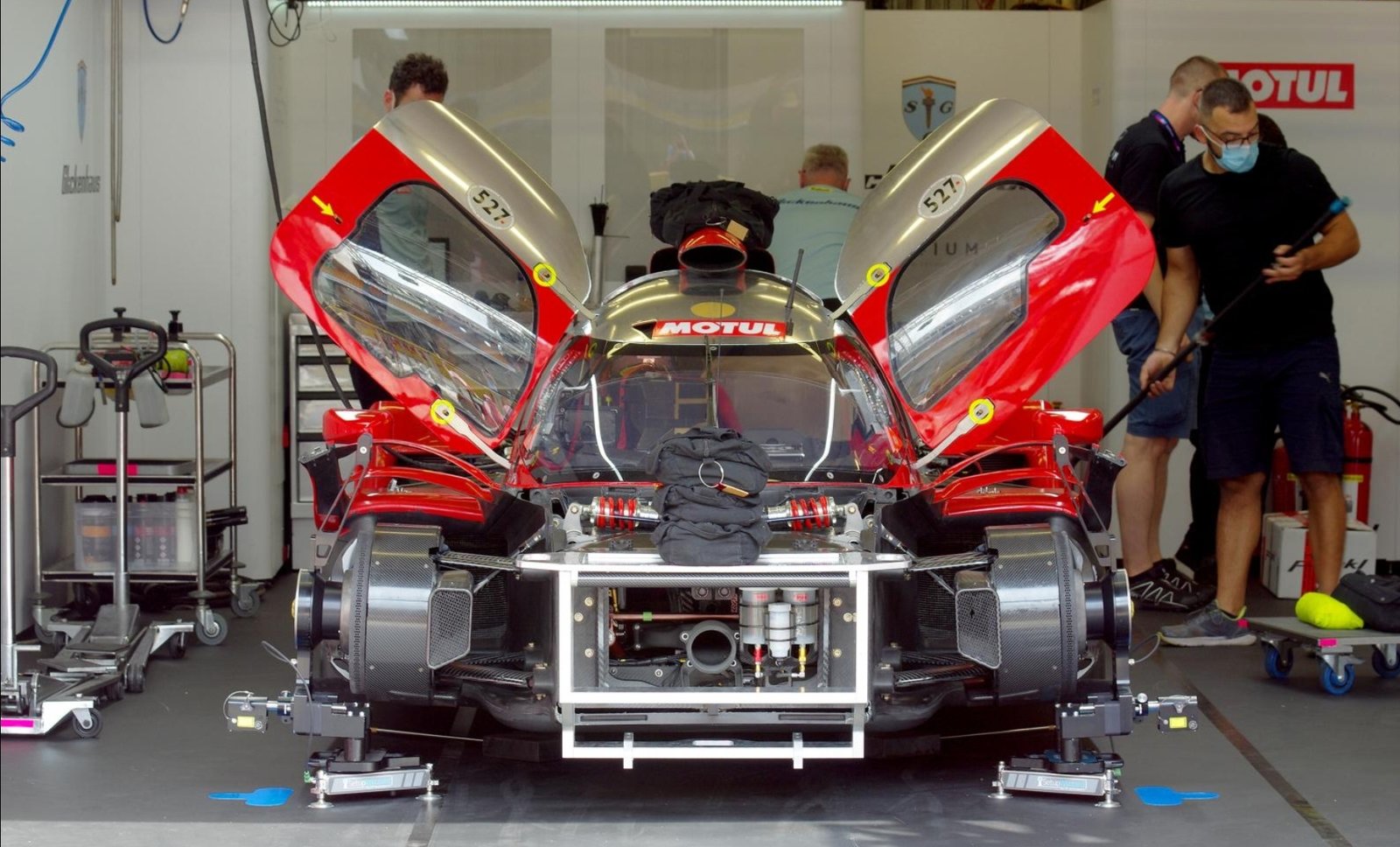
For more than a century, the 24 Hours of Le Mans has been the ultimate stage for automotive engineers to prove that a racing car must not only be fast, but also capable of surviving nonstop punishment for a full 24 hours.
Unlike regular races that last only a few hours, Le Mans demands a machine that can operate under extreme conditions. Every engine component is forced to work close to its maximum limit for an entire day.
The engine must continuously spin at thousands of revolutions per minute, cover more than 5,000 km, endure extreme temperature changes, and maintain performance without suffering significant degradation.
With such a demanding racing concept, victory at Le Mans for manufacturers such as Toyota, Ferrari, Porsche, BMW, Cadillac, Alpine, and Peugeot is not just about winning a trophy.
It is proof that the technology they develop is capable of surviving the most extreme conditions a vehicle can experience.
However, one major question remains.
If Le Mans racing cars are required to operate continuously for 24 hours, what technology allows them to remain efficient, precise, and highly advanced?
The answer lies in a combination of innovations that make Le Mans one of the largest technology laboratories for the automotive industry.
Thermal Efficiency: The Key Foundation of Le Mans Engines
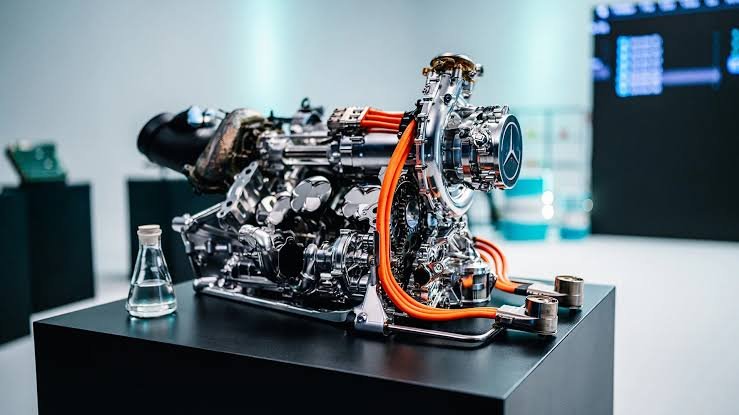
One of the most important technologies in modern Le Mans racing cars is thermal efficiency.
Thermal efficiency measures how much chemical energy from fuel is successfully converted into mechanical power.
In normal production cars, a large portion of fuel energy is lost as heat through the exhaust system, radiator, friction between components, and cooling systems.
Typical gasoline engines in road cars usually have thermal efficiency of around 30 to 40 percent. This means more than half of the energy contained in the fuel never becomes driving force.
However, endurance racing such as Le Mans operates with much higher standards.
For years, manufacturers like Toyota, Porsche, Ferrari, and Peugeot have continued developing engines capable of producing high power while consuming less fuel.
These improvements in efficiency are achieved through various technologies, including:
- Higher combustion pressure
- Optimized combustion chamber design
- High-pressure fuel injection systems
- Reduced internal engine friction
- Precise temperature management of engine components
All of these technologies are designed to ensure that every drop of fuel produces the maximum possible energy.
Toyota and Le Mans as a Technology Laboratory
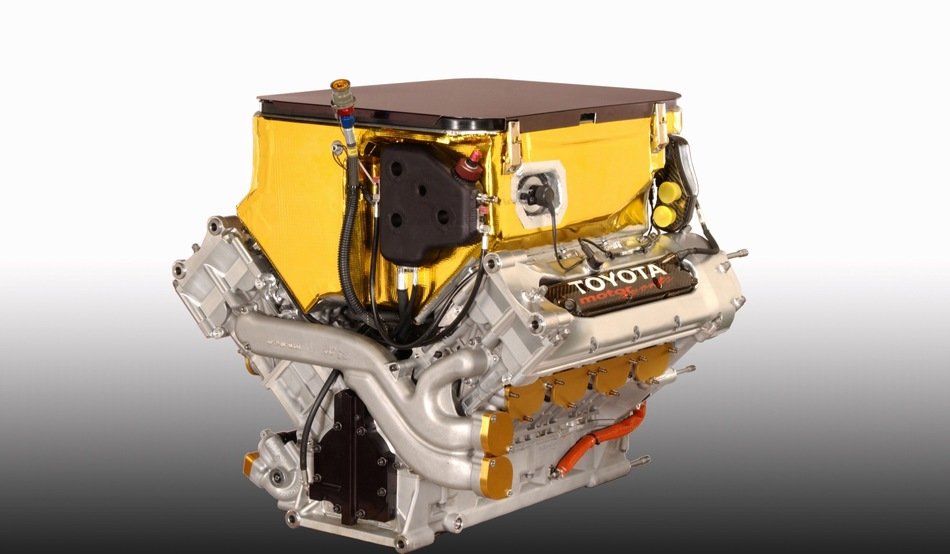
One of the most famous examples comes from Toyota.
When Toyota developed its hybrid racing car for the World Endurance Championship (WEC) in 2010, the goal was not only to create massive power.
Toyota also focused on how every drop of fuel could generate the maximum amount of energy.
According to Toyota Gazoo Racing, Le Mans functions as a moving laboratory for developing technologies that can later be applied to road cars.
Many innovations in combustion, cooling systems, and hybrid technology were first tested under racing conditions before eventually being introduced into mass-production vehicles.
Managing Heat: The Biggest Challenge for Le Mans Engines
Improving engine efficiency is not only about creating stronger combustion.
The biggest challenge is controlling the heat generated by that combustion process.
According to thermodynamics, the higher the controlled combustion temperature, the greater the potential efficiency of the engine.
However, if temperatures become too high, problems such as knocking, piston damage, and complete engine failure can occur.
Therefore, Le Mans Hypercar engines must maintain an extremely delicate balance between generating maximum heat and ensuring every component remains safe throughout the 24-hour race.
Advanced Materials for Engine Durability
Modern materials play a crucial role in allowing Le Mans engines to survive.
Internal engine components are designed to reduce energy losses caused by friction.
One example is the piston.
Pistons used in Le Mans racing engines are made significantly lighter than those found in normal vehicles. Lower weight reduces inertia forces when the engine operates at extremely high RPM.
In addition, piston surfaces, piston pins, and piston rings often use diamond-like carbon (DLC) coatings.
This coating has extremely low friction characteristics and very high wear resistance.
The goal is not only to improve performance but also to ensure that engine energy is not wasted simply overcoming friction between components.
Even reducing friction by only a few percent can provide a major advantage when an engine must operate continuously for 24 hours.
Cylinder Technology and Metal Expansion
Besides pistons, cylinder walls are also a major focus.
Some manufacturers use plasma-based cylinder coatings or special materials that improve heat transfer while reducing wear.
With these technologies, combustion heat can be controlled more effectively, while engine oil can maintain an optimal protective layer between metal surfaces.
Another interesting factor is that engineers must also consider thermal expansion.
When the engine is still cold, there is a specific gap between the piston and cylinder wall.
However, once the engine reaches its optimal operating temperature, metal components expand until they reach precisely calculated dimensions.
The result is a tighter combustion chamber, reduced combustion gas leakage, and improved engine efficiency.
Small Engines with Massive Power
Besides thermal technology, another fascinating aspect of Le Mans engines is their relatively small displacement.
Many people might assume that the most extreme racing cars must use massive engines.
However, many modern Le Mans Hypercars actually use relatively compact engines.
Examples include:
- The Ferrari 499P uses a 2.992 cc V6 twin-turbo engine.
- The Toyota GR010 Hybrid uses a 3.5-liter V6 twin-turbo engine.
- Alpine A424 uses a 3.4-liter V6 turbo engine.
- Cadillac V-Series. R uses a 5.5-liter naturally aspirated V8 engine.
Although their engine capacities are not as large as traditional sports cars, these engines are capable of delivering extreme performance while surviving a full 24-hour race.
The main secrets are two major technologies:
High-pressure direct injection and modern racing turbochargers.
Direct Injection: Creating More Complete Combustion
The direct injection system works by spraying fuel directly into the combustion chamber using extremely high pressure.
In modern racing engines, injection pressure can exceed 350 bar.
For comparison, normal car tire pressure is usually only around 2 to 3 bar.
This means the fuel injection pressure can be more than 100 times higher than the pressure inside a regular vehicle tire.
The main purpose of this high pressure is to create better fuel atomization.
The smaller the fuel droplets, the easier it becomes for fuel to mix with air.
The results are :
- Faster combustion
- Increased power output
- Better fuel efficiency
- Reduced risk of knocking
The engine electronics can also control fuel injection timing with extreme precision.
Even within a single combustion cycle, fuel can be injected multiple times to achieve the most efficient combustion process.
Turbocharger : Turning Exhaust Gas into Power
Perfect combustion is only half of the challenge for a Le Mans engine.
The other half is ensuring the engine receives as much air as possible.
This is where the turbocharger becomes essential.
A turbocharger uses energy from exhaust gases to spin a turbine.
The turbine then drives a compressor that forces more air into the engine.
The more air and oxygen entering the combustion chamber, the more fuel can be burned efficiently.
The result is massive power without increasing engine displacement.
200,000 RPM Turbochargers and Extreme Heat-Resistant Materials
Modern Le Mans racing turbochargers can spin at more than 200,000 RPM.
At such extreme speeds, the challenge is not only producing power, but also ensuring the turbocharger survives the entire 24-hour race.
That is why racing turbochargers use materials far beyond those found in normal vehicles.
The turbine housing uses special alloys such as nickel-base superalloys, capable of surviving exhaust temperatures around 950°C to more than 1,000°C.
Meanwhile, the turbo shaft is made from high-strength materials with manufacturing tolerances measured in only a few microns.
Le Mans Engines: The Perfect Balance Between Performance and Efficiency
The sophistication of modern turbocharger technology does not stop at producing power.
The engine computer continuously adjusts turbo boost pressure based on track conditions.
When exiting slow corners, turbo pressure is increased gradually to deliver smoother power and maintain maximum tire traction.
However, on long straights, the system maintains turbo pressure at the most efficient level to reduce fuel consumption.
Therefore, turbochargers in Le Mans are not simply tools for increasing speed.
They are also a crucial part of energy efficiency strategies.
Looking at all the technology involved, it is not an exaggeration to say that Le Mans racing engines are among the most advanced internal combustion engines ever created.
These engines are not designed only to produce enormous power.
A Le Mans engine must operate under extreme conditions, maintain maximum performance, and survive for a full 24 hours without stopping.
That is why the 24 Hours of Le Mans is not just a race.
Le Mans is where the limits of automotive technology continue to be tested, challenged, and developed.

Adhe is part of the 88 Eight Box Editorial Team, covering JDM culture, motorsport, automotive technology, and industry news. The team focuses on delivering original automotive stories, reviews, and insights for enthusiasts worldwide.