
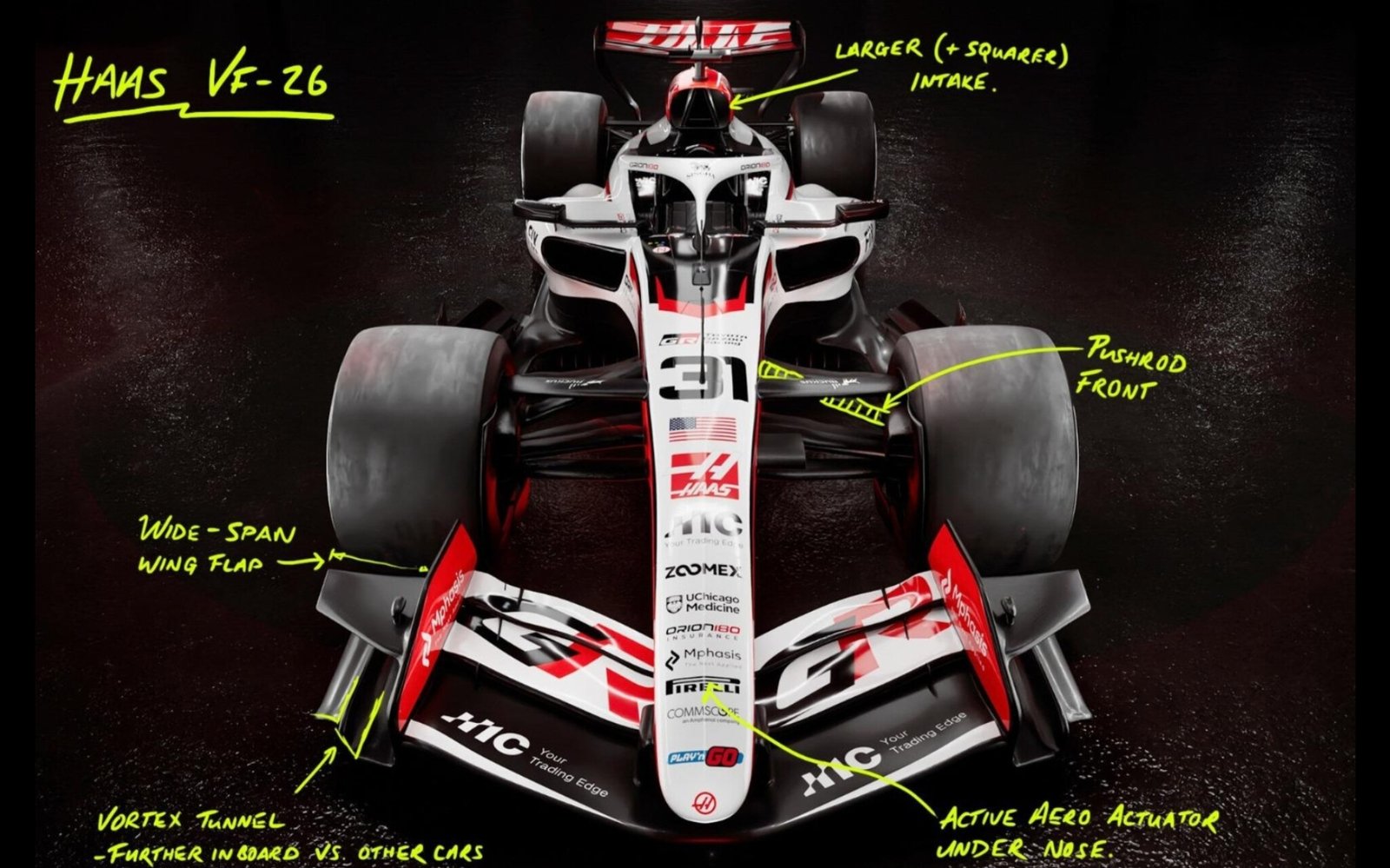
Haas has once again attracted attention in Formula 1 with its unique aerodynamic solution around the nose section and front wing pillars. Instead of using the pillars purely as structural supports, the team has explored ways to turn this small area into an additional tool for controlling airflow.
In modern Formula 1, every surface matters. Even a component as small as the front wing mounting pillars can influence how air travels around the car, especially toward critical areas such as the floor, diffuser, and underbody tunnels. Haas’ design aims to improve airflow management by creating a cleaner and more controlled aerodynamic path beneath the chassis.
How Does It Work?
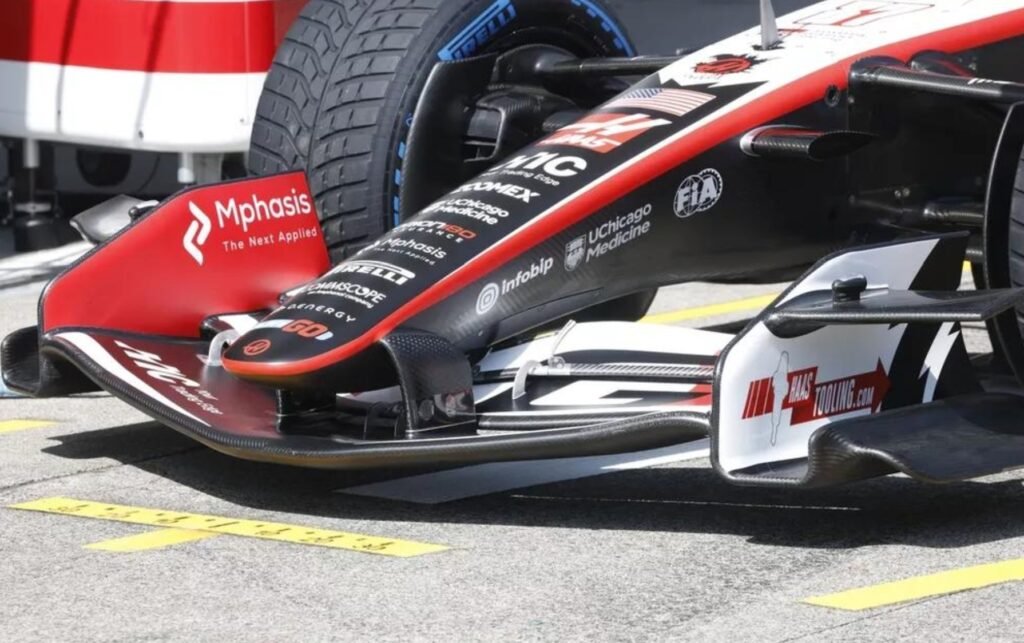
The design serves several key purposes:
• Managing airflow beneath the nose
The shape and positioning of the pillars help guide air toward the lower section of the car, where ground effect plays a major role in generating downforce.
• Reducing aerodynamic turbulence
A smoother airflow coming from the front wing helps prevent unwanted disturbances around the suspension, floor edges, and other aerodynamic surfaces.
• Improving airflow energy toward the floor
By accelerating and stabilizing the airflow underneath the car, the design can help create a stronger low-pressure area, increasing aerodynamic grip.
Why Is This Innovation Interesting?
In the budget cap era, Formula 1 teams can no longer rely on unlimited spending to find performance gains. As a result, development has shifted toward smaller aerodynamic details, including:
- nose and front wing connections,
- flap designs,
- wing pillars,
- endplates,
- and small airflow control devices.
These tiny details can make a significant difference because modern F1 performance often comes down to optimizing airflow efficiency across the entire car.
A New Era of Aerodynamic Battles
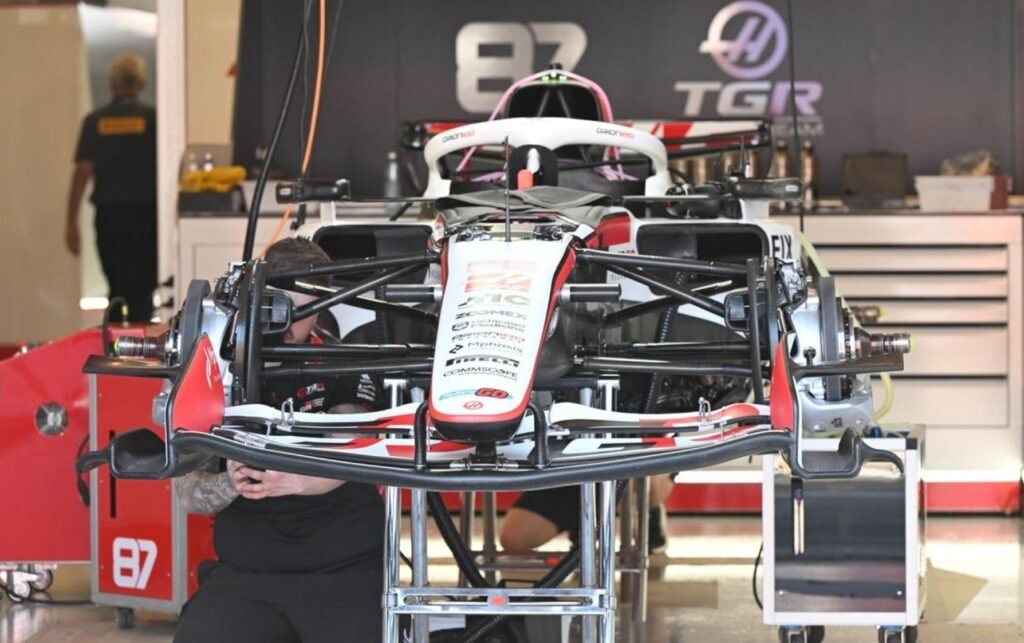
Haas’ front wing pillar concept shows how Formula 1 has become a competition of precision engineering. A difference of just a few millimeters in a carbon fiber component can affect downforce, stability, and overall performance on track.
While the front wing pillar may look like a simple mounting part, Haas is proving that in Formula 1, even the smallest components can become a valuable aerodynamic weapon.

Adhe is part of the 88 Eight Box Editorial Team, covering JDM culture, motorsport, automotive technology, and industry news. The team focuses on delivering original automotive stories, reviews, and insights for enthusiasts worldwide.