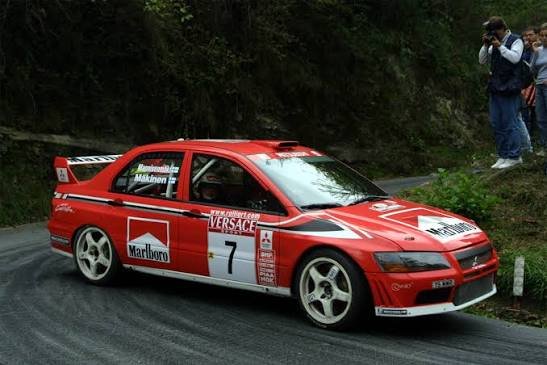
The 1990s are widely regarded as one of the wildest and most iconic eras in the history of rally racing. During this period, the World Rally Championship (WRC) became a battlefield where legendary manufacturers from Japan and Europe fought for supremacy.
But the WRC in the 1990s was not just about finding the fastest car on the stages. It was also a golden era where manufacturers used rally racing as a platform to showcase their engineering capabilities, creating some of the most legendary machines ever built.
From Subaru, Toyota, Ford, Peugeot, and Mitsubishi, every manufacturer brought unique technology and philosophy to the championship. Among all those names, Mitsubishi became one of the most feared forces in rally history.
With the famous three-diamond logo on its cars, Mitsubishi transformed the Lancer Evolution into a rally weapon capable of dominating almost any surface. During its peak years, Mitsubishi forced major rivals such as Subaru, Ford, Toyota, and Peugeot to work harder than ever just to challenge them.
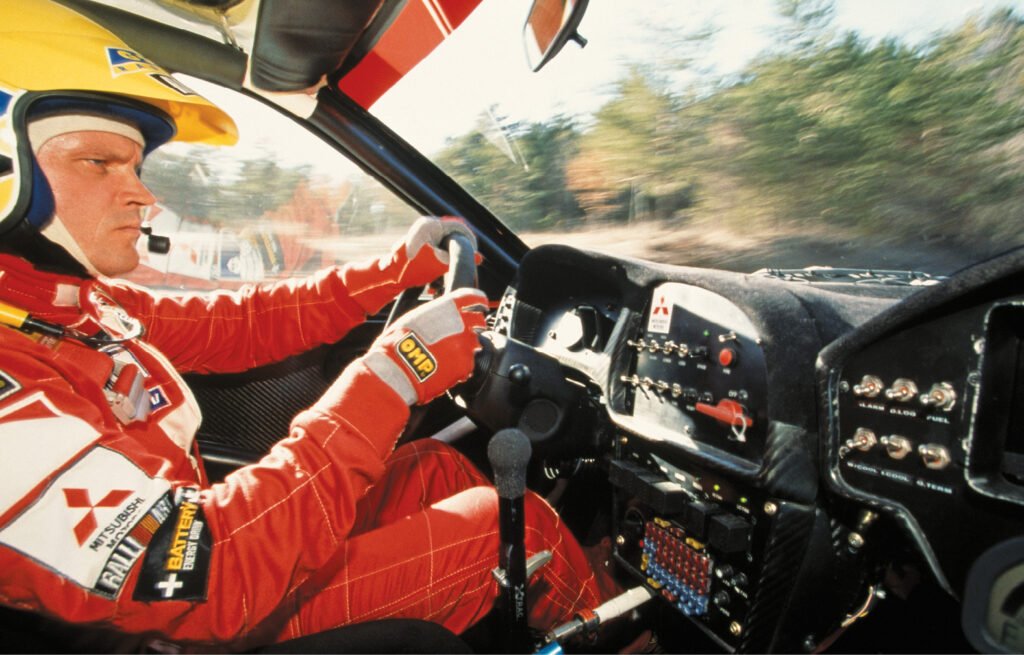
The foundation of Mitsubishi’s success came from the perfect combination of an exceptional car and a brilliant driver: Tommi Mäkinen.
Together with the early generations of the Lancer Evolution, from the Evo III to the Evo VI, Mitsubishi achieved an incredible four consecutive World Rally Championship drivers’ titles from 1996 to 1999 with Mäkinen behind the wheel.
During that era, the name Lancer Evolution became almost synonymous with victory.
The Evo was known as a machine that was fast, aggressive, and incredibly reliable. It could conquer the asphalt roads of Monte Carlo, the snowy stages of Sweden, and the brutal gravel roads of Safari Rally. Mitsubishi had created one of the most complete rally cars of its generation.
However, as history has proven many times, no racing dynasty can last forever.
The Beginning of Mitsubishi’s Decline
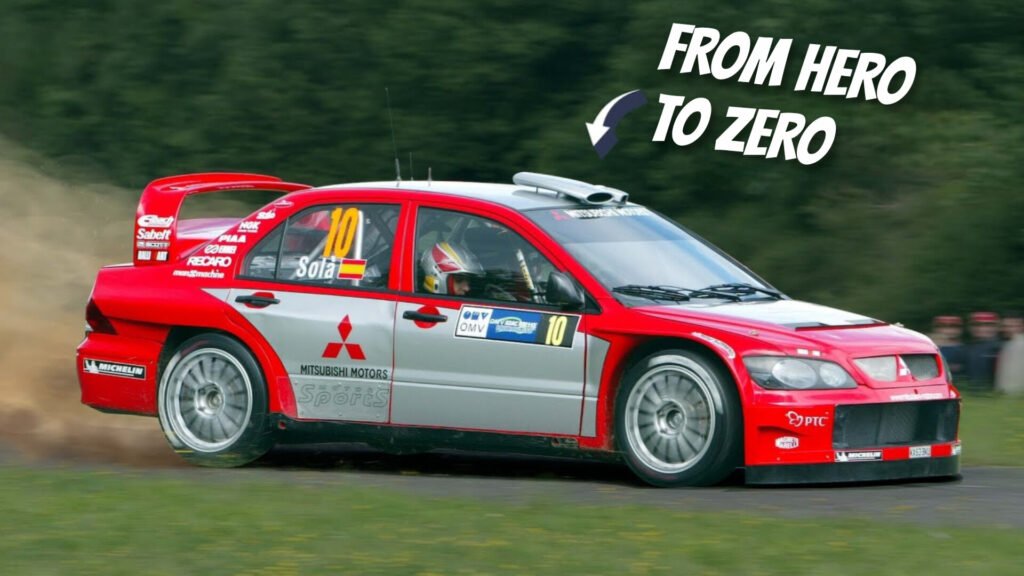
Mitsubishi’s downfall began when the WRC entered a new era with the introduction of World Rally Car regulations in 1997.
The new rules completely changed the competition. Unlike the previous Group A regulations, manufacturers were given much greater freedom to modify their cars without the requirement of producing large numbers of road-going homologation models.
This allowed teams to create cars specifically designed for rally competition.
Subaru quickly developed the Impreza WRC. Ford introduced the Focus WRC, a car that became famous for its speed and balance. Peugeot later created the legendary 206 WRC, which would become one of the most successful rally cars in history.
Meanwhile, Mitsubishi decided to continue using the Group A-based philosophy that had already delivered them championship success.
At first, the decision seemed reasonable. The Lancer Evolution had won four consecutive drivers’ championships, and Mitsubishi believed its proven formula still had enough potential.
Unfortunately, that confidence became the beginning of a major problem.
While other manufacturers were developing completely new WRC-spec machines, Mitsubishi continued evolving an older platform. This limited the company’s ability to create modern suspension geometry, advanced aerodynamics, and electronic systems that were becoming essential in the new era.
The Evo was still competitive, but the advantage Mitsubishi once enjoyed was slowly disappearing.
The Arrival of the Mitsubishi Lancer Evolution 7 WRC
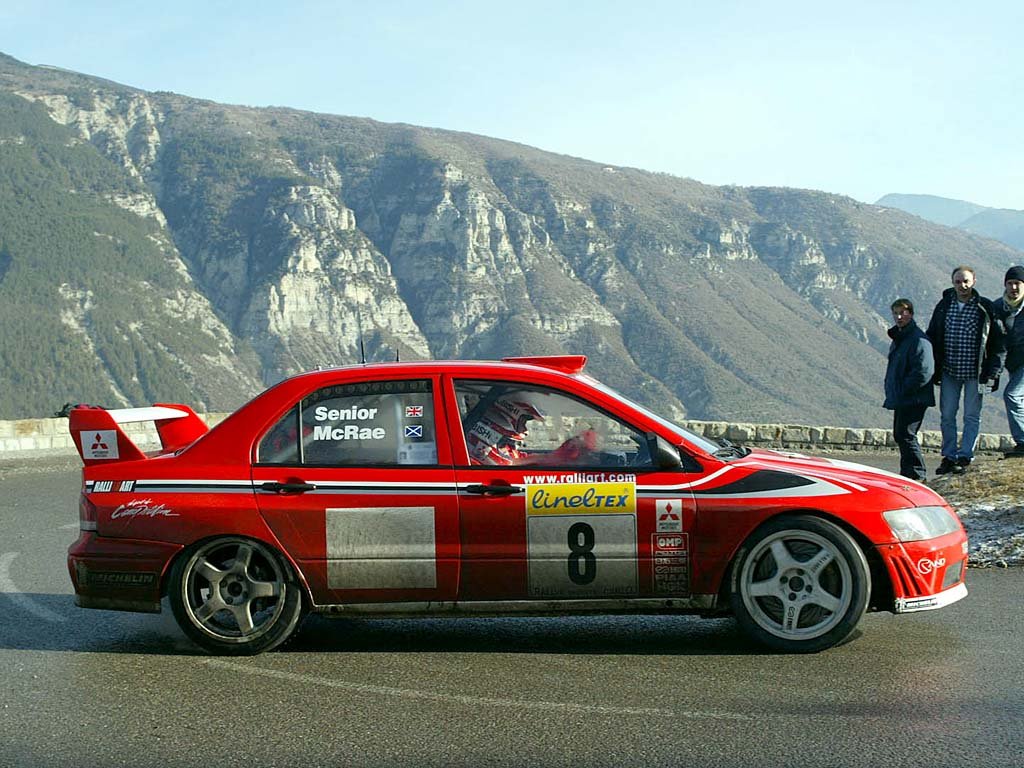
Eventually, Mitsubishi realized that it needed a true World Rally Car to compete in the modern WRC.
The answer was the Mitsubishi Lancer Evolution 7 WRC.
However, the timing was far from perfect.
Mitsubishi had already lost valuable years of development compared with its rivals. The team had very limited time to create a completely new rally machine, and the project was rushed before making its debut at Rally Sanremo in 2001.
Instead of being developed around a purpose-built rally platform, the Evo 7 WRC was based on the Lancer Cedia, a larger family sedan platform.
This created a major disadvantage.
Previous generations of the Lancer Evolution were compact, aggressive, and perfectly suited for rally stages. The Evo 7, however, inherited a larger body and heavier character from its road car foundation.
Compared with the compact Peugeot 206 WRC and the highly balanced Subaru Impreza WRC, the Mitsubishi struggled to match their agility and responsiveness.
Ralliart engineers attempted to improve the car with major aerodynamic upgrades, but the basic problem remained. The platform itself was not ideal for modern WRC competition.
The Evo 7 WRC felt heavier, less agile, and more difficult to drive at the limit.
Outdated Technology Became Another Weakness
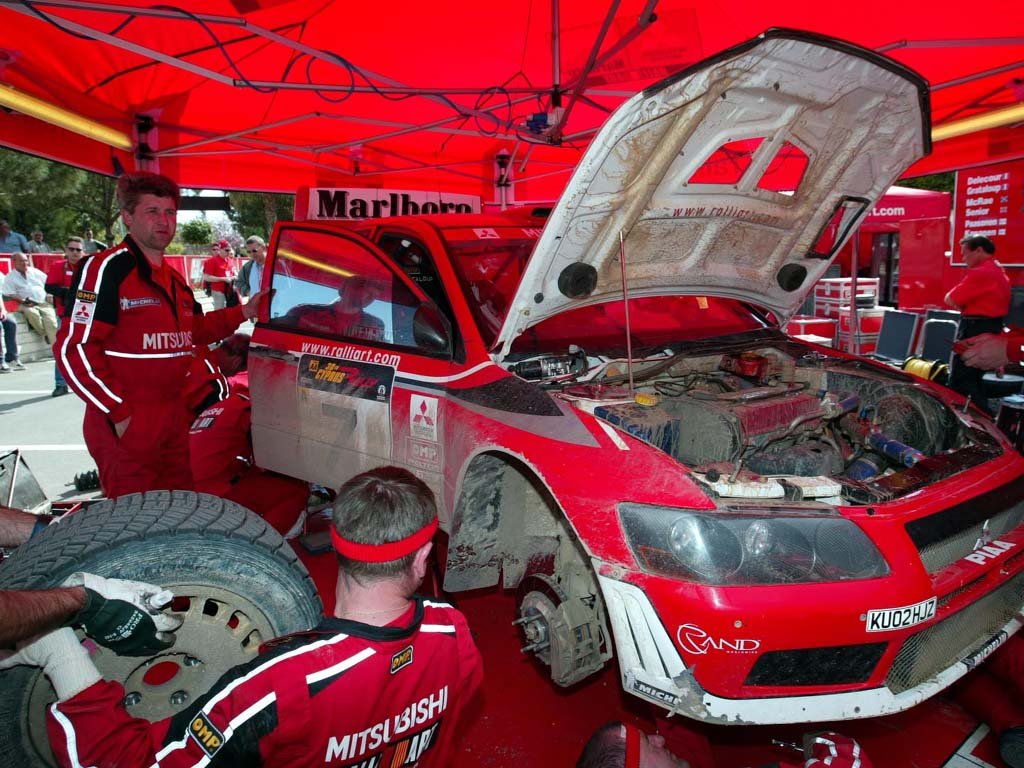
The problems were not only related to the car’s size and weight.
Technology also became a major disadvantage.
The WRC regulations allowed manufacturers to use advanced electronic systems, including active differentials that could automatically manage torque distribution between the front, center, and rear axles.
These systems helped cars accelerate faster out of corners, improve stability under braking, and make them easier to control.
While Subaru, Ford, and Peugeot embraced these technologies, Mitsubishi remained more conservative.
The Evo 7 WRC continued using a more traditional drivetrain setup, forcing drivers to rely heavily on techniques such as left-foot braking to maximize performance.
This approach worked perfectly for Tommi Mäkinen, who understood Mitsubishi’s rally cars better than anyone.
But after Mäkinen left for Subaru at the end of the 2001 season, Mitsubishi lost the driver who could extract the maximum potential from the car.
A Difficult Era Without Tommi Mäkinen
To replace their legendary champion, Mitsubishi recruited two experienced drivers: François Delecour and Alister McRae.
Both drivers had impressive careers in WRC, but even they struggled with the Evo 7 WRC’s unique characteristics.
The car required a very specific driving style, and adapting to its limitations was extremely difficult.
The situation became worse because the Evo 7 WRC also suffered from reliability issues.
Electrical failures and transmission problems frequently affected Mitsubishi’s results, causing lost opportunities and damaging the confidence of both drivers and engineers.
For a team that had dominated the championship only a few years earlier, the decline was a painful experience.
During the 2002 season, Mitsubishi collected only nine constructors’ points, falling far behind rivals such as Subaru, Peugeot, and Ford.
For a manufacturer that had once been the king of rally racing, those results were extremely disappointing.
The End of Mitsubishi’s WRC Dream
Mitsubishi continued trying to recover with later versions such as the Evo WRC2, WRC04, and WRC05.
However, the damage had already been done.
The Evo 7 WRC became a symbol of Mitsubishi’s struggle to adapt to a rapidly changing motorsport environment. After the 2005 season, Mitsubishi officially ended its WRC program.
The story of the Lancer Evolution 7 WRC teaches one important lesson:
In motorsport, past success does not guarantee future victories.
Mitsubishi once ruled the rally world with the Lancer Evolution, but when regulations changed and competitors moved forward with new technology, the company struggled to catch up.
The Mitsubishi Lancer Evolution 7 WRC was not a bad car because Mitsubishi lacked engineering talent. In fact, the company had already proven its ability to build championship-winning machines.
The real problem was timing.
Mitsubishi underestimated how quickly the WRC landscape would change. The Evo 7 WRC arrived in an era where every small advantage mattered, and being late in development meant fighting an uphill battle against rivals who had already mastered the new regulations.
Perhaps the biggest tragedy of the Evo 7 WRC is that it carried the name of one of rally’s greatest legends, but it was born during the period when Mitsubishi’s dominance was already fading.
However, failure does not erase history. The Lancer Evolution remains one of the most important names in rally culture, and the Evo 7 road car became a JDM icon loved by enthusiasts around the world.
What do you think about the Mitsubishi Lancer Evolution 7 WRC? Was it truly one of Mitsubishi’s biggest mistakes in rally history, or was it simply a victim of bad timing and changing regulations?
Share your opinion in the comments below.

Adhe is part of the 88 Eight Box Editorial Team, covering JDM culture, motorsport, automotive technology, and industry news. The team focuses on delivering original automotive stories, reviews, and insights for enthusiasts worldwide.