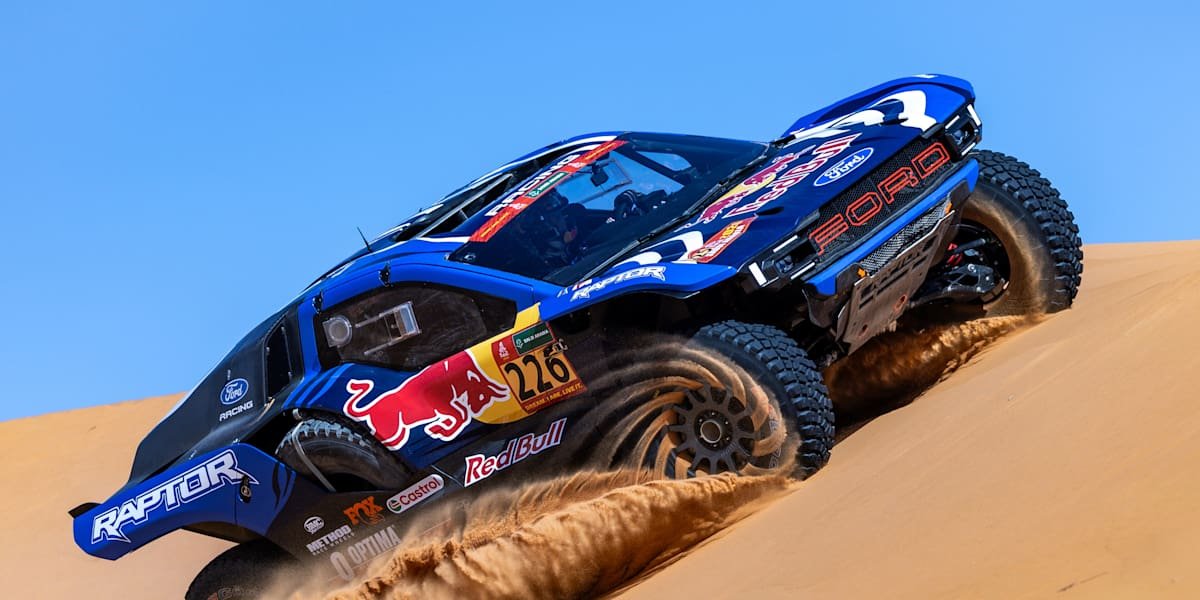
Dakar Rally, The Race That Goes Beyond Speed
There is no other motorsport event in the world that combines extreme speed, navigation challenges, physical endurance, and survival against nature like the Dakar Rally. This legendary competition is not simply about being the fastest driver. It is a brutal test where competitors must fight against endless deserts, extreme temperatures, rocky terrain, deep sand, and the constant risk of getting lost in areas without clear roads.
Since its first edition in 1979, the Dakar Rally has become one of the most demanding motorsport events ever created. Many drivers believe winning Dakar can be even harder than winning a circuit championship because the challenges change every single day. Unlike traditional racing, where the track is predictable, Dakar forces competitors to adapt constantly to unpredictable environments.
The Birth of Dakar Rally: From Paris to the African Desert
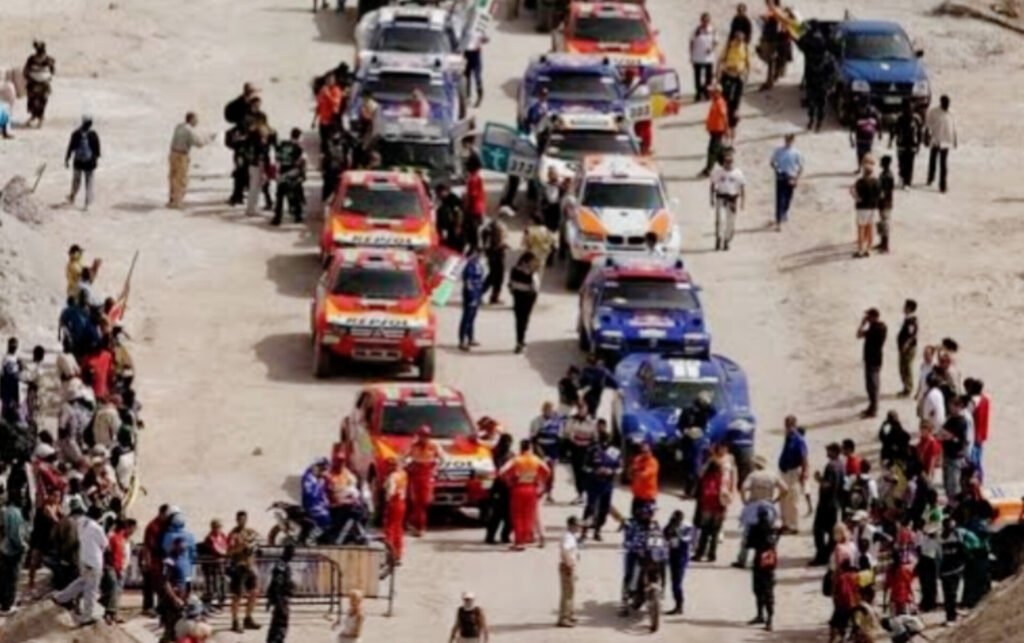
The Dakar Rally was created by French racer and adventurer Thierry Sabine after he became lost during an off-road race in the Sahara Desert in 1977.
That experience inspired Sabine to create a competition that would test both human ability and machine reliability in one of the harshest environments on Earth.
The first Dakar Rally was held in 1979 with the original route:
Paris (France) → Dakar (Senegal)
The journey crossed thousands of kilometers through Africa, challenging participants with massive deserts, dangerous terrain, and limited infrastructure.
During its early years, Dakar was not only for professional racers. Many ordinary adventurers joined the event simply to prove their courage and survival skills against the wilderness.
Dakar Rally Becomes a Global Motorsport Icon
Over the decades, Dakar became a symbol of extreme adventure and motorsport endurance. However, security concerns forced organizers to change the location of the event.
In 2009, Dakar left Africa and moved to South America, where countries such as Argentina, Chile, and Peru provided new challenges. Then, starting in 2020, the rally found a new home in Saudi Arabia, introducing competitors to a completely different desert environment.
Saudi Arabia brought new obstacles, including:
- Endless sand dunes
- Massive desert landscapes
- Rocky mountain tracks
- Dry river valleys
- Extreme temperature changes between day and night
Even with new locations, Dakar continues to follow the same philosophy:
Humans versus nature.
The Dakar Rally Format
Unlike circuit racing, where drivers compete for several hours on a closed track, Dakar Rally lasts for nearly two weeks.
Competitors must complete multiple stages every day, with each stage containing different challenges.
The rally consists of two main sections:
Special Stage
The competitive section where drivers race against the clock. The fastest time determines the ranking.
Liaison Stage
A transportation section where competitors travel to the next location. This part is not timed but requires careful planning because mechanical problems can still affect the race.
A modern Dakar Rally can cover thousands of kilometers. The total distance includes long road sections and thousands of kilometers of competitive racing through extreme terrain.
Dakar Rally Vehicle Categories
Dakar is unique because it is not limited to one type of vehicle. Different machines compete against each other in several categories.
1. Motorcycles
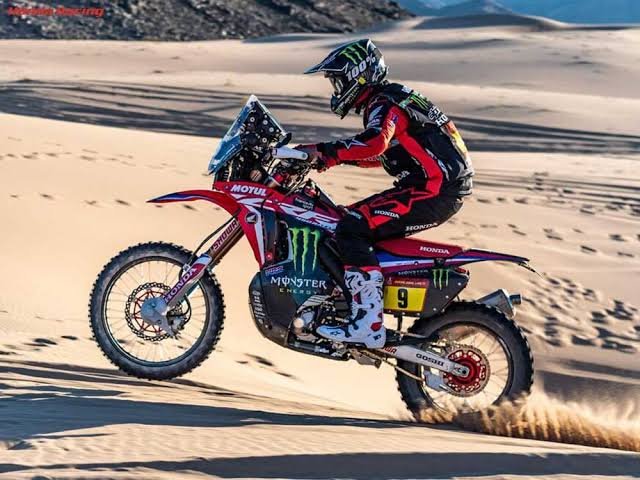
The motorcycle category is considered one of the most dangerous classes in Dakar because riders face every obstacle without the protection of a vehicle cabin.
Dakar motorcycles are specially designed with:
- Around 450cc engines
- Long-travel suspension systems
- Large fuel tanks
- Lightweight racing components
- Advanced navigation equipment
Manufacturers such as KTM, Honda, and Hero have become major competitors in this category.
Motorcycle riders must combine incredible physical strength, navigation ability, and mental endurance because even a small mistake can end their race.
2. Rally Raid Cars
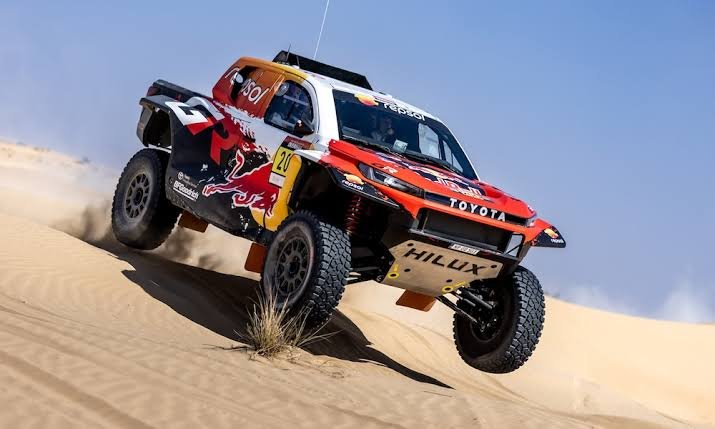
The car category is the most famous class in Dakar because it attracts major automotive manufacturers.
Modern Dakar cars are highly advanced racing machines equipped with:
- Powerful turbocharged engines
- Four-wheel-drive systems
- Long-travel suspension
- Reinforced chassis
- Special desert tires
- Advanced cooling systems
Unlike normal off-road vehicles, Dakar cars are built to survive high-speed impacts, huge jumps, and thousands of kilometers of punishment.
Major teams include:
- Toyota Gazoo Racing
- Ford M-Sport
- Dacia Sandriders
- Mini X-Raid
These manufacturers use Dakar as a laboratory to develop future automotive technologies.
3. Trucks
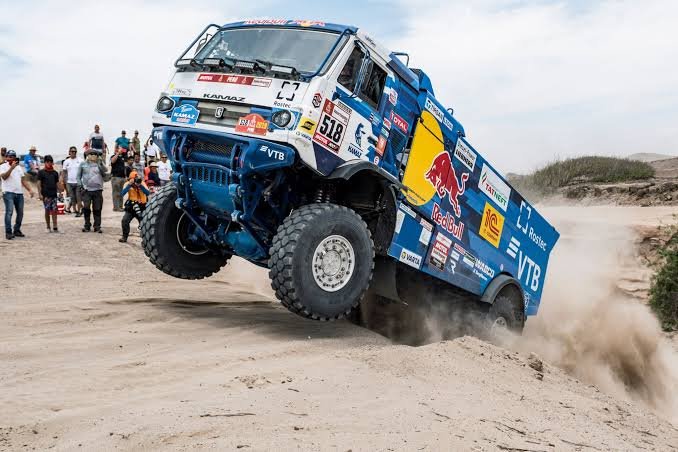
The truck category is one of the most spectacular parts of Dakar Rally.
These massive machines can weigh several tons, yet they are capable of flying over sand dunes at incredible speeds.
Dakar trucks feature:
- Extremely powerful engines
- Heavy-duty suspension systems
- Reinforced frames
- Advanced cooling technology
Legendary manufacturers and teams include:
- Kamaz
- Iveco
- Tatra
The truck category proves that even the largest vehicles can become extreme racing machines.
The Crazy Technology Behind Dakar Vehicles
Dakar vehicles are not ordinary off-road cars. Every component is designed to survive some of the harshest conditions in motorsport.
Suspension Systems
Suspension is one of the most important technologies in Dakar.
The vehicles must absorb:
- Huge jumps
- Hard landings
- Sharp rocks
- Deep holes
- High-speed impacts
Dakar suspension systems use:
- Competition-grade shock absorbers
- Extremely long suspension travel
- Lightweight but strong materials
- Adjustable damping systems
A suspension failure can immediately end a competitor’s race.
Engine Technology
Dakar engines must balance two things:
Maximum performance and extreme reliability.
The engines need:
- Massive torque for climbing dunes
- Efficient cooling systems
- Protection from dust and sand
- Reliability over thousands of kilometers
Unlike track racing, where an engine only needs to survive a few hundred kilometers, Dakar engines must endure nearly two weeks of punishment.
Navigation Technology
Speed alone cannot win Dakar.
Navigation plays a critical role because competitors race through open terrain without traditional racing roads.
Drivers and navigators rely on:
- Digital roadbooks
- GPS systems
- Compass navigation
- Route notes
A navigation mistake of only a few kilometers can cost a team hours and destroy their chances of victory.
Why Is Dakar Rally So Difficult?
1. No Clear Roads
Unlike the World Rally Championship (WRC), Dakar does not take place on closed roads with a fixed route.
Competitors must read the terrain while driving at extremely high speeds.
A small navigation error can send a team far away from the correct route.
2. Extreme Weather Conditions
The desert creates unpredictable challenges.
During the day:
- Temperatures can become extremely high
- Dust reduces visibility
- Drivers risk dehydration
During the night:
- Temperatures can drop dramatically
- Visibility becomes more difficult
- Mechanical repairs become harder
3. Vehicle Damage
Small failures can destroy a competitor’s entire campaign.
Common problems include:
- Tire punctures
- Engine overheating
- Broken suspension components
- Electrical failures
- Transmission problems
A team can lose hours because of a single mechanical issue.
Dakar Rally Legends
Stéphane Peterhansel – “Mr. Dakar”
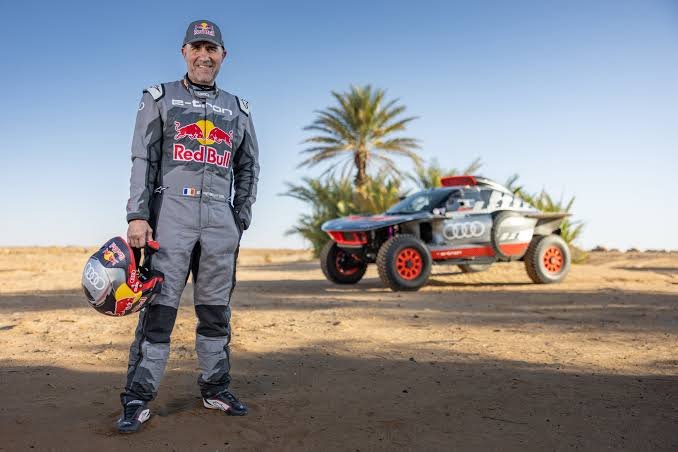
Stéphane Peterhansel is considered the greatest Dakar competitor in history.
He achieved legendary success in both motorcycle and car categories, earning the nickname “Mr. Dakar.”
His ability to combine speed, strategy, and endurance made him one of the most respected figures in rally raid history.
Nasser Al-Attiyah
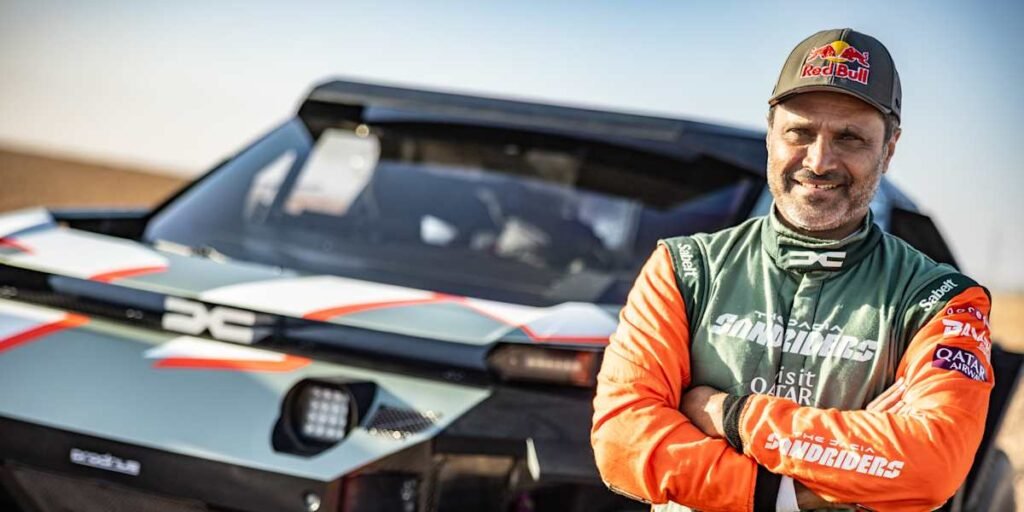
Nasser Al-Attiyah is one of the most successful modern Dakar drivers.
Known for his aggressive driving style and incredible desert skills, he has become one of the dominant forces in the modern era of rally raid racing.
Ari Vatanen
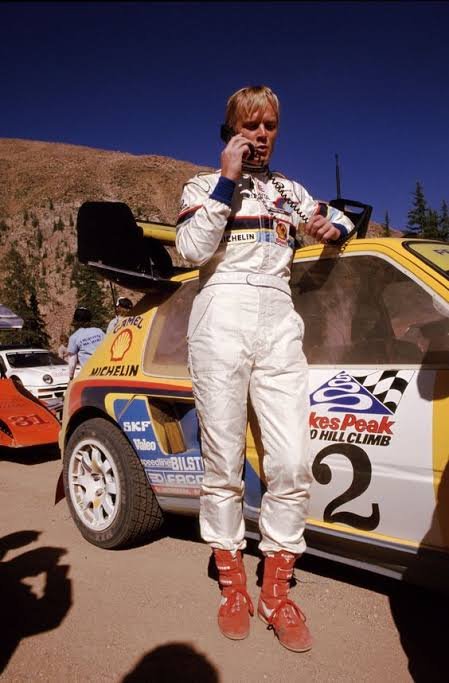
The former World Rally Champion became a Dakar icon through his spectacular driving style.
His famous battles in the desert helped make Dakar one of the most recognized motorsport events worldwide.
Dakar Rally and The Future of Motorsport
Dakar is no longer only a race. It has become a testing ground for future automotive technology.
Manufacturers are now exploring:
- Hybrid technology
- Alternative energy systems
- More sustainable racing solutions
- Advanced electric powertrains
The extreme environment of Dakar allows manufacturers to test technology under conditions far beyond normal road use.
What survives Dakar can eventually influence future production vehicles.
More Than Just a Race
The Dakar Rally is far more than a motorsport competition. It is an ultimate adventure that tests the limits of human courage, engineering ability, and mechanical endurance.
Winning Dakar requires more than speed. Competitors need:
- Courage
- Physical endurance
- Strategic thinking
- Navigation skills
- A machine capable of surviving the impossible
This is why Dakar remains one of the most legendary motorsport events on Earth.
Because in Dakar, victory is not only about being the fastest.
Victory belongs to those who can survive until the finish line.

Adhe is part of the 88 Eight Box Editorial Team, covering JDM culture, motorsport, automotive technology, and industry news. The team focuses on delivering original automotive stories, reviews, and insights for enthusiasts worldwide.