
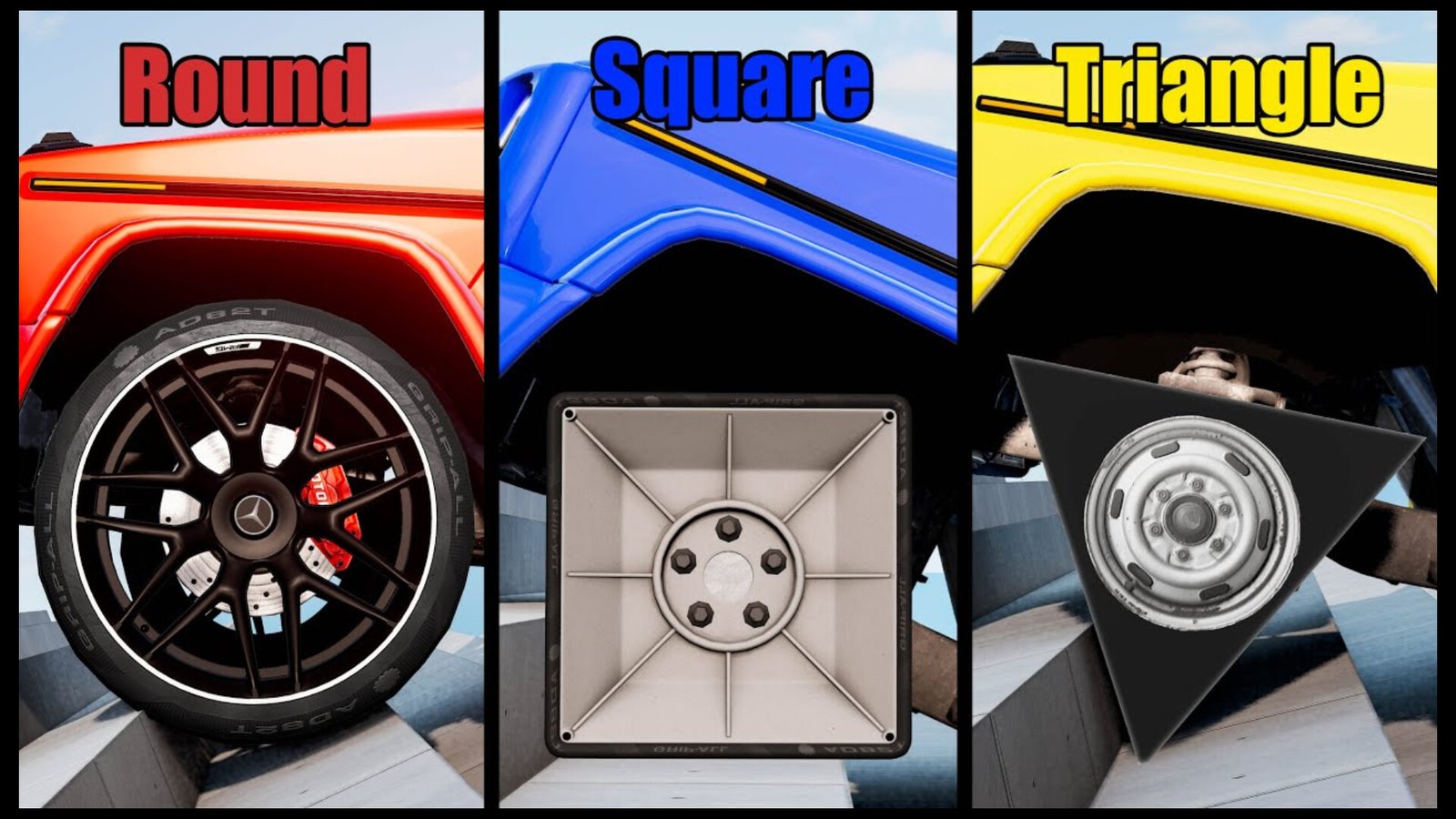
If you look closely, almost every vehicle in the world, from bicycles and cars to Formula 1 race machines, uses round wheels. The design may appear simple, but behind this shape lies a combination of physics and engineering principles that allow vehicles to move faster, more efficiently, and with greater stability.
So, why are wheels not designed as squares or triangles? The answer lies in how a wheel interacts with the surface beneath it.
Why Do Wheels Need to Be Round?
One of the main reasons wheels are round is their ability to distribute vehicle weight evenly. A circular shape spreads the load more balanced across the tire’s contact patch with the road, reducing stress on components and improving stability.
Another important factor is efficiency. Round wheels create very low rolling resistance, meaning they require less energy to move forward compared to other shapes. As a wheel rotates, its center remains at a constant height, allowing the vehicle to move smoothly without repeatedly lifting and dropping the entire body.
Comfort is another major advantage. Because the wheel axle stays at a consistent level while moving, vibrations and impacts are greatly reduced. This allows passengers to experience a smoother ride, even on uneven surfaces.
From a safety perspective, round wheels also provide better grip and control. They allow vehicles to accelerate, brake, and change direction more effectively across different road conditions.
What Would Happen If Wheels Were Square?
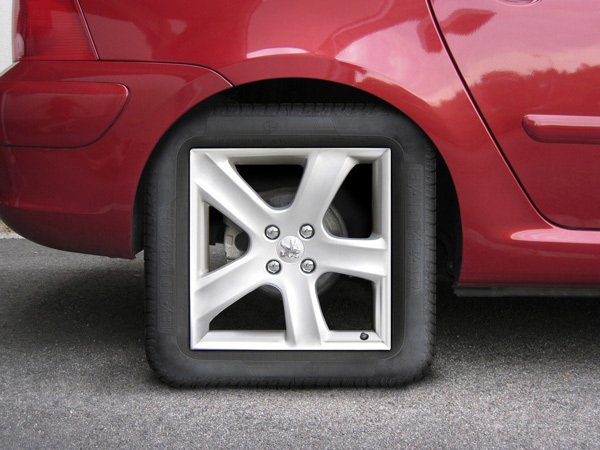
In theory, square wheels can be built, and they have even been used in engineering experiments. However, they are extremely inefficient for normal transportation.
Every time a square wheel rotates, the vehicle must force itself over each corner. This requires significantly more energy compared to a smooth circular motion.
The axle would also move up and down dramatically every time the wheel changes sides. This would place enormous stress on the suspension system while creating uncomfortable and damaging vibrations for passengers and vehicle components.
Why Not Use Triangle-Shaped Wheels?
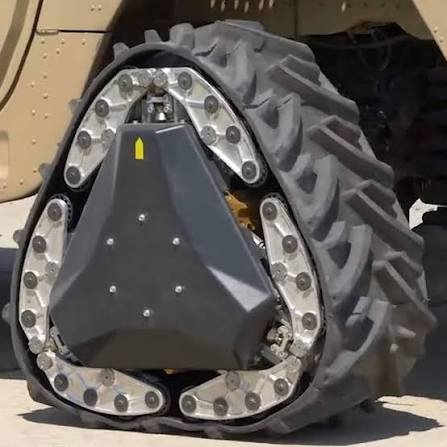
Triangle-shaped wheels face similar problems. As they rotate, each sharp corner creates repeated impacts with the road surface.
This would result in unstable movement, excessive vibration, and uneven load distribution. The three corners would experience concentrated stress, causing faster wear and increasing the risk of damage.
The Origin of the Round Wheel

The concept of the round wheel dates back thousands of years. The first wheels appeared around 3500 BC in Mesopotamia, an ancient region located in modern-day Iraq.
Interestingly, the earliest wheels were not created for transportation. They were originally used as pottery wheels to help craftsmen shape clay objects.
Later, people in Mesopotamia adapted these circular wooden discs for transportation by attaching them to carts. This innovation made it possible to move heavy goods with much less effort.
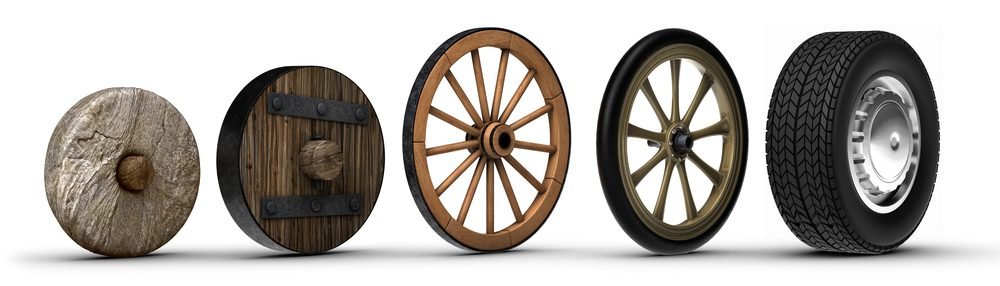
The wheel continued to evolve over centuries, from simple wooden designs to iron-reinforced wheels and eventually modern tires. In 1888, John Boyd Dunlop patented the first practical pneumatic tire, an air-filled rubber tire originally developed for bicycles, which became the foundation of modern vehicle tires.
88eightbox Opinion: A Simple Shape That Changed the World
The round shape may look like one of the simplest designs ever created, but it remains one of humanity’s most influential inventions. Thousands of years after its first appearance, the wheel continues to serve as the foundation of modern transportation.
Technology has continued to advance, from electric vehicles to autonomous driving systems. However, the basic principle of the round wheel remains difficult to replace because it follows the laws of physics in the most efficient way possible.
What do you think? Will future transportation still rely on round wheels, or will humans eventually discover a completely new system of movement?
Share your thoughts in the comments and let us know your opinion about the future of vehicle technology.

Adhe is part of the 88 Eight Box Editorial Team, covering JDM culture, motorsport, automotive technology, and industry news. The team focuses on delivering original automotive stories, reviews, and insights for enthusiasts worldwide.