Hiroshi Okuda died on August 8, 2026, at the age of 93.
Toyota confirmed his passing, although the company did not initially disclose the cause of death. Some reports later stated that he died of natural causes/old age.
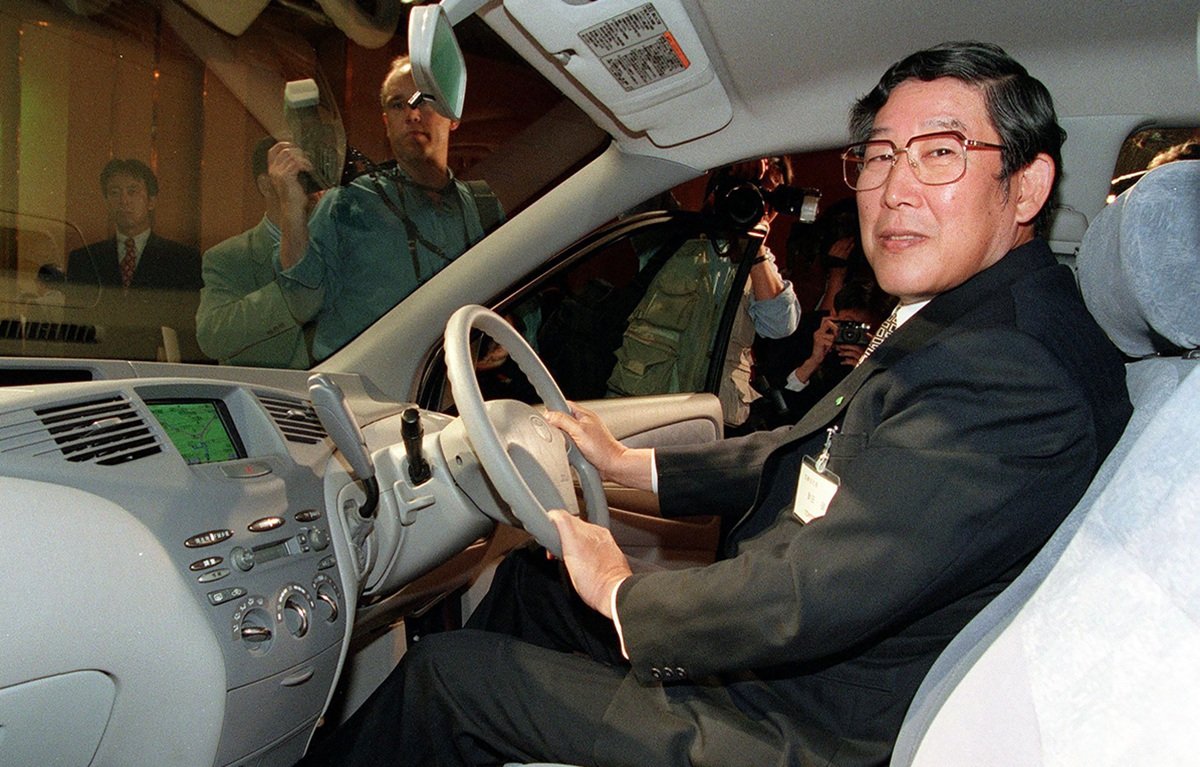
Hiroshi Okuda (29 December 1932 – 8 August 2026) was Toyota’s President from 1995 to 1999 and Chairman from 1999 to 2006. He is widely remembered for pushing the development of the first-generation Toyota Prius, launched in 1997, and for leading Toyota’s major global expansion.
The automotive world has lost one of Japan’s most influential industry figures. Hiroshi Okuda, the former President and Chairman of Toyota Motor Corporation who played a key role in bringing the first mass-produced hybrid vehicle to the global market, has died at the age of 93.
Okuda is remembered as a visionary leader who transformed Toyota’s direction during his tenure from 1995 to 2006. At a time when many automakers were still uncertain about the future of environmentally friendly vehicles, he made the bold decision to accelerate Toyota’s hybrid vehicle program.
That decision led to the launch of the first-generation Toyota Prius in 1997, a car that would later become the symbol of the hybrid revolution and a foundation for the development of modern electrified vehicles.
The Man Behind the Prius Revolution
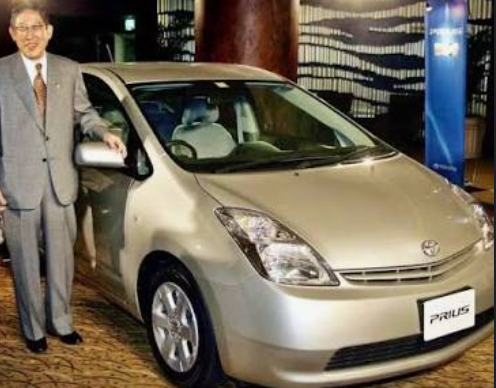
Known as the “Father of the Prius,” Hiroshi Okuda played a crucial role in pushing Toyota’s engineers to develop a fuel-efficient vehicle ahead of its original schedule.
Okuda believed the automotive industry was heading toward a major transformation driven by environmental concerns and the need for better fuel efficiency. He challenged Toyota’s development team to move faster and bring the Prius to market before the new millennium.
The result was a groundbreaking vehicle that changed public perception of hybrid technology. The Prius proved that eco-friendly cars could be practical, reliable, and suitable for everyday use, paving the way for Toyota’s long-term electrification strategy.
Transforming Toyota Into a Global Giant

Beyond the Prius project, Okuda’s leadership brought significant changes to Toyota’s global business strategy.
Under his direction, Toyota expanded aggressively by increasing production capacity and strengthening its presence in key markets, including the United States, Europe, and Asia.
Unlike many previous Toyota executives who came from engineering backgrounds or the Toyoda family lineage, Okuda built his career through international sales after joining Toyota in 1955.
His more aggressive and global-focused management style helped transform Toyota’s traditionally conservative corporate culture into a more dynamic and competitive organization.
Influence Beyond the Automotive Industry
Okuda’s influence extended beyond Toyota and the automotive sector. From 2002 to 2006, he served as chairman of Keidanren (Japan Business Federation), one of Japan’s most powerful business organizations.
Through that role, he became one of Japan’s most influential economic figures, advising the government on business and economic policies.
A Lasting Legacy in Automotive History
The passing of Hiroshi Okuda marks the end of an important chapter in Japanese automotive history.
His decision to invest heavily in hybrid technology at a time when the industry remained skeptical proved to be a defining moment. More than two decades after the Prius debuted, his vision continues to influence the direction of the global automotive industry.
Hiroshi Okuda did more than help Toyota become one of the world’s largest automakers — he helped reshape the future of mobility by accelerating the transition toward cleaner and more efficient vehicles.

Adhe is part of the 88 Eight Box Editorial Team, covering JDM culture, motorsport, automotive technology, and industry news. The team focuses on delivering original automotive stories, reviews, and insights for enthusiasts worldwide.