
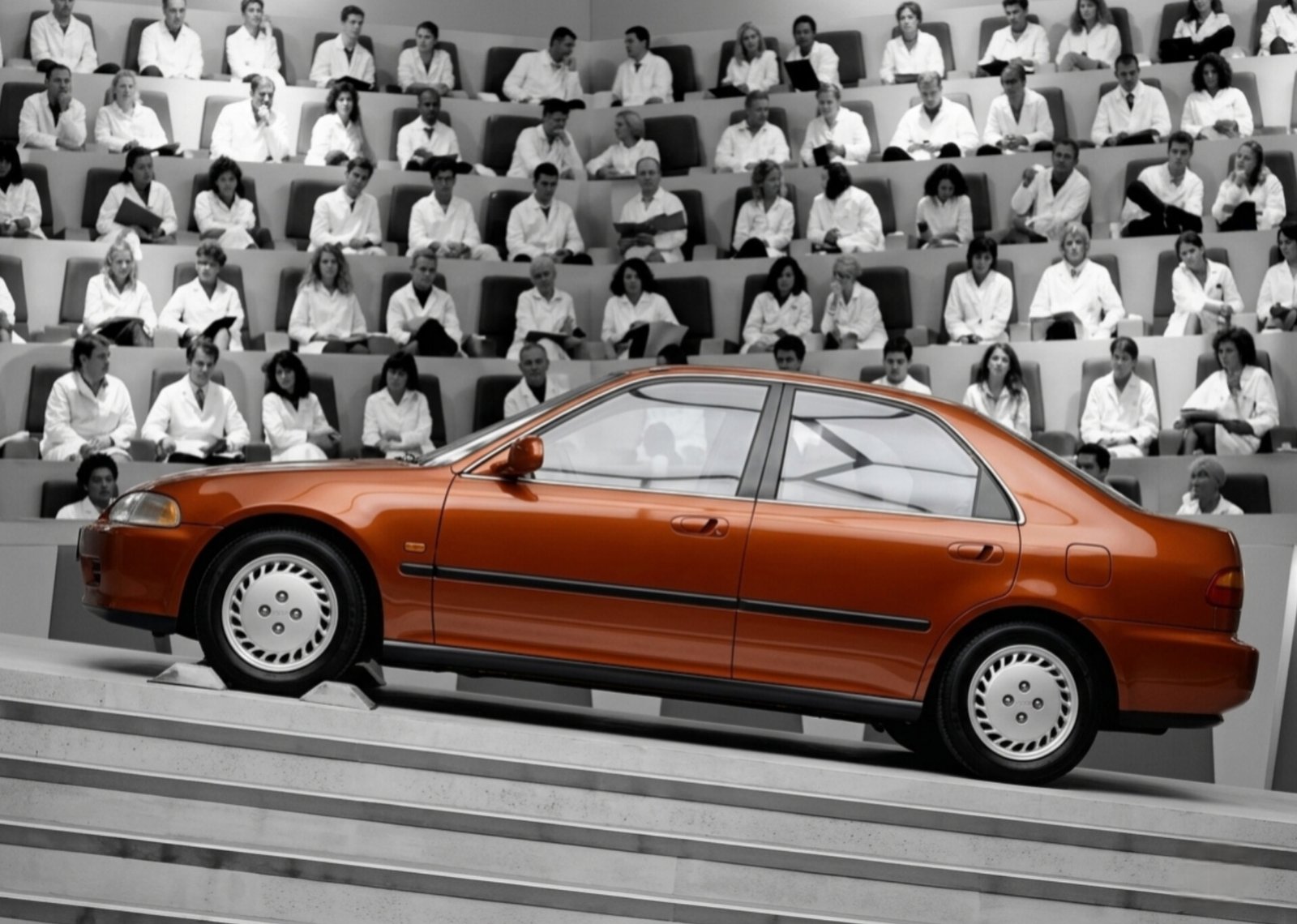
In 1994, Honda put the fifth-generation Civic through an extraordinary endurance test that pushed the limits of engine durability. The company ran the Civic continuously on a dynamometer for 24 hours a day, seven days a week, for 63 consecutive days.
The test accumulated around 1,500 hours of nonstop operation, with Honda engineers monitoring the vehicle around the clock to demonstrate the strength and reliability of the Civic’s engine. The extreme endurance run later became the focus of a Honda advertisement, carrying a simple but powerful message: the company was willing to go to extraordinary lengths to test the engines used in its everyday vehicles.
A continuous 63-day run was equivalent to more than two years of normal driving if a car was used for two hours every day — compressed into just over two months of nonstop operation. However, it is important to note that a dynamometer test is not exactly the same as real-world driving. The controlled environment removes factors such as repeated cold starts, heavy traffic, road conditions, and constant temperature changes that occur during daily use.
Even so, operating an engine continuously for 1,500 hours remains an impressive demonstration of durability. The test perfectly represented the engineering philosophy that helped build Honda’s reputation during the 1990s, when models like the Civic became globally known for their reliability, efficiency, and long-lasting performance.

Adhe is part of the 88 Eight Box Editorial Team, covering JDM culture, motorsport, automotive technology, and industry news. The team focuses on delivering original automotive stories, reviews, and insights for enthusiasts worldwide.