During the 1960s through the 1990s, many manufacturers believed that the naturally aspirated V12 engine was the ultimate weapon for winning the legendary 24 Hours of Le Mans.
With twelve cylinders, a beautiful exhaust note, high-revving characteristics, and massive power potential, the V12 was considered one of the most perfect internal combustion engine configurations ever created.
Manufacturers such as Ferrari, Jaguar, Aston Martin, and several Le Mans prototype teams relied on V12 engines in their pursuit of endurance racing glory.
However, motorsport often proves that theory and reality do not always match.
Behind its incredible sound and impressive performance, the V12 had several weaknesses that became increasingly obvious when the engine was forced to operate continuously under extreme conditions during a 24-hour race.
The Group C 3.5-Liter Era: When V12 Engines Were Forced to Live Like Formula 1 Engines
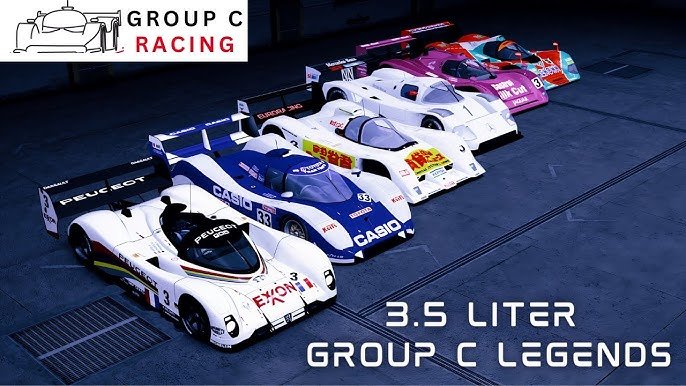
The biggest challenge appeared during the Group C 3.5-liter era from 1991 to 1993, when the FIA introduced new regulations requiring naturally aspirated 3.5-liter engines based on Formula 1 technology.
Many teams responded by developing extremely high-revving engines capable of exceeding 11,000 RPM.
On paper, these engines were technological masterpieces. They produced incredible horsepower and delivered breathtaking performance.
But Le Mans was not a sprint race.
A Formula 1 engine was designed to deliver maximum performance over a short distance, while a Le Mans engine had to survive flat-out running for an entire day.
As a result, many high-performance prototype engines struggled with reliability.
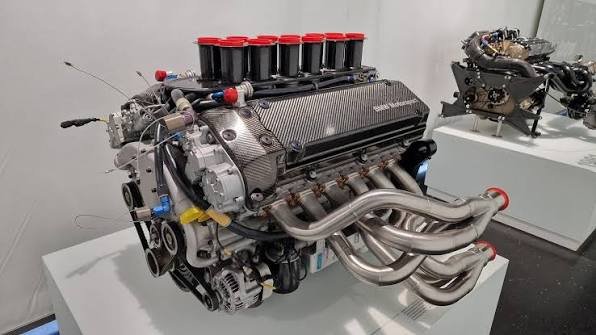
Cars such as the Jaguar XJR-14, Nissan R390 GT1, BMW V12 LMR, and other advanced prototypes experienced frequent mechanical failures during endurance competition.
One notable example was the Lola T92/10, which used the Judd GV 3.5 engine derived from Formula 1 technology. Competing in the 1992 World Sportscar Championship, the car suffered multiple retirements caused by internal engine failures and gearbox problems related to the extreme operating conditions.
Was the V12 Really a Bad Engine for Endurance Racing?
Interestingly, history also shows that not every V12-powered car failed.
Legendary machines such as the Ferrari 250 Testa Rossa, Matra-Simca MS670, and McLaren F1 GTR proved that V12 engines could still conquer endurance racing.
However, overall statistics from certain eras showed that V12-powered prototypes often suffered higher failure rates compared with V6 and V8 competitors.
So the question remains:
Was the V12 engine fundamentally unsuitable for Le Mans endurance racing?
The answer is more complicated.
The Engineering Perfection Behind the V12
From an engineering perspective, the V12 is one of the most naturally balanced engine layouts ever developed.
A 60-degree V12 configuration provides excellent primary and secondary balance, allowing the engine to operate extremely smoothly without requiring additional balance shafts like smaller four-cylinder engines.
This smoothness was one of the main reasons why manufacturers such as Ferrari, Jaguar, and Aston Martin were attracted to the design.
A smoother engine should theoretically experience less vibration and provide better durability.
But Le Mans is not a normal driving environment.
The race pushes every component far beyond normal limits.
The Hidden Enemy: Torsional Harmonic Vibration
One of the biggest problems faced by high-revving V12 engines was torsional harmonic vibration.
Many people assume that a crankshaft is a completely rigid component. In reality, every metal part has a certain level of elasticity.
When a crankshaft experiences massive torque forces, it can twist slightly before returning to its original shape.
In smaller engines such as V6s or V8s, this movement is relatively minor.
However, a V12 engine requires a much longer crankshaft to accommodate twelve cylinders.
Every combustion event creates a torque pulse through the crankshaft. With twelve cylinders firing continuously at extremely high RPM, these forces occur at a very high frequency.
When the frequency of these torque pulses matches the natural vibration frequency of the crankshaft, resonance occurs.
At that moment, the crankshaft can begin twisting like an elastic rod being repeatedly rotated.
Although this vibration is invisible to the human eye, the consequences are severe.
The first components affected are usually:
- Main bearings
- Connecting rod bearings
- Timing gears
- Valve train components
The crankshaft vibration can disturb the thin oil film protecting the bearings. Once that lubrication layer becomes unstable, metal-to-metal contact occurs.
Temperatures rise rapidly, bearing material begins to wear away, and eventually the bearing can fail completely.
At first, the problem may remain hidden. Oil pressure may still appear normal, and the engine may continue producing full power.
But every lap increases the damage.
Eventually, the engine loses oil pressure and suffers catastrophic failure.
Why Harmonic Dampers Could Not Fully Solve the Problem
To reduce these vibrations, engineers introduced torsional dampers or harmonic balancers at the end of the crankshaft.
Their purpose was to absorb vibration energy and prevent it from spreading throughout the engine.
However, damper technology during the 1960s, 1970s, and 1980s was still limited.
Rubber compounds, materials, and simulation technology were nowhere near as advanced as today.
The dampers helped reduce vibration, but they could not completely eliminate the problem when engines were pushed to maximum RPM for 24 hours.
The Second Major Problem: Heat Management
Besides vibration, another major weakness of large V12 engines was thermal management.
Every combustion engine generates enormous amounts of heat. Inside the combustion chamber, temperatures can exceed 2,000 degrees Celsius.
In smaller engines such as four-cylinder or V8 designs, cooling is easier because the engine block is shorter.
A V12 creates a much greater challenge.
With twelve cylinders arranged across two banks, the engine block becomes significantly longer. This means coolant must travel much farther through the engine.
Typically, coolant enters from the front of the engine first.
The front cylinders receive the coolest coolant, while the rear cylinders receive coolant that has already absorbed heat from the previous cylinders.
This creates a thermal gradient, where different areas of the engine operate at different temperatures.
Under normal road conditions, this difference may not be significant.
But during Le Mans, where the engine operates close to maximum load for hours, the temperature imbalance can become dangerous.
The consequences include:
- Uneven expansion of the engine block
- Increased mechanical stress
- Distorted components
- Higher risk of internal failure
The End of the V12 Era at Le Mans
Over time, engineers learned that winning endurance races was not about having the most cylinders or the biggest horsepower figure.
Success depended on the perfect balance between:
- Performance
- Efficiency
- Weight
- Fuel consumption
- Reliability
This is why the V12, once considered the ultimate symbol of performance, slowly disappeared from modern endurance racing.
Today’s Le Mans machines rely heavily on turbocharged V6 and V8 hybrid powertrains, supported by advanced materials, computer simulations, and sophisticated energy recovery systems.
Modern technology has allowed smaller engines to outperform traditional V12 designs in efficiency and durability.
The V12 was never a bad engine.
In fact, it remains one of the most beautiful and technically impressive engine layouts ever created.
But Le Mans taught the automotive world an important lesson:
The best racing engine is not the one that produces the most power. It is the one that can survive the longest when pushed to its absolute limit.

Adhe is part of the 88 Eight Box Editorial Team, covering JDM culture, motorsport, automotive technology, and industry news. The team focuses on delivering original automotive stories, reviews, and insights for enthusiasts worldwide.