
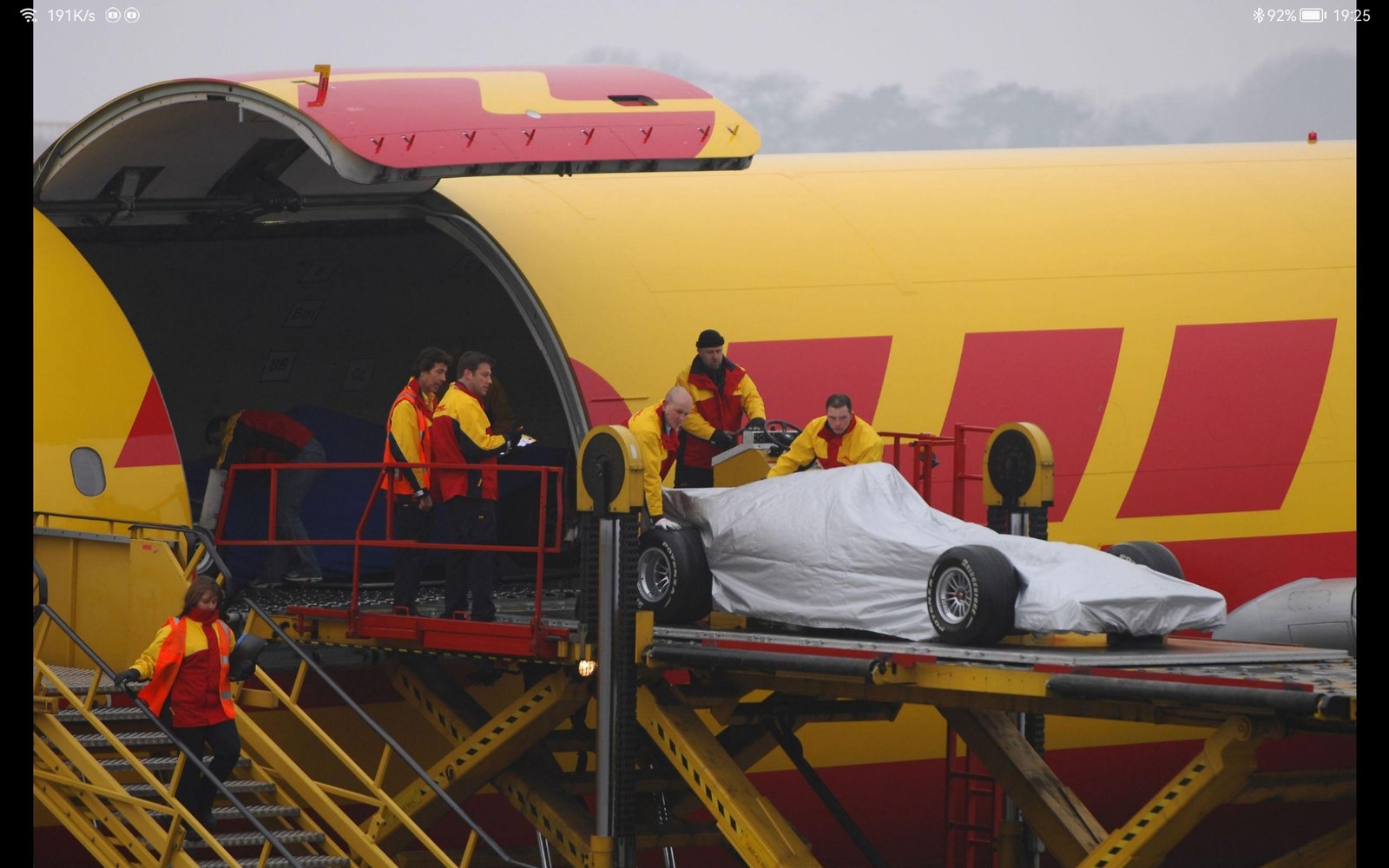
How can Formula 1 cars and entire racing teams move from one country to another in just a matter of days?
One week, the race takes place in the United Kingdom. The following week, the entire paddock are already standing in Hungary. Then it moves again to Belgium, Italy, Singapore, the United States, and many other destinations throughout the season.
But what actually moves is far more than just 20 racing cars.
Thousands of tons of equipment, hundreds of trucks, cargo planes, shipping containers, and thousands of personnel must arrive at every circuit on time.
This raises a fascinating question: what happens if even one shipment arrives late? Could an F1 team actually fail to race because of a logistics problem?
This is the story of one of the most complex logistics operations in the world of motorsport.
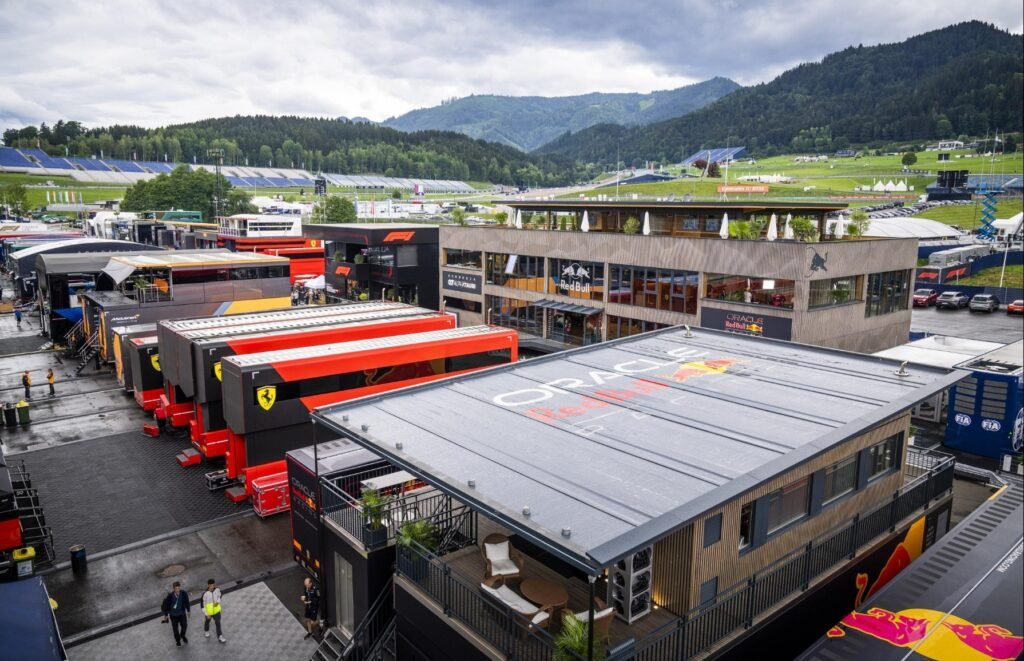
Formula 1 Brings an Entire “Mini City” to Every Circuit
Many people think a Formula 1 team only travels with two race cars.
The reality is much bigger.
Every F1 team brings almost an entire “mini city” with them to every circuit. Everything required to operate a racing team during a Grand Prix weekend must be transported from one country to another.
The equipment includes:
Two complete race cars
Spare chassis
Front and rear wings
Suspension components, brakes, and wheels
Pit stop equipment
Computers, servers, monitors, and communication systems
Hundreds of electronic sensors
Measurement tools and mechanical equipment
Generators and air conditioning systems
Even kitchen equipment and hospitality facilities for sponsors and guests
All of these items are packed into hundreds of specially designed containers.
The total weight of one team’s logistics package can reach around 40–50 tons.
Multiply that by 11 Formula 1 teams, and more than 400 tons of equipment must move between locations every race weekend.
And that number does not include equipment belonging to the FIA, Formula One Management, tire suppliers, television crews, and medical teams.
Overall, Formula 1’s global logistics operation can involve more than 1,200 tons of materials throughout an entire season.
That is why many people describe the F1 paddock as a “city that is constantly on the move.”
The real race begins after the checkered flag.
There is one fact many fans may not know.
When Sunday’s race ends and spectators leave the grandstands, another race is just beginning.
For the logistics crews, the hardest work starts after the cars cross the finish line.
The cars are immediately returned to the garages. Front wings are removed, tires are taken off, and electronic components are carefully secured.
The entire garage operation begins to disappear.
The perfectly organized garage that viewers see on television is slowly transformed into hundreds of boxes and transport cases ready for the next destination.
Monitors are packed away, cables are rolled up, computers are shut down, and even hospitality furniture is dismantled and stored.
Every single item has its own barcode and assigned storage location.
Nothing can be lost—not even a small bolt.
Because one missing component could create a major problem at the next race.
The entire packing process usually has to be completed within just a few hours.
While some crew members are still dismantling the paddock, others are already heading toward airports, cargo terminals, or transport hubs.
They are working against the clock.
The Three Main Transportation Methods Behind Formula 1
So how does Formula 1 move around the world?
The answer is a combination of three major transportation systems.
- Trucks: The Backbone of European Logistics
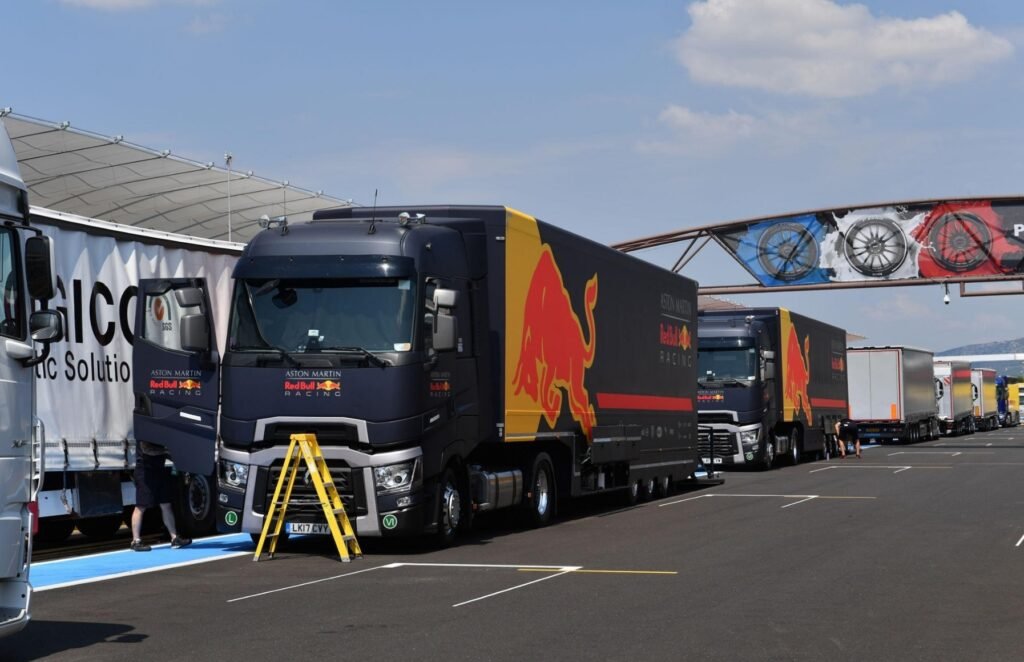
For races held across Europe, trucks are the foundation of Formula 1 logistics.
Each team operates a fleet of large trucks carrying garages, spare parts, working equipment, and hospitality facilities.
When races are scheduled close together within Europe, these truck convoys leave immediately after the previous event is packed up.
Sometimes, the next destination is only a few hours away.
- Cargo Planes: Moving F1 Across Continents
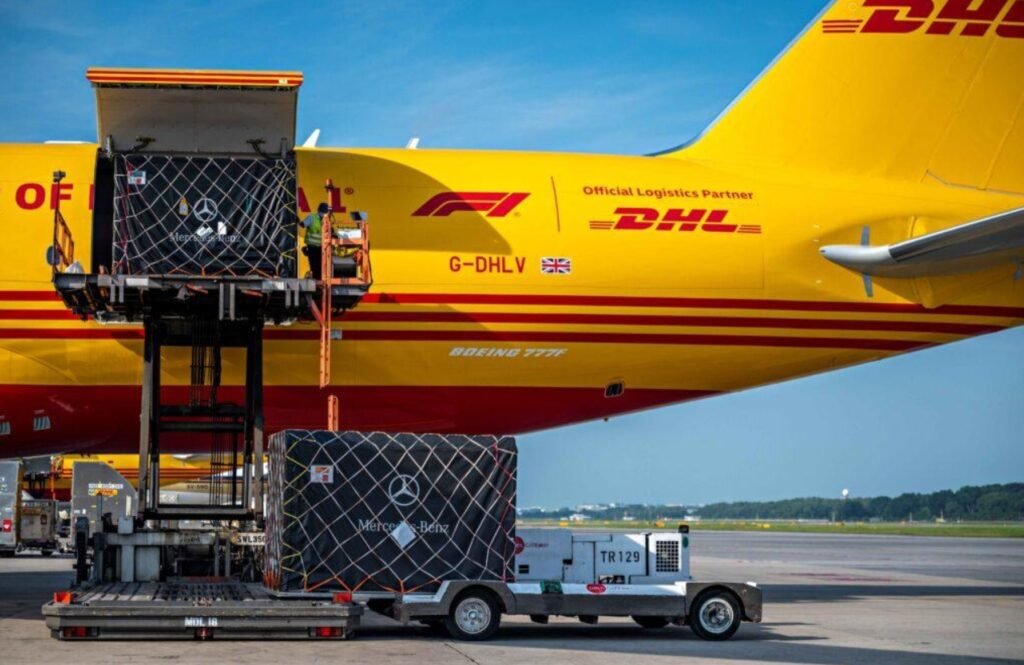
When Formula 1 travels to Asia, America, or the Middle East, trucks are no longer enough.
This is where cargo aircraft become essential.
Dozens of specially designed containers are loaded onto wide-body cargo planes carrying race cars, electronic equipment, and pit stop systems thousands of kilometers around the world.
Everything must arrive on schedule because practice sessions begin only a few days later.
- Ships: For Equipment That Can Travel Earlier
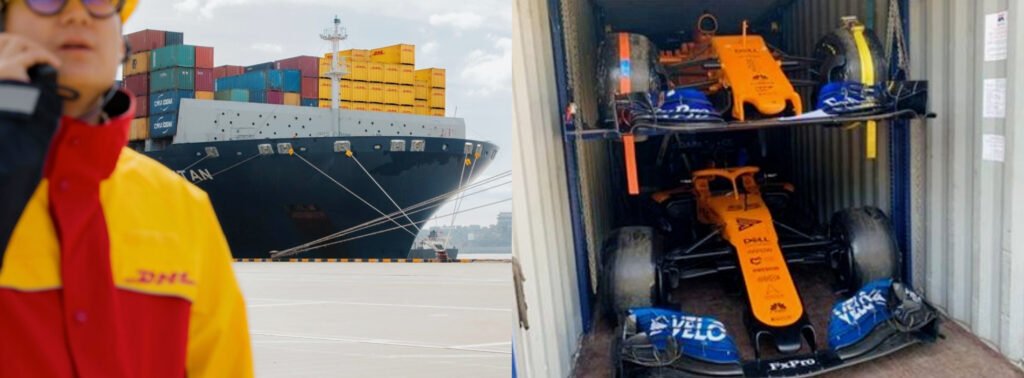
Not every item needs to be transported by air.
Large but less urgent equipment, such as hospitality furniture and certain support materials, is shipped by sea weeks in advance.
This combination of trucks, aircraft, and ships allows Formula 1 to maintain an extremely demanding calendar with races taking place almost every week.
The Secret Behind F1 Logistics: Multiple Sets Working Around the World
One of the biggest secrets behind Formula 1 logistics is that teams do not rely on just one set of equipment.
They have multiple sets operating simultaneously across different locations.
For example:
Set 1:
Currently being used at this week’s race.
Set 2:
Already positioned at the next race venue.
Set 3:
Still traveling by sea toward a race that will take place several weeks later.
Why do teams need so many sets?
Because with only one complete package of equipment, it would be impossible for Formula 1 to follow such a demanding global calendar.
This system allows logistics operations to move in parallel.
While one Grand Prix is taking place, preparations for the next two or three races are already underway.
Behind every race weekend, there is always another operation happening in the background.
What Happens When F1 Logistics Are Delayed?
Now imagine a cargo plane experiencing technical problems.
Bad weather delays a flight. Customs clearance takes longer than expected. Or an airport faces operational issues.
What happens if essential equipment does not arrive on time?
The consequences can be serious.
A delayed shipment could mean the following:
- The garage cannot be built.
- The car cannot be assembled.
- Telemetry systems are unavailable.
- Pit stop equipment is incomplete.
- Mechanics cannot begin their work.
If the delay continues for too long, a team could lose valuable practice time.
Free practice sessions are extremely important because teams use them to collect data, find the best car setup, and develop race strategies.
Without enough practice data, preparing for qualifying and the race becomes much more difficult.
In extreme situations, a team could even risk missing an official session.
Fortunately, Formula 1 has extremely strict backup systems and detailed planning procedures that reduce the possibility of such a scenario.
When Logistics Problems Become a Real Threat
These problems are not just theoretical.
There have been several occasions when Formula 1 cargo shipments experienced delays due to bad weather, flight problems, and airport disruptions.
One notable example happened when part of the cargo heading to the Chinese Grand Prix was delayed because of flight issues.
Some teams were unable to immediately begin building their garages according to schedule.
Although all equipment eventually arrived and the race continued as planned, the crews had to work extremely long hours to make sure everything was ready before the first practice session.
This is why logistics is often described as the “race that nobody sees.”
The Thousands of People Behind Every Grand Prix
When fans watch Formula 1, the cameras usually focus on the drivers.
But behind every driver are thousands of people making the entire event possible.
They include:
- Mechanics
- Engineers
- Hospitality staff
- Logistics crews
- Television production teams
- Track marshals
- Medical personnel
- Communication system operators
Thousands of people travel from one race to another throughout the season.
Along with them come hundreds of trucks, cargo aircraft, shipping containers, and thousands of equipment cases.
Managing an operation of this scale requires incredible precision.
Everything is planned months before the season even begins.
Every departure schedule, travel route, and unloading process is carefully organized.
The Future of F1 Logistics: Becoming More Sustainable
Formula 1 is not only chasing speed on the racetrack.
The championship is also working to make its global logistics operation more efficient and environmentally friendly.
One major approach is organizing the race calendar more intelligently by grouping events geographically.
For example:
- Races in the Americas are arranged closer together whenever possible.
- European events are grouped to reduce unnecessary travel.
- Middle Eastern races are also planned more efficiently.
Formula 1 has also expanded the use of sustainable aviation fuel to help reduce carbon emissions.
These efforts are part of the championship’s goal of achieving net zero carbon emissions by 2030.
The future of Formula 1 is not only about who is fastest on track.
It is also about who can operate in the most efficient and sustainable way.
Conclusion: The Race Begins Before the Lights Go Out
Behind every Formula 1 starting light, thousands of people have already completed their own race.
They are not drivers.
They are the logistics teams.
They make sure every bolt, every computer, every tire, and every pit stop tool arrives at exactly the right place and at exactly the right time.
The first race of every Formula 1 weekend does not happen on the track.
It happens on highways, at airports, and in shipping ports — a race against time that happens far away from the cameras.
Because without them, the starting lights of Formula 1 might never turn on.

Adhe is part of the 88 Eight Box Editorial Team, covering JDM culture, motorsport, automotive technology, and industry news. The team focuses on delivering original automotive stories, reviews, and insights for enthusiasts worldwide.