Don’t get rejected at scrutineering or fooled by counterfeit equipment. Here’s how to read the safety certification codes found on racing helmets, suits, gloves, shoes, and other motorsport safety gear.
For racers, buying safety equipment is not simply about choosing the right brand, color, or design. Hidden behind every racing helmet or suit are certification codes that determine what standard the equipment was tested to and where it can be used.
Get one code wrong and your equipment could be rejected during scrutineering. Worse, a helmet or racing suit carrying a convincing-looking FIA or Snell sticker is not necessarily a genuinely certified product.
Two of the biggest names you will encounter are FIA (Fédération Internationale de l’Automobile) and the Snell Foundation.
The FIA is the international governing body responsible for regulating many aspects of motorsport, including safety requirements and homologation standards for racing helmets, protective clothing, gloves, shoes, and frontal head restraint systems.
The Snell Foundation, meanwhile, is an independent non-profit organization based in the United States that focuses on developing and testing head-protection standards. It was named after American racing driver William “Pete” Snell, who died from head injuries in a racing accident in 1956.
UNDERSTANDING SNELL: SA, M AND K
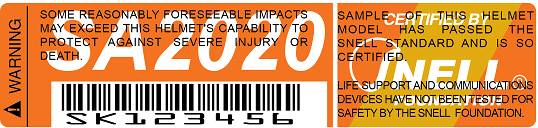
One of the easiest things to check when buying a helmet is the letter appearing before the Snell certification number.
SA stands for Special Application and is designed for competitive automotive racing. The standard includes impact testing intended for racing use as well as a flammability requirement. Snell also has requirements for helmets configured with M6 terminals for use with compatible frontal head restraint systems.
M stands for Motorcycle. This standard is intended for motorcycle use and differs significantly from the SA standard. Among the key differences, the M standard does not include the same flammability requirement used for SA helmets.
That means a motorcycle helmet carrying an M certification should not automatically be considered suitable for a car-racing event that requires an automotive racing helmet standard.
Then there is K, which stands for Karting. These helmets are designed specifically for karting and have their own impact and abrasion requirements. Like the M standard, K helmets do not have the same flammability requirements as SA helmets.
The number following the letters represents the edition of the Snell standard—for example, SA2020 or SA2025.
Snell generally updates its major helmet standards on a five-year cycle. However, the year printed on the certification should not simply be interpreted as an automatic expiration date for the helmet itself. The specific model, certification status, serial information, and competition regulations still need to be checked.
As of 2026, SA2025 is the latest Snell standard for competitive automotive sports, replacing SA2020 as the current generation.
FIA HELMET STANDARDS: DON’T JUST LOOK FOR THE LOGO
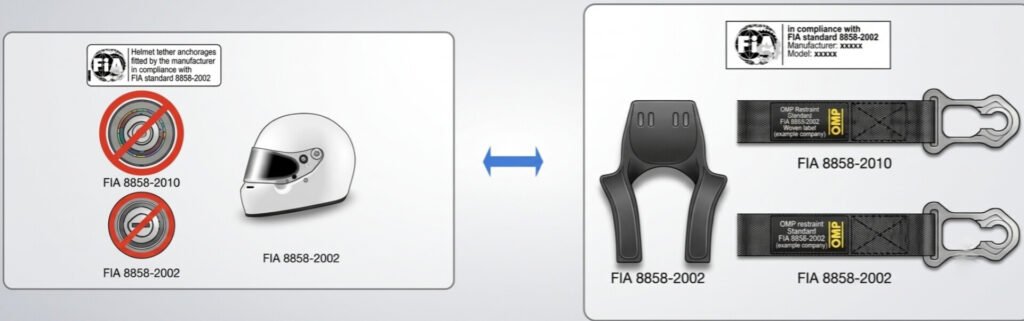
When it comes to racing helmets, FIA homologation is divided into different standards depending on the level and intended application.
FIA 8859-2015 is known as the Premium Helmet standard and remains relevant for helmets carrying that homologation. However, FIA has since introduced the newer FIA 8859-2024 Premium Helmet standard.
At a higher level is FIA 8860, known as the Advanced Helmet Standard. This standard introduces significantly more demanding testing requirements and is intended for high-level motorsport applications.
So don’t simply search for the words “FIA Approved”.
Look for the complete FIA standard number, homologation number, manufacturer, model and official certification label.
The FIA also provides official Technical Lists that can be used to verify homologated helmets and other safety equipment.
That is particularly important when buying expensive equipment from an unfamiliar seller.
FIA 8856-2000 VS FIA 8856-2018
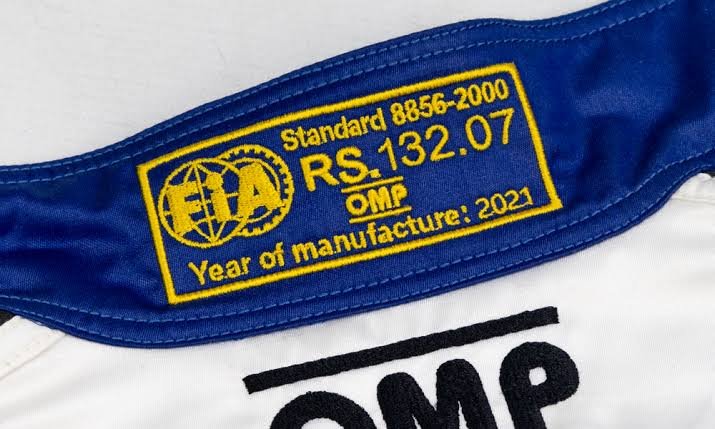
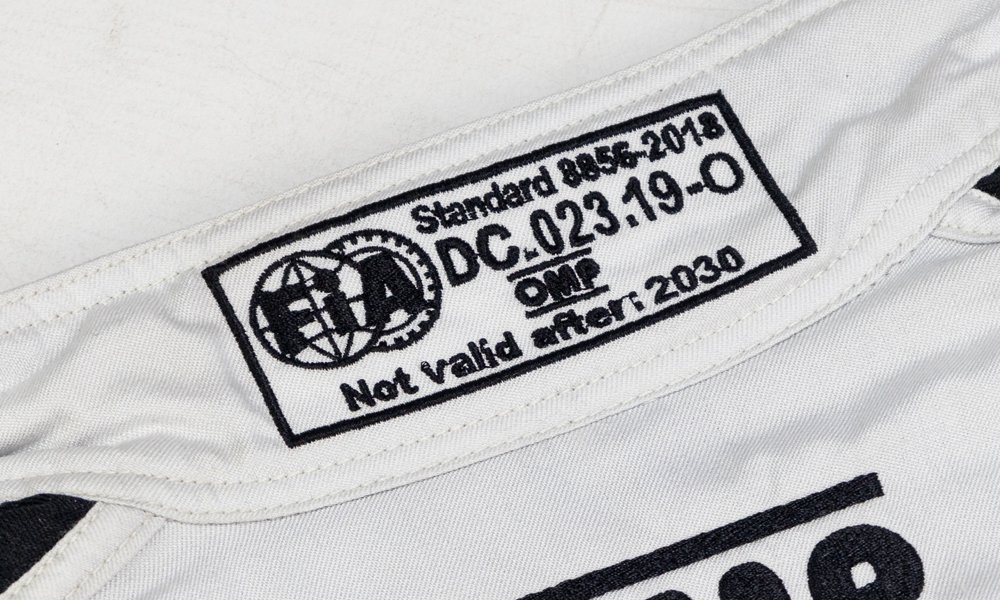
There is another important FIA code that applies not to helmets, but to driver protective clothing.
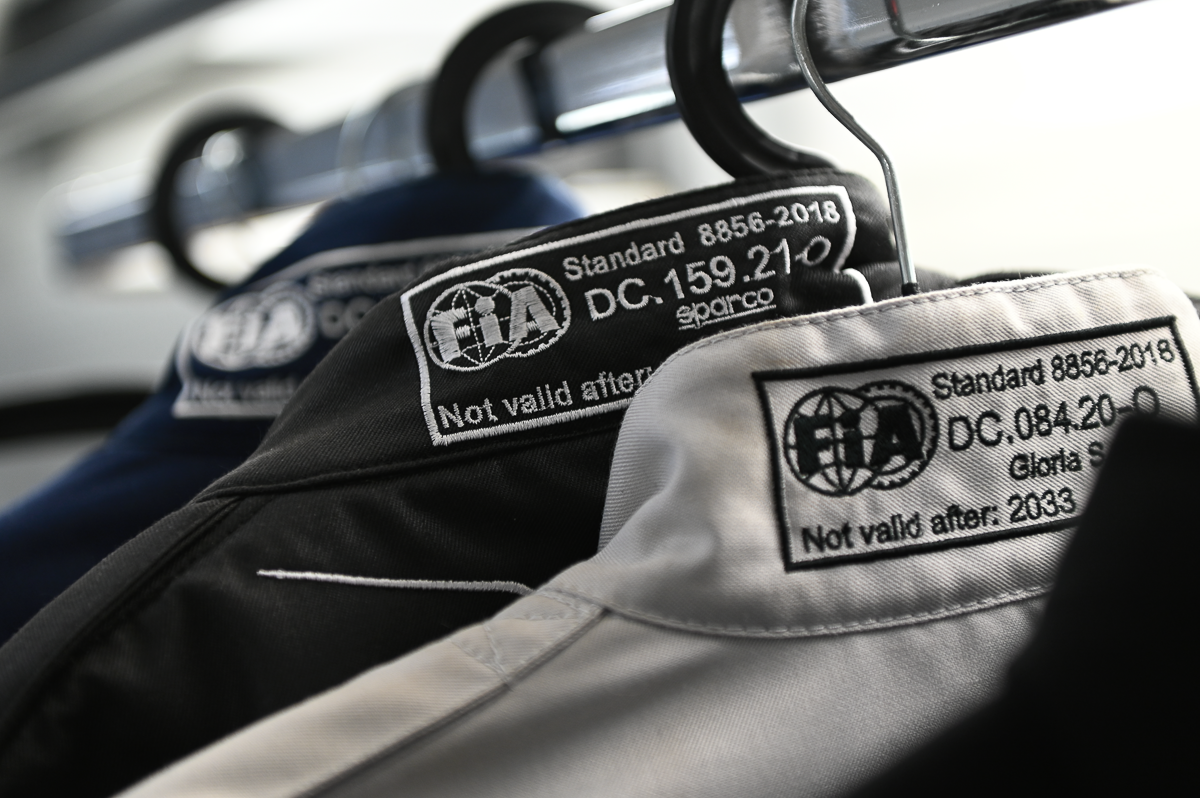
FIA 8856-2018 covers protective clothing such as racing suits, underwear, balaclavas, gloves and shoes.
Compared with FIA 8856-2000, the 2018 standard introduced tougher requirements for protection against heat.
One of the key measurements is the Heat Transfer Index (HTI). FIA increased the required level of thermal protection, with the minimum protection for racing suits reaching 12 seconds under the relevant test conditions.
The newer standard also introduced a defined 10-year validity period for FIA 8856-2018 protective clothing.
That means racers should not simply check whether a suit says “FIA 8856-2018.”
They should also inspect the FIA label, homologation information, hologram and validity date, then compare those details with the official FIA Technical List.
DIFFERENT CODES, DIFFERENT PURPOSES
| Code | Intended Use |
|---|---|
| Snell SA2025 | Competitive automotive racing |
| Snell M2025D / M2025R | Motorcycle helmets |
| Snell K2025 | Karting helmets |
| FIA 8859-2015 | Premium racing helmets |
| FIA 8859-2024 | New-generation Premium racing helmets |
| FIA 8860-2018 | Advanced racing helmets |
| FIA 8856-2000 | Previous-generation driver protective clothing |
| FIA 8856-2018 | Current-generation driver protective clothing |
However, one important detail should never be forgotten: a certification does not automatically mean the equipment is legal for every racing series.
Championship regulations, national sporting authorities, circuit rules and individual event regulations can impose additional or different requirements.
Always check the regulations of the specific event you are entering.
HOW TO SPOT POTENTIALLY FAKE RACING EQUIPMENT
The first rule is simple:
Don’t buy based on the sticker alone.
For Snell helmets, check whether the exact helmet model and size appear on Snell’s official list of certified helmets. Genuine certification information can be checked against Snell’s database rather than simply trusting a seller’s description.
For FIA equipment, check the homologation number, manufacturer, model, official label, hologram and validity information against the appropriate FIA Technical List.
Be especially careful with vague marketing terms such as:
“FIA style.”
“FIA approved design.”
“FIA equivalent.”
“Meets Snell standards.”
Those phrases are not the same thing as official homologation.
A genuine certification should be verifiable.
And remember one of the most important rules:
A MOTORCYCLE HELMET WITH AN “M” CERTIFICATION IS NOT AUTOMATICALLY A CAR-RACING HELMET.
Likewise, a karting helmet carrying a K certification cannot automatically replace a helmet required by a car-racing championship.
THE CHECKLIST BEFORE YOU BUY
Before spending money on racing safety equipment, check:
1. The certification standard
Make sure the code matches the type of motorsport you are entering.
2. The certification year
Understand what the year represents and whether the particular event still accepts that standard.
3. The homologation number
Don’t rely on a generic FIA or Snell logo.
4. The model and manufacturer
Make sure they match the official certification database or Technical List.
5. The label and security features
Inspect FIA labels, holograms, serial information and other authentication features.
6. The validity period
This is particularly important for FIA 8856-2018 protective clothing.
7. The event regulations
A helmet or suit can be genuine and certified but still fail to meet the requirements of a particular championship.
8. The seller
Whenever possible, buy from an authorized distributor or a reputable motorsport equipment specialist.
SAFETY EQUIPMENT IS NOT A FASHION ACCESSORY
A racing helmet might look identical to a road helmet. A racing suit might look like an expensive piece of clothing. But the certification code hidden on the label tells a much bigger story.
It tells you what the equipment was designed for, which standard it was tested against, and whether it may be accepted for your particular form of motorsport.
And when you’re sitting inside a race car surrounded by fuel, heat, carbon fiber and metal, that information matters far more than the logo on the chest.
Because when an accident happens, the important question isn’t how expensive or authentic the equipment looks. It’s whether it was actually tested, properly certified, and still valid.
What do you think? Do amateur racers pay enough attention to FIA and Snell certification codes before buying safety equipment, or are brand and appearance still the biggest factors? Let us know in the comments.

Adhe is part of the 88 Eight Box Editorial Team, covering JDM culture, motorsport, automotive technology, and industry news. The team focuses on delivering original automotive stories, reviews, and insights for enthusiasts worldwide.