They Were Not Just Engineers and Racers, They Were the Visionaries Who Turned Japanese Cars Into Global Icons
When people talk about JDM (Japanese Domestic Market), many immediately think about legendary cars such as the Nissan Skyline GT-R, Toyota Supra, Honda NSX, Mazda RX-7, and Toyota AE86.
But behind every iconic machine, there are people who created the ideas, technology, and culture that made Japanese cars respected around the world.
JDM was not created by one single person. It was built through decades of innovation, motorsport, engineering excellence, and passion from countless individuals.
These five figures played a major role in shaping the identity of Japanese automotive culture.
Their philosophy was simple:
A car should not only be a machine — it should have character, technology, and a connection with the driver.
1. Shinichiro Sakurai — The Father of the Nissan Skyline
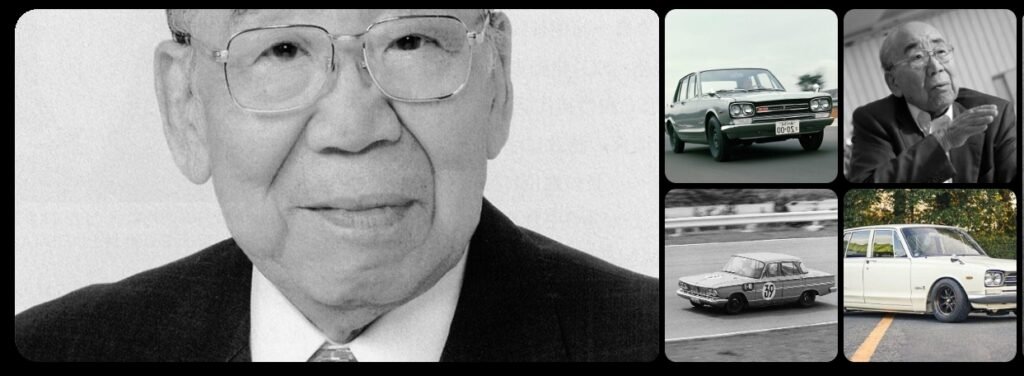
Shinichiro Sakurai
When discussing the history of JDM, the name Shinichiro Sakurai is impossible to ignore.
Sakurai was a Japanese engineer who became one of the most influential figures behind the development of the Nissan Skyline. Before becoming part of Nissan, Skyline was originally developed by Prince Motor Company, where Sakurai played a crucial role in shaping its identity.
Because of his contribution, many enthusiasts around the world recognize him as:
“The Father of the Skyline”
He was the man who transformed Skyline from a simple Japanese sedan into a performance machine capable of competing against European sports cars.
The Beginning of the Skyline Legend
The first Skyline appeared in 1957 under Prince Motor Company.
However, Sakurai had a much bigger vision. He did not want Skyline to become just another family car.
He wanted to create a Japanese vehicle that could challenge the performance standards of European brands such as:
- BMW
- Alfa Romeo
- Mercedes-Benz
His philosophy was clear:
A great car must have personality, emotion, and a unique identity.
The Birth of the Skyline GT-R
Sakurai’s greatest achievement came with the introduction of:
1969 Nissan Skyline GT-R (PGC10)
This car became one of the foundations of Japanese performance culture.
Specifications:
- Engine: S20 DOHC Inline-6
- Displacement: 2.0 liters
- Power: Around 160 hp
- Drivetrain: Rear-Wheel Drive (RWD)
- Transmission: 5-speed manual
While modern standards make the power figure look modest, the technology and racing capability of the Skyline GT-R were revolutionary for its time.
The car dominated Japanese motorsport and created the DNA that would later define future generations of GT-R models.
Sakurai’s Legacy
Without Shinichiro Sakurai, the world might never have seen legendary cars such as:
- Nissan Skyline R32 GT-R
- Nissan Skyline R33 GT-R
- Nissan Skyline R34 GT-R
He created the foundation of Skyline’s identity:
Performance, precision, and advanced technology.
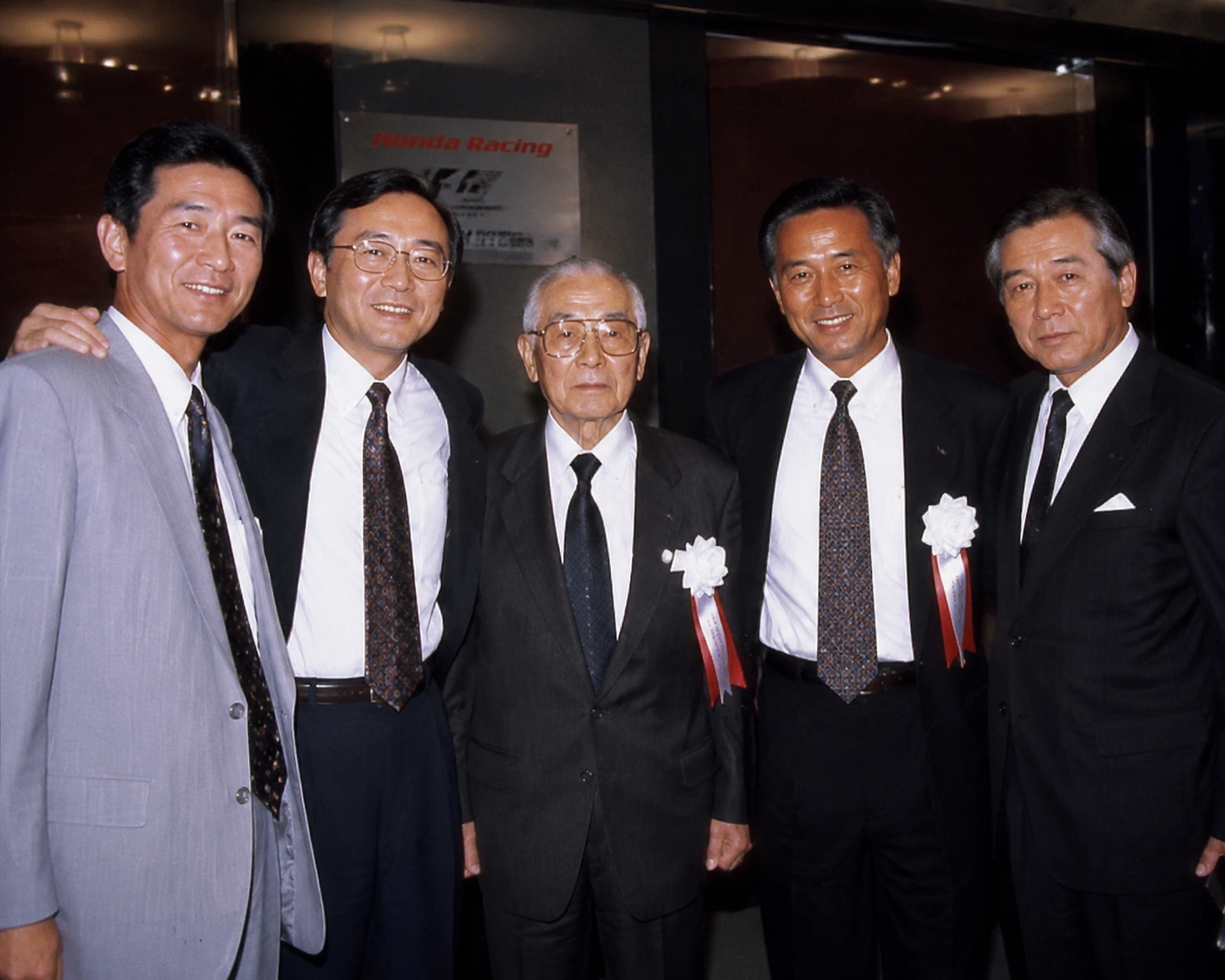
2. Soichiro Honda — The Visionary Behind High-RPM Engineering
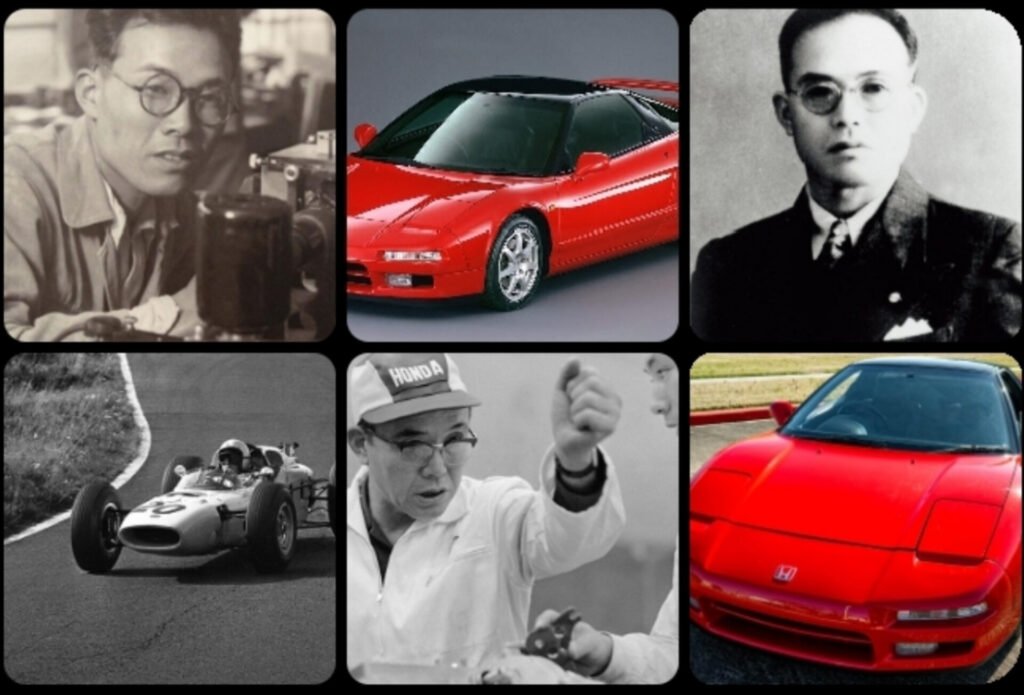
Soichiro Honda
If Nissan became famous through Skyline, Honda’s story was shaped by one legendary figure:
Soichiro Honda.
He was the founder of Honda Motor Co. and one of the most influential personalities in automotive history.
From a Small Workshop to a Global Automotive Giant
Honda started as a small company producing engine components.
However, Soichiro Honda had a much bigger ambition:
Japan had to prove it could build vehicles capable of competing with the world’s best.
Honda first became famous through motorcycles before entering the automotive industry.
His approach was different from many manufacturers.
He believed performance did not always come from bigger engines.
Instead, Honda focused on:
- Lightweight engineering
- High-revving engines
- Advanced technology
- Motorsport development
The Honda Philosophy: Small Engines, Maximum Performance
This philosophy created some of the most famous engines in JDM history.
B-Series Engine Family
Examples:
- B16A VTEC
- B18C Type R
K-Series Engine Family
Examples:
- K20
- K24
These engines became famous because they offered:
- High RPM capability
- Strong reliability
- Excellent tuning potential
Honda NSX: Japan’s Supercar Statement
In 1990, Honda introduced:
Honda NSX
This car was built to challenge the dominance of European supercars, especially Ferrari.
Its highlights included:
- V6 VTEC engine
- Mid-engine layout
- Lightweight aluminum body
- Exceptional handling balance
The development of the NSX also involved feedback from Formula 1 legend:
Ayrton Senna
Soichiro Honda’s Legacy
He changed the world’s perception of Japanese cars.
Before Honda’s success, many people viewed Japanese vehicles mainly as practical and economical.
Honda proved that Japanese engineering could also create:
High-performance machines with racing DNA.
3. Yutaka Katayama — The Man Who Introduced Japanese Cars to the World
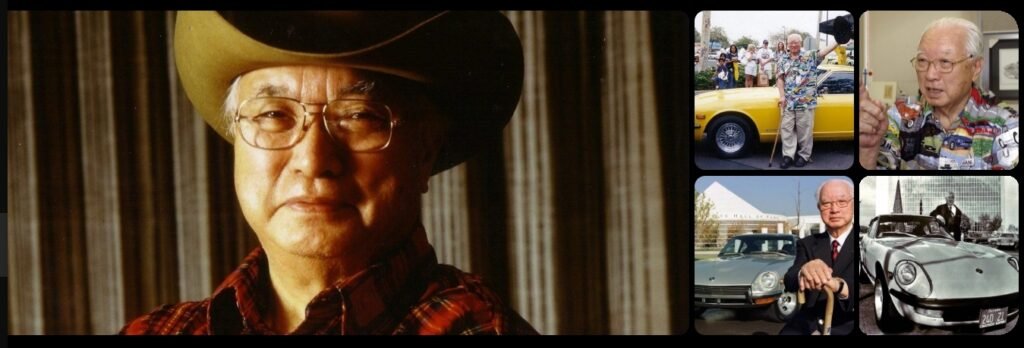
Yutaka Katayama
Many Japanese cars became globally recognized because of one important figure:
Yutaka Katayama, widely known as:
“Mr. K”
Katayama was a Nissan executive who played a major role in expanding the Datsun brand into the United States.
Changing the Image of Japanese Cars
During the 1960s, Japanese cars were often underestimated compared to American and European vehicles.
Katayama saw an opportunity.
He believed Japanese cars had important advantages:
- Better fuel efficiency
- Reliable engineering
- Affordable ownership
- Practical technology
The Datsun 240Z Revolution
One of his biggest achievements was helping introduce:
Datsun 240Z
The 240Z changed how the world viewed Japanese sports cars.
It offered:
- Beautiful design
- Strong performance
- Affordable pricing
- Driving enjoyment
The success of the 240Z became the foundation for future Nissan performance icons.
Katayama’s Legacy
Without his vision, global automotive culture might have developed very differently.
His work helped open the door for legendary Japanese cars such as:
- Nissan Z Series
- Skyline GT-R
- Future JDM performance models
He was one of the people who brought Japanese automotive culture to the international stage.
4. Kunimitsu Takahashi — The Pioneer of Japanese Drifting
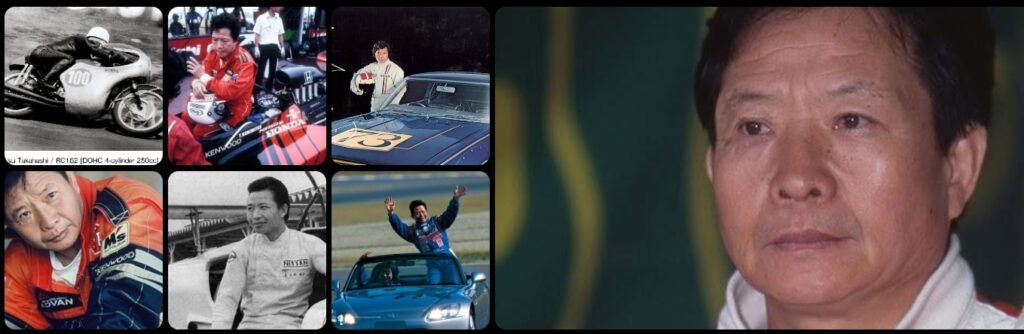
Kunimitsu Takahashi
Before drifting became a worldwide motorsport phenomenon, there was:
Kunimitsu Takahashi
A legendary Japanese racer who influenced generations of drivers.
A Racing Career Full of Achievements
Takahashi competed in various racing categories, including:
- Formula 1
- Motorcycle Grand Prix
- Japanese Touring Car Championship
However, his biggest influence came from his unique driving style.
The Birth of a Drifting Technique
During his racing career, Takahashi developed a technique that involved:
- Entering corners at extremely high speed
- Using controlled oversteer
- Managing the car through throttle control
This style allowed him to maintain speed through corners while controlling the vehicle’s movement.
His approach later became one of the foundations of modern drifting.
Takahashi’s Influence
His driving style inspired future legends, including:
- Keiichi Tsuchiya
- D1 Grand Prix competitors
- Formula Drift drivers
He was one of the pioneers who transformed car control into an art form.
5. Keiichi Tsuchiya — The Drift King Who Took JDM Worldwide
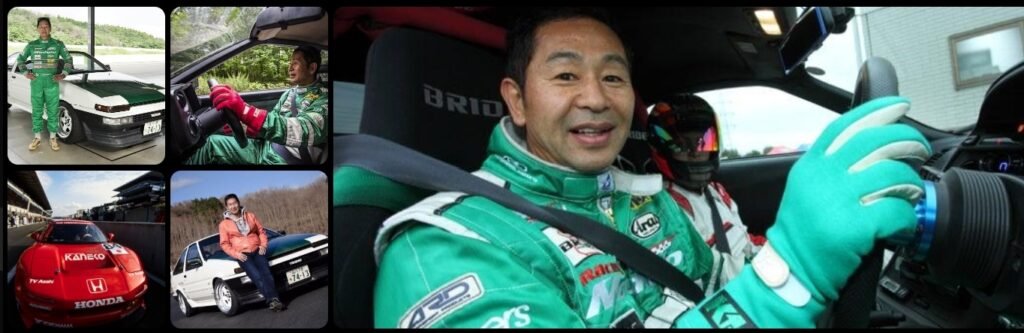
Keiichi Tsuchiya
No name is more closely associated with drifting than:
“The Drift King” — Keiichi Tsuchiya
Tsuchiya became a global icon because of his incredible driving skills and his ability to make drifting popular worldwide.
From Mountain Roads to Motorsport History
Tsuchiya became famous for driving:
Toyota AE86
A lightweight rear-wheel-drive car equipped with:
- 4A-GE engine
- Simple mechanical design
- Excellent balance
The AE86 was not the most powerful car, but Tsuchiya proved that skill and technique could overcome horsepower.
Making Drifting a Global Culture
Tsuchiya helped transform drifting from an underground Japanese driving style into an international motorsport culture.
He promoted:
- Advanced car control
- Driver skill over horsepower
- The creativity of Japanese tuning culture
His influence helped establish events such as:
- D1 Grand Prix
- Professional drifting competitions
- Global tuner culture
Conclusion: The Five People Who Created the DNA of JDM
JDM is not simply about powerful engines, expensive cars, or modified vehicles.
It is a culture built from:
Engineering innovation, motorsport passion, creativity, and the connection between driver and machine.
| Figure | Contribution |
|---|---|
| Shinichiro Sakurai | Created the foundation of the Skyline legend |
| Soichiro Honda | Developed high-performance Japanese engineering philosophy |
| Yutaka Katayama | Introduced Japanese cars to the global market |
| Kunimitsu Takahashi | Helped create the foundation of drifting |
| Keiichi Tsuchiya | Made drifting and JDM culture famous worldwide |
These five legends proved that Japanese cars were not just affordable transportation.
They were machines with personality, technology, and passion.
From small Japanese workshops to the biggest automotive stages in the world, their legacy continues every time someone starts a Skyline, Supra, Civic Type R, RX-7, or AE86.
JDM is not just about cars.
JDM is a culture built by visionaries.

Adhe is part of the 88 Eight Box Editorial Team, covering JDM culture, motorsport, automotive technology, and industry news. The team focuses on delivering original automotive stories, reviews, and insights for enthusiasts worldwide.