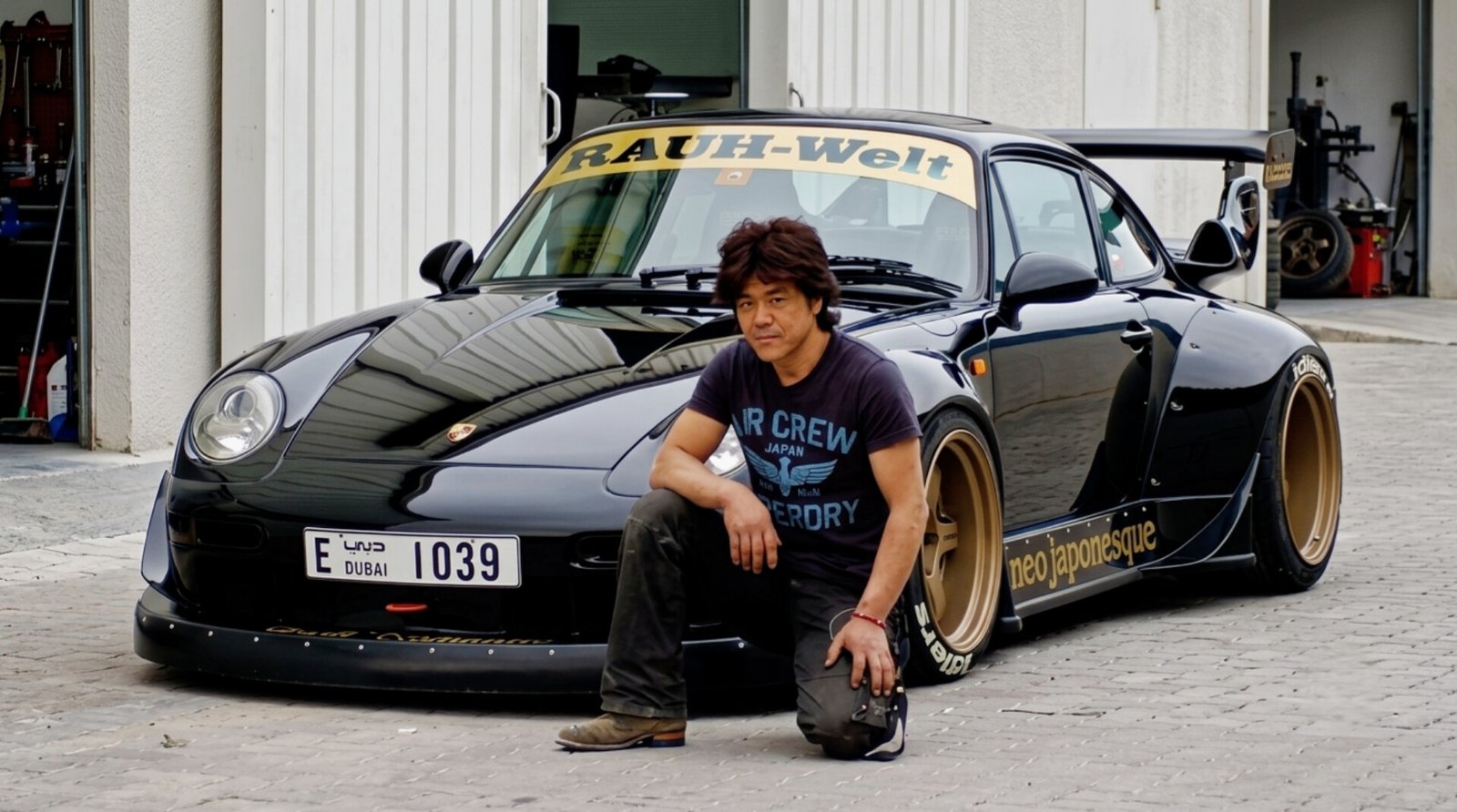
Akira Nakai is more than just a Japanese tuner. He is a symbol of freedom, creativity, and rebellion in the automotive world. His name is almost inseparable from one iconic modification style: extreme wide-body Porsche builds.
For many car enthusiasts, especially fans of wide-body tuning, the name RWB (RAUH-Welt Begriff) immediately creates admiration. The work of Nakai-san has often been described as a masterpiece — a combination of classic Porsche heritage, aggressive styling, and a unique handmade philosophy.
With his signature overfenders, massive wheels, low stance, and unmistakable personality, Nakai-san transformed classic Porsche models into machines that carried a new identity: a blend of old-school elegance and modern aggression.
At the peak of RWB’s popularity, customers from around the world were willing to wait almost two years just to have Nakai-san personally build their Porsche. His creations became highly desirable, and RWB became one of the most recognizable Porsche tuners on the planet.
However, as his reputation grew, so did the criticism.
The same tuner who was once celebrated by thousands of enthusiasts eventually became the target of controversy, criticism, and even hatred.
So how did RWB go from being one of the most loved tuning brands in the world to one of the most debated?
The Birth of Akira Nakai and the Rough World Era
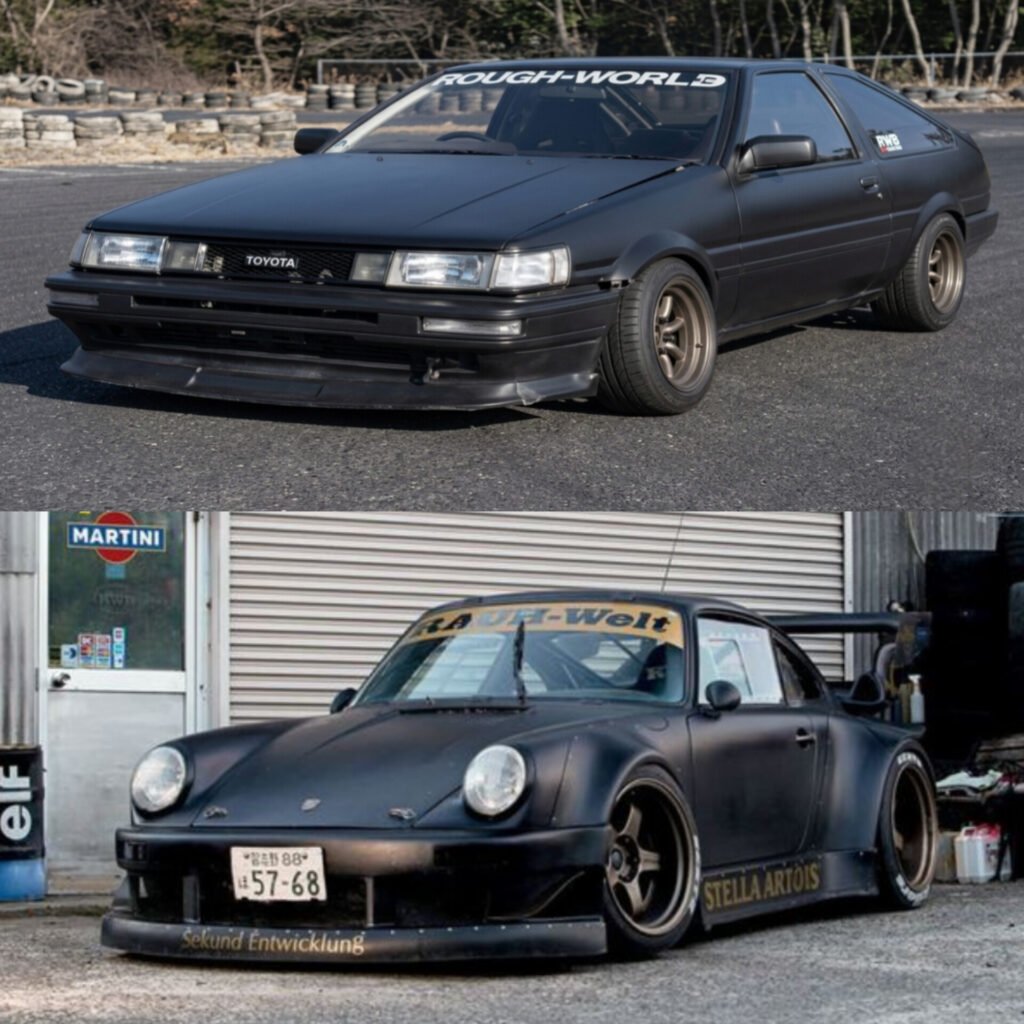
RWB was founded by Japanese tuner Akira Nakai, a man who originally became known through another legendary Japanese car: the Toyota AE86.
During the 1990s, when illegal mountain drifting, known as Touge racing, became a major underground culture in Japan, Nakai-san was part of a drift group called Rough World.
The group was famous for modifying cars with extreme creativity. One of their most recognizable styles was aggressive wheel camber, known as Onikyan (Demon Camber) — an extreme angle that gave cars a dramatic appearance.
The Rough World crew frequently drove around the famous Tsukuba area, and their name itself represented their attitude. Rough World could be interpreted as a “harsh world” or “the world of the wild.”
Nakai-san was the leader of this group.
During the mid-1990s, Rough World and Nakai-san appeared in Japanese automotive magazines with their modified AE86 models. Their cars quickly became famous because they had a unique combination of aggression and elegance.
Unlike many other drift cars at the time, Rough World vehicles looked different. They featured extreme styling, unusual tire setups between the front and rear, and their iconic large windshield sticker displaying the Rough World name.
But behind the popularity, Nakai-san still had another dream.
A dream involving Porsche.
From Toyota AE86 To Porsche Passion
Since childhood, Akira Nakai had always admired Porsche.
The turning point came when a damaged Porsche arrived at his workshop after an accident. Instead of simply repairing it, Nakai-san experimented with the car and transformed it into something completely different.
The result changed his direction forever.
At the age of 28, Nakai-san purchased his first Porsche 911 and immediately began modifying it.
He named the car “Stella Artois”, inspired by his favorite beer that he often enjoyed while working on his projects.
The Porsche became his personal experiment.
Nakai-san converted the car into a track machine, removing unnecessary components and replacing many parts with lightweight materials, including carbon fiber components.
One of his biggest modifications was changing the transmission to a Porsche 915 five-speed gearbox to reduce weight.
In the end, Nakai-san managed to reduce the car’s weight by approximately 362 kilograms.
But the most controversial and unique part of the build was the bodywork.
The wide-body kit was installed completely by Nakai-san himself using simple tools, including a basic saw. There were no advanced measuring systems or computer-designed templates.
At the time, seeing a Porsche with massive rear overfenders and an aggressive stance was unusual. However, some enthusiasts immediately fell in love with the design.
Nakai-san realized there was potential.
This could become a business.
The Birth of RWB and Global Recognition
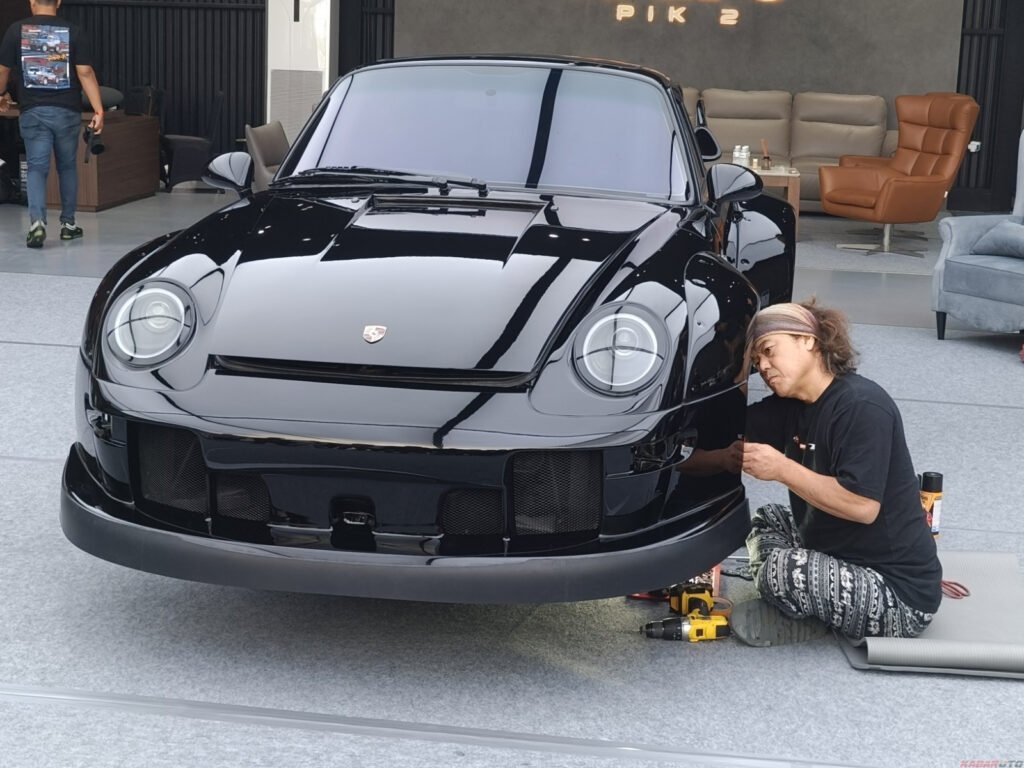
In the early 2000s, Nakai-san created his own Porsche-focused workshop.
The old name Rough World evolved into RWB — RAUH-Welt Begriff.
As Porsche enthusiasts in Japan began recognizing his work, international attention soon followed.
Around 2008 and 2009, European and American automotive magazines started featuring the mysterious Japanese tuner who built Porsche cars unlike anything else.
Photos of RWB Porsches spread rapidly across online communities such as Speedhunters, StanceNation, and Instagram.
One of the biggest moments came in 2011 when Speedhunters visited Nakai-san’s small garage in Chiba.
Photographer Larry Chen and the Speedhunters team documented Nakai-san’s life, his workshop, and his unique approach to building cars.
The documentary became a turning point.
After the video was released, RWB’s popularity exploded worldwide.
International customers began requesting RWB conversions, and the brand expanded outside Japan.
In 2011, RWB Thailand became the first official overseas franchise.
In 2012, RWB Indonesia was established with legendary projects such as Rotana and Royal Ocean.
Then in 2013, RWB expanded further with locations including the United Kingdom, Germany, and the United States.
At that moment, RWB had officially become a legendary Porsche tuning brand.
Why Did People Start Criticizing RWB?
Despite its massive popularity, not everyone accepted Nakai-san’s philosophy.
Porsche purists — enthusiasts who strongly value originality and heritage — began criticizing RWB for modifying classic Porsche models so heavily.
Their biggest argument was simple:
RWB destroys the original identity and historical value of the Porsche.
The wide-body conversion requires cutting and modifying the original body panels. Once a Porsche receives the RWB treatment, returning it to factory condition becomes extremely difficult.
For many collectors, this was considered unacceptable.
But the criticism did not stop there.
Many automotive experts also questioned RWB’s materials, finishing quality, and construction methods.
Nakai-san has never openly revealed detailed information about the exact materials used for his body kits.
Some critics argue that the finishing quality is inconsistent, pointing out uneven panel gaps, rough cuts, and handmade modifications that appear less precise compared with modern professional bodywork.
For RWB supporters, these imperfections represent the human touch.
They believe the flaws prove the car was created by an artist, not a machine.
But for enthusiasts who value precision, those same imperfections are considered weaknesses.
The Silicone Controversy
One of the biggest criticisms against RWB is Nakai-san’s unusual installation method.
Instead of using traditional mounting methods such as professional brackets, bolts, or welded supports, RWB is known for using black silicone adhesive in many parts of the build process.
The controversial example is the installation of the tow hook.
Critics questioned how a legendary tuner with worldwide recognition could attach a functional component using silicone adhesive.
This led some people to accuse RWB of prioritizing appearance over performance and durability.
The debate became even stronger because RWB builds often require a long waiting period and come with a very high price.
Because of the unclear materials, handmade process, expensive cost, and limited performance validation, some critics began calling RWB an overpriced and overhyped tuner.
From Underground Racing Culture To Car Show Icon
Another major criticism is that RWB has moved away from its original philosophy.
Historically, Nakai-san came from Japan’s underground drifting culture, where cars were built for driving.
However, modern RWB Porsches are often seen at car shows, exhibitions, and collector events rather than being used for serious street performance or racing.
According to critics, the original underground spirit of RWB has disappeared.
The aggressive wide-body design, oversized wheels, and extreme stance create a dramatic appearance, but many question whether the modifications provide real aerodynamic benefits.
The RWB wide-body design has never been officially proven through wind tunnel testing.
For some people, it is more about visual emotion than engineering performance.
Is RWB Really an Investment?
Despite all the criticism, many RWB owners believe their cars will become valuable investments.
Each RWB build receives its own identity and serial number, making every car unique.
Many enthusiasts believe that if Nakai-san eventually stops producing RWB builds, the existing cars could become highly collectible.
That belief is one of the biggest reasons why people continue to commission RWB Porsche projects.
For them, the value is not only in performance.
It is about owning a piece of automotive history created by one person’s vision.
Whether RWB is considered art, modification, or simply an expensive fashion statement depends on who you ask.
But one thing is undeniable:
Akira Nakai changed the Porsche tuning world forever.
Love it or hate it, RWB became a cultural phenomenon — a reminder that cars are not only machines, but also expressions of personality, creativity, and passion.

Adhe is part of the 88 Eight Box Editorial Team, covering JDM culture, motorsport, automotive technology, and industry news. The team focuses on delivering original automotive stories, reviews, and insights for enthusiasts worldwide.