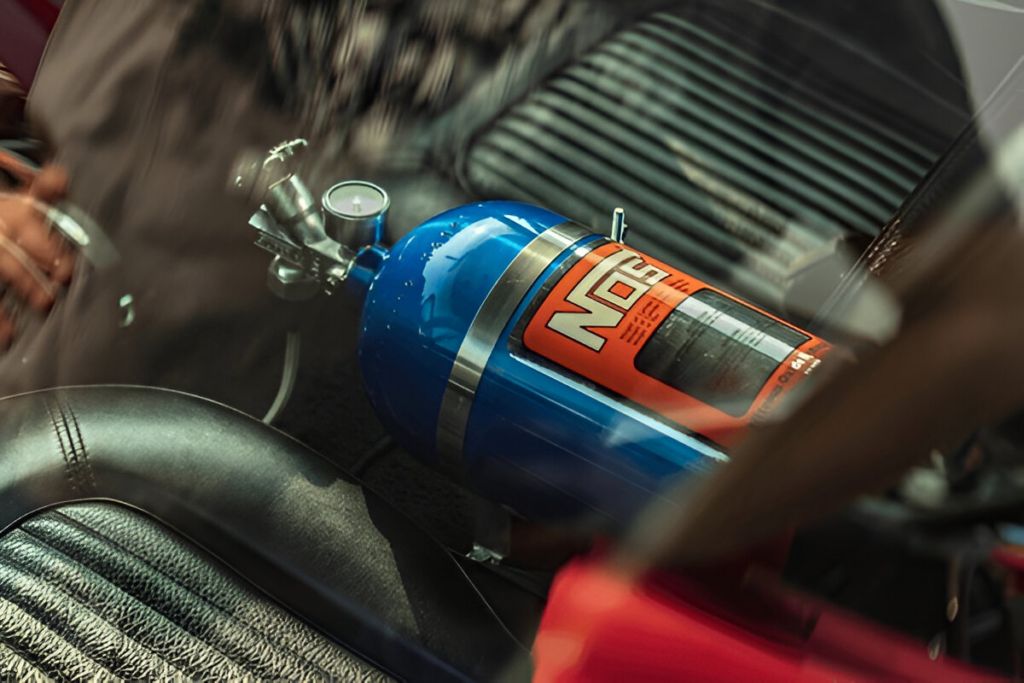
NOS (Nitrous Oxide System) is one of the most popular performance-enhancing technologies in the world of racing and car modification. The system works by injecting nitrous oxide gas (N₂O) into the engine to increase the amount of oxygen available during the combustion process.
Simply put, NOS acts as an “instant oxygen booster”, allowing the engine to burn more fuel in a short period of time and create a massive increase in power without increasing engine displacement.
How Does NOS Work Inside an Engine?
A conventional engine requires a mixture of air and fuel to produce power. Normal atmospheric air contains only around 21% oxygen, which becomes one of the main limitations when trying to increase engine performance.
NOS improves combustion efficiency through two main mechanisms:
1. Increasing Oxygen Supply for Stronger Combustion
When nitrous oxide enters the extremely hot combustion chamber (around 300°C), the N₂O molecules break down into:
- Nitrogen (N₂)
- Oxygen (O₂)
The additional oxygen allows the engine to burn more fuel during combustion. The available oxygen concentration can increase to around 36%, significantly higher than normal atmospheric air.
The result is a much stronger combustion explosion, producing a sudden increase in horsepower and torque.
2. Intake Charge Cooling Effect
NOS is stored inside a high-pressure bottle in liquid form. When injected into the intake system, the liquid nitrous rapidly changes into gas through evaporation.
This process creates an extreme cooling effect, reducing intake air temperatures to approximately -29°C to -40°C.
Colder air has a higher density, meaning more oxygen molecules and fuel can enter the cylinders.
More air and fuel inside the combustion chamber means a bigger explosion and more power output.
Types of NOS Systems
Based on the injection method, NOS systems are divided into three main categories:
1. Dry System
How it works:
A dry NOS system only injects nitrous oxide into the intake manifold. The additional fuel is then supplied by the ECU through increased injector output.
Advantages:
- Simple installation.
- Lower cost.
- Suitable for mild horsepower upgrades.
Disadvantages:
- Limited power gains.
- Risk of a lean fuel mixture if the ECU cannot provide enough additional fuel.
2. Wet System
How it works:
A wet system injects both nitrous oxide and additional fuel simultaneously through a special fogger nozzle into the intake system.
Advantages:
- Better air-fuel ratio control.
- Safer for larger horsepower increases.
- Commonly used in racing applications.
Disadvantages:
- More complicated installation.
- Requires an additional fuel delivery system.
3. Direct Port System
How it works:
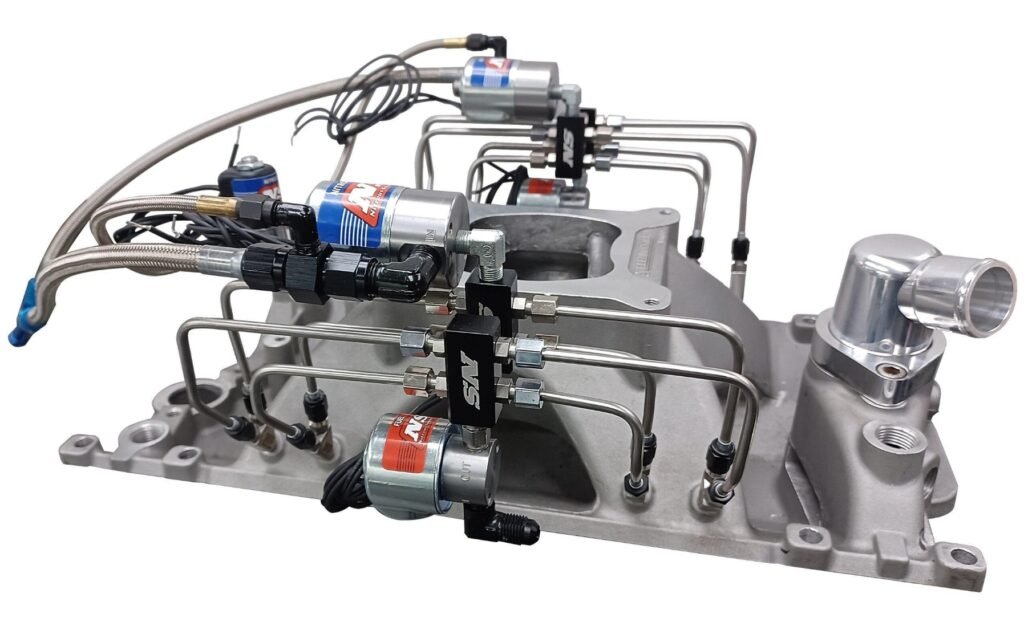
This is the most advanced and precise NOS system. Each cylinder receives its own dedicated injector nozzle installed directly into the intake runners.
Advantages:
- Extremely even distribution between cylinders.
- Capable of producing massive horsepower gains, reaching hundreds of additional horsepower.
Disadvantages:
- Very expensive.
- Requires extensive engine modifications.
- Needs professional tuning.
Advantages and Risks of Using NOS
| Advantages | Risks / Disadvantages |
|---|---|
| Instant Power Increase: Can add around 50 to 300+ horsepower with the push of a button. | Extreme Mechanical Stress: Higher cylinder pressure can damage pistons, connecting rods, and head gaskets. |
| Efficient Power Boost: Extra power is only used when NOS is activated, meaning normal driving does not consume additional fuel. | Limited Duration: The nitrous bottle can empty quickly, usually lasting only several seconds during full use. |
| Works on Many Engines: Can be applied to naturally aspirated and turbocharged engines. | Risk of Lean Burn: Insufficient fuel supply can create excessive heat, causing severe engine damage or failure. |
NOS Myths vs Facts
Myth: Nitrous oxide can explode like gasoline.
Fact:
N₂O itself is not flammable. It does not burn like fuel. Instead, it works as an oxidizer, providing additional oxygen that allows gasoline to burn faster and more aggressively.
Myth: Cars with NOS always shoot blue flames and accelerate like in action movies.
Fact:
Real racing applications use NOS only for short periods, usually around 5–15 seconds per activation. The system is designed for specific moments such as drag racing launches, overtaking, or maximum acceleration runs.
Conclusion
NOS remains one of the fastest ways to increase engine performance without replacing the engine or making extreme modifications.
However, installing NOS is not simply about adding a bottle and pressing a button. Proper use requires careful calculation of:
- Engine strength
- Fuel system capacity
- Internal component durability
- ECU tuning
When properly installed and tuned, NOS can transform an ordinary engine into a powerful racing machine. But when used incorrectly, the same technology can quickly become the cause of catastrophic engine failure.

Adhe is part of the 88 Eight Box Editorial Team, covering JDM culture, motorsport, automotive technology, and industry news. The team focuses on delivering original automotive stories, reviews, and insights for enthusiasts worldwide.