
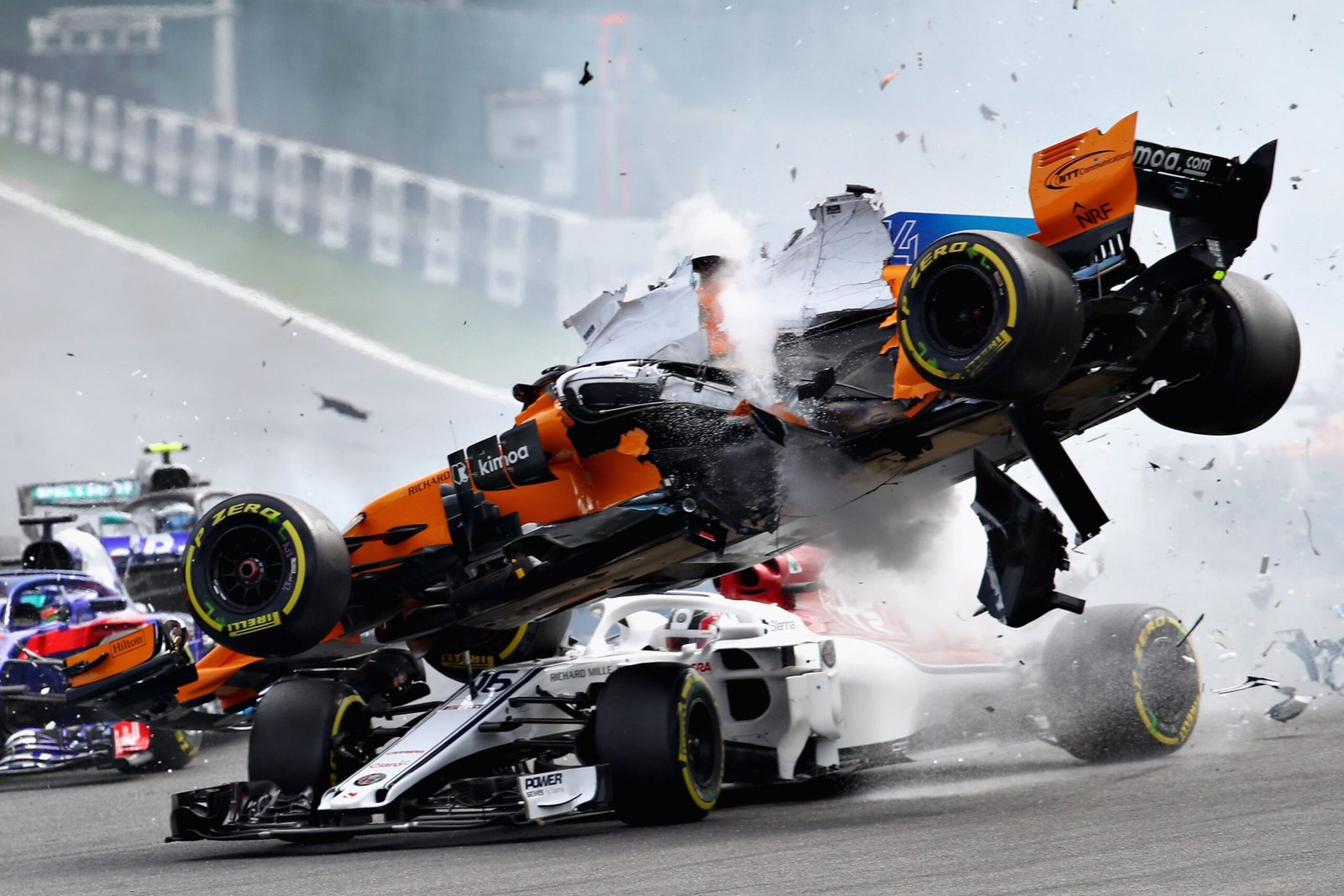
When a Formula 1 car crashes, the world usually focuses on the dramatic impact, the condition of the driver, and whether the race will be stopped. But behind the scenes, a much bigger battle begins inside the garage.
For an F1 team, a crash is not simply a damaged car. It becomes an emergency operation involving mechanics, engineers, data analysts, and factory departments working against the clock to rebuild the machine and get it back on track.
The First Priority: Saving the Driver
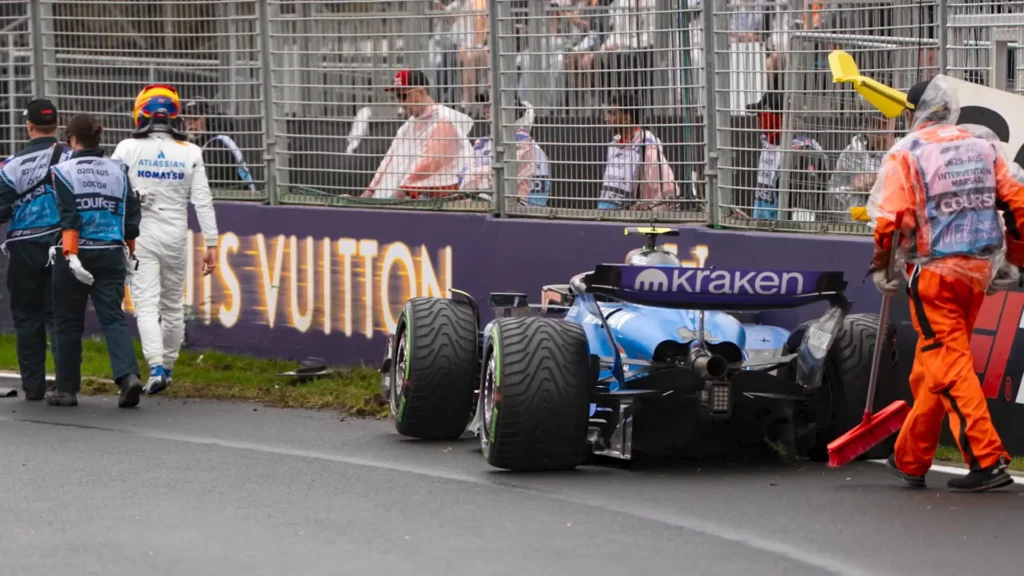
After any accident, driver safety is always the number one priority.
As soon as a crash happens, marshals and medical crews immediately move toward the scene to check the driver’s condition. Modern Formula 1 cars are designed with advanced safety systems, including the carbon fibre monocoque survival cell, the halo protection system, and multiple energy-absorbing structures designed to protect the driver during extreme impacts.
A famous example was Romain Grosjean’s crash at the 2020 Bahrain Grand Prix. After his car broke through the barrier and caught fire, the FIA conducted a detailed investigation using video footage, physical evidence, and accident data to understand exactly what happened and how safety could be improved.
The Damaged Car Is Recovered Back to the Garage
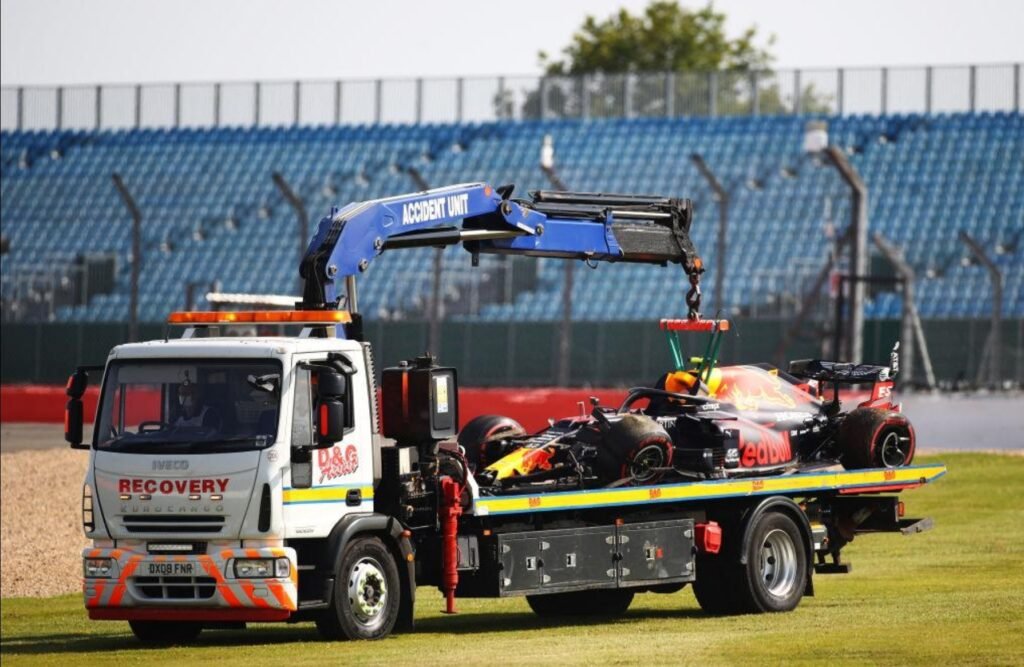
Once the driver is confirmed to be safe, the damaged car is removed from the circuit using a recovery vehicle.
When it arrives at the garage, the mechanics immediately begin a rapid inspection. They do not only look at visible damage; they search for hidden problems:
- Is the chassis structure still safe?
- Are the suspension components damaged?
- Did the gearbox suffer impact damage?
- Is the engine or hybrid ERS system affected?
- Is the floor damaged?
A Formula 1 car can look relatively intact from the outside while suffering serious internal damage.
An F1 Car Cannot Simply Be “Fixed” Like a Normal Car
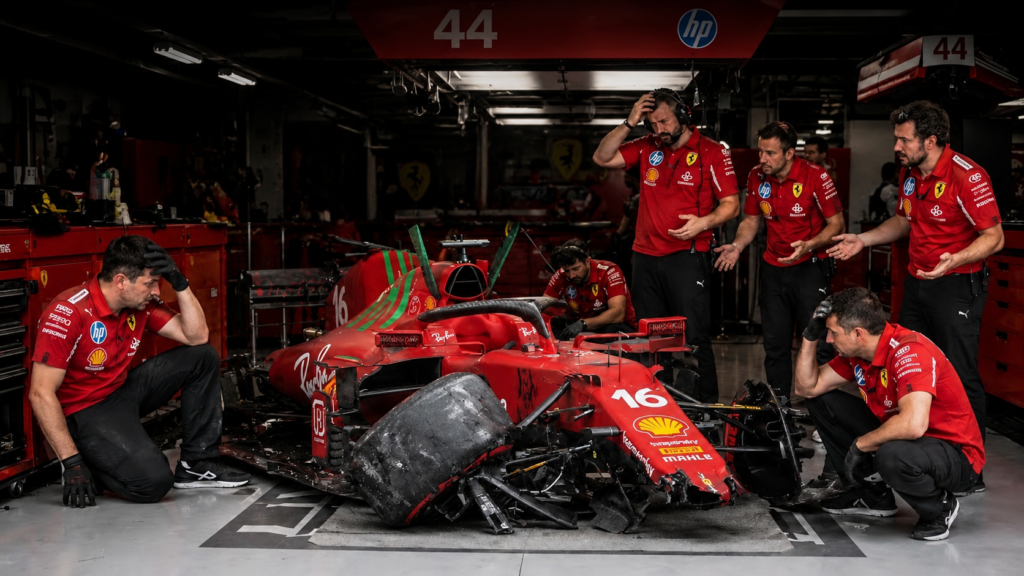
Unlike road cars, Formula 1 machines are built with extremely precise components where even a small change can affect performance.
After a crash, teams often replace:
- Front wing
- Suspension parts
- Sidepods
- Floor components
- Carbon fibre aerodynamic parts
- Cooling systems
- Gearbox components
Even a small crack or deformation in aerodynamic parts can completely change the balance of the car, affecting downforce, stability, and cornering performance.
The Most Important Inspection: The Monocoque
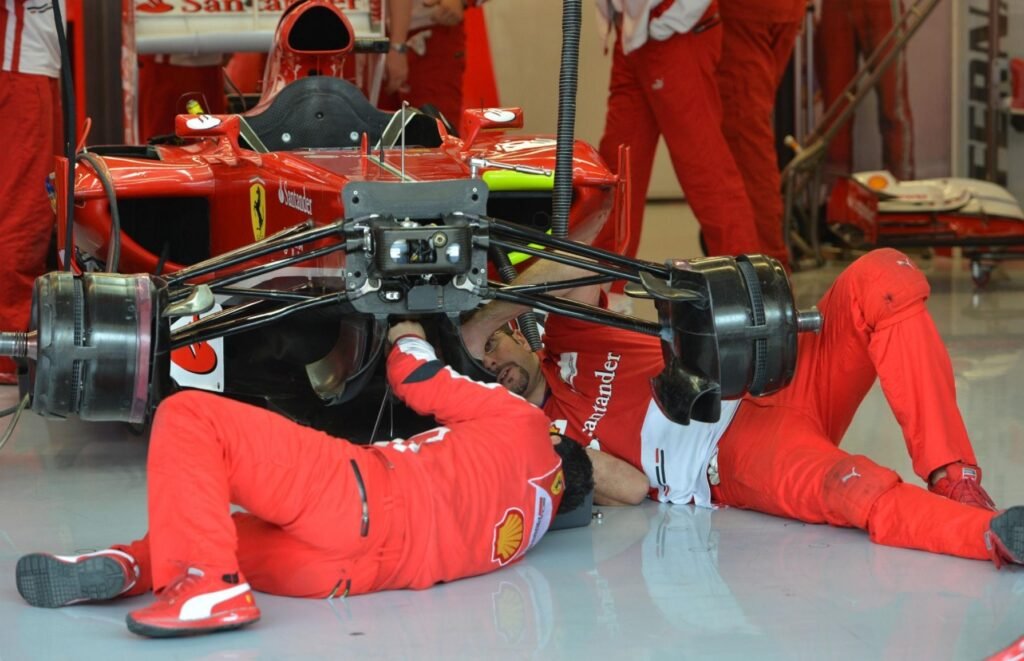
The most critical part of an F1 car is the carbon fibre monocoque, the protective survival cell surrounding the driver.
If the monocoque suffers structural damage, teams cannot simply repair it like a normal body panel. It must meet strict FIA safety standards.
If engineers determine that the chassis is unsafe, the team must replace it with a spare chassis prepared for emergencies.
Crash Data Is Analysed Like an Aircraft Investigation
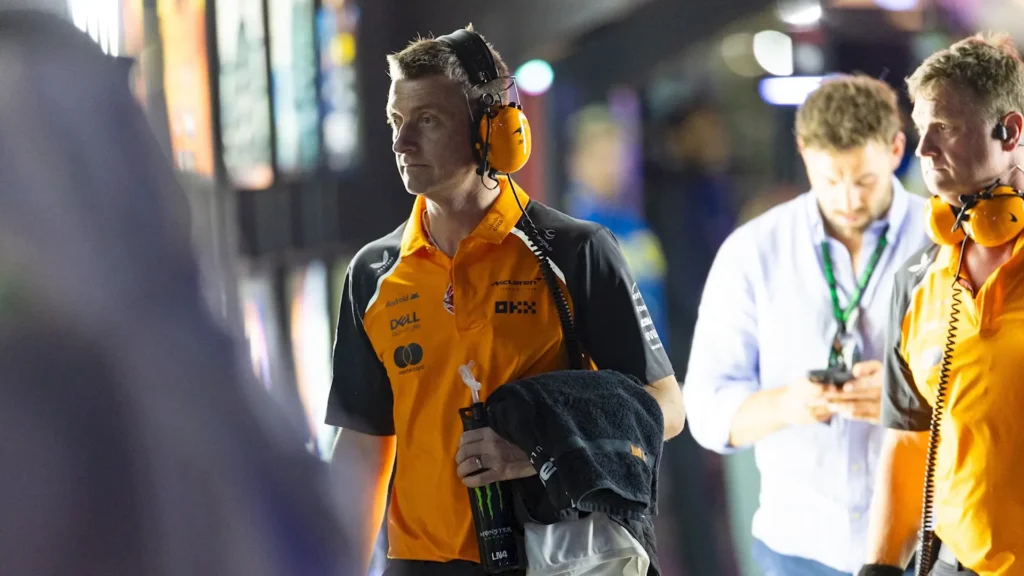
Every major F1 accident creates valuable information.
Formula 1 cars are equipped with an Accident Data Recorder (ADR), similar to a black box, which records important information during a crash, including impact forces and vehicle behaviour.
Engineers analyse:
- Speed before impact
- Angle of collision
- G-forces experienced
- How the car absorbed energy
- Whether any component failed
The results can influence future car designs and improve safety standards across motorsport.
Mechanics Work Against Time
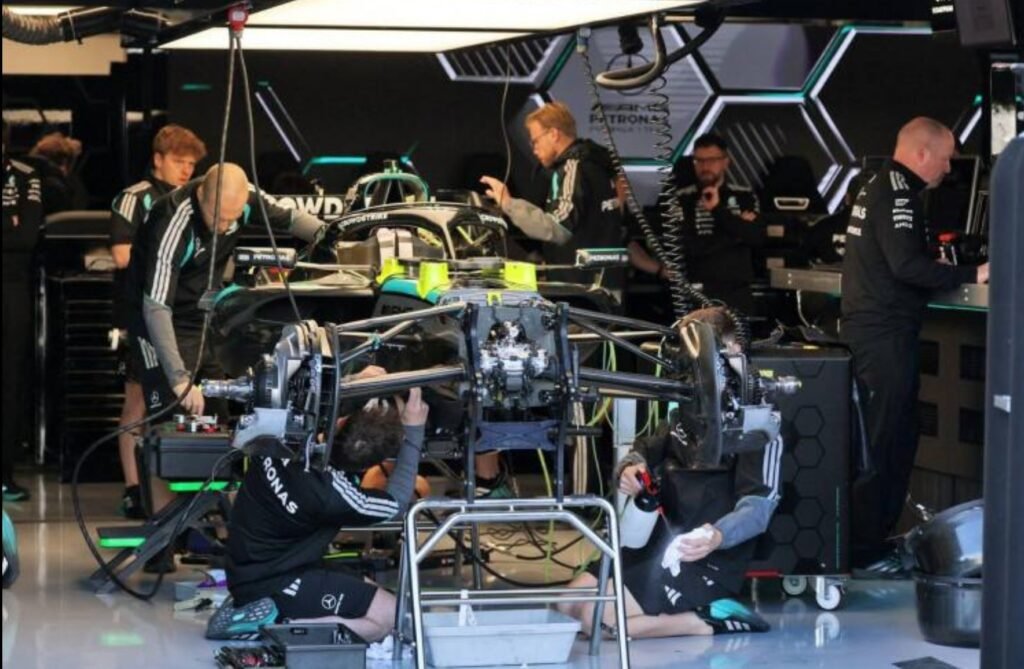
If a crash happens during Friday practice or qualifying, the team may have only a few hours to rebuild the car before the next session.
Dozens of mechanics can work late into the night:
- Removing damaged parts
- Installing replacement components
- Checking electronic systems
- Inspecting hydraulic systems
- Performing safety checks
A car that looks completely destroyed in the afternoon can sometimes return to the pit lane the following morning.
How Expensive Is an F1 Crash?
A Formula 1 crash can cost hundreds of thousands or even millions of dollars.
A minor accident may only require a new front wing and carbon components. However, a major crash that damages the chassis, gearbox, suspension, and aerodynamic package can create a huge financial burden.
In the budget cap era, crashes are even more painful because teams must carefully manage their spending throughout the season.
What Happens If the Car Cannot Be Saved?
If the damage is too severe, teams have several options:
- Use a spare chassis
- Replace damaged components with new parts
- Manufacture new pieces at the factory
- Send broken parts back for analysis
Even a destroyed car can provide valuable information. Engineers use the data to improve future designs, reliability, and safety.
The Hidden Heroes Behind Every F1 Comeback
For fans, an F1 crash may last only a few seconds.
But behind the scenes, the recovery process is a massive operation:
Driver rescued → Car recovered → Data analysed → Damage inspected → Parts replaced → Car rebuilt → Back to racing
This is the side of Formula 1 that many people never see.
Formula 1 is not only about building the fastest car on the planet. It is also about creating a machine that can survive the biggest impacts, learn from failure, and return stronger for the next battle.
Behind every car that comes back after a crash, there is a team of engineers and mechanics working tirelessly to bring it back to life.

Adhe is part of the 88 Eight Box Editorial Team, covering JDM culture, motorsport, automotive technology, and industry news. The team focuses on delivering original automotive stories, reviews, and insights for enthusiasts worldwide.