
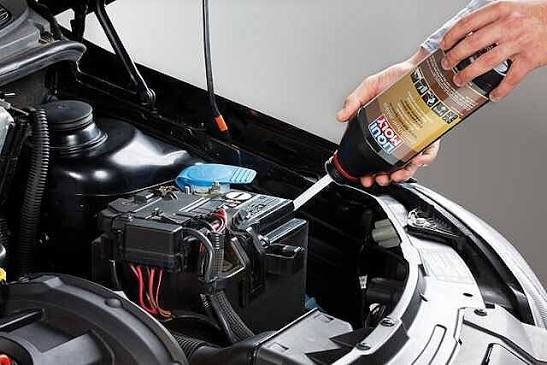
Engine oil and hydraulic oil are both essential lubricants used in machinery, but they are designed to perform different jobs. Although both can reduce friction, protect metal components, and prevent wear, their chemical formulations, viscosity requirements, and performance characteristics are tailored to the systems in which they operate.
Understanding these differences is particularly important for automotive enthusiasts, mechanics, heavy-equipment operators, and anyone responsible for maintaining industrial machinery. Using the wrong lubricant can compromise equipment performance, accelerate component wear, and potentially lead to expensive repairs.
So, what exactly separates hydraulic oil from engine oil, and can one be used as a substitute for the other?
What Is Engine Oil?
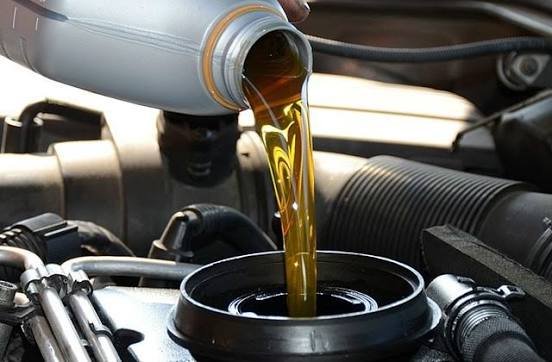
Engine oil is a lubricant specifically formulated for internal combustion engines, including gasoline and diesel engines. Its primary purpose is to create a protective film between moving components, minimizing friction and preventing direct metal-to-metal contact.
Inside a running engine, numerous parts move at high speeds and operate under demanding conditions. Pistons travel up and down inside cylinders, crankshafts rotate under substantial loads, and camshafts operate the valve train. These components generate friction and heat that must be managed to prevent excessive wear and mechanical failure.
Engine oil is formulated to provide wear protection, maintain engine cleanliness, resist high temperatures, and preserve an effective lubricating film under pressure.
However, engine oil does considerably more than lubricate moving parts.
1. Reduces Friction and Wear
Engine oil forms a lubricating film between moving components, helping prevent direct contact between metal surfaces.
This protection is particularly important around crankshaft bearings, camshafts, piston rings, and cylinder walls, where inadequate lubrication can cause accelerated wear and, in severe cases, serious engine damage.
The oil must also maintain sufficient film strength under the pressures and temperatures encountered during engine operation.
2. Keeps the Engine Clean
Combustion produces contaminants that can enter the lubricating system. Oxidation and high-temperature operation can also contribute to the formation of deposits and sludge.
Engine oils therefore contain carefully selected detergent and dispersant additives.
Detergents help control deposits on engine surfaces, while dispersants keep contaminants suspended in the oil so they are less likely to accumulate as sludge. Certain additives also help neutralize acidic substances generated during engine operation.
These functions are particularly important in engines that operate for extended periods under high loads or experience frequent stop-and-go driving.
3. Helps Control Engine Temperature
Engine oil absorbs heat from lubricated components and carries some of that heat away as it circulates through the engine.
Although the cooling system remains the primary means of controlling engine temperature in most conventional automotive applications, engine oil contributes to thermal management by carrying heat away from areas that coolant may not directly contact.
The lubricant must also resist oxidation and degradation when exposed to high temperatures over extended periods.
4. Protects Against Corrosion
Engine oil contains additives designed to help protect internal components from corrosion and oxidation.
This protection matters because engines are exposed to combustion byproducts, moisture, and other contaminants that can gradually degrade the lubricant and affect metal surfaces.
Together, these characteristics explain why engine oil must meet specific requirements beyond simply being thick enough to separate moving parts.
What Is Hydraulic Oil?
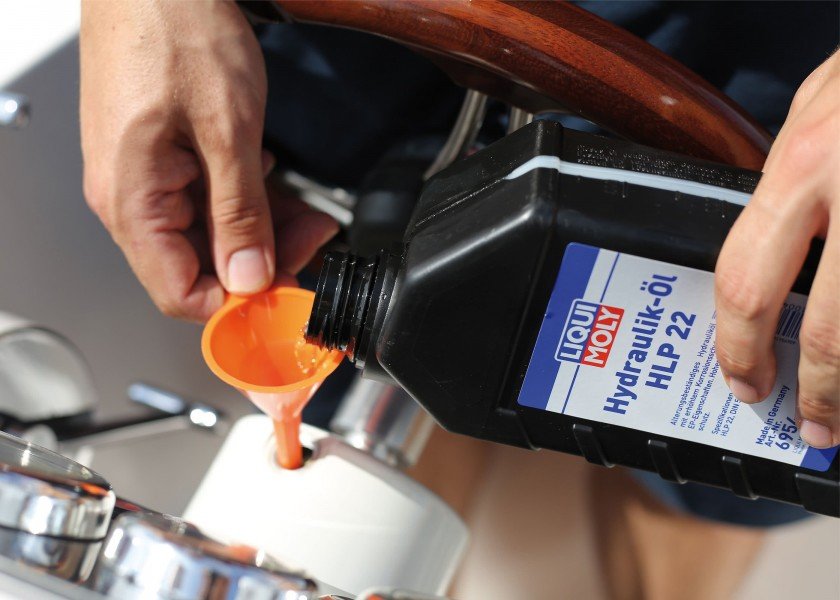
Hydraulic oil is a specialized fluid used in hydraulic systems to transmit power, lubricate components, manage heat, and protect internal surfaces from wear and corrosion.
Unlike conventional engine oil, whose primary application is lubricating an engine, hydraulic oil has an additional fundamental responsibility: transmitting force through a pressurized fluid.
Hydraulic systems are widely used in excavators, forklifts, industrial presses, injection-molding machines, agricultural equipment, and other machinery that relies on controlled mechanical movement.
To understand its importance, consider a hydraulic excavator.
When the operator moves a control lever, hydraulic valves regulate the flow of pressurized fluid. A hydraulic pump supplies that fluid, which then acts on cylinders to produce movement.
The fluid allows the machine to generate and control substantial forces without relying entirely on mechanical linkages.
If the hydraulic oil contains excessive air, becomes too viscous, loses its protective properties, or becomes contaminated, the system may become less efficient and its components may experience premature wear.
Hydraulic oil must therefore be formulated to meet several specialized requirements.
1. Transmits Hydraulic Power
The defining function of hydraulic oil is to transmit force through a hydraulic circuit.
The fluid must respond predictably to pressure changes so that pumps, valves, hydraulic motors, and cylinders can operate as intended.
Entrained air can interfere with this function because air is much more compressible than liquid oil. Excessive air in the system can contribute to sluggish operation, reduced efficiency, and other hydraulic problems.
For this reason, hydraulic fluids are formulated with characteristics that promote appropriate air release and help control foaming.
2. Lubricates Pumps, Valves, and Other Components
Although transmitting power is its defining responsibility, hydraulic oil must also lubricate the moving components within the hydraulic system.
Hydraulic pumps and motors contain parts that operate under considerable loads. Proper lubrication helps reduce friction, limit wear, and extend component service life.
Hydraulic oils commonly incorporate anti-wear additives, although the appropriate formulation depends on the pump design, materials, operating conditions, and manufacturer’s requirements.
3. Resists Foaming and Releases Air
The ability to release air is particularly important in hydraulic systems.
Air bubbles trapped in the fluid can make hydraulic operation less consistent. In certain circumstances, they can also contribute to cavitation, a damaging phenomenon associated with the formation and collapse of vapor cavities within a liquid.
Hydraulic oils are therefore formulated to balance air-release performance and foam control.
These characteristics help maintain efficient power transmission while reducing the risk of problems associated with excessive air in the system.
4. Manages Water Contamination and Maintains Cleanliness
Water contamination can damage hydraulic systems by promoting corrosion, reducing lubricant performance, and contributing to operational problems.
Many conventional mineral-based hydraulic oils are formulated to separate readily from water, a property known as demulsibility.
Hydraulic oils must also maintain suitable filterability so that filtration systems can remove contaminants without the fluid itself contributing unnecessarily to filter blockage.
However, not every hydraulic fluid is designed to separate water in the same way. Some specialized formulations have different water-handling characteristics, depending on their intended applications.
The correct formulation therefore depends on the equipment and the manufacturer’s requirements.
The Main Differences Between Hydraulic Oil and Engine Oil
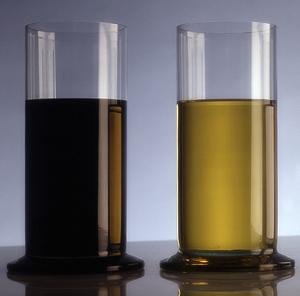
The biggest difference is not that one oil lubricates while the other does not. Both provide lubrication and wear protection.
Instead, the distinction lies in their primary responsibilities and the performance characteristics required by their respective systems.
Engine oil is designed primarily to lubricate and protect internal combustion engines, while hydraulic oil is designed primarily to transmit power through hydraulic systems while providing appropriate lubrication and component protection.
This difference influences their additive packages, viscosity requirements, resistance to contamination, and overall performance.
1. Different Additive Formulations
Both oils contain base oils and carefully selected chemical additives. However, their additive packages are developed to meet different operating requirements.
Engine oils commonly use detergents and dispersants to control deposits, manage contaminants associated with combustion, and help neutralize acidic byproducts.
Hydraulic oils, meanwhile, are generally formulated with particular attention to anti-wear protection, oxidation resistance, foam control, air release, filterability, and water separation where required.
These distinctions are not absolute. Some hydraulic fluids contain detergents and dispersants, while both lubricant categories may use overlapping additive chemistries.
The important point is that additives must work together as a tested formulation. Adding more of a particular additive does not automatically make an oil suitable for a different application.
2. Different Viscosity Requirements
Viscosity describes a fluid’s resistance to flow. It is an important factor in both engine and hydraulic lubrication because it affects the formation of lubricating films, the movement of fluid, and operating efficiency.
However, the appropriate viscosity depends on the equipment’s design and operating conditions.
Engine oils commonly use SAE viscosity grades, such as SAE 5W-30 or SAE 10W-40. These classifications are defined by SAE J300, which establishes the viscosity limits for engine lubricating oils.
Industrial hydraulic oils commonly use ISO viscosity grades, such as ISO VG 32, ISO VG 46, and ISO VG 68. ISO 3448 establishes a viscosity-classification system for industrial liquid lubricants, including hydraulic fluids.
The numbers in these classifications cannot simply be compared as though they belong to the same scale.
For example, SAE 10W-40 and ISO VG 46 do not represent equivalent overall lubricant specifications, even though individual fluids from different categories may have overlapping viscosity characteristics at certain temperatures.
Viscosity is only one aspect of lubricant performance. Two oils with similar viscosities can still have significantly different additive packages and performance capabilities.
Choosing oil based on thickness alone is therefore not a reliable way to determine whether it is suitable for a particular machine.
3. Different Operating Conditions
Engine oil must withstand the combination of high temperatures, mechanical loads, oxidation, and contaminants associated with internal combustion.
Hydraulic oil encounters a different set of challenges, including pressure fluctuations, air entrainment, possible water contamination, and the need to maintain predictable fluid behavior throughout the hydraulic circuit.
Hydraulic systems may also have demanding filtration requirements and relatively small reservoirs, leaving less time for the fluid to release air or allow contaminants to settle.
Consequently, a lubricant that performs well inside an engine is not automatically suitable for a hydraulic pump or control valve.
4. Different Performance Specifications
Lubricants are evaluated against standards and specifications appropriate to their intended applications.
For engine oils, SAE J300 addresses viscosity classification, while other industry categories and vehicle-manufacturer approvals determine whether an oil meets the additional performance requirements of a particular engine.
For hydraulic oils, equipment manufacturers may specify particular viscosity grades, hydraulic-fluid categories, industry standards, or approved products.
For example, hydraulic oils meeting the requirements of ISO 11158 or DIN 51524 may be specified for particular systems, depending on the equipment and the required fluid type.
Meeting the correct viscosity grade is therefore not enough. The lubricant must also satisfy the applicable performance requirements.
Can Engine Oil Be Used Instead of Hydraulic Oil?
The answer is sometimes, but only when the equipment manufacturer specifically permits it.
It is incorrect to assume that engine oil can never be used in a hydraulic system. Certain hydraulic equipment is designed to operate with specified engine oils or automatic transmission fluids.
For example, some hydraulic motors permit the use of particular engine oils alongside approved hydraulic fluids and automatic transmission fluids. However, these approvals apply to specific equipment and should not be interpreted as a general recommendation for all hydraulic systems.
Some mobile equipment also uses hydraulic fluids containing detergent and dispersant additives similar to those found in engine oils. These fluids can be useful in certain applications because they help manage sludge and contamination.
However, such formulations may also behave differently when water enters the system, making correct fluid selection essential.
The reverse is equally important: conventional hydraulic oil should not be used as engine oil simply because it appears to have a suitable viscosity.
An engine requires a lubricant that meets its particular requirements for wear protection, deposit control, temperature performance, and other engine-specific characteristics.
A general-purpose hydraulic oil may not provide the complete protection required by an internal combustion engine.
In both situations, the correct reference is the equipment manufacturer’s specification, not the lubricant’s appearance or viscosity alone.
What Happens If You Use the Wrong Oil?
Using an unsuitable lubricant may not cause immediate failure, but it can compromise performance and shorten component life.
If engine oil is used in a hydraulic system without the necessary approval, the consequences may include inadequate air release, excessive foaming, unsuitable viscosity, or insufficient compatibility with the equipment’s materials and filtration requirements.
Depending on the formulation and operating conditions, an unsuitable fluid may also contribute to deposits, corrosion, reduced efficiency, or premature component wear.
Likewise, using hydraulic oil in an engine without the required engine-oil approvals can leave critical components inadequately protected against wear, combustion-related deposits, and other operating stresses.
The precise consequences depend on the oil, the machine, and the conditions under which it operates. Neither lubricant category is inherently suitable for every application.
If the wrong oil has already been added, the safest response is to consult the equipment manufacturer’s instructions or a qualified service professional to determine whether the fluid needs to be drained, replaced, or flushed.
Avoid continuing to operate the equipment until its suitability has been established, particularly if the wrong fluid has been introduced into a critical system.
How to Choose the Right Oil
Selecting the correct lubricant starts with identifying the system in which it will be used.
For an engine, check the owner’s manual for the recommended SAE viscosity grade, required industry specifications, and any manufacturer-specific approvals.
For hydraulic equipment, consult the service manual or hydraulic-system documentation for the approved fluid category, viscosity requirements, operating-temperature range, and other relevant specifications.
It is also important to consider the machine’s working environment. Equipment operating at very low ambient temperatures may require different viscosity characteristics from machinery operating continuously under high loads and temperatures.
Finally, pay attention to maintenance. Correct oil selection alone cannot compensate for excessive contamination, unsuitable operating temperatures, damaged seals, or neglected filtration.
Following the specified service intervals and maintaining fluid cleanliness are essential to reliable operation.
Hydraulic oil and engine oil may share some ingredients and basic lubricating properties, but they are not automatically interchangeable.
Engine oil is primarily engineered to protect internal combustion engines against friction, wear, heat, and combustion-related contamination. Hydraulic oil is primarily engineered to transmit power efficiently while protecting hydraulic pumps, valves, cylinders, and other system components.
Their differences extend beyond viscosity to include additive chemistry, air-release behavior, water-handling characteristics, filtration requirements, and application-specific performance standards.
The most important rule is simple: always use the lubricant specified by the equipment manufacturer. A cheaper or more readily available oil is not necessarily a suitable substitute, even when its viscosity appears similar.
From an automotive maintenance perspective, choosing the correct oil is not merely about keeping mechanical parts lubricated. It is about ensuring that the entire system receives the protection it was designed to require.
What about you? Have you ever encountered a machine that specifies an unusual hydraulic fluid or permits the use of engine oil in its hydraulic system? Share your experience in the comments.

Adhe is part of the 88 Eight Box Editorial Team, covering JDM culture, motorsport, automotive technology, and industry news. The team focuses on delivering original automotive stories, reviews, and insights for enthusiasts worldwide.