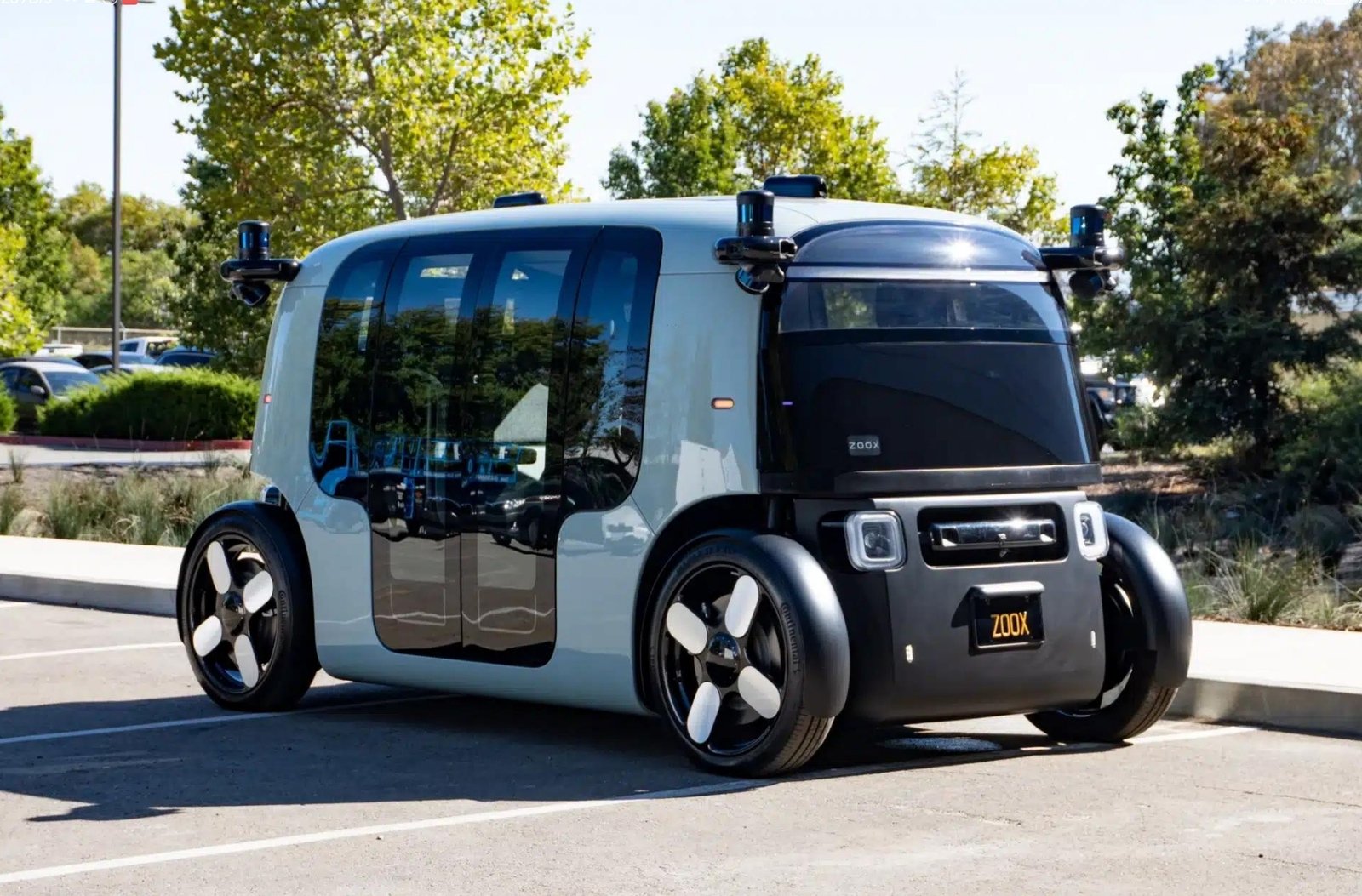
The automotive world has entered a new era after Zoox, Amazon’s autonomous vehicle company, received a major regulatory approval in the United States to operate its fully autonomous robotaxi without a steering wheel or pedals for commercial passenger services.
The approval from the National Highway Traffic Safety Administration (NHTSA) represents one of the biggest milestones in the development of self-driving technology. For the first time, a vehicle designed from the beginning without traditional human controls has been cleared to provide paid transportation services on public roads in the United States.
Not a Conventional Car, But a Robotaxi Built for the Future
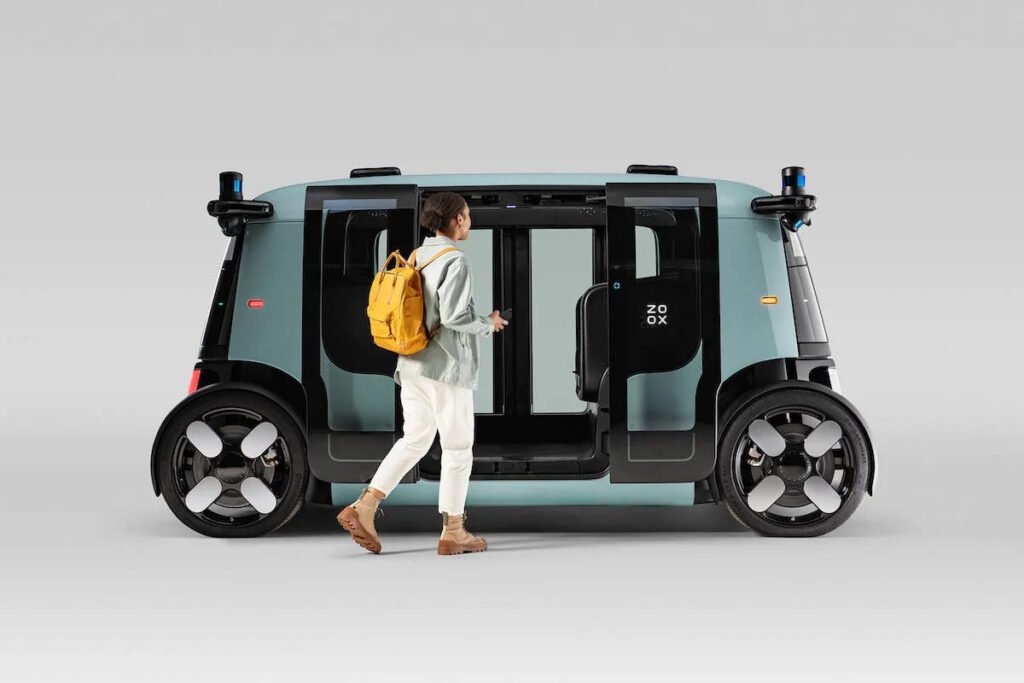
Unlike most autonomous vehicles that are based on existing production cars modified with self-driving technology, Zoox designed its vehicle from the ground up specifically for autonomous transportation.
The Zoox robotaxi eliminates traditional driving components, including:
- Steering wheel
- Accelerator pedal
- Brake pedal
- Conventional mirrors
Instead, the vehicle relies on a combination of advanced sensors, including cameras, lidar, radar, and long-range infrared sensors, to understand and navigate its surroundings with a full 360-degree view.
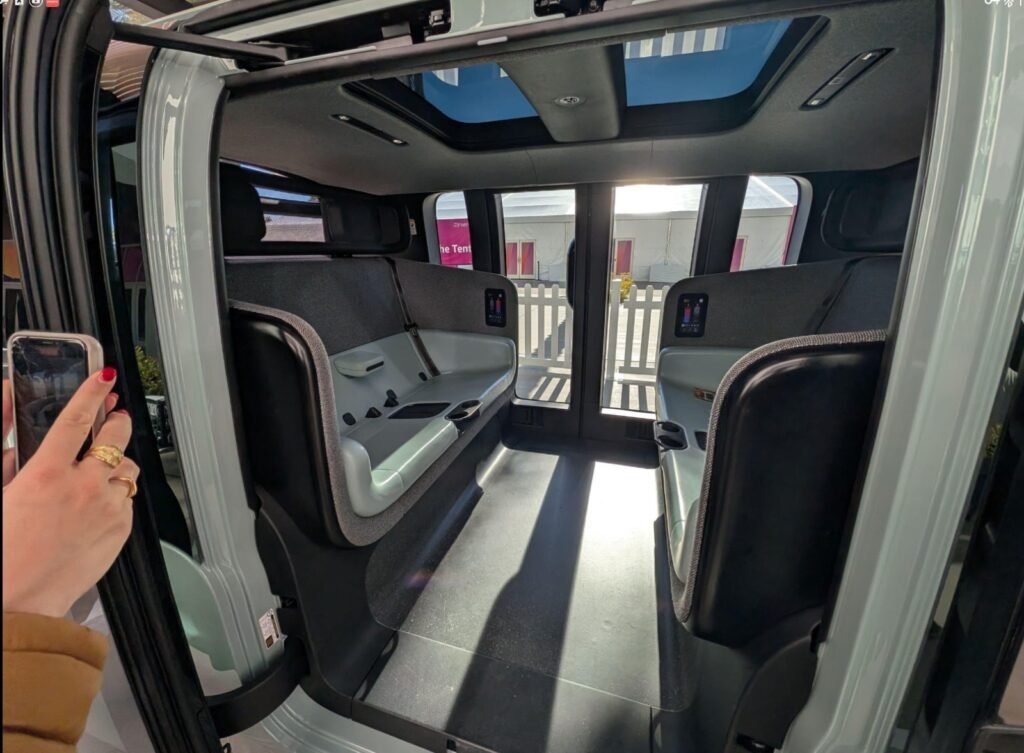
The interior design is also completely different from a normal vehicle. The cabin is built like a futuristic passenger space, featuring two rows of seats facing each other. The layout creates an experience closer to riding in a future mobility capsule rather than sitting inside a traditional car.
A Major Step Toward Commercial Robotaxi Services
Before receiving this approval, Zoox operated its autonomous vehicles mainly through testing programs with passengers riding for free. With the latest regulatory clearance, the company can now begin charging customers and expand its robotaxi service across several locations in the United States.
The approval allows Zoox to operate up to 2,500 vehicles per year during a two-year period, with additional monitoring requirements related to safety performance and incident reporting.
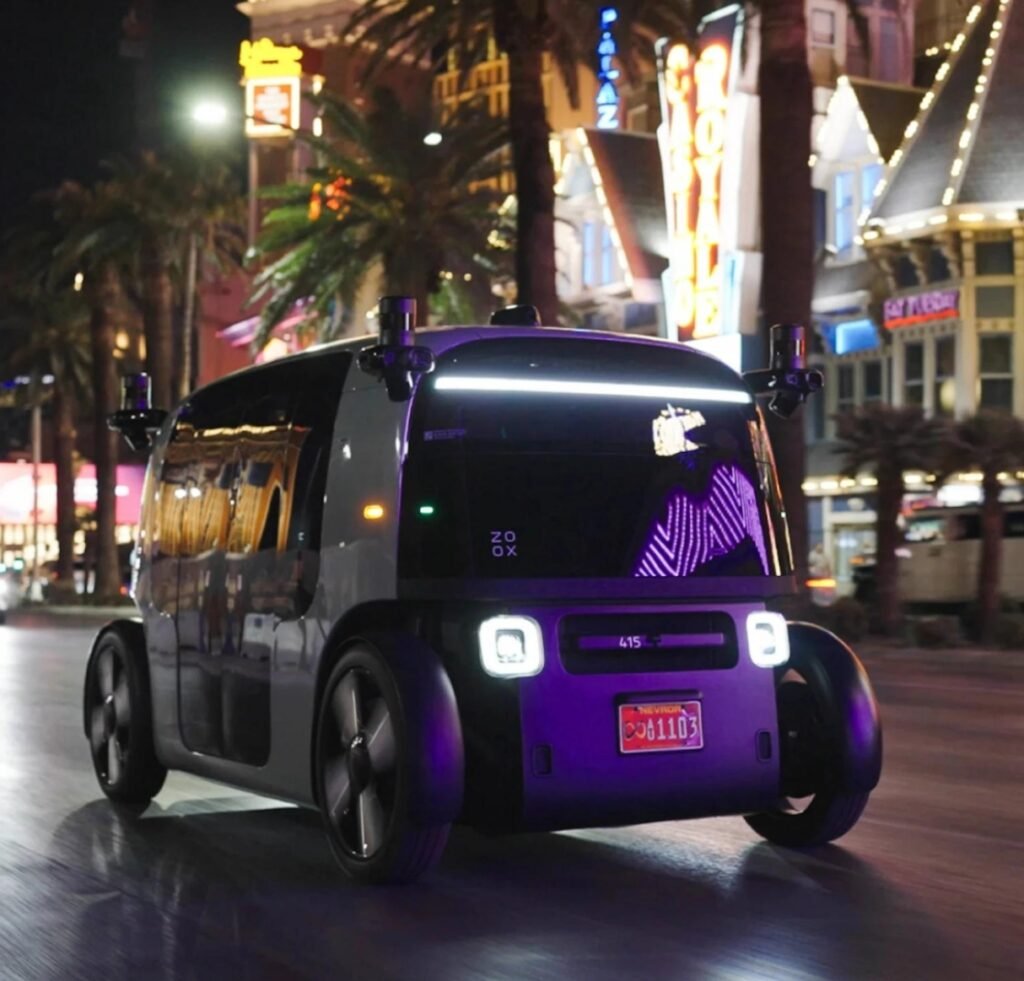
The company’s first major commercial expansion will focus on Las Vegas, before expanding to other cities including San Francisco, Miami, and Austin.
Safety Concerns Remain a Major Discussion
Although the approval represents a significant victory for the autonomous vehicle industry, it has also sparked debate about whether fully driverless technology is ready for widespread public use.
Some critics continue to question whether removing human controls entirely creates additional safety risks, especially in unexpected road situations where human intervention has traditionally been available.
NHTSA has stated that vehicles like Zoox must meet safety standards equal to or higher than conventional vehicles. However, regulators are also developing new rules because many existing automotive safety standards were created during an era when every vehicle was controlled by a human driver.
A New Battle in the Autonomous Vehicle Industry
Zoox’s approval places the company in direct competition with major autonomous driving players such as Waymo and Tesla, which are also developing driverless transportation services.
However, Zoox is taking a different approach. While many companies are trying to transform traditional cars into autonomous vehicles, Zoox believes the future of transportation requires vehicles that are designed from the beginning without a driver.
The company’s robotaxi represents a major shift in automotive design — moving away from the idea of a car controlled by a person and toward a vehicle created entirely around passengers and artificial intelligence.
With this historic approval, vehicles without steering wheels and pedals are no longer just a futuristic concept. Slowly but surely, fully autonomous vehicles controlled by artificial intelligence are becoming a real part of America’s transportation landscape.

Adhe is part of the 88 Eight Box Editorial Team, covering JDM culture, motorsport, automotive technology, and industry news. The team focuses on delivering original automotive stories, reviews, and insights for enthusiasts worldwide.