How one Chevrolet Chevelle, a giant fuel line and a mechanic who refused to accept the obvious turned NASCAR’s rulebook into a playground
There was a time when NASCAR inspection was nothing like the highly controlled process we know today.
There were no laser scanners checking every millimetre of a car. No sophisticated simulation programmes. No armies of engineers armed with computers analysing every aerodynamic surface. And certainly no modern system capable of measuring a race car down to microscopic tolerances.
Instead, there was a rulebook.
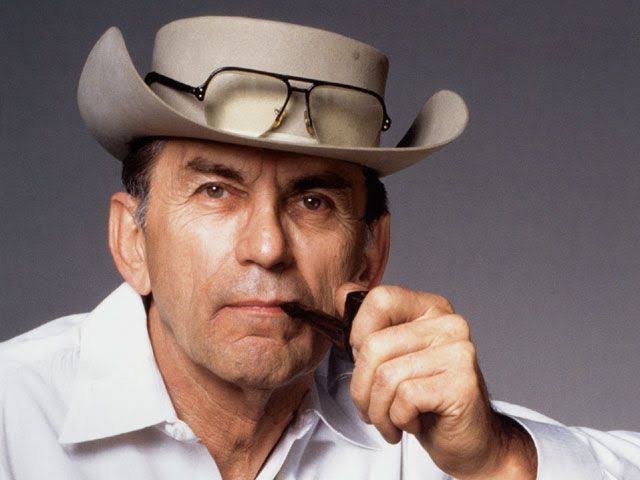
And if something wasn’t written in that rulebook, Henry “Smokey” Yunick wanted to know why he couldn’t use it.
That philosophy turned Yunick into one of the most brilliant, controversial and downright irritating figures NASCAR has ever produced.
Working from his famous “Best Damn Garage in Town” in Daytona Beach, Florida, Yunick became known as a mechanic, engineer, car owner, crew chief and inventor. He won the 1961 Daytona 500 with Marvin Panch and the 1962 Daytona 500 with Fireball Roberts, while also helping shape some of Chevrolet’s most important racing technology.
But his real legacy may not be the races he won.
It was the things he tried to do that NASCAR hadn’t thought to outlaw yet.
The Chevrolet That Embarrassed Ford and Chrysler
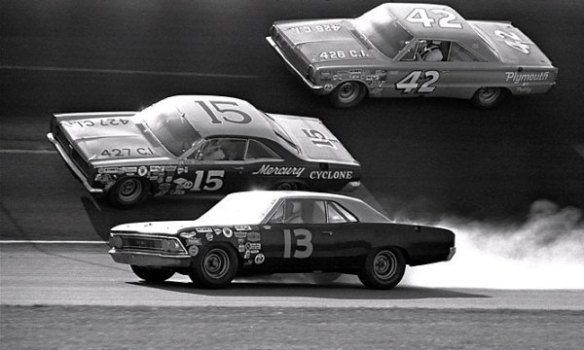
The story reached another level in 1967.
At the time, Ford and Chrysler were heavily involved in NASCAR’s factory wars, while Chevrolet had effectively withdrawn from major factory-backed stock-car competition.
Then Smokey Yunick arrived at Daytona with an unsponsored Chevrolet Chevelle, carrying the legendary No. 13 and driven by Curtis Turner.
It looked like a fairly ordinary Chevelle.
It wasn’t.
Turner stunned the NASCAR establishment by becoming the first driver to officially break the 180-mph barrier in Daytona 500 qualifying, recording approximately 180.831 mph (291 km/h) and putting Yunick’s Chevrolet on pole.
For the factory-backed Ford and Chrysler teams, it was an extraordinary embarrassment.
An unsponsored Chevrolet had just turned up and beaten the giants.
And the car looked suspiciously small.
Very suspiciously small.
The “7/8-Scale” Chevelle
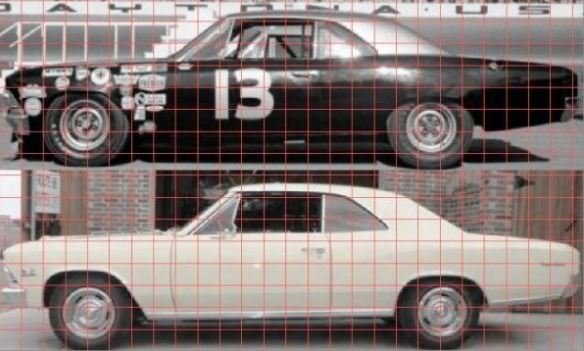
One of the most famous stories surrounding Yunick’s Chevelle is that the car had effectively been built at 7/8 scale.
The theory was simple: make the car smaller, and it would have less frontal area and therefore less aerodynamic drag.
But the exact story is more complicated.
Some contemporary and later accounts described the car as a 7/8-scale Chevelle, while other research has challenged that description, and Yunick himself reportedly rejected the idea that he simply built a 7/8-scale replica.
What is much less controversial is that Yunick made significant aerodynamic and chassis changes.
The body was moved rearward on the chassis, the roof and window areas were altered, the bumpers were tightly integrated into the bodywork and the underside was heavily modified.
The result was a Chevelle that looked broadly familiar from the outside but was considerably more sophisticated underneath.
In other words, it was a stock car only in the same sense that a modern F1 car is technically a car.
And Yunick wasn’t finished.
Then the Engine Exploded
The 1967 Daytona 500 should have been the perfect ending to the story.
It wasn’t.
Turner’s No. 13 Chevrolet eventually suffered an engine failure on lap 143, ending what had been one of the most spectacular demonstrations of speed at Daytona that year.
Then came Atlanta.
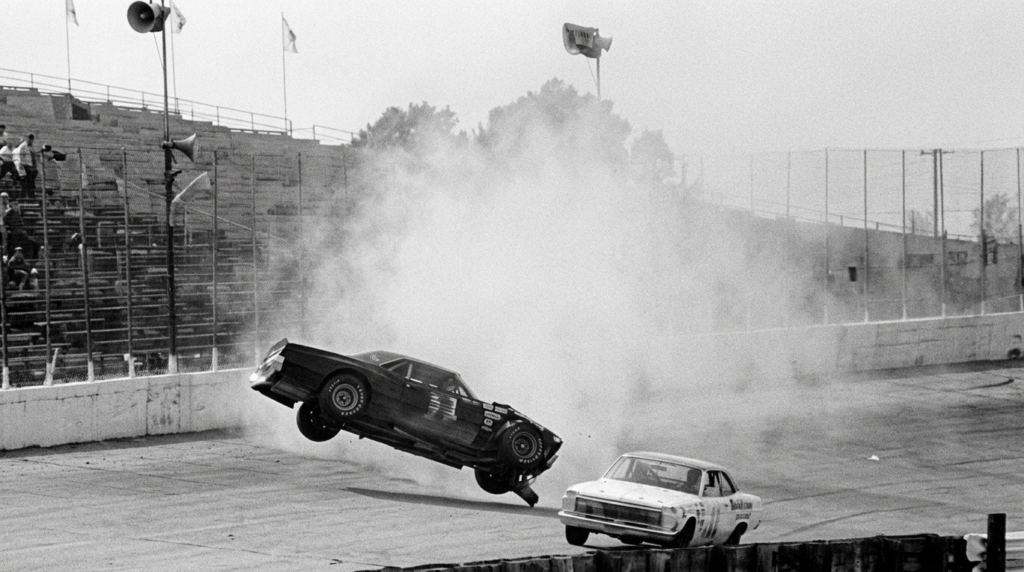
During practice for the 1967 Atlanta 500, Turner’s Chevelle crashed heavily.
The car was destroyed.
Turner survived.
Yunick, naturally, went back to work.
He built another Chevelle.
And this one became even more famous.
The Black and Gold No. 13
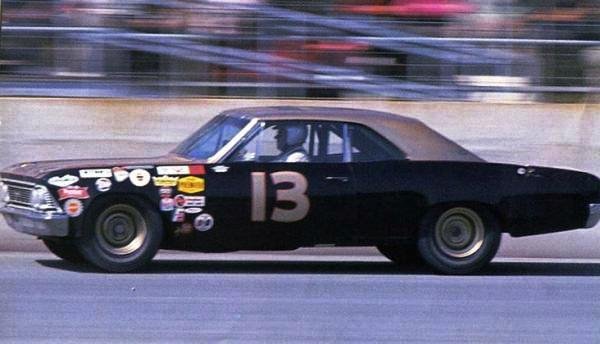
The second car was the black-and-gold No. 13 Chevelle that would become one of the most notorious race cars in NASCAR history.
It was technically advanced, aerodynamically clever and surrounded by so many rumours that separating the actual engineering from the folklore is almost impossible.
But one thing is certain:
NASCAR officials were very suspicious of Smokey Yunick.
And with good reason.
Yunick had a habit of looking at the rulebook from the opposite direction.
Most engineers asked:
“What does the rule allow us to do?”
Smokey effectively asked:
“What did the rule forget to prohibit?”
That distinction was enormous.
The 11-Foot Fuel Line
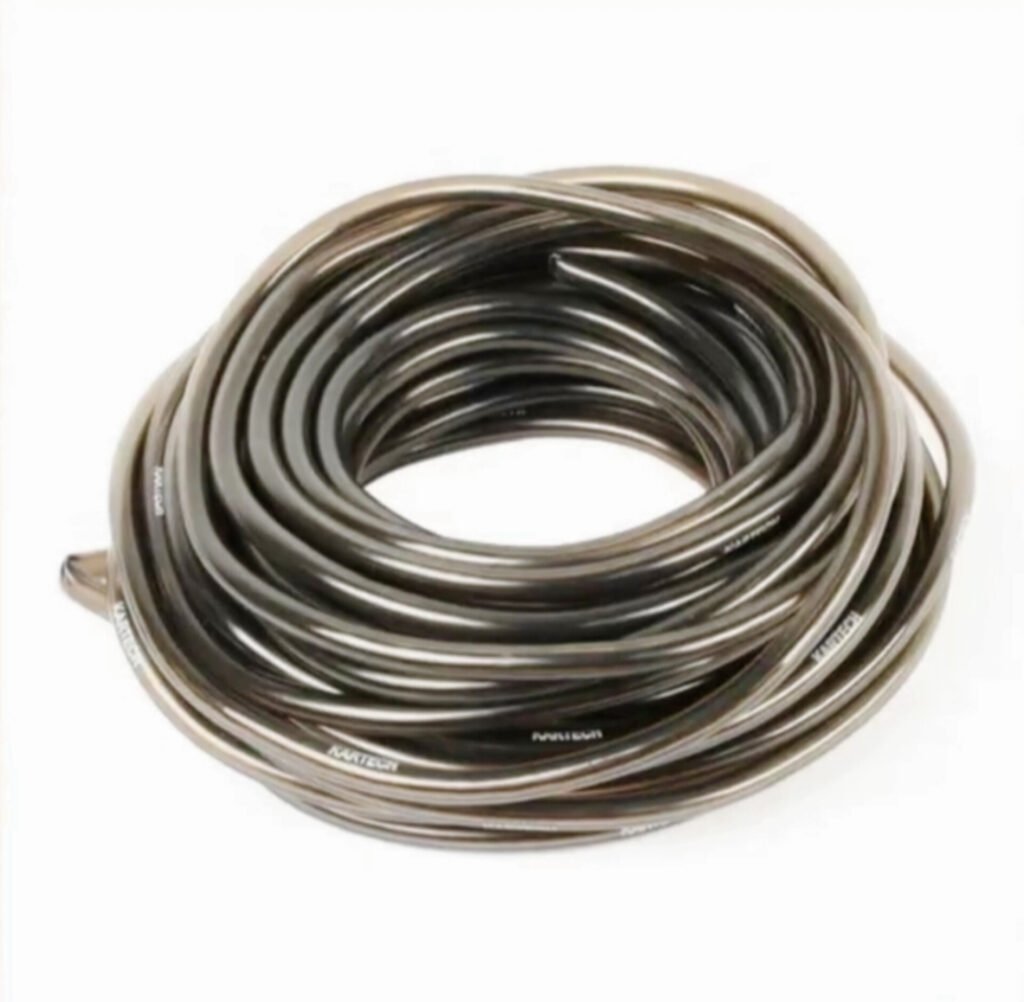
Then came perhaps the most famous Smokey Yunick trick of them all.
NASCAR specified the permitted fuel-cell capacity.
But according to Yunick, the regulations at the time did not specify how large or how long the fuel line itself could be.
So he built one.
It was approximately 11 feet long and two inches in diameter.
That’s not really a fuel line.
That’s a garden hose having an existential crisis.
According to Yunick’s own later explanation, the enormous line could hold roughly five gallons of additional fuel around 19 litres.
The logic was beautifully simple.
The fuel cell could remain within the specified capacity.
The additional fuel was simply… elsewhere.
The result was effectively extra range without technically increasing the fuel-cell capacity.
And Yunick’s argument was brutally straightforward:
There was no rule specifying the diameter of the fuel line.
Therefore, at least according to his interpretation, it wasn’t illegal when he did it.
NASCAR disagreed.
So NASCAR changed the rule.
“Better Make It 18”
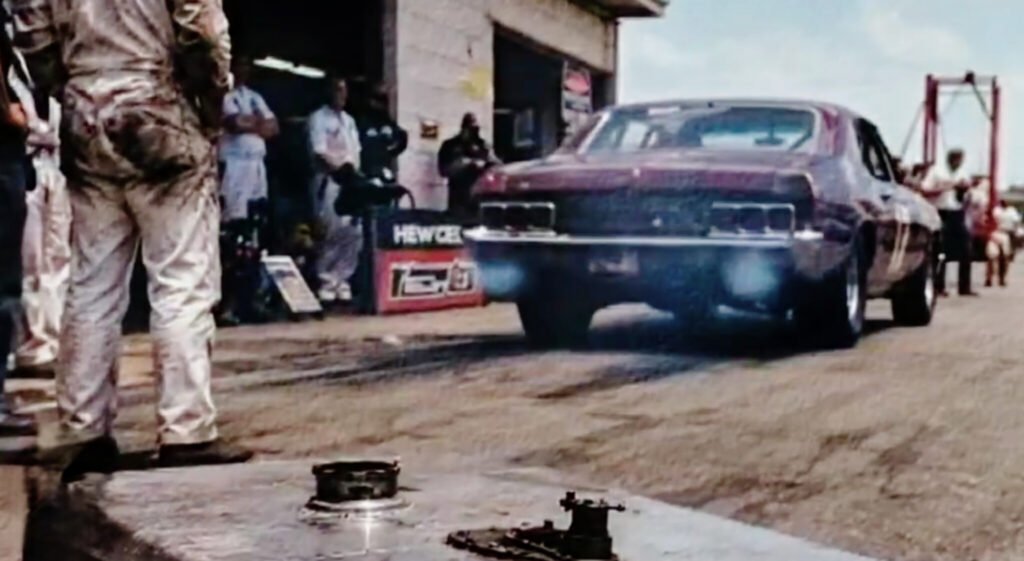
The legendary confrontation came during a technical inspection.
NASCAR officials became suspicious of Yunick’s Chevrolet and removed the fuel cell to check it.
The tank itself was apparently within the legal specification.
But inspectors found a long list of other issues they wanted Yunick to correct before the car could race.
One famous version of the story says inspectors handed Yunick a list of 17 violations.
Yunick looked at it and reportedly replied:
“Better make it 18.”
Then came the part that turned the story into NASCAR folklore.
Yunick started the Chevrolet and drove away.
The story has been repeated for decades as evidence that the car could run without its fuel cell because of the enormous amount of fuel contained in the oversized fuel line.
Some historical accounts repeat that version almost exactly, while other sources have disputed parts of the story. Even ESPN’s reporting noted that Yunick’s own recollections and later retellings sometimes differed.
But whether every detail happened exactly as the legend says almost misses the point.
The story perfectly captures Smokey Yunick.
The Car That NASCAR Wouldn’t Let Race
When Yunick brought his black-and-gold No. 13 Chevrolet back to Daytona in 1968, NASCAR was already watching closely.
This time, the car was driven by Johnny Rutherford.
The inspection became far more intense.
NASCAR officials repeatedly examined the fuel cell and questioned the construction of the car. Yunick later insisted that the controversy wasn’t really about the fuel tank at all. In his version, Ford and Chrysler did not want another unsponsored Chevrolet stealing pole position after what had happened in 1967.
Whatever the political background, the result was the same.
The black-and-gold Chevrolet never got to prove what it could do in the 1968 Daytona 500.
It failed technical inspection.
And one of the most infamous race cars in NASCAR history never turned a competitive lap in the race for which it had been built.
That’s what makes the car so fascinating.
It became legendary without ever getting the opportunity to demonstrate its full potential.
Was Smokey Actually a Cheat?
That’s where the story gets interesting.
Yunick hated the word “cheater.”
He didn’t believe he was simply breaking rules.
He believed he was interpreting them.
In his own later explanation of the giant fuel line, Yunick pointed out that NASCAR had specified the fuel-tank capacity but had not specified the maximum diameter of the fuel line.
After NASCAR changed the rule, the loophole disappeared.
And that was essentially his philosophy.
If the rule said you couldn’t do something, don’t do it.
If the rule didn’t say anything about it?
Find out what happens.
That mentality made Yunick a nightmare for NASCAR inspectors, but it also made him one of the most inventive engineers the sport had ever seen. NASCAR itself has described him as one of the most innovative minds to pass through its garage, noting the legends surrounding his extended fuel lines, chassis modifications and other technical tricks.
The Genius Behind the Mischief
It would be easy to remember Smokey Yunick simply as the guy who tried to cheat NASCAR.
That would be selling him dramatically short.
Yunick was a genuine engineering innovator.
He helped develop Chevrolet’s early small-block V8 technology, won two NASCAR championships as a mechanic with Herb Thomas, won the 1960 Indianapolis 500 as part of Jim Rathmann’s winning crew and accumulated an extraordinary record of technical inventions and innovations.
He was also inducted into the International Motorsports Hall of Fame in 1990.
His reputation wasn’t built solely on finding loopholes.
It was built on understanding cars so deeply that he could see possibilities other engineers simply didn’t notice.
And that is probably the most important part of the Smokey Yunick story.
The Rulebook Was the Challenge
Modern NASCAR is a very different world.
Cars are measured with extraordinary precision. Technical regulations are far more comprehensive. Teams employ armies of engineers, simulation specialists and aerodynamicists. The opportunities for hiding a five-gallon advantage inside an apparently legal component are considerably smaller.
Back in Yunick’s era, however, the rulebook itself was part of the engineering challenge.
And Smokey Yunick treated it accordingly.
He wasn’t asking:
“How can I break the rules?”
He was asking:
“What haven’t they thought of yet?”
That question produced faster cars, angry inspectors, rewritten regulations and some of the greatest stories ever to emerge from a NASCAR garage.
For NASCAR officials, Smokey Yunick was a headache.
For engineers, he was a genius.
For competitors, he was an absolute menace.
And for motorsport history?
He’s one of the reasons the phrase “If it isn’t prohibited, it’s probably worth trying” became almost a philosophy of American racing.
The funniest part is that every time NASCAR closed one loophole, Smokey would simply start looking for another.
And that may be the real legacy of the man from The Best Damn Garage in Town.
Not that he cheated the rulebook.
But that he read it more carefully than almost anyone else.
What do you think? Was Smokey Yunick a cheating genius, or simply an engineer who understood the rules better than the people who wrote them? Let us know in the comments.

Adhe is part of the 88 Eight Box Editorial Team, covering JDM culture, motorsport, automotive technology, and industry news. The team focuses on delivering original automotive stories, reviews, and insights for enthusiasts worldwide.