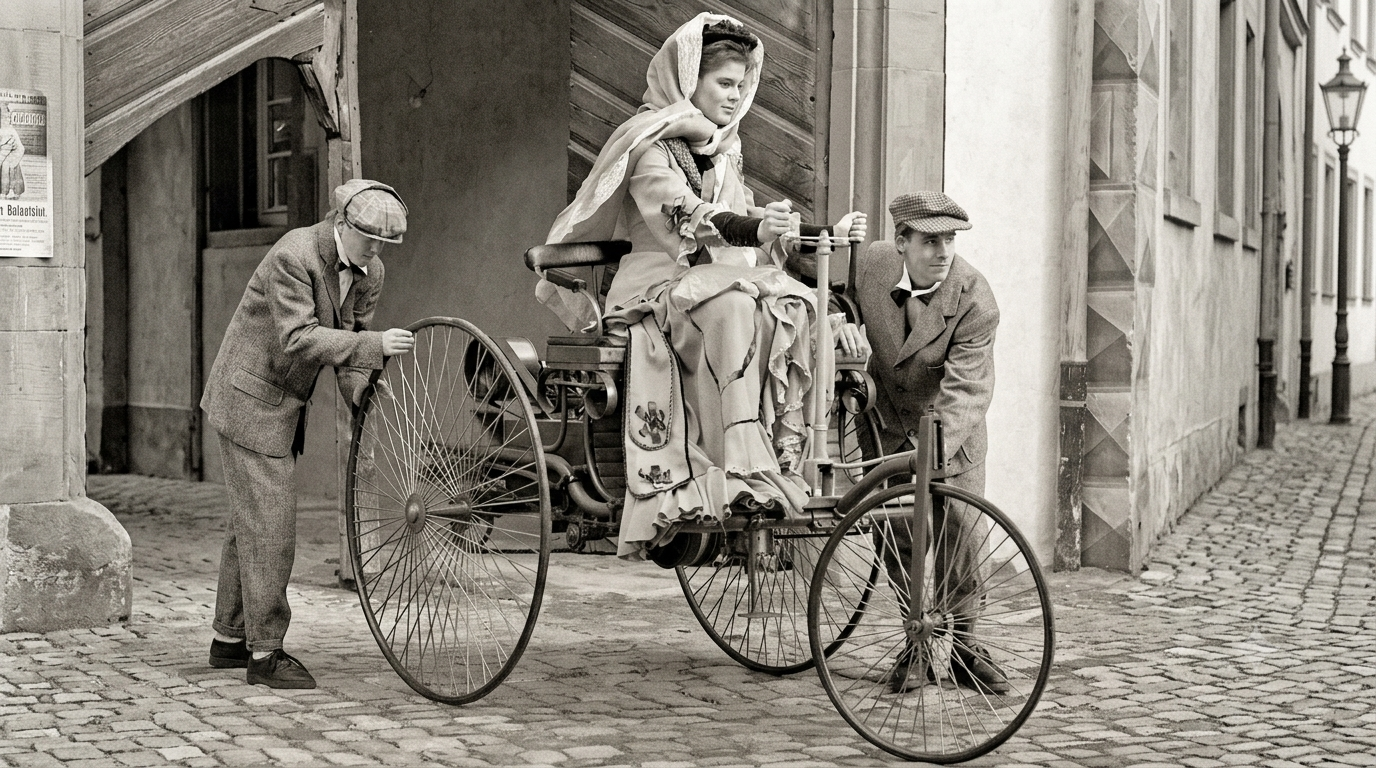
Forget Nürburgring testing, wind tunnels and million-dollar proving grounds. In 1888, there were no test tracks, no fuel stations, no roadside assistance and certainly no sat-nav.
There was just Bertha Benz and a three-wheeled motor car.
And she was about to take one of the most important road trips in automotive history.
More than 130 years before modern cars were subjected to endless durability testing, Bertha Benz climbed aboard the Benz Patent-Motorwagen and drove it more than 100 kilometres from Mannheim to Pforzheim, Germany.
It wasn’t exactly a relaxing Sunday drive.
It was effectively the world’s first long-distance road test.
Who Was Bertha Benz?
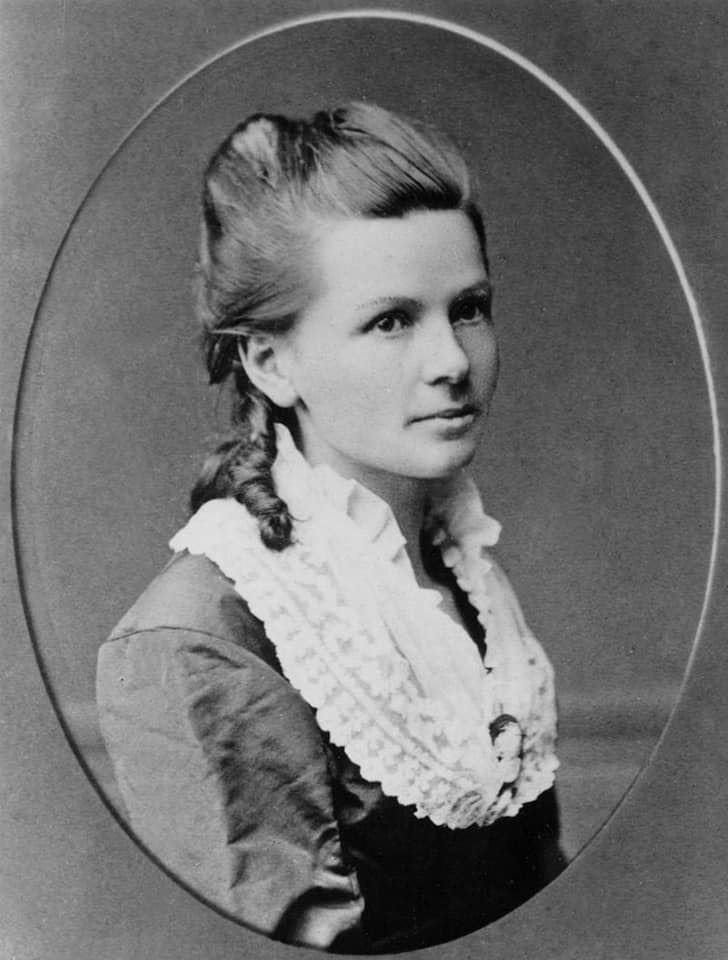
Born Cäcilie Bertha Ringer on 3 May 1849, Bertha grew up in Pforzheim, Germany. She later married engineer and inventor Carl Benz, the man whose work would lead to what is widely regarded as the world’s first practical automobile.
The couple married on 20 July 1872 and had five children: Clara, Thilde, Richard, Eugen and Ellen.
But Bertha was much more than Carl Benz’s wife standing in the background while he played with engines.
She was an important supporter of his work from the beginning.
When Carl was struggling financially with his early engineering projects, Bertha used her dowry to help support his ambitions. She believed in his idea of a horseless carriage at a time when the concept sounded considerably more ridiculous than it does today.
Then, in 1886, Carl Benz received the patent for his revolutionary Patent-Motorwagen.
The machine worked.
But there was still one rather important problem.
Would anybody actually believe in it?
The Problem With the World’s First Car
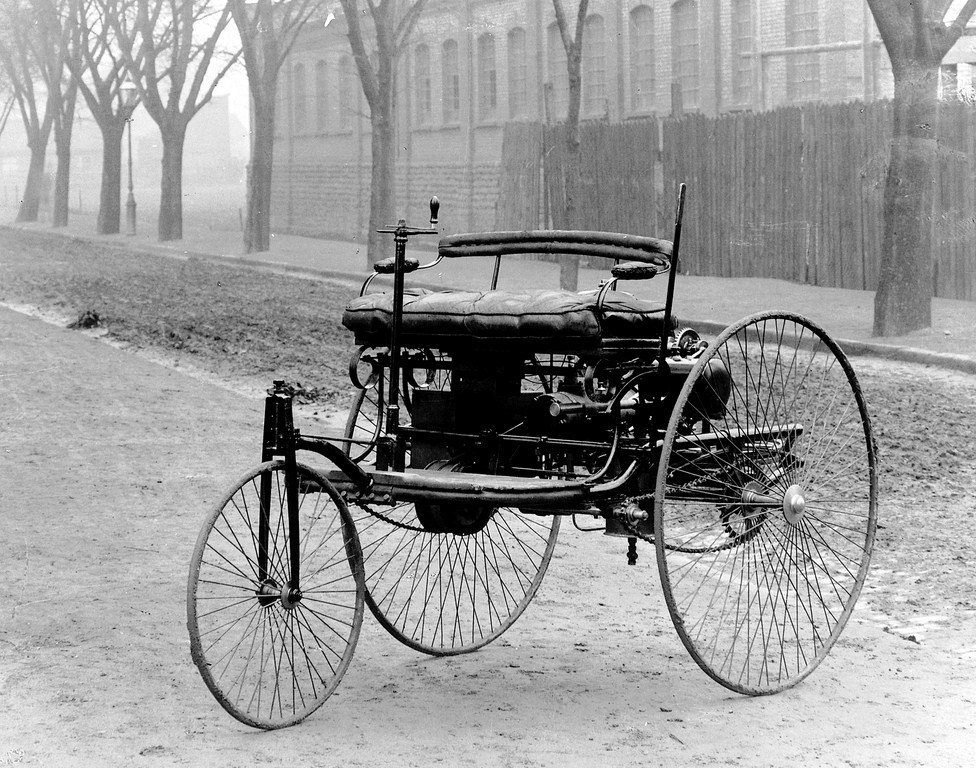
The Patent-Motorwagen was a remarkable piece of engineering for its time, but it was hardly what we’d call user-friendly.
It had three wheels, a lightweight tubular-steel frame and a single-cylinder petrol engine. There was no conventional steering wheel, no suspension as we know it today and no sophisticated fuel system.
Most importantly, it had never been properly tested over a serious distance.
People could see that Carl Benz had built a machine that moved.
What they couldn’t yet see was whether it could actually become a useful means of transportation.
Bertha apparently decided that somebody needed to find out.
So she did something rather spectacular.
She took the car without telling Carl.
The 1888 Road Trip
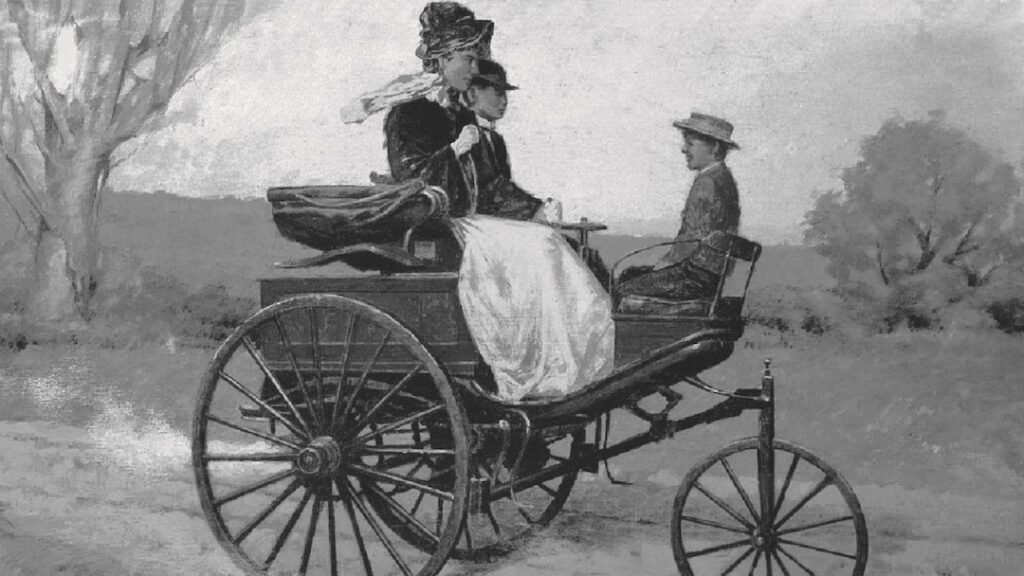
In August 1888, Bertha took the Patent-Motorwagen and set off from Mannheim with her two sons, Richard, 14, and Eugen, 15.
Their destination was Pforzheim, Bertha’s hometown.
The journey covered roughly 67 miles, or 108 kilometres, one way. Including the return journey and detours, the overall trip was around 180 kilometres.
Remember, this was 1888.
There were no proper roads designed for cars.
There were no petrol stations.
There were no breakdown recovery trucks.
And if something went wrong, you couldn’t simply pull out your phone and search for the nearest mechanic.
Bertha had to improvise.
A lot.
The World’s First Automotive Troubleshooting Session
During the journey, the Patent-Motorwagen suffered from a variety of mechanical problems.
And Bertha didn’t exactly sit around waiting for someone else to fix them.
She used a hairpin to help clear a blocked fuel line and reportedly used part of her clothing to help insulate an electrical component.
When the vehicle’s brakes began wearing down, she had a local shoemaker reinforce the brake shoes with leather.
That’s quite some dedication to the road test.
And then there was the fuel problem.
There were obviously no petrol stations in 1888, so Bertha stopped at a pharmacy in Wiesloch and bought ligroin, a petroleum-based solvent that could be used as fuel for the car.
That pharmacy is now widely regarded as the world’s first filling station.
Imagine explaining that to someone today:
“Excuse me, do you sell fuel for my three-wheeled experimental automobile?”
More Than Just a Road Trip
The journey wasn’t simply an adventure.
It provided Carl Benz with something far more valuable than a sales brochure:
real-world feedback.
Bertha’s journey exposed weaknesses in the Patent-Motorwagen that couldn’t be discovered by simply driving around the workshop.
The brakes needed improvement. The fuel system had problems. The car struggled with hills. And the journey demonstrated exactly what would need to change if motor cars were ever going to become practical transportation.
In other words, Bertha had effectively conducted one of the world’s earliest automotive durability tests.
Only instead of a controlled test facility, she had German country roads.
The Journey Changed Carl Benz’s Car
Bertha eventually reached Pforzheim with her sons.
She then sent a telegram to Carl informing him that they had arrived safely.
After spending some time in Pforzheim, the group made the return journey to Mannheim.
The experience gave Carl Benz a list of things that needed fixing and improving.
And that was precisely the point.
The Patent-Motorwagen was no longer just a machine that worked in theory.
It had proved that a petrol-powered automobile could travel a serious distance under real-world conditions.
Bertha had demonstrated something Carl’s workshop could never prove on its own:
the car could actually go somewhere.
Bertha Benz Was the Original Test Driver
Today, car manufacturers spend enormous amounts of money testing prototypes.
Cars are driven through deserts, across frozen lakes, around racetracks and over rough roads. Brakes are tested thousands of times. Engines run for hours on dynos. Components are subjected to extreme temperatures and brutal durability cycles.
Bertha Benz did the 1888 version.
She took an experimental car onto public roads, drove it for more than 100 kilometres, dealt with mechanical failures along the way and returned with a list of improvements.
There was no data logger.
No telemetry.
No engineers standing beside the road.
Just Bertha, her sons and a very brave three-wheeled machine.
Her Legacy
Bertha Benz died in Ladenburg on 5 May 1944, just two days after her 95th birthday.
Her contribution to automotive history, however, has never disappeared.
The road she travelled between Mannheim and Pforzheim is now known as the Bertha Benz Memorial Route, commemorating the journey that helped demonstrate the practical potential of the automobile.
In 2024, Germany also issued a special postage stamp commemorating Bertha Benz’s 175th birthday, featuring her alongside the Benz Patent Motor Car.
And perhaps the most fitting way to describe her role comes from Carl Benz himself.
He once reportedly said of his wife:
“She was more daring than I.”
That’s quite an admission from the man who invented the automobile.
Carl Benz built the machine.
Bertha Benz proved it could survive the road.
And arguably, that’s where the automobile stopped being an invention in a workshop and started becoming a way of life.

Adhe is part of the 88 Eight Box Editorial Team, covering JDM culture, motorsport, automotive technology, and industry news. The team focuses on delivering original automotive stories, reviews, and insights for enthusiasts worldwide.