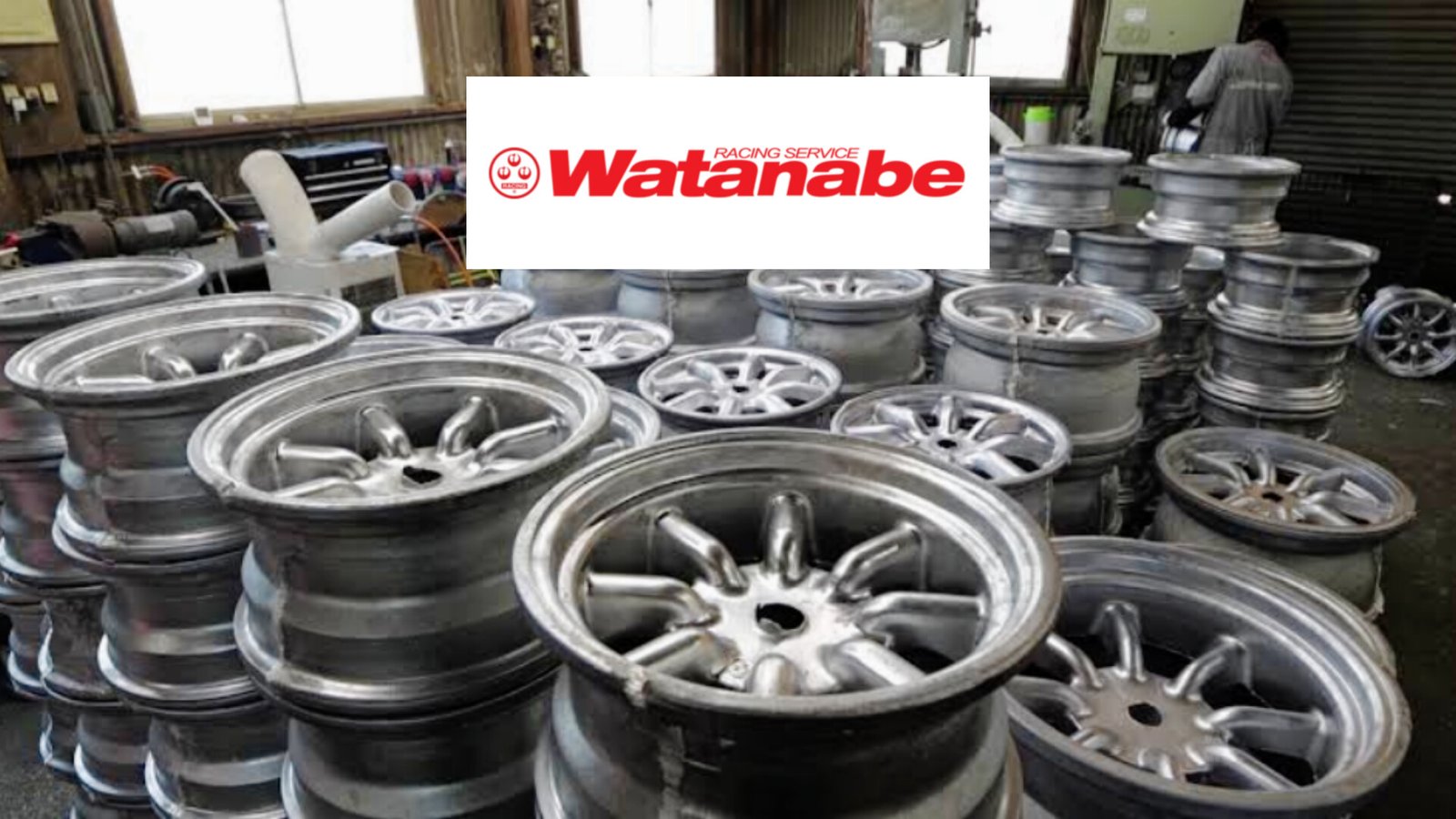
In an automotive world increasingly dominated by robots, automated production lines and computer-controlled machinery, Racing Service Watanabe. better known as RS Watanabe, is doing something that feels almost rebellious.
It is still making wheels the old-fashioned way.
The legendary Japanese wheel manufacturer continues to preserve traditional handmade craftsmanship, with its metal casting workshop in Ibaraki maintaining a production process that feels more like traditional Japanese metalworking than modern mass production.
And yes, some of these wheels are literally poured by hand.
Sand Casting and Manual Metal Pouring
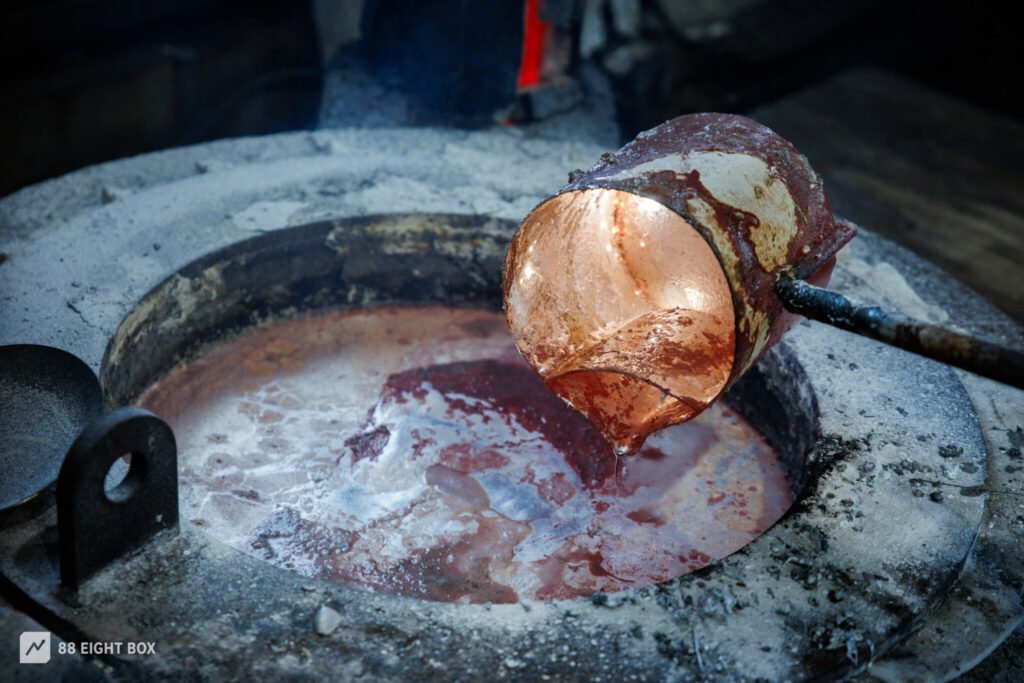
Instead of relying entirely on automated pressing and production machinery, molten aluminium at around 750°C is manually scooped by experienced craftsmen using specially designed containers before being poured directly into the mould.
For certain special sizes, limited editions and magnesium wheels, RS Watanabe uses a traditional sand-casting process.
The sand mould is prepared manually, and once the molten metal has cooled and solidified, the mould has to be broken apart to remove the finished wheel.
That means one sand mould is effectively used for one wheel.
It is a slow process by modern manufacturing standards. But that is precisely the point.
The Finishing Is Still Done by Human Hands
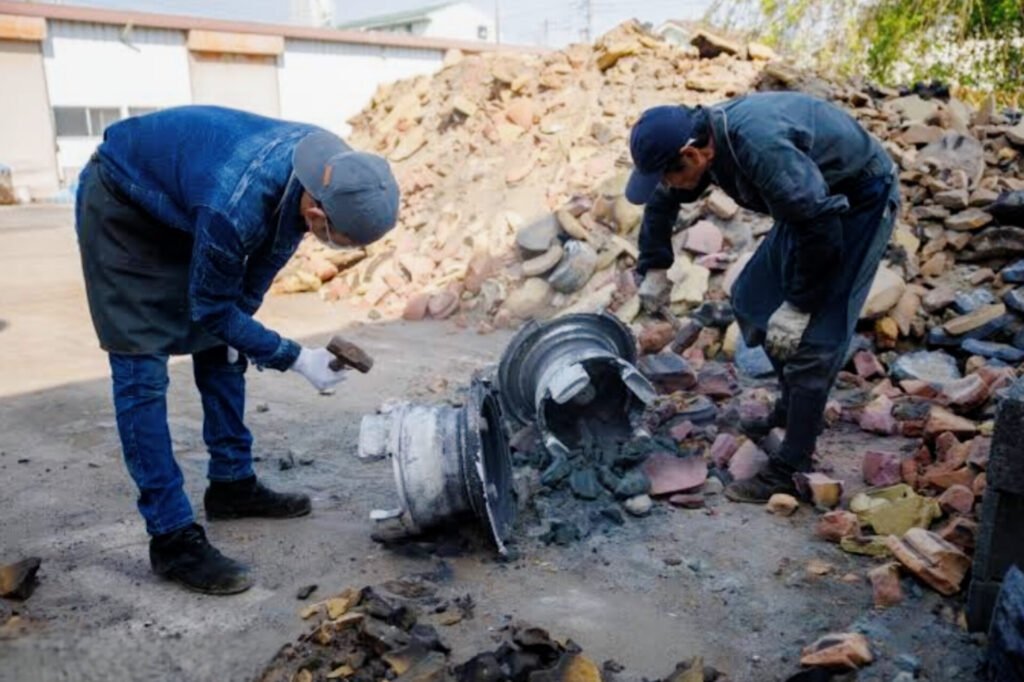
Getting the wheel out of the mould is only the beginning.
Any excess casting material is cut away, sanded and cleaned up manually using hand tools. If a small casting imperfection or fine cavity is discovered, craftsmen can repair it using manual TIG welding, before sanding the area again until the surface is smooth.
Even machining operations such as drilling the lug holes, offset and hub bore are carried out using non-CNC drilling and machining equipment, relying heavily on the experience of craftsmen who have spent decades working with wheels.
This isn’t simply a factory worker pressing a button and waiting for a machine to finish.
The person making the wheel is part of the manufacturing process.
Every Wheel Has Its Own Fingerprint
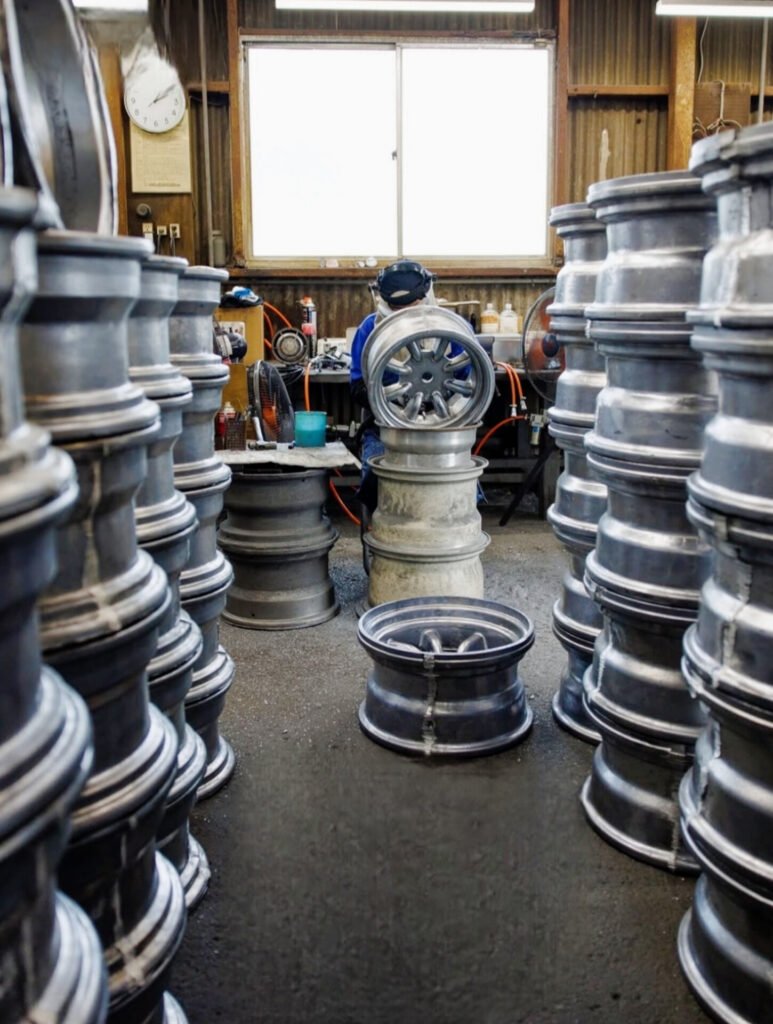
There is another interesting consequence of the traditional process.
Because RS Watanabe’s raw wheels are produced using handmade techniques and sand casting, their unfinished surfaces can retain natural textures from the casting process.
The pattern of the sand is never necessarily identical from one wheel to another.
In other words, every wheel can carry subtle traces of the human process that created it.
For collectors and enthusiasts of classic Japanese cars, that imperfection isn’t necessarily something to hide.
It is part of the character.
It is the automotive equivalent of a fingerprint a reminder that the wheel was made by people rather than simply reproduced by an automated production line.
Why RS Watanabe Wheels Can Take So Long
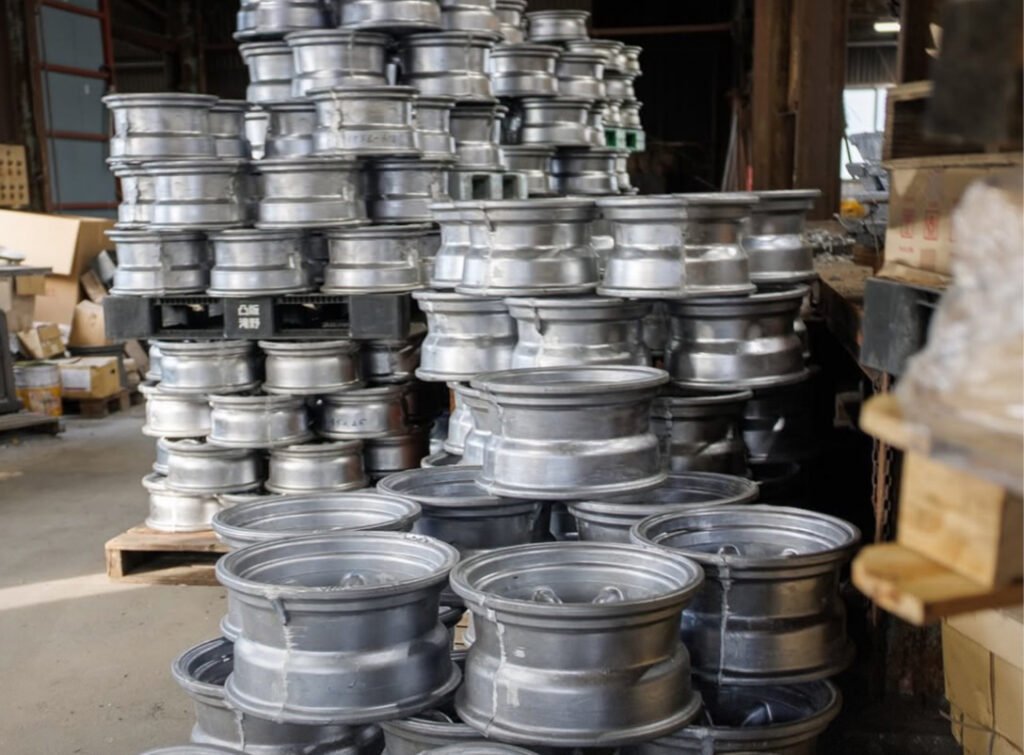
There is, naturally, a downside to doing things this way.
Production capacity is limited. The workshop reportedly produces only around 20 to 30 wheels per day, while demand remains strong among enthusiasts of classic and retro Japanese cars.
Cars such as the Toyota AE86 Trueno, Nissan Fairlady Z, Datsun 510 and Mazda MX-5 Miata NA are particularly well suited to the unmistakable character of RS Watanabe wheels.
With complicated production processes and strong demand, waiting times for new orders can reportedly reach one to two years.
For someone accustomed to ordering a set of wheels online and having them delivered within days, that sounds completely ridiculous.
For an RS Watanabe enthusiast, however, the waiting is part of the story.
1968 — And Still Going
The company’s iconic 8-Spoke design was first introduced in 1968, yet its basic philosophy remains remarkably relevant today.
While much of the wheel industry has embraced high-volume manufacturing, automation and increasingly sophisticated production technology, RS Watanabe has chosen to preserve something much older: craftsmanship.
There is something fascinating about a wheel that refuses to behave like a modern commodity.
RS Watanabe’s appeal isn’t simply about having an old-school eight-spoke design on a classic Japanese car. It is about knowing that behind that wheel is a manufacturing process involving heat, sand, hand tools, welding and years of accumulated human experience.
In an age where almost everything can be made faster, cheaper and more consistently by machines, RS Watanabe’s approach makes a surprisingly strong argument for slowing things down.
The tiny imperfections and traces of manual work aren’t necessarily defects. For many enthusiasts, they are proof that the object has a story.
And perhaps that is why a set of RS Watanabe wheels can feel like more than just another aftermarket modification.
Would you choose traditionally handmade wheels like RS Watanabe, even if you had to wait one or two years for them or would you rather buy a modern wheel that can be produced faster and more precisely?
Let us know what you think in the comments.

Adhe is part of the 88 Eight Box Editorial Team, covering JDM culture, motorsport, automotive technology, and industry news. The team focuses on delivering original automotive stories, reviews, and insights for enthusiasts worldwide.