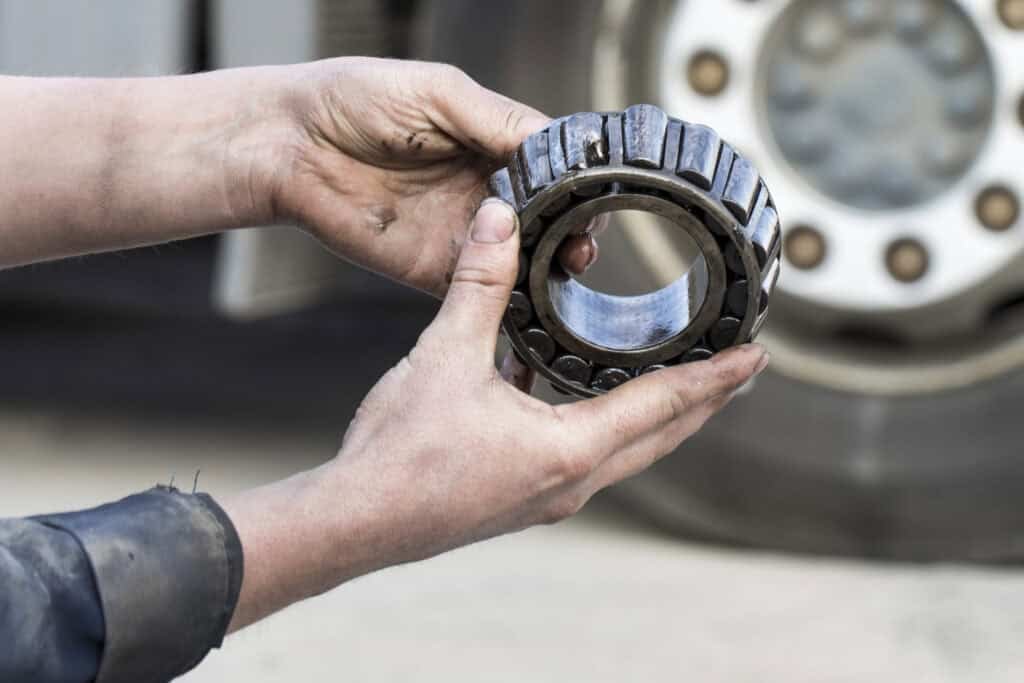
A wheel bearing is one of those components you rarely think about until it starts making a noise you simply cannot ignore.
The problem is that a failing wheel bearing does not always announce itself with an obvious mechanical failure. In many cases, the first warning is a faint humming, rumbling, or growling sound that gradually becomes louder as the vehicle picks up speed.
And that sound matters. Catching a failing bearing early can prevent a relatively straightforward repair from becoming a much more serious wheel-end problem.
THE CLASSIC SOUND: HUMMING, GROWLING OR RUMBLING
The most common symptom of a worn wheel bearing is a low-frequency hum, growl, rumble, or droning noise coming from somewhere around the wheels.
The important clue is that the noise normally follows vehicle speed rather than engine RPM.
Accelerate and the noise gets louder or changes pitch. Slow down and it fades. If you coast with the transmission disengaged and the noise continues at the same road speed, the wheel end becomes a much stronger suspect.
This happens because a damaged bearing develops imperfections on its internal rolling surfaces. As the balls or rollers rotate, those damaged areas generate vibration and noise. The faster the wheel turns, the more noticeable the noise becomes.
THE BIGGEST CLUE: THE SOUND CHANGES WHEN YOU TURN
This is where diagnosing a wheel bearing gets particularly interesting.
A worn bearing often becomes louder or quieter when the vehicle turns because cornering changes the load on the wheel bearings.
For example, during a left-hand turn, the vehicle’s weight transfers toward the right-hand side. That increases the load on the right-side wheel bearings.
If the humming or growling becomes noticeably louder during a gentle left turn, the right-side bearing becomes a suspect. If the noise becomes louder during a right turn, the left-side bearing becomes the suspect.
However, this is a diagnostic clue not absolute proof. Noise can travel through the suspension, steering system and body structure, making it surprisingly difficult to identify the exact wheel from inside the cabin. SKF specifically warns that bearing noise can sometimes appear to come from the opposite side of the failed bearing.
DOES IT SOUND LIKE A BAD TYRE?
This is where things get tricky.
A worn or unevenly worn tire can produce a surprisingly convincing humming or droning noise that sounds almost identical to a failing wheel bearing.
The difference is that tire noise can be strongly affected by the road surface and tire tread condition. A bearing-related noise tends to follow vehicle speed and may change when the vehicle is gently loaded from side to side during cornering.
That is why replacing a wheel bearing based purely on noise can be an expensive gamble.
Even professional technical guidance warns that tire, brake, drivetrain, suspension and bearing noises can overlap. A proper diagnosis should therefore combine the road-test symptoms with a physical inspection.
WHAT ABOUT GRINDING?
A light hum is one thing. A harsh grinding or roaring sound is considerably more concerning.
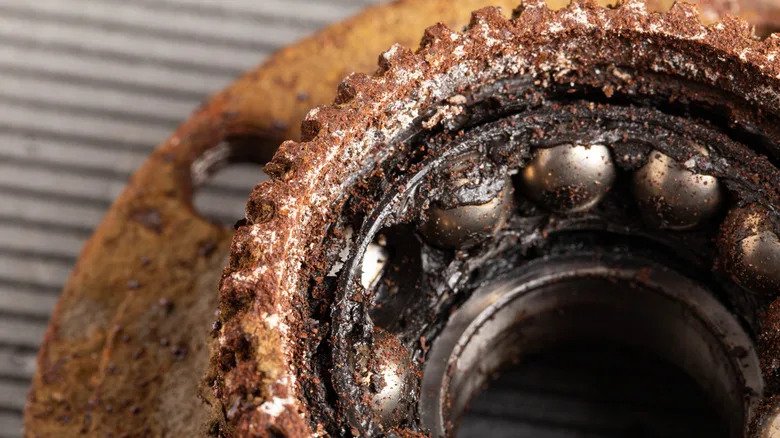
A bearing that has progressed from a mild rumble to obvious grinding may have suffered significant internal damage or loss of its proper running condition.
Timken lists humming, rumbling and growling as typical worn-bearing symptoms and notes that severe bearing looseness can also create other problems at the wheel end.
If the noise is accompanied by steering vibration, wheel looseness, clunking, or unusual vehicle behavior, the car should be inspected rather than simply driven until the noise gets worse.
DON’T IGNORE VIBRATION OR WHEEL PLAY
Noise is not the only warning sign.
A failing wheel bearing can also produce vibration that changes with vehicle speed or steering input. Excessive play at the wheel is another major warning sign.
With the vehicle safely lifted and properly supported, a technician can check the wheel for abnormal looseness and rotate it by hand to feel or listen for roughness. MOOG recommends checking for play, unusual noise and vibration, while also noting that suspension components can produce similar symptoms.
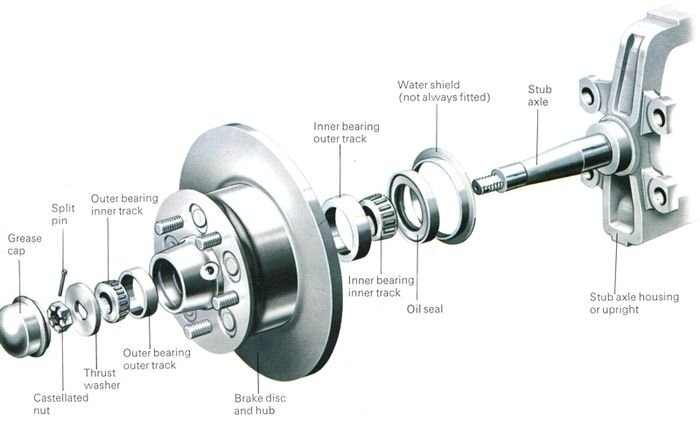
Some modern vehicles use sealed hub-bearing assemblies, meaning the bearing itself is not intended to be adjusted or repacked. If the assembly is noisy, rough or outside the manufacturer’s specified limits, replacement may be required.
CAN YOU DIAGNOSE IT YOURSELF?

You can narrow down the possibilities, but don’t treat a road test as a definitive diagnosis.
On a safe, empty road, listen at a steady speed and pay attention to whether the noise changes during gentle steering inputs. Avoid sudden swerving or aggressive maneuvers.
Then compare what you hear with other symptoms:
- Noise rises with road speed: wheel bearing or tire becomes a stronger suspect.
- Noise changes significantly during gentle turns: wheel bearing becomes more suspicious.
- Noise changes with braking: investigate the brake system.
- Clicking during tight turns: an outer CV joint may be involved.
- Noise changes dramatically with different road surfaces: tire noise becomes more likely.
- Wheel has excessive play: the wheel bearing or another suspension/wheel-end component needs inspection.
A manufacturer service procedure may also specify measuring bearing end play rather than relying on sound alone. For example, Nissan service information instructs technicians to check wheel-bearing operation and axial play and to replace the hub assembly when the bearing does not turn smoothly or the play exceeds specification.
THE SOUND CAN FOOL YOU
Perhaps the most important lesson is this: the loudest noise you hear is not necessarily coming from the wheel you think it is.
Wheel-bearing noise can travel through the suspension, steering components and vehicle structure. That’s why technicians sometimes use chassis ears, acoustic listening equipment, a stethoscope, or a controlled lift inspection to pinpoint the source.
SKF notes that a noisy bearing can sometimes be misleading and recommends careful comparison of the wheel ends rather than relying solely on where the driver hears the noise.
So if your car has suddenly developed a persistent hum that gets louder with speed and especially if that hum changes when you gently turn the steering wheel don’t simply turn up the radio.
Your wheel bearing may be trying to tell you something.
A wheel bearing rarely becomes a problem overnight from the driver’s perspective. More often, it starts with a small sound that is easy to dismiss as tire noise or normal road noise. The smart move is to investigate it while the symptom is still subtle rather than waiting for the noise to become impossible to ignore.
Have you ever diagnosed a bad wheel bearing just from the sound? Tell us what your car sounded like in the comments.

Adhe is part of the 88 Eight Box Editorial Team, covering JDM culture, motorsport, automotive technology, and industry news. The team focuses on delivering original automotive stories, reviews, and insights for enthusiasts worldwide.