You paid the repair bill, the warning light went away, and everything seemed fine. Then, a few days or weeks later, the Check Engine light comes back. Here’s what your car may actually be trying to tell you.
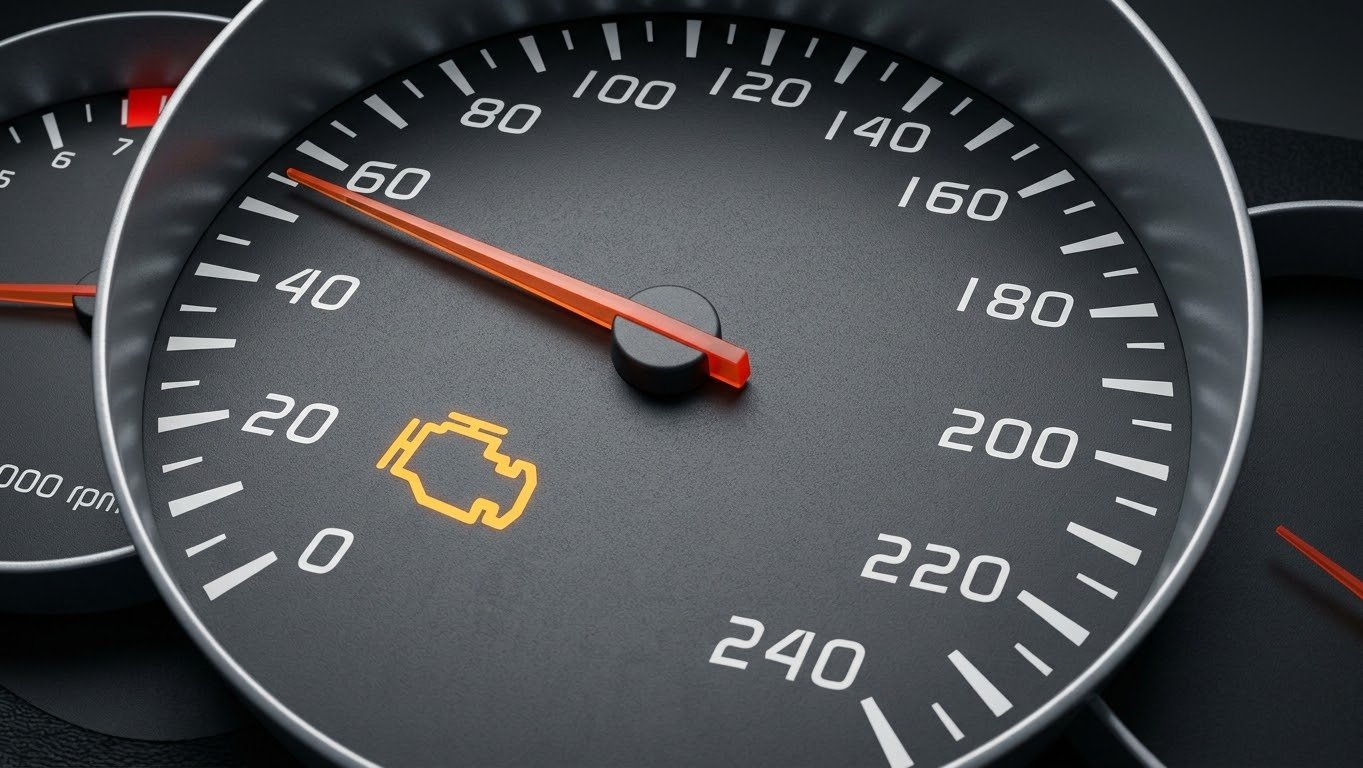
There is perhaps no more frustrating moment after a trip to the repair shop than seeing that familiar yellow engine icon return to the dashboard.
The sensor was replaced. The leak was repaired. The supposedly faulty component was swapped out. The mechanic cleared the code, the light disappeared, and you drove home thinking the problem was finally over.
Then, several days or a few hundred miles later, it comes back.
Before blaming the mechanic or assuming you need another expensive replacement part it is worth understanding how modern engine diagnostics actually work.
A Check Engine light is not a direct instruction to replace a particular component. It is a warning that the vehicle’s onboard diagnostic system has detected a condition outside its expected parameters.
The Diagnostic Trouble Code (DTC) stored by the vehicle can provide an important clue, but it does not necessarily identify the root cause.
And that distinction can save you a lot of money.
The Check Engine Light Is a Symptom, Not a Diagnosis
Modern vehicles rely on dozens of sensors and computer-controlled systems to monitor everything from fuel mixture and ignition to emissions and engine temperature.
When the computer detects something outside the expected range, it can store a Diagnostic Trouble Code and illuminate the Check Engine light.
The mistake is assuming that the code automatically identifies the failed part.
For example, an engine running too lean may trigger a fault related to an oxygen sensor. But that does not necessarily mean the oxygen sensor itself has failed.
A vacuum leak, fuel-delivery problem, exhaust leak, wiring fault, or another mechanical issue could cause the sensor to report a condition that is actually happening.
In other words, the sensor may be telling the truth.
Replacing the sensor simply because its readings triggered a code could therefore leave the real problem untouched.
That is why proper diagnosis involves checking the entire system and performing additional tests rather than simply replacing the first component mentioned by the scanner.
One Problem Can Have More Than One Cause
Automotive problems rarely follow a neat script.
A single underlying fault can affect multiple components or create several symptoms. Fixing one part of the problem may improve the vehicle without completely eliminating the condition that triggered the warning.
Take an emissions-related problem.
A damaged hose can create an air leak, causing the engine to operate differently from what the computer expects. The resulting readings could trigger one or more fault codes.
Repair the obvious leak and the car may immediately run better.
But if another small leak remains, the computer may eventually detect the problem again.
That is when the Check Engine light comes back.
The same principle applies to electrical problems. A replacement sensor may be perfectly good while its wiring, connector, power supply, or ground connection is faulty.
In that situation, installing another sensor is essentially throwing money at the wrong end of the problem.
A New Part Can Fail, Too
There is also the possibility that the repair itself needs to be checked.
New components can fail prematurely. Some replacement parts can be defective, while others may not be installed correctly.
A connector might not be fully seated. A hose may not be secured properly. A seal could be damaged. A wiring connection might be loose.
These problems can be especially difficult to diagnose because they may not occur all the time.
A sensor might work perfectly when the engine is cold and start behaving incorrectly once temperatures rise. A loose electrical connection might only cause trouble when the vehicle hits a bump.
The result?
The car behaves perfectly when it is sitting in the workshop.
Then the warning light comes back once you are on the road.
Your Car May Need Time to Confirm the Problem
Here is another reason the Check Engine light can return after a seemingly successful repair.
Clearing a fault code does not mean the vehicle has permanently declared itself healthy.
Modern OBD systems run a number of diagnostic checks, often referred to as readiness monitors. Some of these checks do not run continuously and require specific operating conditions.
The engine may need to reach a certain temperature. The vehicle may need to cruise at a particular speed, accelerate, decelerate, or complete a certain drive cycle before a particular monitor can run.
That means a vehicle can leave the workshop with the Check Engine light off and appear completely normal.
Then, after several trips, the vehicle finally performs the diagnostic test associated with the original problem.
If the fault is still present, the warning light can return.
According to the U.S. Environmental Protection Agency, OBD systems use these monitors to evaluate emissions-related systems, and the monitors may require specific driving conditions before they can complete.
So the computer did not necessarily “miss” the problem at the repair shop.
It may simply not have had the right conditions to test for it yet.
Intermittent Problems Are the Mechanic’s Worst Nightmare
A fault that happens every single time is relatively easy to diagnose.
A fault that appears once every few days is another story.
A loose connector, small vacuum leak, failing ignition component, temperature-sensitive sensor, or intermittent electrical problem can behave perfectly under one set of conditions and fail under another.
This is where diagnostic data becomes extremely valuable.
Technicians may need to examine freeze-frame data, live sensor readings, fuel trims, electrical signals, wiring, and other information to reproduce the circumstances under which the fault occurred.
That is considerably more useful than simply scanning the vehicle and replacing whatever component appears next to the code.
Common Reasons the Check Engine Light Comes Back
There are several possible explanations:
- The original problem had multiple causes. Fixing one issue did not eliminate everything affecting the system.
- The replacement component failed. New parts can still be defective.
- The installation needs to be checked. Connectors, hoses, seals, or wiring may not be properly secured.
- The problem is intermittent. The fault only appears under certain temperatures, loads, speeds, or driving conditions.
- There is an electrical problem. The sensor itself may work correctly while its circuit does not.
- A vacuum or exhaust leak remains. Small leaks can affect sensor readings and fuel mixture.
- The EVAP system still has a leak. A loose or damaged fuel cap is one possibility, although leaks can occur elsewhere in the evaporative-emissions system.
- The code was simply cleared without fixing the root cause. Turning off the warning does not repair the condition that triggered it.
This is why repeatedly replacing parts based solely on diagnostic codes can become extremely expensive.
A DTC should be treated as a starting point for diagnosis, not a shopping list.
What Drivers Are Saying
The frustration is not limited to professional mechanics.
Automotive communities such as Reddit are full of owners describing situations where the same Check Engine light returned after multiple repairs.
Some cases involve repeated sensor replacements, while others eventually turn out to be vacuum leaks, wiring problems, cracked valves, or other issues that were not immediately obvious.
These experiences highlight an important lesson: replacing the component associated with a fault code does not necessarily eliminate the condition that caused the code in the first place.
Community experiences are anecdotal, of course, but they illustrate just how easily modern diagnostic problems can become a parts-swapping exercise.
So, What Should You Do When the Light Comes Back?
Don’t immediately assume you need another replacement part.
First, pay attention to how the vehicle is behaving.
If the Check Engine light is solid and the vehicle is running normally, arrange another diagnostic inspection and tell the shop exactly what was repaired previously.
Ask the technician to compare the current DTCs with the original codes and determine whether the same fault has returned.
The most useful question is not:
“What part should I replace?”
Instead, ask:
“What is causing this code, and what test can prove it?”
That question can make a huge difference.
Also keep track of when the light returns. Did it happen during cold startup? After a long drive? Under hard acceleration? At idle? In heavy traffic?
Those details can help a technician reproduce an intermittent problem.
But a Flashing Check Engine Light Is a Different Story
A solid Check Engine light deserves attention.
A flashing Check Engine light deserves much more urgency.
A flashing warning can indicate an active misfire, which can raise exhaust temperatures and potentially damage the catalytic converter and other components.
Ford’s owner information, for example, warns that a flashing engine warning light can indicate an active misfire and advises avoiding heavy acceleration and having the vehicle serviced as soon as possible.
AAA Northeast similarly warns that a flashing Check Engine light can indicate a serious misfire and should not be ignored.
If the engine is shaking badly, the vehicle has lost significant power, or the warning is flashing, continuing to drive as if nothing happened is a bad idea.
So, Did the Repair Shop Get It Wrong?
Not necessarily.
A Check Engine light returning after a repair does mean the vehicle has detected another fault or that the original condition may still be present.
But it does not automatically prove that the previous repair was wrong.
The original problem may have had several causes. A different fault may have developed. A replacement component may have failed. A wiring problem may have been overlooked. Or the vehicle may simply have needed several drive cycles before it could confirm that the problem was still there.
The real mistake is repeatedly clearing the warning without finding out why it keeps coming back.
At the end of the day, the Check Engine light isn’t your enemy.
It is your car’s way of saying:
“Something needs to be checked.”
The expensive part is ignoring that message or responding to it by replacing parts at random.
The most expensive part of a Check Engine problem isn’t always the component itself. Sometimes, it is the wrong diagnosis.
A good diagnostic process should use the fault code as a clue, then follow the evidence until the actual cause is found. That may take more time, but it is usually far cheaper than replacing one sensor after another and hoping the warning finally disappears.
Have you ever paid for a repair, only to see the Check Engine light return a few days later? Tell us what happened in the comments.

Adhe is part of the 88 Eight Box Editorial Team, covering JDM culture, motorsport, automotive technology, and industry news. The team focuses on delivering original automotive stories, reviews, and insights for enthusiasts worldwide.