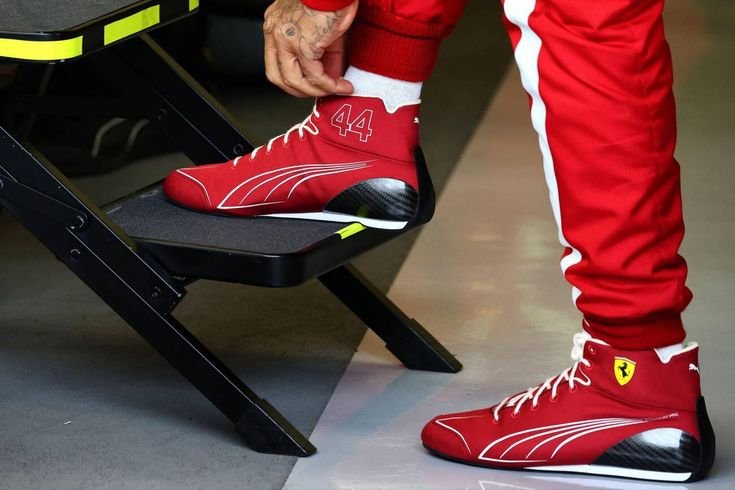
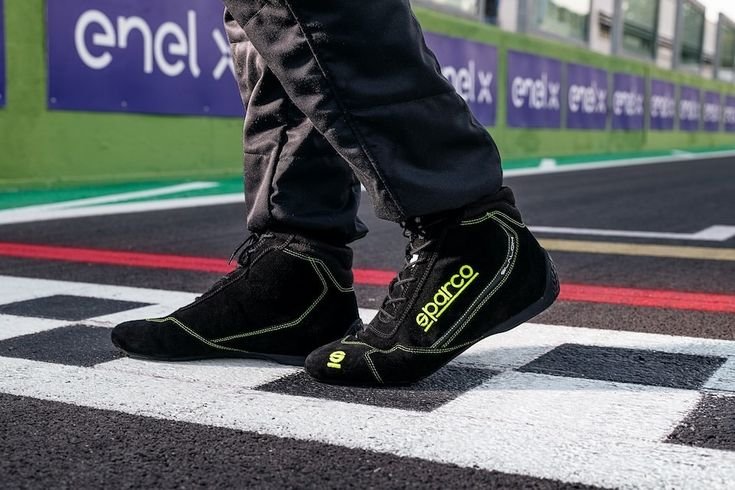
Take a close look at a racing shoe and you’ll notice something immediately: it looks nothing like your everyday footwear. It’s slim, lightweight, tightly fitted to the foot, and perhaps most noticeably, it has an incredibly thin sole.
To some people, that might look like nothing more than classic motorsport styling. But there’s actually a very good reason behind almost every detail.
Racing shoes are designed to be part of a driver’s equipment, helping support both performance and safety on the track.
A Driver’s Feet Need to Be “Connected” to the Car
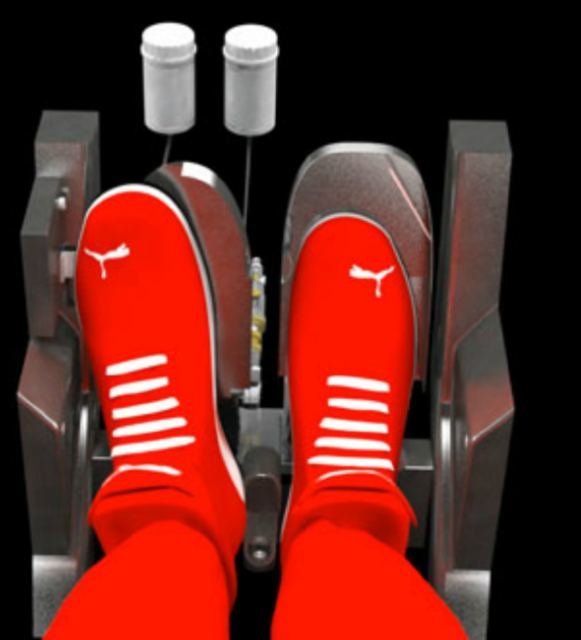
The primary job of a racing shoe is to maximise pedal control.
A driver needs to control the throttle, brakes and clutch with movements that are small, fast and consistent. That’s why racing shoes use a low-profile, close-fitting construction designed to minimise interference between the foot and the pedals.
Inside a race car, where pedal boxes are hardly what you’d call spacious, an oversized or bulky shoe can actually get in the way.
The Thin Sole Isn’t Just for Looks
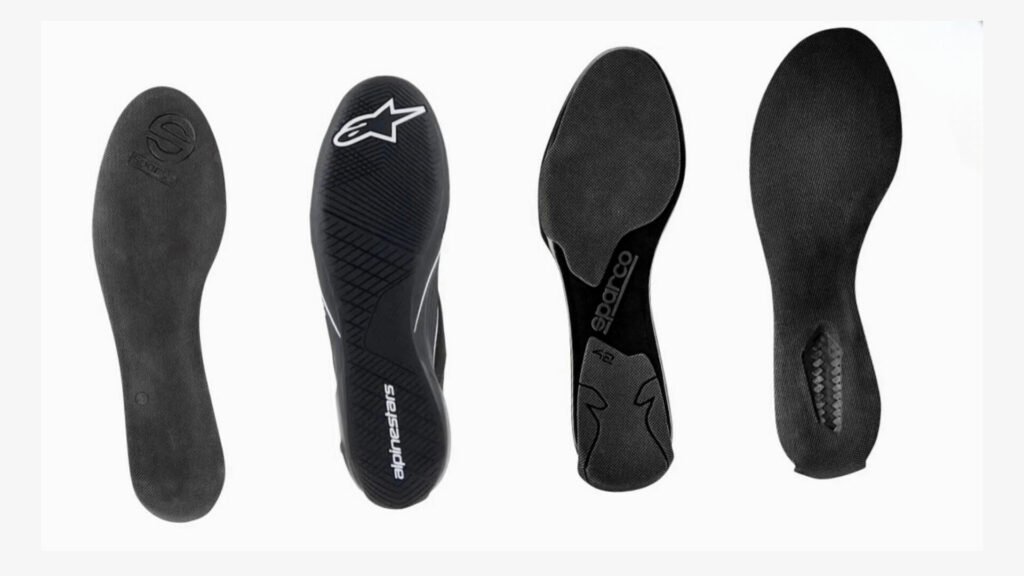
So why not simply fit racing shoes with thicker soles and call it a day?
Because the bulkier the construction becomes, the greater the potential for reduced tactile feedback and restricted freedom of movement.
A racing shoe is designed around one simple goal: keeping the driver’s feet able to “read” the pedals accurately and precisely.
Pedal Feel Is a Real Thing
A driver doesn’t simply need to know that a pedal is being pressed.
They need to feel how much pressure is being applied, how far the pedal is moving and how the car is responding to that input.
Those tiny signals coming through the foot provide the driver with additional information about what the car is doing, helping them translate that sensation into more precise control on track.
That is why pedal feel matters.
Heel-and-Toe Needs Freedom of Movement
One foot, two jobs.
During a heel-and-toe downshift, the driver brakes while simultaneously giving the throttle a quick blip to match engine speed during the downshift. It’s a fast, precise movement.
And the pedal box isn’t exactly a ballroom.
A close-fitting racing shoe helps reduce unnecessary movement, while a construction that supports ankle mobility allows the foot to work more naturally around the pedals.
The result is less interference between the shoe and the pedal box, and more precise control from the driver.
But It’s Not Just About Performance
In racing, the worst-case scenario is always part of the calculation.
Racing footwear is therefore also designed with flame and heat protection in mind, according to the relevant standards and homologation requirements.
So one pair of shoes has two important jobs: helping the driver control the car and protecting their feet when things go seriously wrong.
A Small Shoe with a Very Big Responsibility
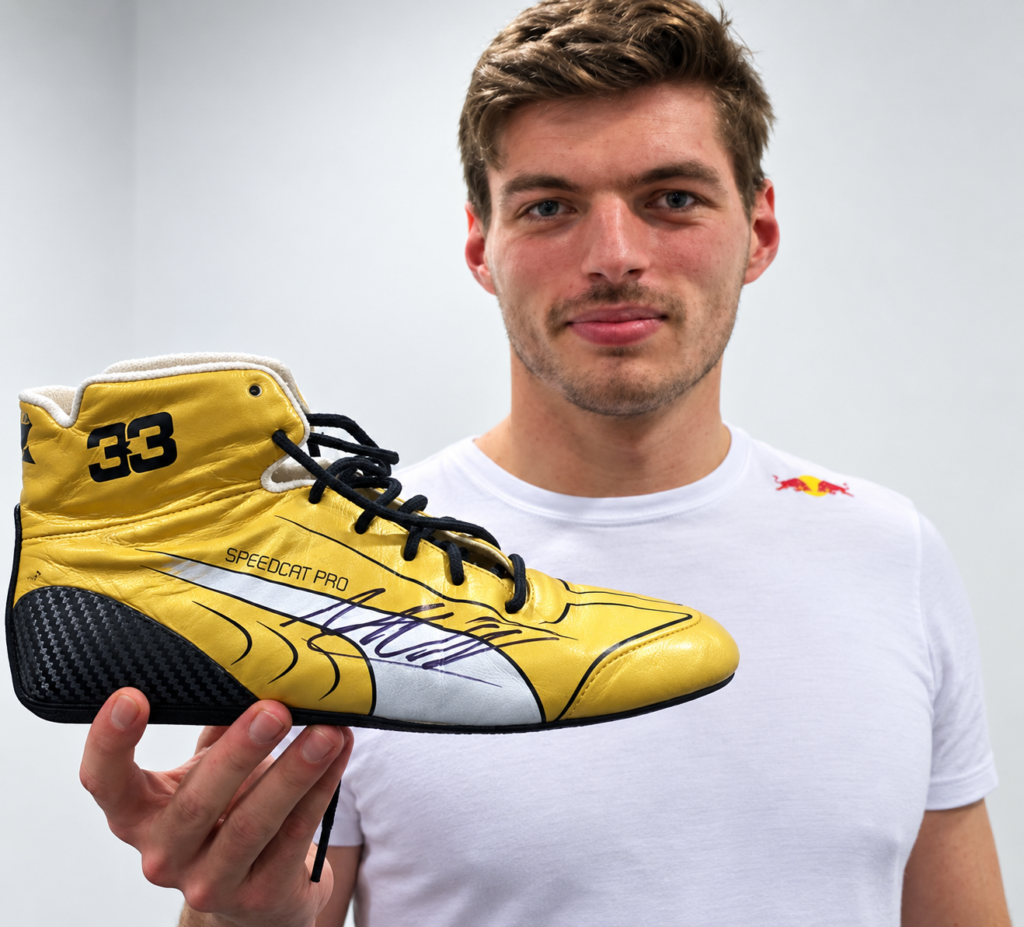
Racing shoes don’t magically make a driver faster.
What they do is help translate every movement of the driver’s feet into more precise input, control and ultimately the car’s direction and behaviour.
The throttle, brake and clutch might look simple enough. But at the highest level of competition, tiny differences in pressure and foot movement can have a significant effect on how the car responds.
Because ultimately, a car can only respond as well as the input its driver gives it.
And that’s perhaps the best explanation for those incredibly thin soles.
They aren’t there simply to look cool. They’re there to help the driver feel the car.
In my view, racing shoes are a perfect example of how something that looks incredibly simple in motorsport can actually have a very technical purpose. That thin sole isn’t there for fashion. It’s about control, feel and freedom of movement when every foot movement needs to be as precise as possible.
What do you think? Have you ever tried racing shoes, and could you feel a difference compared with a regular pair of shoes? Let us know in the comments.

Adhe is part of the 88 Eight Box Editorial Team, covering JDM culture, motorsport, automotive technology, and industry news. The team focuses on delivering original automotive stories, reviews, and insights for enthusiasts worldwide.