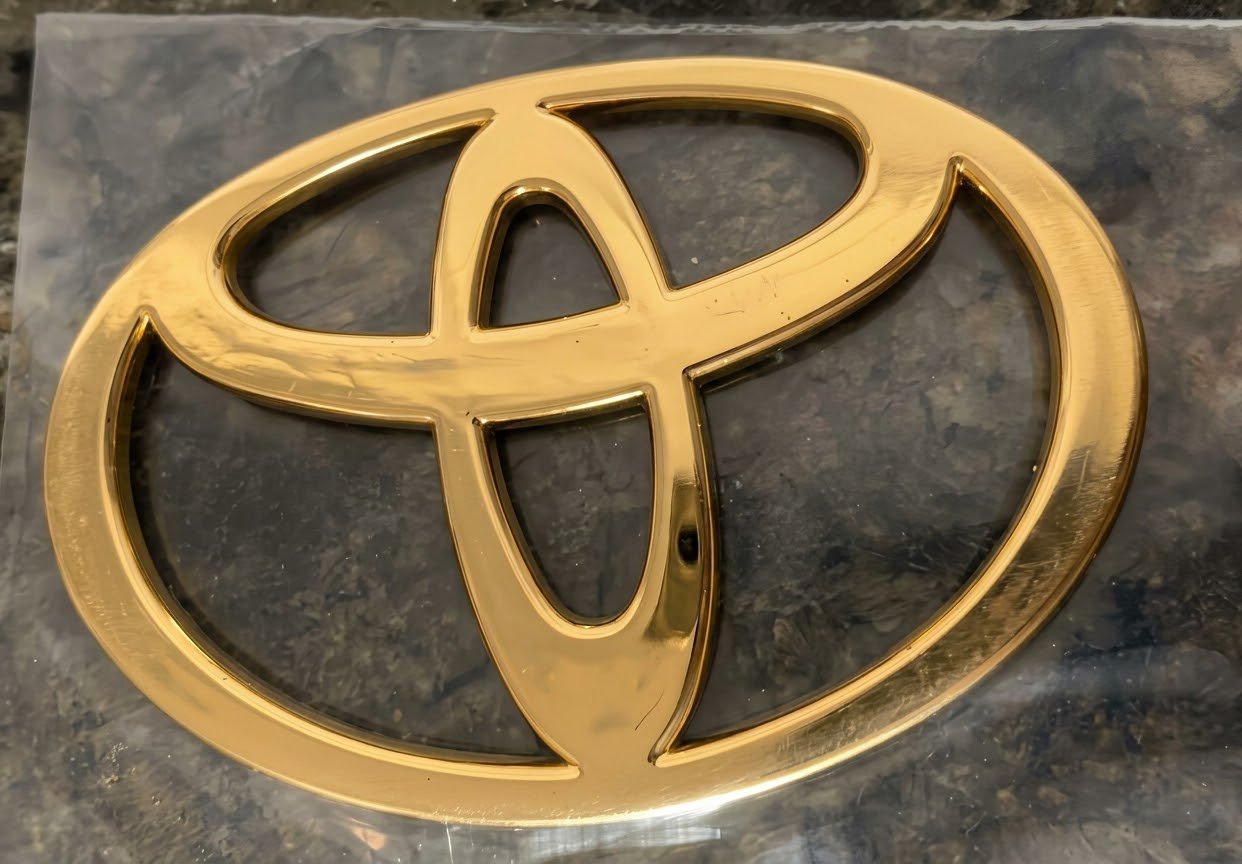
If you have ever spotted a 1990s Toyota Camry, Corolla, Land Cruiser, 4Runner, or Previa wearing gold-colored badges, you might assume the previous owner simply modified the car.
But that is not necessarily the case.
Toyota actually offered official gold emblem packages on several models, particularly in the United States. In Japan, meanwhile, gold-plated badges had already become a popular dealer accessory during the 1980s.
For a certain generation of Toyota owners, adding a little gold to the exterior was a surprisingly legitimate way to make a car look more luxurious.
It Wasn’t Just an Aftermarket Modification
The gold-emblem trend had already gained popularity in Japan during the 1980s. Toyota was among the manufacturers offering gold-colored or gold-plated badges through its dealer network.
The idea was relatively simple.
Take the standard chrome Toyota badge and model lettering, give them a gold finish, and suddenly an ordinary family car looked a little more upscale.
The trend continued into the 1990s, when gold badges became particularly noticeable on Toyota models sold in North America.
But there is an important distinction: a gold emblem did not necessarily mean the car was a special high-performance or luxury trim.
In many cases, it was simply an appearance package.
Toyota Actually Called It a “Gold Emblem Package”
One of the clearest examples can be found in the 1996 Toyota Camry.
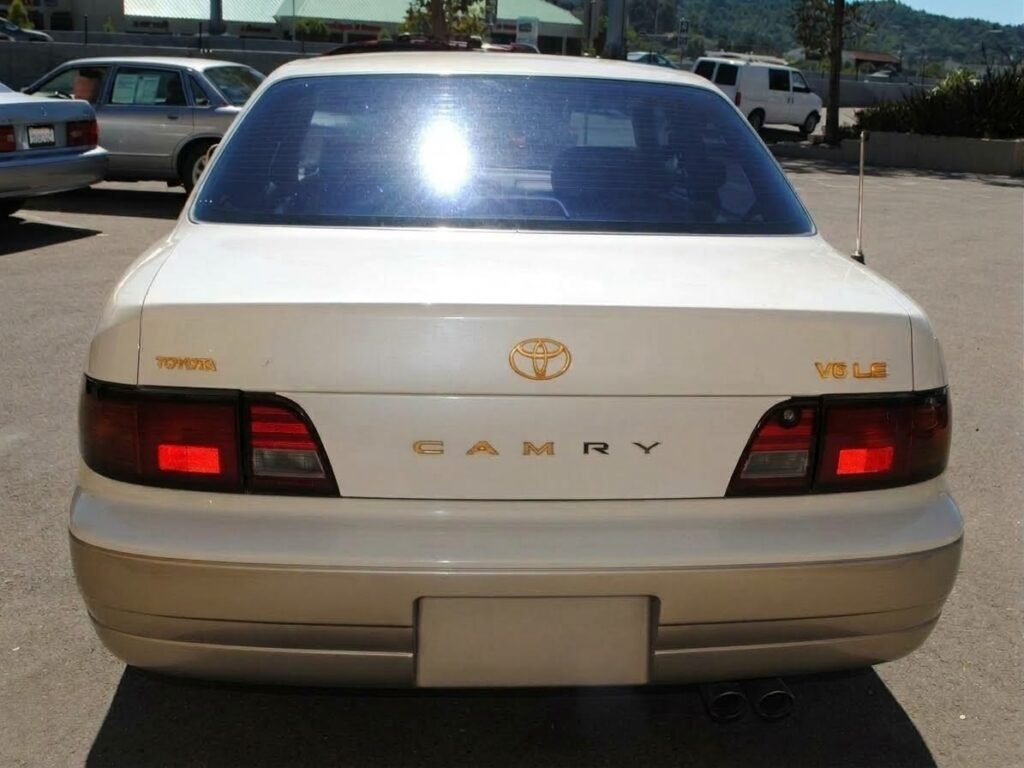
Toyota’s 1996 Camry brochure listed a Gold Emblem Package among the available accessories. The package featured a gold-plated, weather-resistant finish for the exterior emblems.
Toyota’s parts documentation also lists specific gold-package components for 1995–1996 Camry models, including gold versions of the grille emblem, Toyota badge, and model and trim lettering.
That means a 1990s Camry wearing gold badges may not have been modified by its owner at all.
It could have left the dealer that way.
Corolla Could Get the Gold Treatment, Too
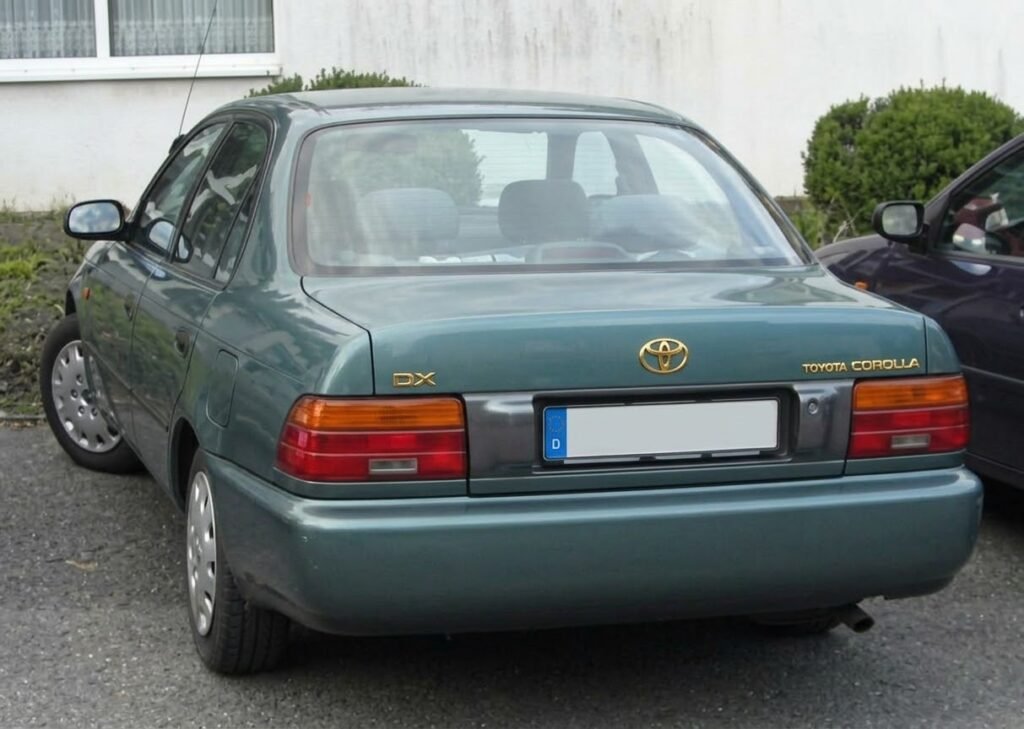
The trend was not limited to Toyota’s larger or more expensive vehicles.
The E100-generation Corolla was also offered with a Gold Emblem Package in the United States.
Depending on the vehicle and market, these accessories could be installed at the factory, port, or dealership.
That is an important detail because it shows that Toyota was not treating gold emblems as something reserved exclusively for flagship luxury cars.
The company was effectively offering customers a relatively simple way to make an everyday family car look more premium.
Even the Land Cruiser Had a Gold Emblem Package
The idea becomes even more interesting when you look at the Toyota Land Cruiser.

Toyota’s 1997 Land Cruiser documentation listed a Gold Emblem Package as an available accessory. The package was described as having a gold-plated, weather-resistant finish for the exterior emblems.
In other words, a customer could order a Land Cruiser with gold badges without receiving any mechanical upgrade.
There was no additional horsepower.
No special suspension.
No different four-wheel-drive system.
It was purely about appearance.
But appearance mattered.
During the 1990s, gold-colored exterior trim was widely associated with luxury and prestige, making it an easy visual upgrade for customers who wanted their vehicle to stand out.
Were They Actually Made of Gold?
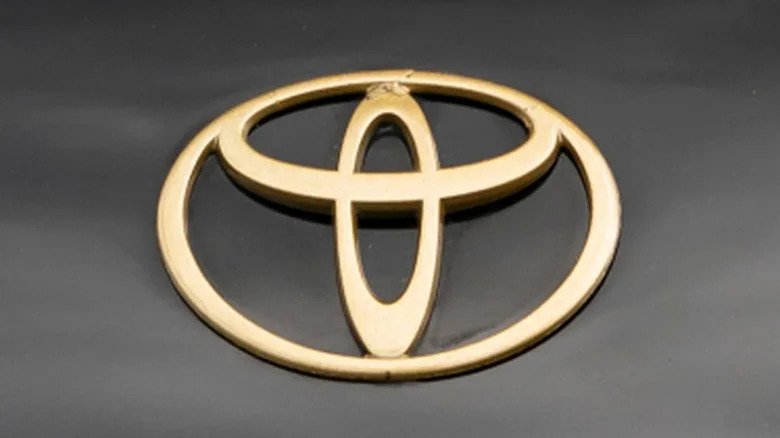
This is where the story gets interesting.
Toyota’s documentation for certain models explicitly used terms such as “gold-plated” and “gold-plated finish.”
So, no, these were not simply ordinary badges painted yellow in every case.
But that also does not mean the badges were made from solid gold.
The gold was used as a surface finish over the badge, with protective coatings helping it withstand exposure to the elements.
Toyota continued to use the concept on later vehicles as well. For example, documentation for the 2004 Avalon described an emblem package using 24-karat gold plating, along with a protective clear coating.
The exact construction and finish could vary depending on the model, year, and market, so it would be inaccurate to assume that every gold Toyota emblem from the 1990s used exactly the same material or gold content.
Why Did Toyota Do It?
The answer is surprisingly simple:
Gold looked expensive.
During the 1980s and 1990s, gold-colored trim was strongly associated with luxury in Japan and other automotive markets.
Gold badges, gold lettering, and other gold-colored exterior details were popular accessories, particularly among customers who wanted their cars to look more distinctive.
Toyota simply turned that trend into an official accessory business.
It also happened during a period when Toyota was aggressively expanding its premium image.
In Japan, Toyota was developing increasingly luxurious vehicles and strengthening its presence in the premium segment. The company’s luxury ambitions eventually contributed to the creation of Lexus in the late 1980s.
Against that backdrop, gold-plated exterior details fit perfectly with the visual language of the era.
Gold Badges Did Not Mean More Performance
One of the biggest misconceptions about gold-badged Toyotas is that the gold lettering indicated a special engine or performance version.
Generally, it did not.
Toyota offered gold versions of badges and lettering associated with ordinary trim levels.
On the Camry, for example, Gold Emblem Package components were available for lettering such as LE, XLE, SE and V6.
The gold finish was therefore an appearance upgrade rather than a mechanical one.
The same basic principle applied to vehicles such as the Land Cruiser.
The customer was buying exclusivity in appearance, not additional performance.
And the Package Wasn’t Necessarily Cheap
Interestingly, a Gold Emblem Package was not always an inexpensive accessory.
Period documentation and enthusiast records for the Land Cruiser indicate that the package could cost several hundred dollars when installed through Toyota’s dealer or port-accessory system.
That was significant money for a collection of badges.
But this was never really about functionality.
It was about status.
During that period, customers were often willing to spend extra money on relatively small exterior details if those details made the vehicle look more expensive.
Gold badges were one of the easiest ways to achieve that effect.
Why Don’t We See Them Much Anymore?
Because automotive fashion changed.
During the 1980s and 1990s, chrome, gold trim, large model lettering and prominent badges were all part of mainstream automotive styling.
But as the industry moved into the 2000s, exterior design gradually became cleaner and more restrained.
Gold badges eventually became associated with an older generation of automotive styling.
Later, another trend took over: black badges and blacked-out trim.
Today, many owners deliberately remove chrome or replace factory badges with black, carbon-look, or minimalist versions.
The gold emblem went in the opposite direction.
It became a visual reminder of another era.
Today, Gold Emblems Are a Piece of 1990s Toyota History
That is what makes an original gold-badged Toyota so interesting today.
A gold emblem may look like a strange styling choice by modern standards, but on a well-preserved 1990s Toyota, it can be an authentic piece of the car’s original equipment history.
However, buyers should still be careful.
Not every gold emblem on a Toyota today is necessarily original. Previous owners may have replaced standard badges with aftermarket gold versions, painted the original badges, or installed dealer-style accessories later in the car’s life.
For collectors, documents such as the original window sticker, period brochures, parts numbers, dealer records and build information are much better evidence of originality than the color of the badge alone.
So, What Did the Gold Emblem Actually Mean?
In most cases, it meant one thing:
The owner wanted a little more luxury.
Toyota’s gold-emblem trend grew out of the popularity of gold accessories in Japan during the 1980s and continued into the 1990s. Toyota subsequently offered official Gold Emblem Packages on several models, including the Camry, Corolla and Land Cruiser.
And in certain cases, the badges really were gold-plated.
There was no secret high-performance engine hiding underneath the hood.
No special transmission.
No extra horsepower.
Just a little bit of gold.
But that small detail tells us a lot about automotive culture at the time.
Today, car owners often choose black badges, remove emblems completely, or go for a minimalist appearance.
Back in the 1990s, however, the philosophy was almost the opposite.
If you wanted your Toyota to look more expensive, adding some gold was one of the easiest ways to do it.
Gold emblems may look excessive by today’s standards, but that is exactly what makes them interesting.
On an otherwise original 1990s Toyota, those gold badges are more than decoration. They are a snapshot of an era when automotive luxury could be expressed through something as simple as a shiny gold Toyota logo.
So if you find an original Camry, Corolla, Land Cruiser, 4Runner, or another 1990s Toyota wearing its old gold badges, think twice before replacing them with standard chrome.
You might be looking at one of the coolest little pieces of 1990s Toyota history.
What do you think of Toyota’s gold-emblem era classy or completely over the top? Let us know in the comments.

Adhe is part of the 88 Eight Box Editorial Team, covering JDM culture, motorsport, automotive technology, and industry news. The team focuses on delivering original automotive stories, reviews, and insights for enthusiasts worldwide.