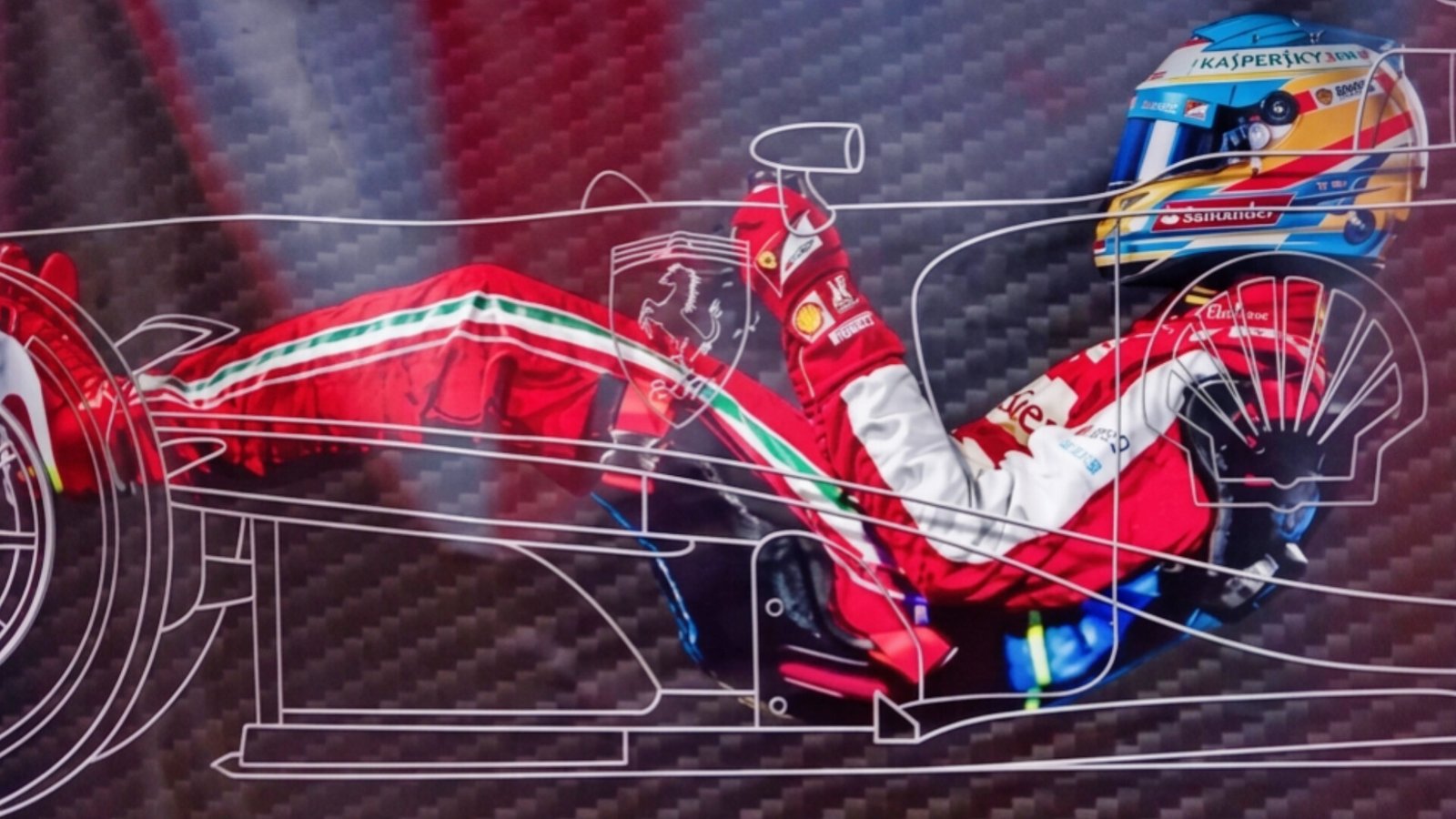
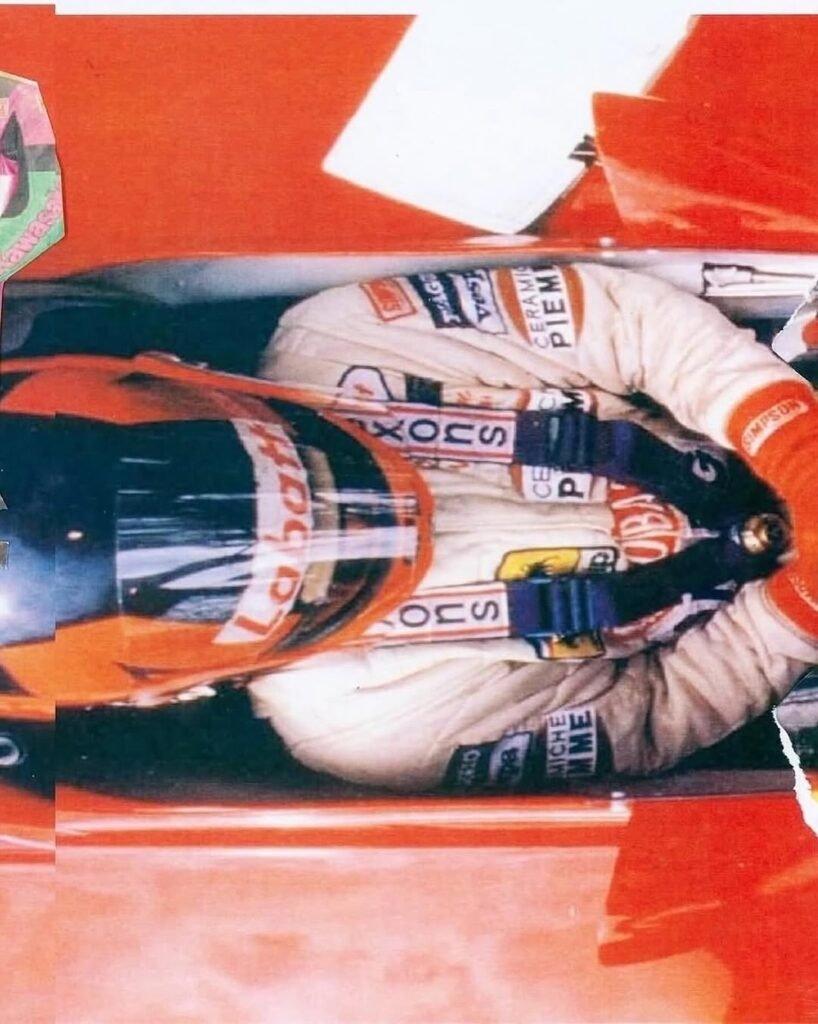
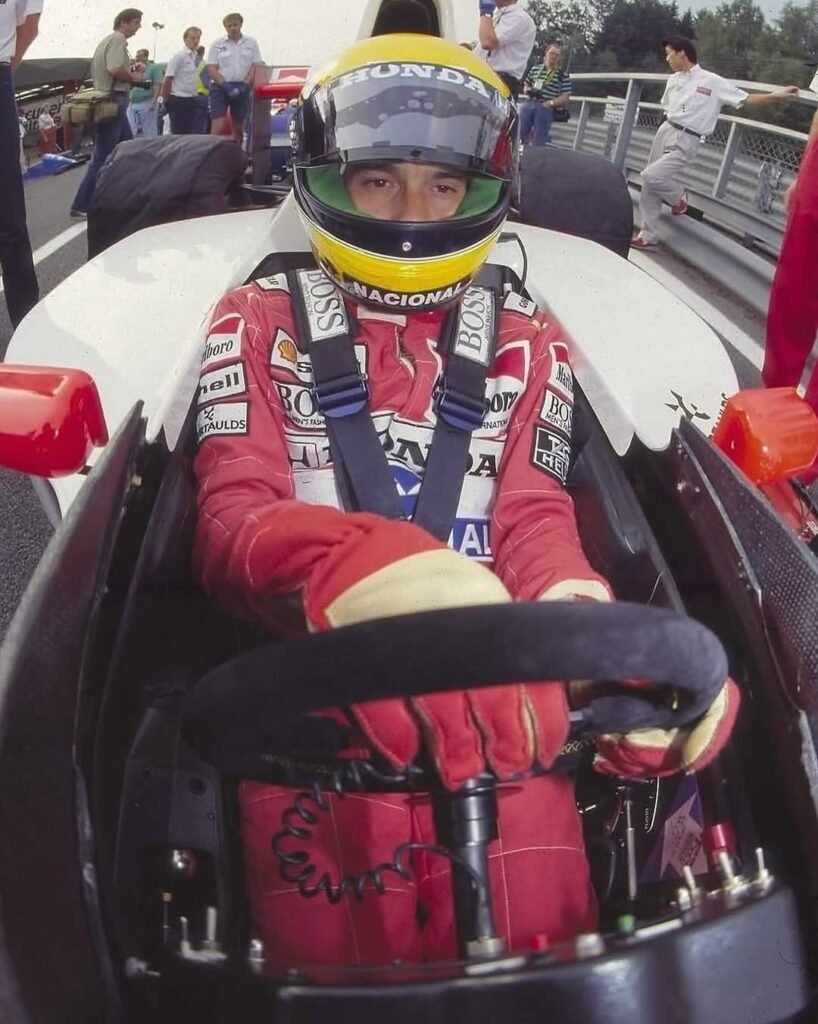
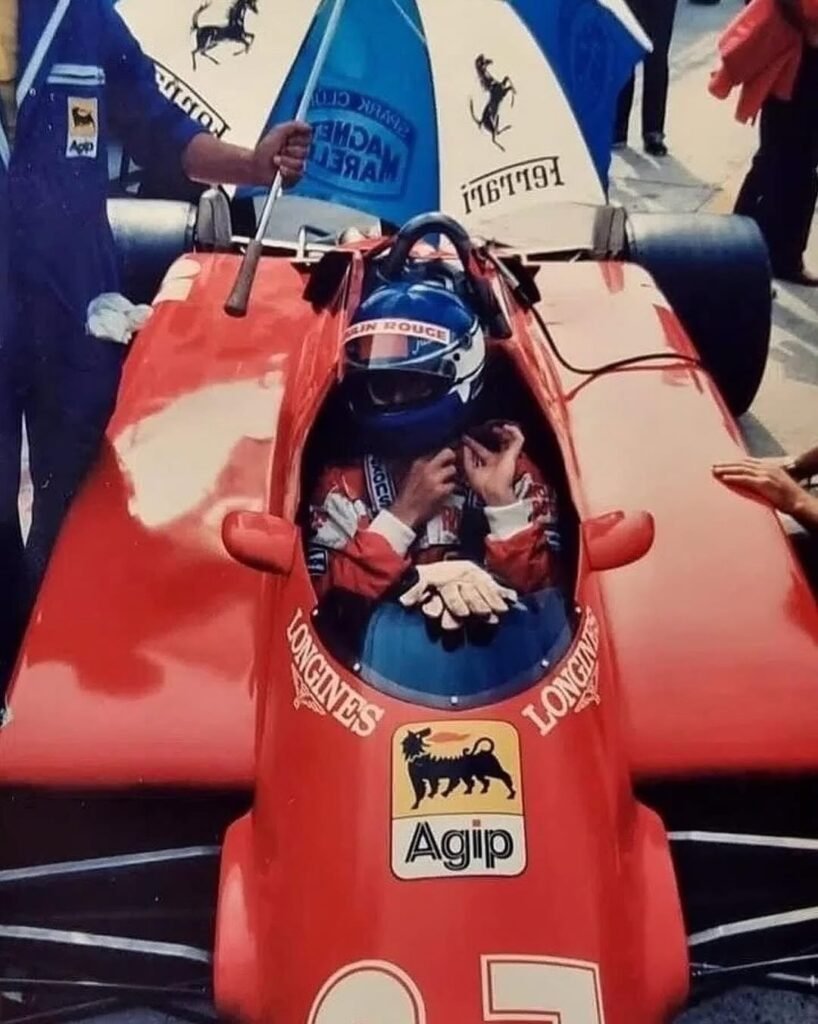
Look closely at an F1 cockpit and one thing immediately stands out: the driver appears to be almost lying down inside the car.
It is not an unusual seating position designed simply for comfort. In Formula 1, the extreme posture is a carefully engineered part of the car’s overall performance, affecting aerodynamics, weight distribution, visibility, safety and even how the driver interacts with the pedals.
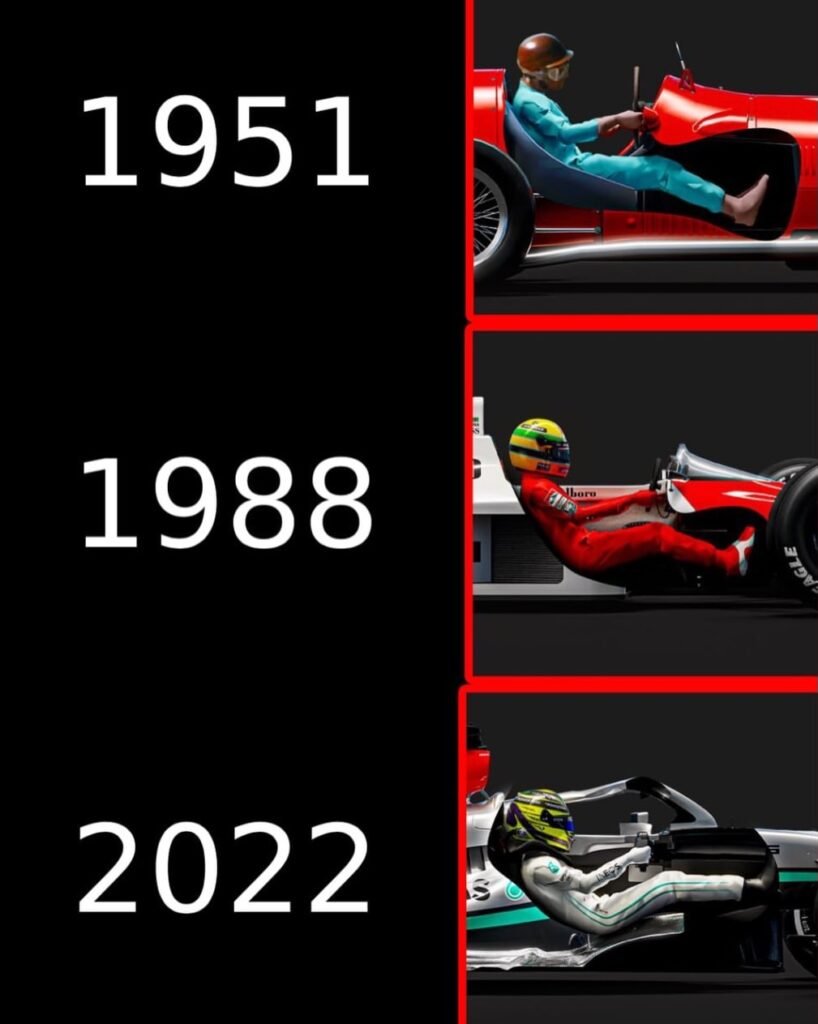
Unlike a conventional road car, where the driver’s hips are generally positioned below the shoulders with the legs pointing downward toward the pedals, an F1 driver sits much lower with the legs raised above the hips and stretched forward.
The driver’s body is effectively reclined inside the monocoque, while the feet sit far ahead in the nose of the car. The steering wheel is also positioned relatively high compared with the driver’s torso, creating a cockpit layout that looks almost unnatural compared with a normal vehicle.
WHY DO F1 DRIVERS SIT LIKE THIS?
One of the biggest reasons is aerodynamics.
Formula 1 cars are designed around airflow, and reducing the frontal area of the car is extremely important. By placing the driver in a lower and more reclined position, engineers can reduce the height and overall packaging requirements of the cockpit.
That gives aerodynamicists greater freedom to shape the bodywork and airflow around the chassis.
The seating position also helps keep the driver’s mass deep inside the survival cell while allowing the car’s center of gravity to remain as low as possible. In a sport where every kilogram and every millimeter can matter, even the driver’s position becomes part of the engineering equation.
But the benefits come with a significant physical cost.
IT IS FAR FROM COMFORTABLE
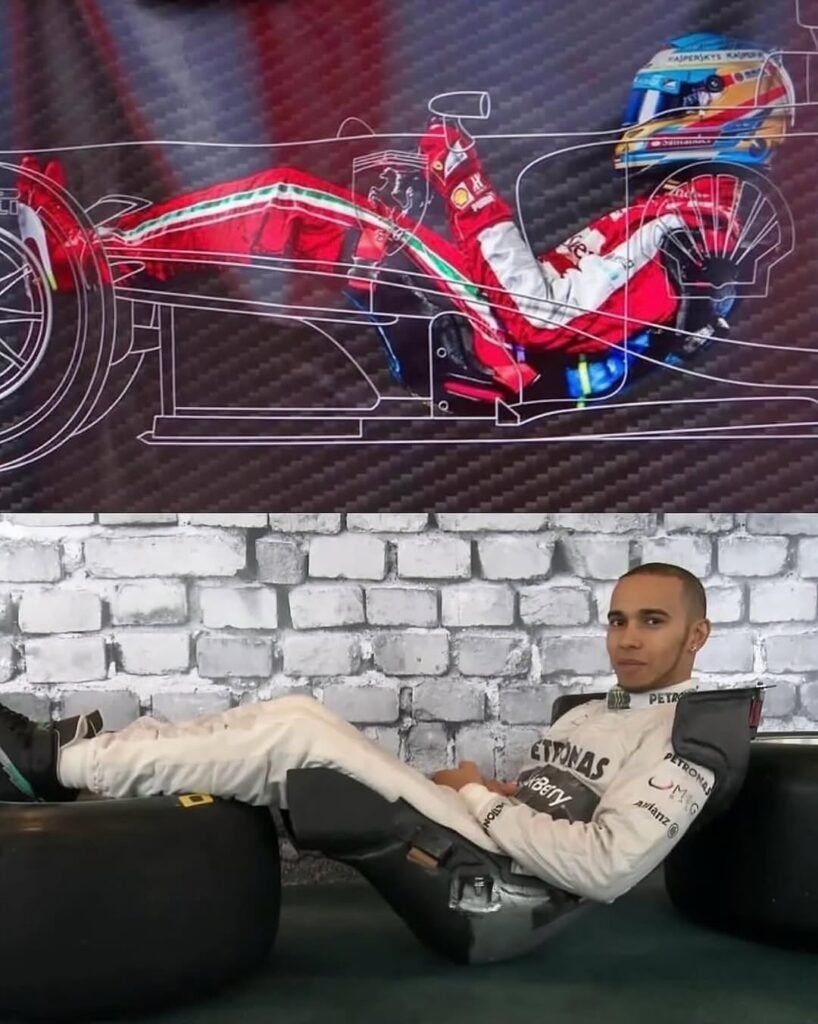
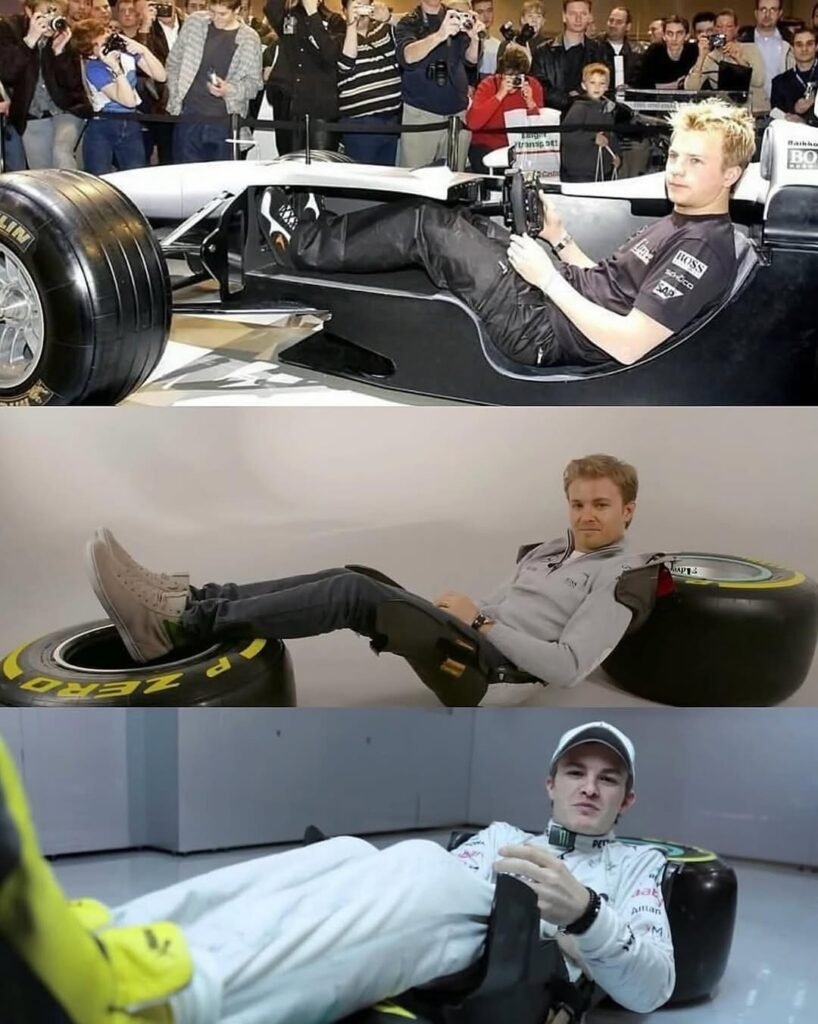
For an F1 driver, sitting in this position for nearly two hours while dealing with high-speed corners, heavy braking and rapid changes of direction is anything but relaxing.
The legs are elevated, the hips are positioned unusually high relative to the feet, and the driver’s body is tightly surrounded by the cockpit.
There is also very limited room for movement. An F1 seat is custom-fitted to the individual driver, creating a snug environment that keeps the body securely in place even under extreme loads.
During a race, drivers can experience tremendous braking forces and lateral acceleration. Their bodies must remain stable while their hands, feet and upper body operate the controls with extreme precision.
That means the seating position is not simply about getting the driver into the smallest possible space. It must also provide the correct relationship between the driver’s body, steering wheel, pedals and visibility.
EVERY MILLIMETER MATTERS
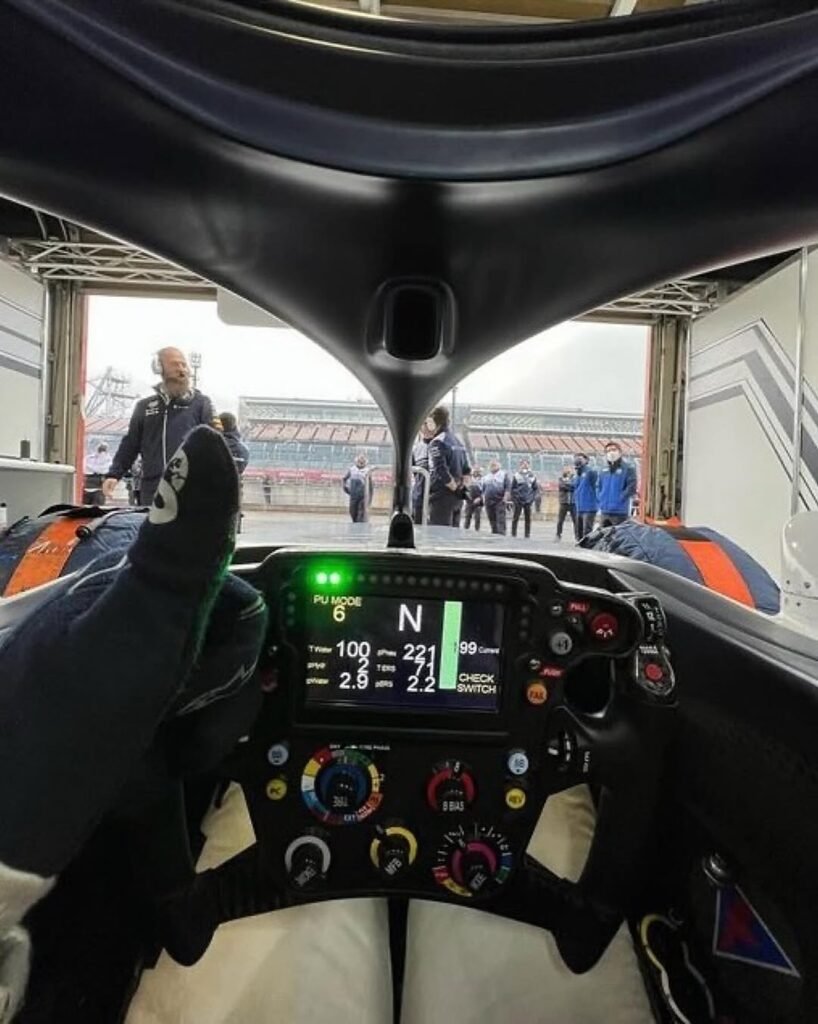
F1 cockpits are designed around the driver almost like a tailored racing suit.
The seat, pedal position, steering wheel and headrest are carefully arranged to match the driver’s physique. A small change in seating or pedal placement can affect comfort, muscle fatigue and how naturally the driver can operate the car.
The position also reflects one of Formula 1’s central engineering philosophies: the car and driver are treated as a single performance package.
The driver cannot simply be placed wherever there is available space. Their location influences weight distribution, aerodynamic packaging and the overall architecture of the chassis.
This is why the bizarre-looking posture is actually a highly optimized solution.
A STRANGE POSITION WITH A VERY LOGICAL PURPOSE
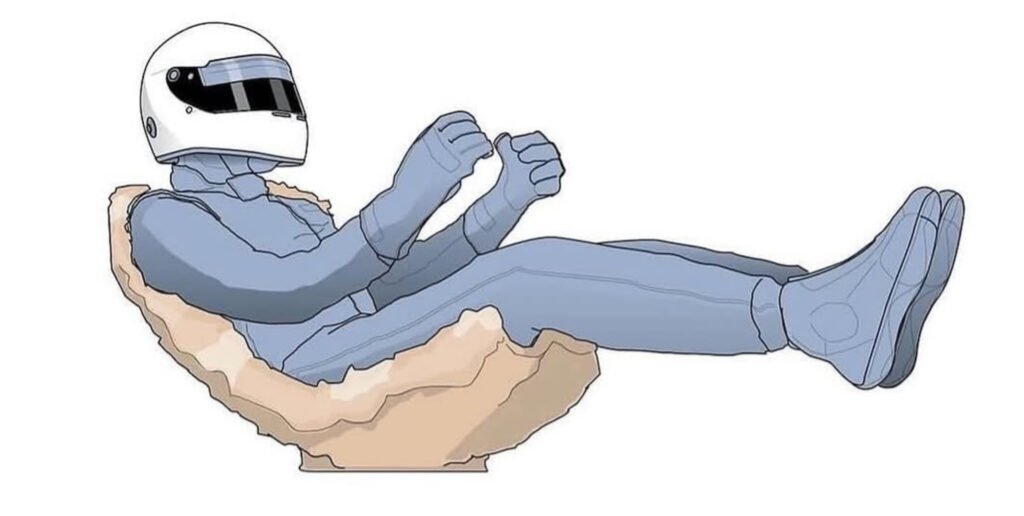
To someone unfamiliar with motorsport, an F1 driver’s seating position can look uncomfortable, excessive and even unnecessary.
But once the engineering reasons are understood, the posture starts to make perfect sense.
The raised legs, reclined torso and extremely compact cockpit allow engineers to keep the driver low inside the chassis, reduce frontal area, optimize the car’s center of gravity and maximize the available aerodynamic space around the survival cell.
In other words, what looks like one of the strangest driving positions in the world is actually the result of decades of aerodynamic and safety development.
From the outside, an F1 cockpit may look like a terrible place to sit. From an engineering perspective, however, almost every angle, position and millimeter has a purpose.
The most fascinating part is that Formula 1 has turned something as ordinary as the way a person sits into a genuine performance technology.
A road car is designed around making the driver comfortable. An F1 car does almost the opposite: the driver must adapt to an environment designed primarily to make the car faster, safer and more efficient.
That extreme seating position is a perfect reminder that in Formula 1, performance does not come from one spectacular component. It comes from hundreds of small engineering decisions working together.
What do you think about the extreme seating position of F1 drivers? Would you be able to drive for two hours in a cockpit like this? Let us know your thoughts in the comments.

Adhe is part of the 88 Eight Box Editorial Team, covering JDM culture, motorsport, automotive technology, and industry news. The team focuses on delivering original automotive stories, reviews, and insights for enthusiasts worldwide.