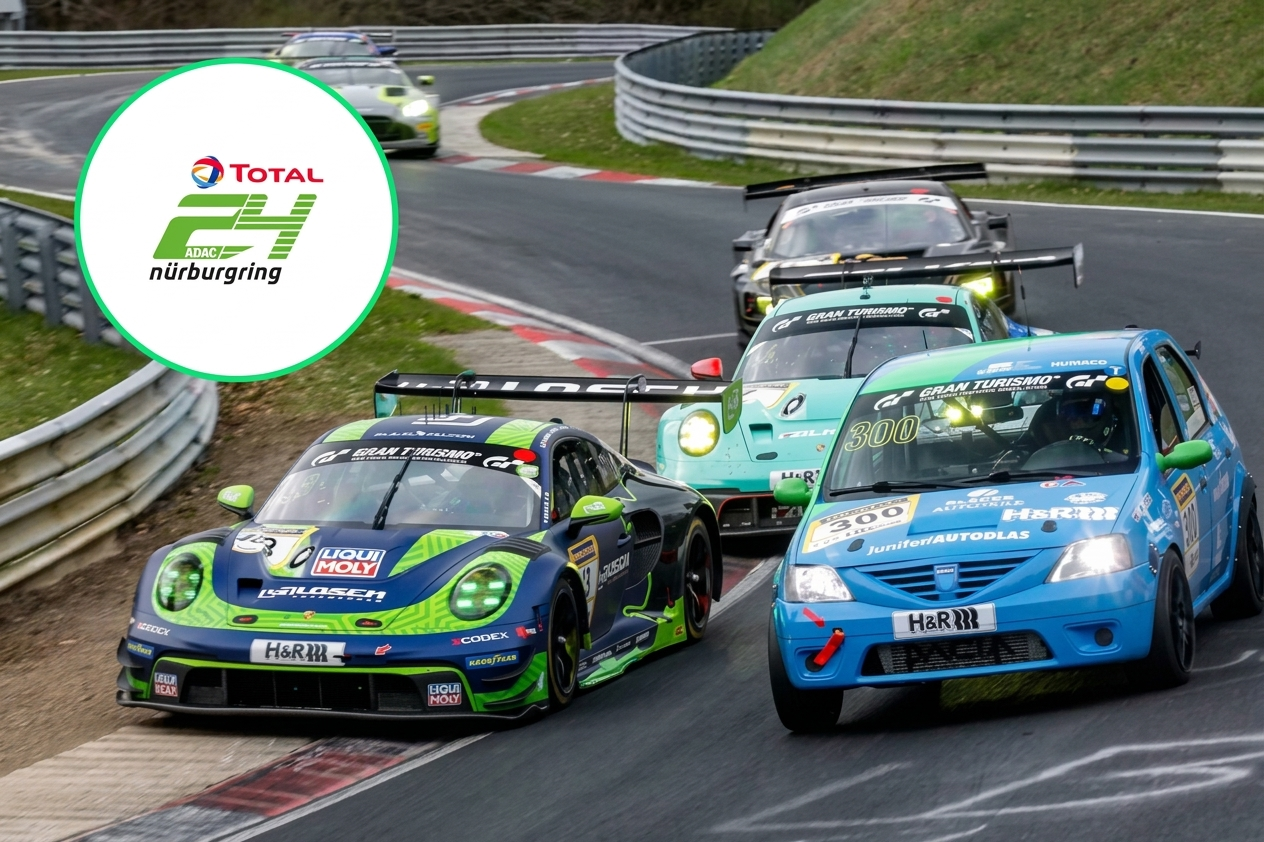
There are plenty of endurance races around the world where the grid is filled with exotic machinery, purpose-built prototypes, and brutally fast GT cars. But the Nürburgring 24 Hours is different.
This is one of those races where almost anything with four wheels can somehow find its way onto the same terrifying piece of tarmac.
The Nürburgring 24 Hours is famous for combining the modern Grand Prix circuit with the legendary Nordschleife, creating a lap of roughly 25 kilometres packed with corners, elevation changes, blind sections, and unpredictable weather. Conditions can even vary dramatically from one part of the circuit to another.
And then there is the multi-class format.
At the sharp end of the field sits the SP9 category, home to GT3 machinery from manufacturers such as Porsche, Mercedes-AMG, BMW, Ferrari, Lamborghini, Aston Martin and Audi. But further down the grid, things become considerably more unusual.
There are production-based and touring-car categories such as V5 and V6, turbocharged production cars in VT2, and alternative-fuel and experimental categories under the AT regulations, including cars using hydrogen, electric power, hybrid systems and other alternative technologies.
That mixture creates one of the strangest sights in motorsport: a grid where a sophisticated GT3 monster can share the Nürburgring with what looks like an ordinary road car.
Here are four of the weirdest machines to ever take on the Nürburgring 24 Hours.
1. DACIA LOGAN
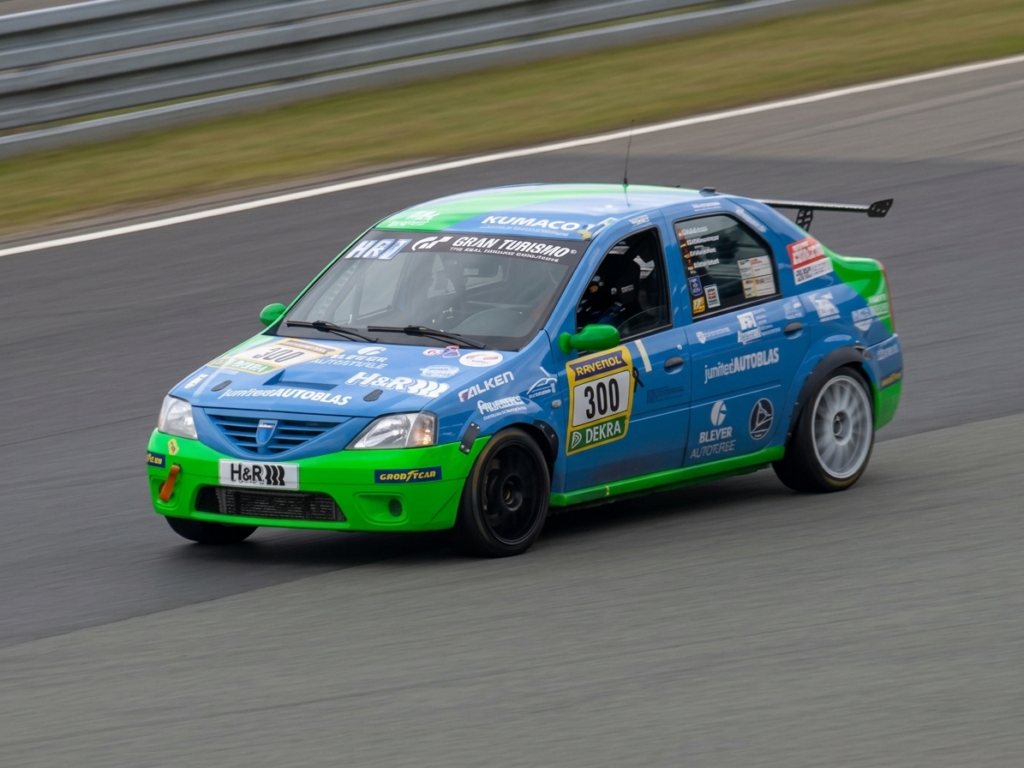
On the road, a Dacia Logan is hardly the kind of car that makes people stop and stare.
It is a practical four-door family sedan designed around affordability, simplicity and everyday usability. But put one inside the Nürburgring 24 Hours and suddenly the humble Logan becomes something completely different.
At the 2025 Nürburgring 24 Hours, Ollis Garage Racing entered a Dacia Logan carrying number 300 in the SP3T class.
And it was not exactly surrounded by slow machinery.
The Logan found itself competing against cars such as the BMW M2 and Hyundai Elantra N, while the sharp end of the overall field was packed with GT3 machinery producing vastly more performance.
But this was no ordinary Logan.
The standard 1.6-litre inline-four engine used in road-going versions produces roughly 87 to 105 horsepower. For its endurance-racing programme, however, Ollis Garage Racing replaced the original engine with a 2.0-litre Renault Mégane RS turbo engine producing around 280 horsepower.
The engine was paired with a sequential six-speed transmission and a proper racing setup.
Suddenly, the boring family sedan had become a Nürburgring weapon.
The 2025 race was far from trouble-free, with the Logan suffering technical problems involving the engine, drivetrain and driveshafts. Despite those setbacks, the team continued fighting.
The car eventually finished 107th overall.
It was nowhere near the GT3 machines at the front, but that almost misses the point.
The Logan became memorable precisely because it looked so completely out of place.
2. VOLKSWAGEN T4 CARAVELLE
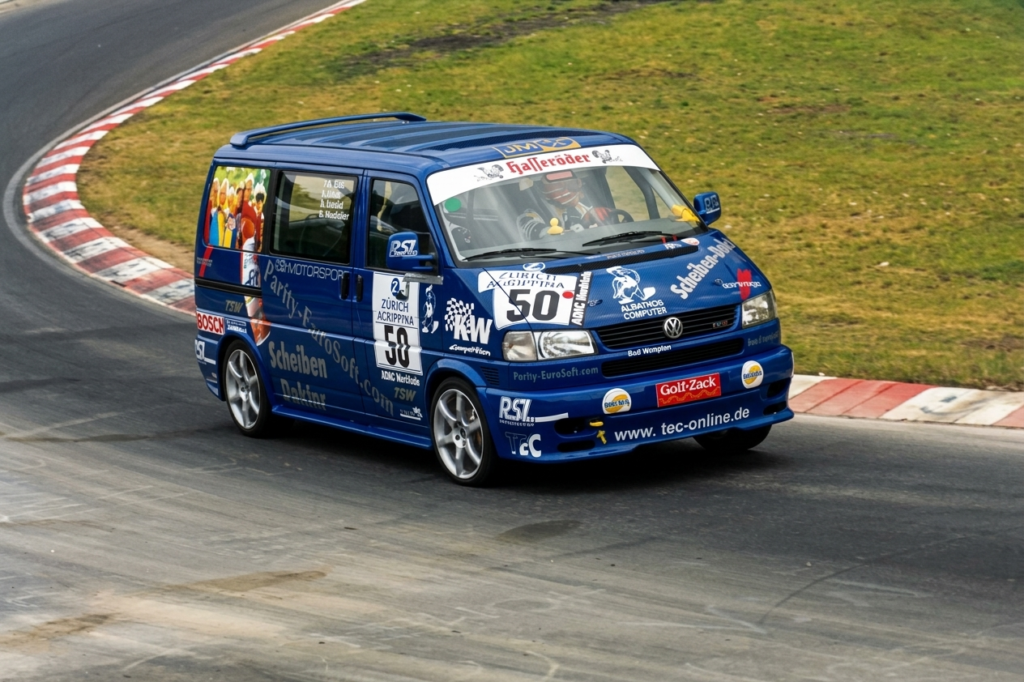
If the Dacia Logan already looks strange among race cars, the Volkswagen T4 Caravelle takes things to another level.
During the 2000s era of the Nürburgring 24 Hours, this Volkswagen van appeared on the Nordschleife alongside considerably more conventional racing machinery.
And remarkably, it was not there simply as a publicity stunt.
The T4 Caravelle used a 2.5-litre TDI diesel engine producing around 148 horsepower, connected to a five-speed manual gearbox. It weighed approximately 1,776 kilograms and could reach around 190 km/h.
Compared with cars such as the BMW E36 325 TDS, Audi A4 TDI and Volkswagen Golf TDI, the big T4 was hardly built for outright lap time.
While sports cars attacked the corners, the Caravelle had to haul a large and heavy body around the Nordschleife.
Its lap time was around 12 minutes and 31 seconds.
But the van had one enormous advantage: fuel economy.
With a massive 100-litre fuel tank and relatively efficient diesel power, the T4 could stay out on the circuit for long periods without making frequent pit stops.
In endurance racing, that matters.
The strategy helped the unlikely Volkswagen complete the race and finish 123rd overall out of 208 cars in its field.
It may have looked like someone’s airport shuttle had accidentally entered a 24-hour race, but the T4 had one thing many faster cars did not have range.
3. VOLKSWAGEN BEETLE RSR
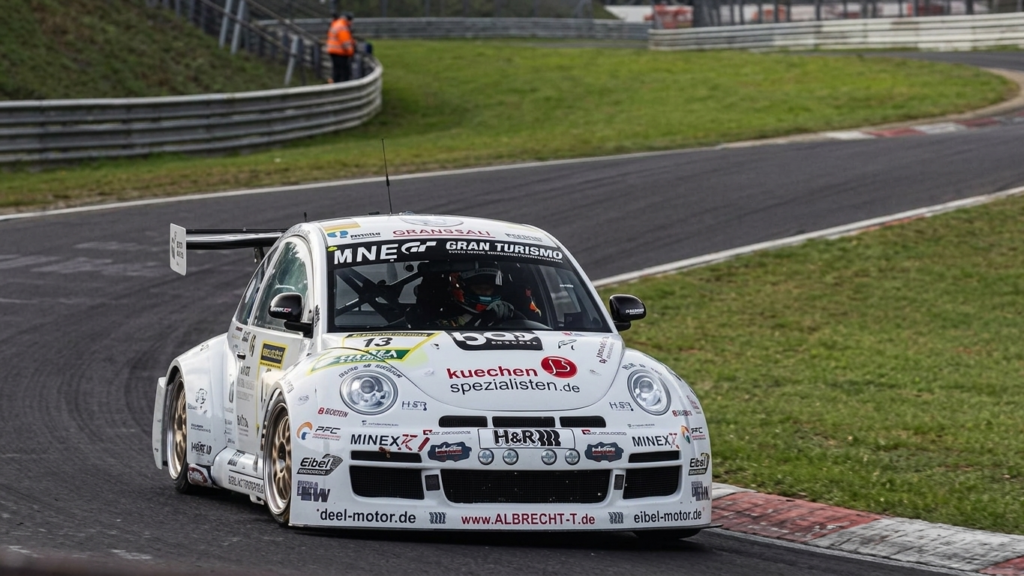
Few cars demonstrate the Nürburgring’s madness better than the Volkswagen Beetle RSR entered by White Angel for Fly and Help.
From the outside, it still looks unmistakably like a Volkswagen Beetle.
Underneath, however, almost everything important has been transformed.
The car was based on a VW Beetle Cup platform, but the project was developed as a private racing programme by the team behind it. The goal was to create a replacement for the Dodge Viper Competition Coupe GT3, which had become increasingly difficult to maintain as parts became harder to source.
Instead of simply buying another ready-made race car, the team created something much more interesting.
A Beetle.
The car received a 2.0-litre turbocharged engine based on TCR technology, producing approximately 364 horsepower. With a top speed of around 260 km/h, this was no longer the harmless little Beetle people remember from the streets.
At the 2024 Nürburgring 24 Hours, the Beetle RSR made its debut and immediately proved that its ridiculous appearance was hiding serious performance.
It finished second in the SP3T class and recorded a fastest lap of approximately 9 minutes 35 seconds around the 25.4-kilometre configuration.
That is the perfect Nürburgring story.
Take one of the world’s most recognisable cute cars, stuff it with serious racing hardware, and unleash it on one of the world’s most dangerous circuits.
The result?
A Beetle that behaves more like a monster.
4. OPEL MANTA FOXEL
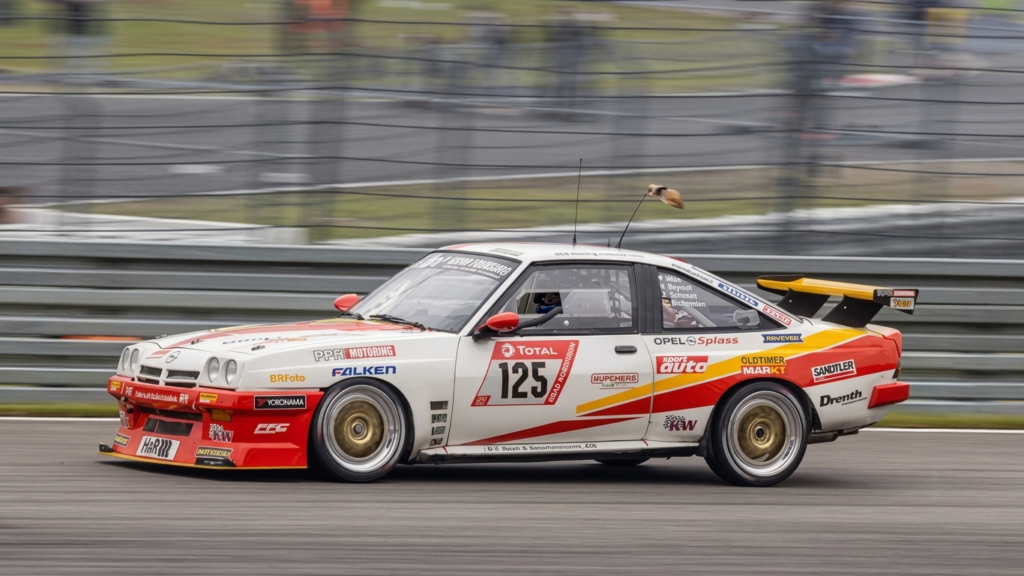
Then there is the Opel Manta known as the Foxel Manta, the car that might have the strangest visual signature of them all.
Look at its roof and you will immediately understand the nickname.
There is a fox tail attached to the car.
That unusual decoration became one of the Manta’s most recognisable features and helped turn the old Opel into one of the Nürburgring’s most beloved eccentric racers.
The car is based on the classic Opel Manta and was prepared for endurance racing by Kissling Motorsport in the early 1990s.
Its original powertrain was far from exotic, using a 1.8-litre Opel engine combined with a 16-valve DOHC cylinder head derived from the Opel Kadett GSi.
Yet simplicity proved to be one of its strengths.
The Manta went on to record 49 class victories in the H2 category.
In 2016, it reached another extraordinary milestone by exceeding 50,000 kilometres of racing distance specifically at the Nürburgring.
That figure continued climbing over the following years, eventually passing 100,000 kilometres.
Then came disaster.
Ahead of the 2022 Nürburgring 24 Hours, the Manta suffered a serious fire linked to its lithium-ion battery system. The damage was severe enough that many people believed the Foxel Manta’s incredible story had finally come to an end.
It didn’t.
The car returned to the Nürburgring in 2023 after an extensive rebuild.
The resurrected Manta was powered by a 2.0-litre four-cylinder engine producing around 250 horsepower and weighed approximately 930 kilograms.
And on its return to the Nürburgring 24 Hours, it completed the race and finished 74th overall.
Even more remarkably, the Foxel Manta continued its Nürburgring adventure into the 2026 season.
At this point, it is no longer simply an old Opel with a fox tail.
It has become part of the Nürburgring’s identity.
WHEN THE NÜRBURGRING BECOMES A CAR MUSEUM AT 200 KM/H
The Nürburgring 24 Hours is fascinating precisely because it refuses to behave like a normal race.
At the front, you have highly engineered GT3 machines capable of attacking the Nordschleife at terrifying speeds.
Further back, you can find touring cars, production cars, turbocharged hatchbacks, alternative-power vehicles and occasionally something that looks like it escaped from a completely different event.
A Dacia Logan.
A Volkswagen T4 van.
A Volkswagen Beetle hiding a 364-horsepower racing machine underneath.
And an ancient Opel Manta with a fox tail that has somehow survived decades of Nürburgring punishment.
That is what makes the Nürburgring 24 Hours so special.
It is not just a battle between the fastest cars.
It is a 24-hour celebration of speed, endurance, engineering, obsession and sometimes, sheer automotive madness.
Which of these four cars would you most want to see attacking the Nordschleife? Let us know in the comments.

Adhe is part of the 88 Eight Box Editorial Team, covering JDM culture, motorsport, automotive technology, and industry news. The team focuses on delivering original automotive stories, reviews, and insights for enthusiasts worldwide.