Toyota has spent decades building one of the strongest reputations in the automotive industry. Since entering the U.S. market in 1958, the Japanese automaker has consistently placed reliability, affordability, and customer satisfaction at the center of its strategy.
The brand has also never been afraid to experiment. The Prius, for example, helped bring hybrid technology into the mainstream long before electrification became one of the industry’s biggest priorities.
But even Toyota isn’t immune to mistakes.
Behind the company’s reputation for bulletproof reliability are several models that failed to live up to the Toyota name. Some suffered from questionable engineering decisions, others were compromised by cost-cutting, while several simply arrived at the wrong time with the wrong combination of performance, practicality, or styling.
Here are four Toyota models that the company probably wishes had turned out very differently.
1. 1958 Toyopet Crown: Toyota’s Rough Start in America
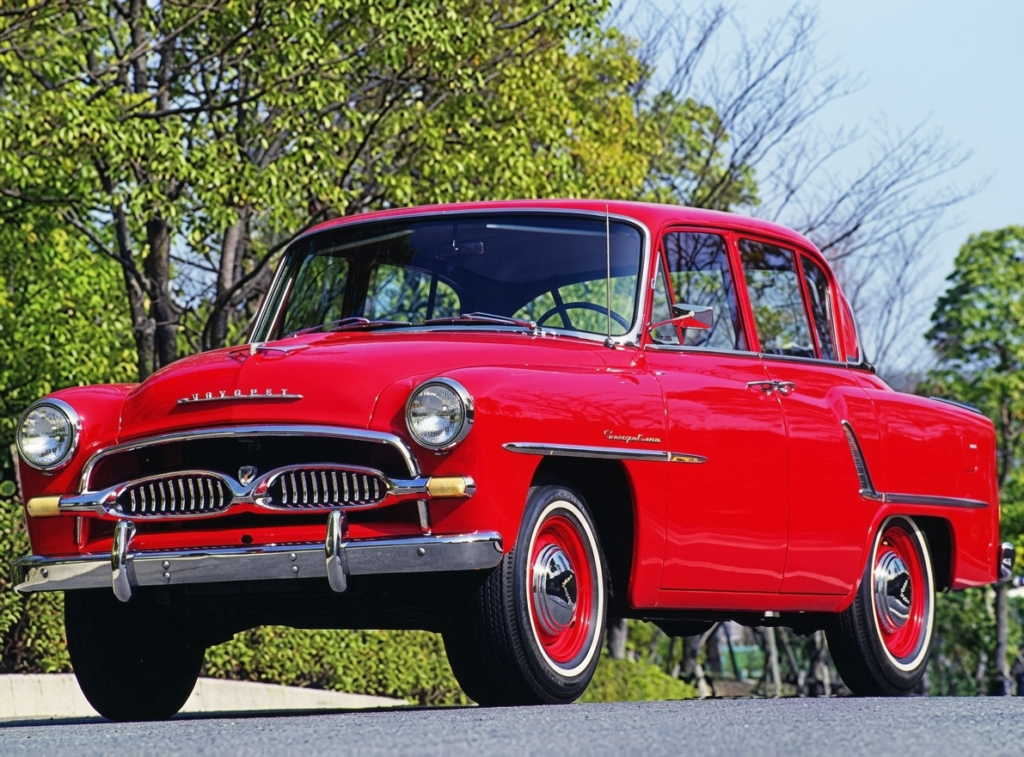
The Toyopet Crown holds an important place in Toyota’s history. It was the company’s flagship model during the post-war era and became the first Japanese car officially sold in North America.
Unfortunately, it was hardly the ideal vehicle to introduce Americans to Toyota.
Toyota entered the U.S. market without the brand recognition it would eventually become famous for. The company opened only a limited number of dealerships, primarily in California, while the Crown itself struggled to compete with the larger and more powerful American cars of the era.
The Crown’s rounded, boxy styling wasn’t necessarily the problem. Its performance was.
The small sedan reportedly needed around 26 seconds to reach 60 mph, making highway driving a frustrating experience. The lack of power became particularly obvious when the car was loaded with passengers or faced steep grades.
And then there were the mechanical problems.
The braking system was considered inadequate, while the engine could suffer from overheating when driven on steep hills. Instead of convincing Americans that Japanese cars were ready to compete with established domestic brands, the Crown reinforced the opposite perception.
Toyota eventually pulled the Crown from the U.S. market.
Ironically, the failure became an important lesson for the company. Toyota returned to the American market in the 1960s with models such as the Corona, beginning a much more successful chapter in its history.
The Crown name would eventually return to the United States decades later, but by then it had become a completely different machine.
2. 1991 Toyota Previa: The Egg-Shaped Minivan That Had Its Problems
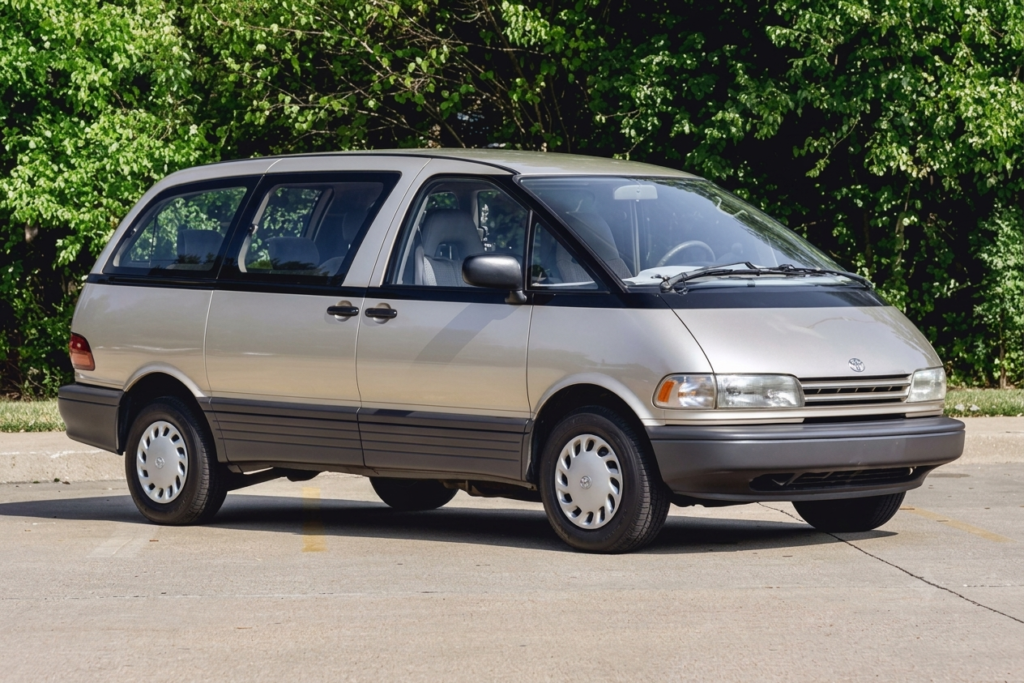
The 1990s gave us plenty of memorable automotive designs, but few were as recognizable as the first-generation Toyota Previa.
With its rounded, almost egg-shaped body and enormous glass area, the Previa looked radically different from conventional minivans.
It was also relatively affordable, with an initial MSRP of around $19,000.
The problem was that its unusual design came with some serious compromises.
Toyota placed the engine in a highly unconventional position beneath the front seats, leaving a limited amount of space for the powerplant. The result was a 2.4-liter four-cylinder engine producing around 138 horsepower.
That wasn’t particularly impressive for a family vehicle expected to carry several passengers and their luggage.
Many competitors were already using V6 engines, giving them a significant advantage in power and highway performance.
Safety was another concern. Some crash tests produced disappointing results, damaging the Previa’s image as a family vehicle.
Then came the mechanical complaints.
Owners reported issues ranging from starter failures and emissions problems to transmission difficulties. The five-speed manual transmission in particular could be difficult to shift, while complaints about acceleration and other mechanical problems further hurt the model’s reputation.
Toyota eventually discontinued the Previa in the U.S. market after the 1998 model year, making way for newer products that were better equipped to compete in the rapidly evolving minivan segment.
Despite its problems, the Previa remains an interesting piece of Toyota history. Its unconventional engineering showed that Toyota was willing to take risks, even when those risks didn’t always pay off.
3. 2000 Toyota Echo: Cheap, Simple and Almost Too Basic
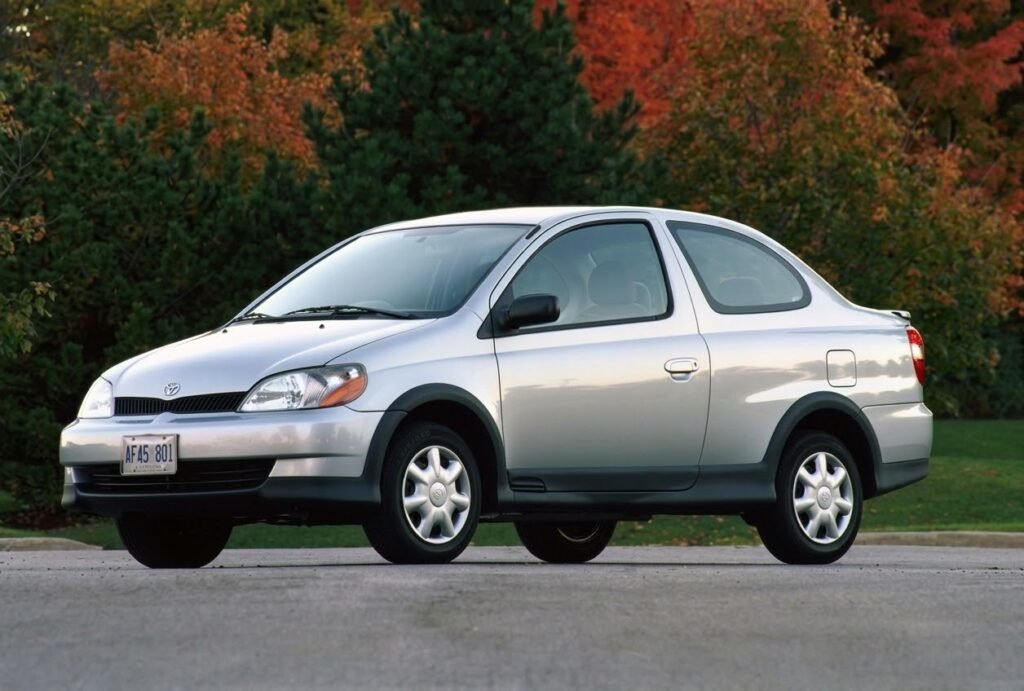
The early 2000s produced some of the strangest automotive designs ever seen on American roads.
The Pontiac Aztek, Chrysler PT Cruiser, and Toyota Echo were among the models that became frequent targets of jokes, but the Echo had another problem beyond its unusual styling: Toyota stripped it down to an almost uncomfortable level.
The tall and narrow body gave the Echo an unusual silhouette that looked more like a futuristic capsule than a conventional compact car.
Toyota’s objective was straightforward: create an affordable vehicle aimed at younger buyers.
To achieve that goal, however, the company kept the equipment list extremely basic.
Features that many buyers expected to see in a modern vehicle, including power steering, air conditioning, and a decent audio system, could be optional rather than standard equipment.
And despite its bare-bones specification, the Echo’s starting price was still around $13,000 at the time.
Adjusted for inflation, that’s roughly equivalent to $22,000 today.
For young buyers looking for affordable transportation, the Echo’s minimalist philosophy didn’t necessarily translate into desirable ownership.
Its unconventional appearance didn’t help either.
The model struggled to gain significant traction in the American market, and Toyota eventually discontinued the Echo in 2005 as the company prepared to focus on its new Scion brand and other products aimed at younger consumers.
The Echo wasn’t necessarily a terrible car mechanically. In fact, its simplicity was arguably one of its strengths.
But simplicity alone wasn’t enough to make it desirable.
4. 2018 Toyota C-HR: Style Over Substance?
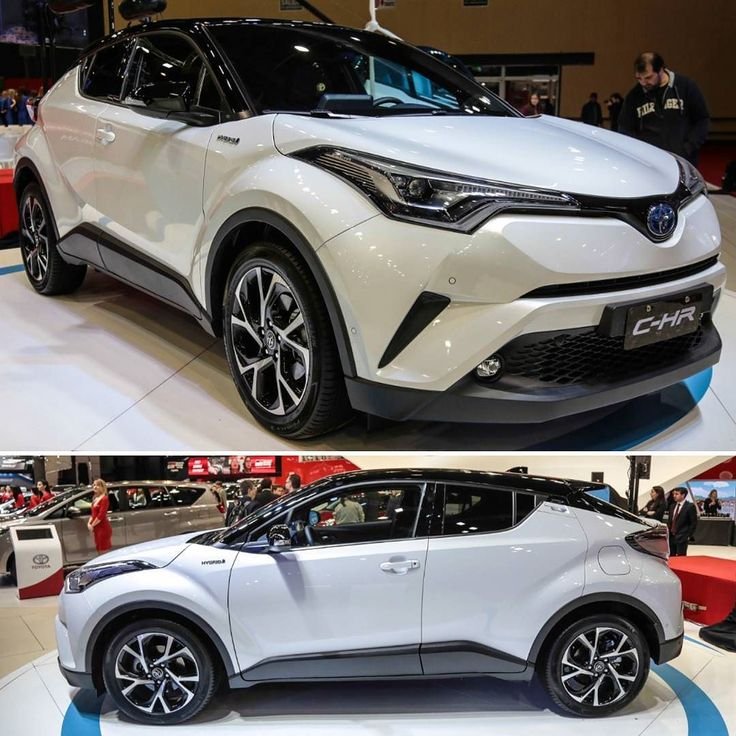
The final entry on this list is much newer and perhaps more controversial.
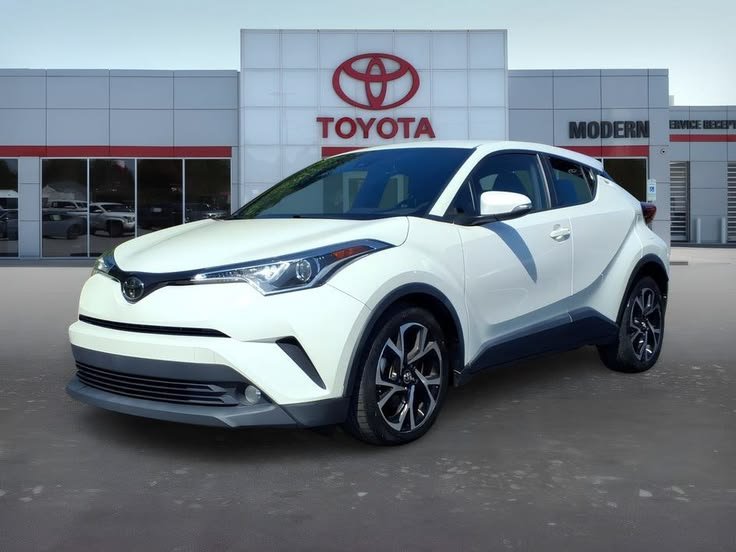
The Toyota C-HR was originally conceived as a vehicle for the Scion brand before Toyota shut down the sub-brand in 2016. The C-HR was subsequently launched under the Toyota badge as the company attempted to challenge the growing subcompact crossover market.
And visually, it certainly wasn’t boring.
The C-HR looked dramatically different from almost anything else in Toyota’s lineup. Aggressive bodywork, a high beltline, hidden rear door handles, and a coupe-inspired roofline gave it a distinctive appearance.
But underneath that styling, the C-HR was less impressive.
Its 2.0-liter four-cylinder engine and CVT combination wasn’t exactly a recipe for exciting performance. Acceleration could be noisy and slow, particularly when compared with some of its competitors.
The starting price of approximately $23,545 also put the C-HR into a competitive part of the crossover market where buyers had plenty of alternatives.
Then there were practicality issues.
The dramatic styling compromised rear visibility, while the rear seats and overall cabin weren’t as user-friendly as some competing crossovers.
Most importantly, the C-HR struggled to deliver the combination of performance, practicality, technology, and efficiency that buyers increasingly expected from a modern crossover.
Its sales numbers tell the story.
In 2019, Toyota sold 48,930 C-HRs in the U.S. Meanwhile, the RAV4 sold an astonishing 448,071 units during the same year.
That’s not a minor difference.
The C-HR’s final U.S. model year arrived in 2022 before Toyota discontinued it and shifted attention toward the much more successful Corolla Cross.
Even Toyota Has to Get It Wrong Sometimes
Toyota’s reputation for reliability can sometimes make it easy to forget that the company has produced plenty of imperfect cars.
The interesting thing about these four models is that they failed for very different reasons.
The Toyopet Crown suffered from inadequate performance and an underdeveloped American market strategy. The Previa pushed unconventional engineering further than the market was necessarily ready for. The Echo prioritized low cost to the point where it sacrificed desirability, while the C-HR demonstrated that striking styling can’t always compensate for mediocre performance and questionable practicality.
But these failures are also part of what made Toyota successful.
Automakers don’t build decades-long reputations without making mistakes along the way. The important part is what happens afterward.
Toyota learned from the Crown, refined its products, developed some of the world’s most respected engines and platforms, and eventually became one of the biggest players in the American market.
Even the Prius, now one of Toyota’s most recognizable nameplates, was once considered a risky experiment.
So perhaps these four cars shouldn’t simply be remembered as Toyota’s “bad” models. They should also be seen as reminders that innovation involves failure.
What do you think?
Do you agree that these are four of Toyota’s worst-reputed models, or is there another Toyota that deserves to be on this list?
Let us know in the comments. We’d love to hear which Toyota you think deserves the title of the company’s biggest automotive mistake.

Adhe is part of the 88 Eight Box Editorial Team, covering JDM culture, motorsport, automotive technology, and industry news. The team focuses on delivering original automotive stories, reviews, and insights for enthusiasts worldwide.