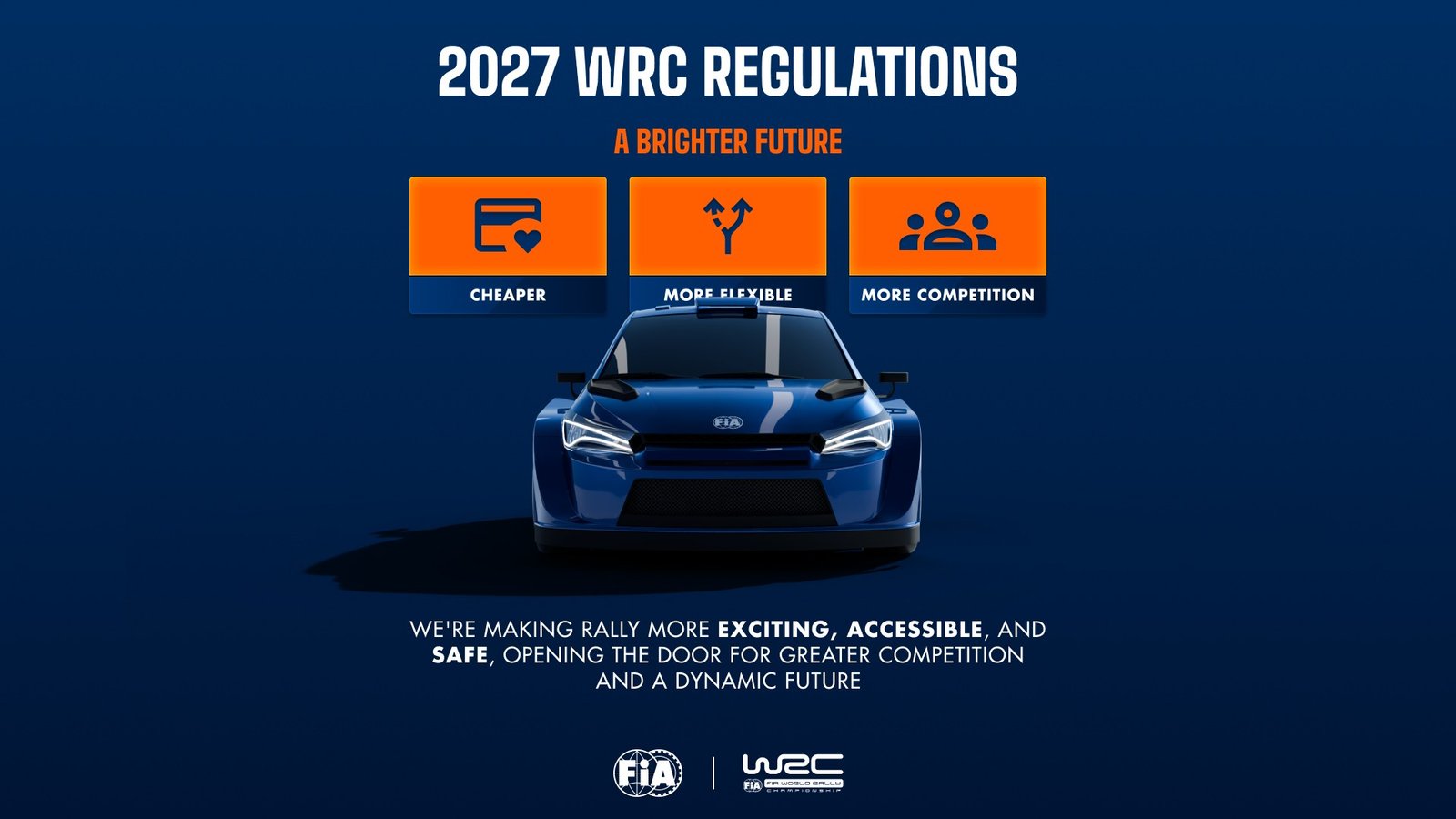
The World Rally Championship is preparing for a major transformation as new technical regulations approach for 2027, while tyre performance remains a key talking point during the 2026 season.
The FIA’s next-generation Rally1 regulations are designed to reduce costs, simplify car construction and make the championship’s top category more accessible to manufacturers and private teams. Meanwhile, Hankook, the WRC’s exclusive tyre supplier, has faced criticism over winter tyre performance and durability problems on demanding gravel stages.
From the removal of hybrid power in the initial 2027 package to the development of revised tyre compounds, both developments could have a significant impact on the championship’s future.
WRC 2027: NEW REGULATIONS AIM TO REDUCE COSTS
The 2027 season will introduce a new technical framework for the WRC’s premier category, replacing the current Rally1 formula with a more affordable approach to car design and development.
Approved by the FIA in December 2024, the WRC27 regulations establish a framework intended to remain in place for ten years. The objective is to reduce the financial barriers associated with competing at the highest level of international rallying.
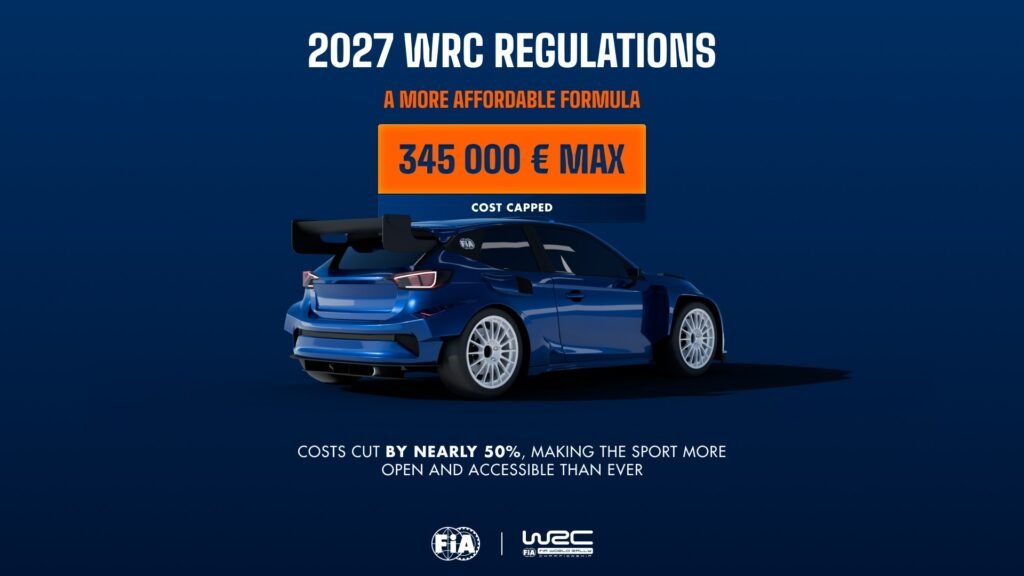
Under the new rules, a Rally1 car in tarmac specification will have a price cap of €345,000. The regulations also promote the use of established components, simplified engineering and more durable parts to reduce development and operating expenses.
Rather than relying solely on a conventional financial cost-cap system, the FIA uses technical restrictions and defined component costs to control expenditure.
The changes are intended to encourage greater participation from manufacturers, independent constructors and private teams, potentially creating a more diverse field of competitors.
HYBRID POWER DROPPED FROM THE INITIAL WRC27 PACKAGE
One of the biggest changes for 2027 is the removal of the hybrid system used by the current-generation Rally1 cars.
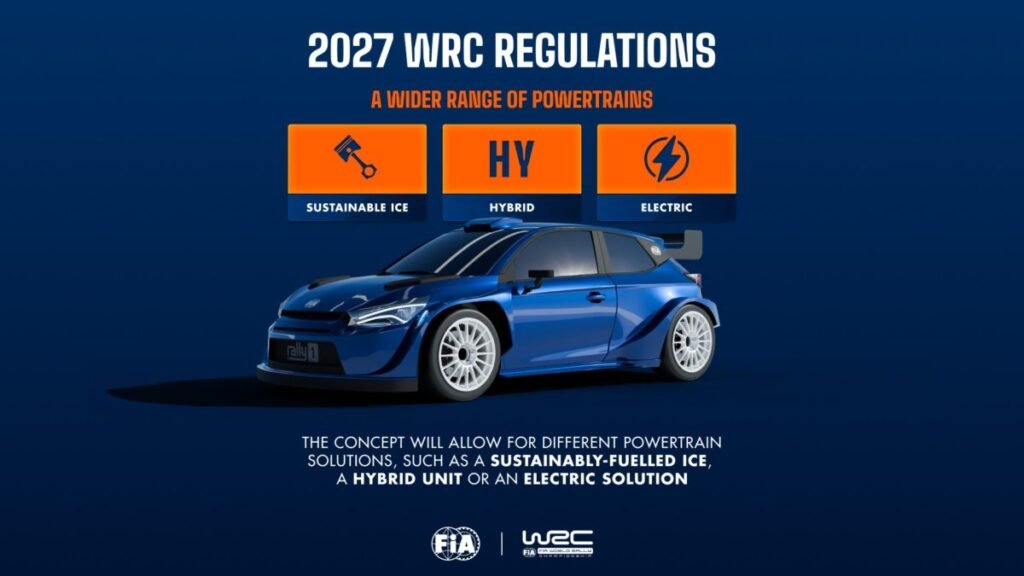
The initial WRC27 specification centres on a 1.6-litre turbocharged internal-combustion engine running on sustainable fuel. The FIA’s published concept targets approximately 290 horsepower, combined with four-wheel drive and a five-speed gearbox.
Removing the current plug-in hybrid configuration simplifies the powertrain and eliminates the additional costs associated with its hardware, maintenance and operation.
However, the broader WRC27 framework does not permanently rule out alternative powertrain technologies. The regulations are designed to accommodate potential future developments, including hybrid and fully electric solutions.
For the initial 2027 configuration, the focus is on a simpler combustion-engine package using sustainable fuel.
RALLY2 TECHNOLOGY OPENS THE DOOR TO MORE COMPETITORS
The new Rally1 cars will incorporate several established technical solutions to help control costs.
Their tubular-frame chassis will use double-wishbone suspension, while braking and steering systems will draw on existing Rally2 specifications. The cars will retain four-wheel drive and a five-speed gearbox.
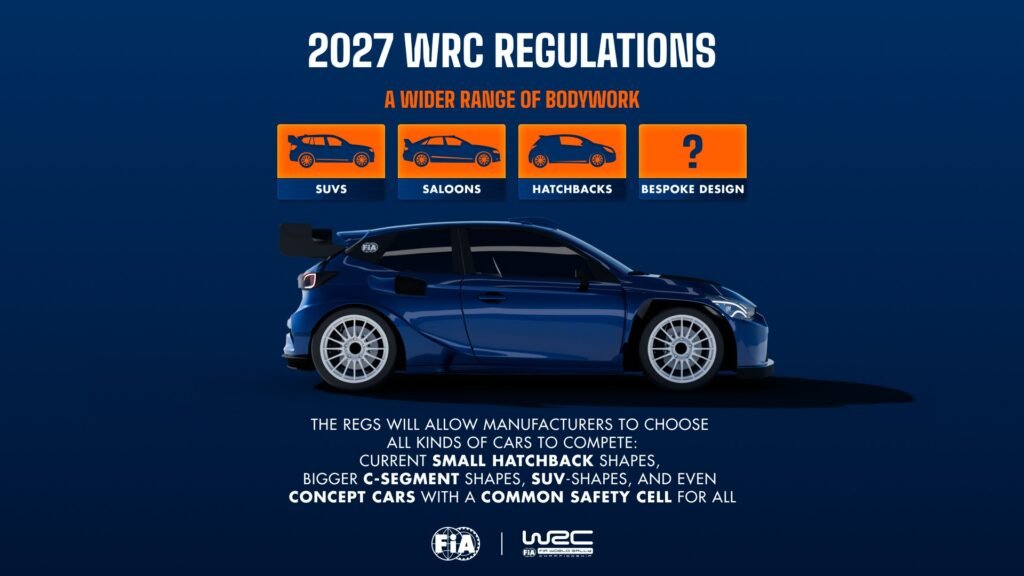
The regulations also allow considerable freedom in exterior design within defined dimensional limits. This means manufacturers and constructors will not be restricted to bodywork that closely resembles a conventional production car.
The result could be a more varied grid, with hatchback-inspired designs, saloon-style bodies, SUV-inspired silhouettes and bespoke rally concepts competing under the same technical framework.
The FIA has also introduced a transitional route for eligible Rally2 machinery. A Rally2-WRC-Kit, priced at €7,500, is intended to help qualifying cars homologated before the end of 2026 compete in the top category during 2027 and 2028.
The kit includes revised front fenders, a front bumper and a rear aerodynamic device designed to improve aerodynamic parity with the new WRC27 cars.
This approach could help increase the number of entries while teams adapt to the new regulations.
HANKOOK UNDER PRESSURE AFTER WINTER TYRE CRITICISM
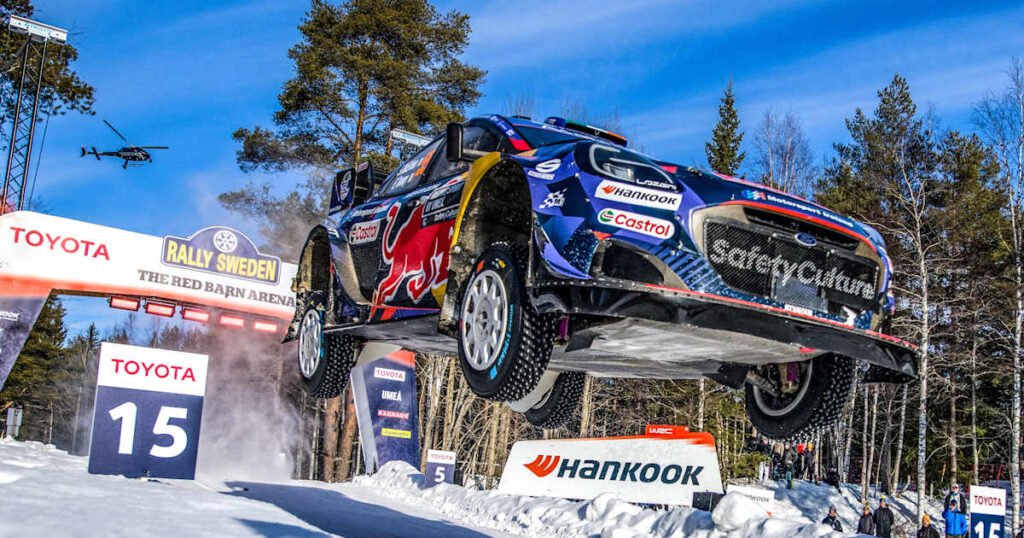
While the FIA prepares for the next generation of rally cars, Hankook has been working to improve the performance of its current tyre range.
The South Korean manufacturer became the WRC’s exclusive tyre supplier in 2025, replacing Pirelli. Its products must cope with an exceptionally wide range of conditions, including wet and dry asphalt, snow, ice, loose gravel and heavily damaged roads.
Rallye Monte-Carlo has been particularly challenging because its stages can combine snow, ice, slush and exposed asphalt, sometimes within the same section.
During the 2026 season opener, several drivers criticised the performance of Hankook’s winter tyres in difficult snow and slush conditions. Sébastien Ogier was among those who publicly raised concerns about the available grip.
The criticism highlighted the difficulty of developing a tyre that remains predictable when temperatures and road surfaces change rapidly.
Hankook has responded by continuing its winter tyre development programme, with the aim of improving traction, stability and consistency in extreme conditions.
TWO NEW WINTER TYRES TARGET SNOW AND ICE
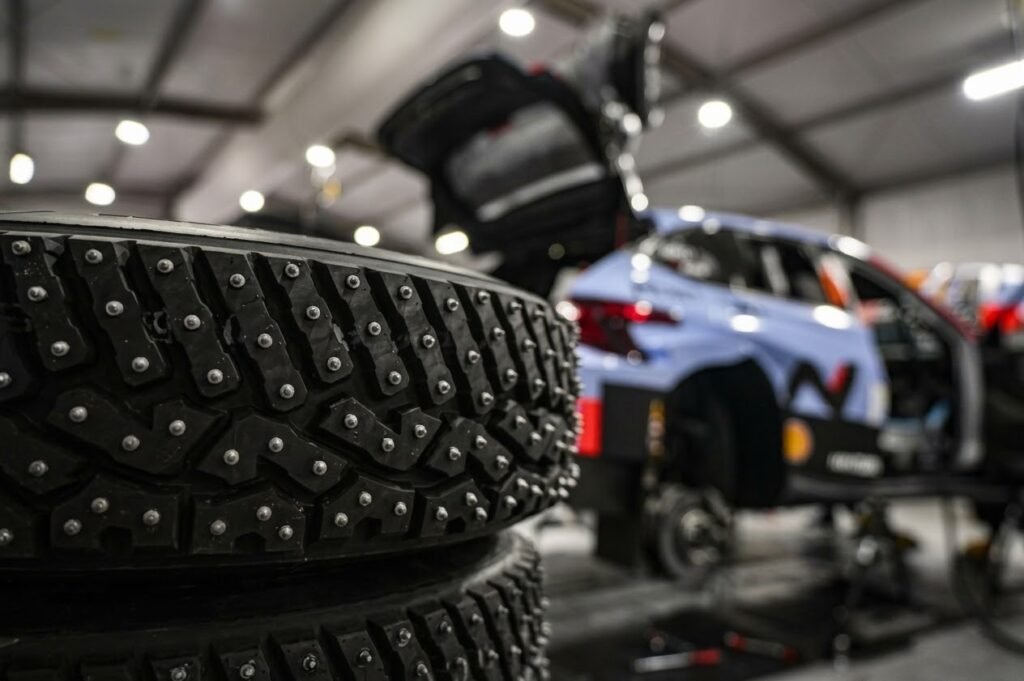
Hankook has outlined plans for two new winter tyre products for the 2027 season: the SR20A winter asphalt tyre and the SR11 studded ice tyre.
The SR20A is intended to improve performance on snow-covered and slushy asphalt. Its development focuses on the tread pattern and rubber compound, with the aim of improving grip and clearing snow and slush more effectively.
The SR11, meanwhile, is designed specifically for icy surfaces. Its development targets stability, handling and stud retention, which are important when cars repeatedly strike frozen ruts and uneven sections of road.
The two products serve different purposes. A tyre optimised for snowy asphalt cannot necessarily deliver the same performance as a studded tyre designed for heavily iced surfaces.
By developing separate specifications, Hankook aims to provide crews with more suitable options for the different conditions encountered during winter rallies.
GRAVEL TYRE FAILURES RAISE DURABILITY CONCERNS
Winter performance has not been Hankook’s only challenge. The 2026 Rally del Paraguay also brought tyre durability into the spotlight.
Several crews experienced punctures and tyre delamination during the demanding gravel stages. Delamination occurs when layers within a tyre separate, potentially compromising its structural integrity and forcing a driver to slow down or stop.
Paraguay’s abrasive roads presented a significant challenge, with rough surfaces, sharp stones and repeated impacts placing considerable stress on tyres.
The failures affected multiple crews and demonstrated how demanding gravel conditions can expose weaknesses that may not appear during ordinary running.
However, punctures and delamination are not necessarily caused by the same factors. Road conditions, impact damage, tyre pressures, operating temperatures and construction characteristics can all influence tyre performance.
The incidents therefore raised legitimate questions about durability without establishing a single cause for every failure.
HANKOOK DEVELOPS REVISED GRAVEL COMPOUNDS
Hankook has continued to develop its gravel tyre range in response to the demands of the championship.
Ahead of Safari Rally Kenya in March 2026, the company introduced a revised soft-compound gravel tyre known as the Dynapro R213. The updated specification incorporated changes intended to improve performance and durability in difficult conditions.
Attention has also turned to the hard-compound gravel tyre, which is particularly important on abrasive events where excessive wear can become a major concern.
A harder rubber compound can improve resistance to wear, but compound hardness alone does not determine durability. Tread design, carcass construction, heat management and resistance to impact damage are also critical.
Hankook’s development programme therefore involves evaluating the complete tyre package rather than simply making the rubber harder.
The objective is to improve resistance to damage while maintaining the grip and predictable handling needed for competitive rallying.
TYRE ALLOCATION RULES ADD ANOTHER CHALLENGE
Tyre reliability also affects strategy under the WRC’s sporting regulations.
For 2026, Rally1 crews are generally limited to 28 new tyres per event, including shakedown, while other categories generally have a limit of 26. The applicable rules also restrict the number of tyre-change opportunities, subject to event-specific provisions.
When punctures or other tyre failures occur, crews must manage their remaining allocation carefully. A damaged tyre can cost valuable time, while using additional tyres may leave a team with fewer options later in the rally.
These limitations make durability especially important on long and abrasive gravel events.
Any changes to tyre allocations must be assessed against the applicable FIA regulations and the supplementary regulations for the relevant event. Such adjustments should not be assumed to apply across the entire championship unless formally confirmed.
THE FUTURE OF THE WRC DEPENDS ON COST AND RELIABILITY
The WRC’s transition to the 2027 regulations represents more than a change in car design. It is an attempt to make the championship’s top category more accessible while preserving the technical and sporting challenges that define rallying.
The new framework aims to reduce costs through simpler powertrains, established components and greater freedom in vehicle design. At the same time, Hankook’s ongoing tyre development highlights the importance of reliability across the championship’s widely varying road conditions.
For the manufacturers and teams, a more affordable car is only part of the equation. They also need dependable tyres capable of handling everything from icy mountain roads to abrasive gravel stages.
The coming seasons will show whether the new regulations can attract more competitors and whether Hankook’s revised tyre specifications can deliver the consistency required at the highest level of rallying.

Adhe is part of the 88 Eight Box Editorial Team, covering JDM culture, motorsport, automotive technology, and industry news. The team focuses on delivering original automotive stories, reviews, and insights for enthusiasts worldwide.