Toyota’s top leadership has called on all Japanese automakers to work together in facing the growing pressure from Chinese electric vehicle manufacturers. Without cooperation, the industrial fortress that Japanese carmakers have built over decades could gradually collapse, one piece at a time.
To understand how serious this warning is, we first need to look at who delivered the message. Toyota is clearly not a company that is currently struggling.
Throughout 2025, the Toyota Group sold approximately 11.3 million vehicles, once again maintaining its position as the world’s largest automaker for the sixth consecutive year.
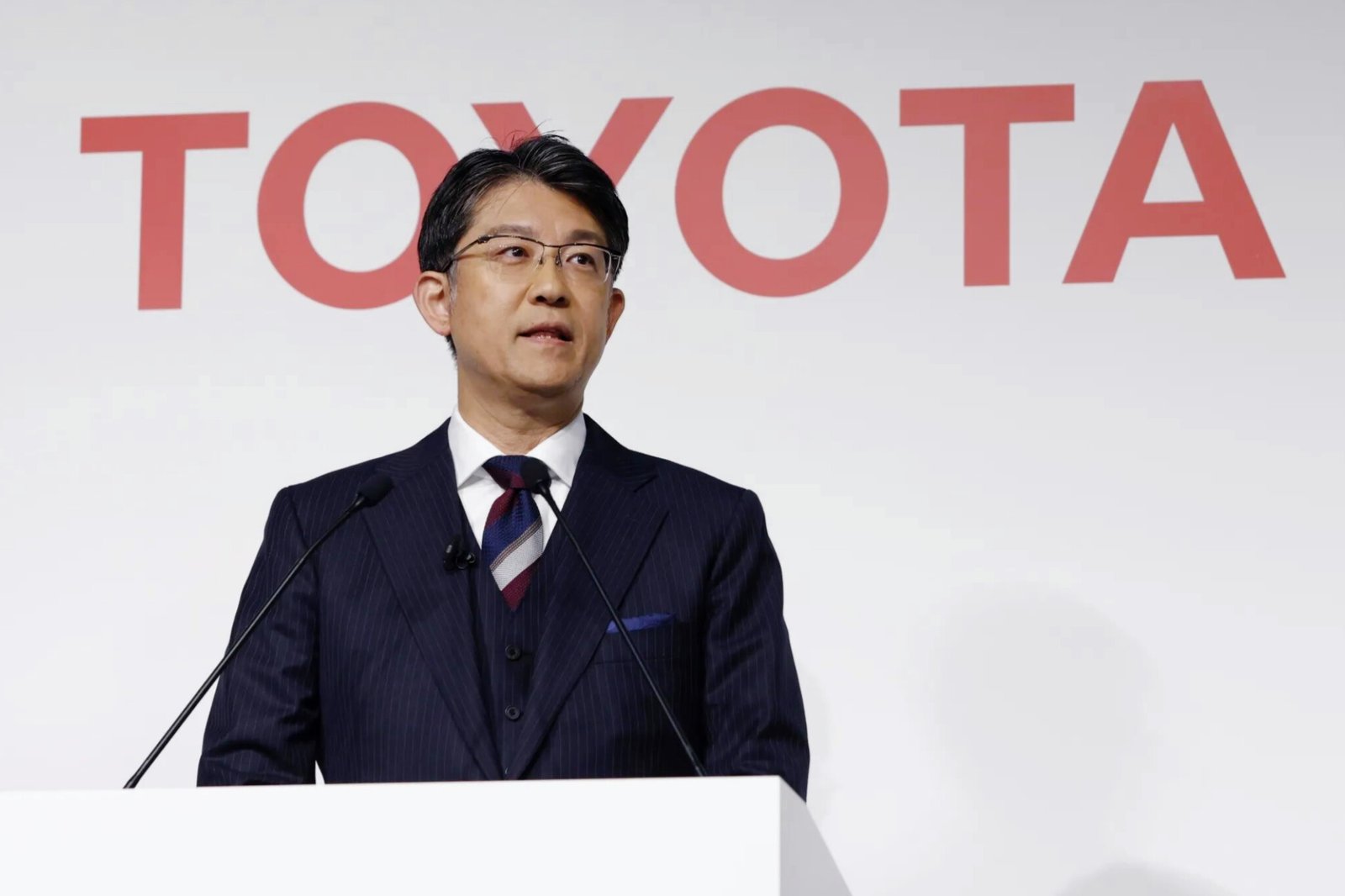
However, the person delivering this warning is someone who understands the Japanese automotive industry from the inside. The message came from Koji Sato, Toyota’s former CEO, who has served since April 2026 as the company’s Vice Chairman and Chief Industry Officer.
At the same time, Sato also leads JAMA (Japan Automobile Manufacturers Association), the organization representing Japan’s automotive industry, including major manufacturers such as Toyota, Honda, Nissan, Suzuki, Mazda, Subaru, and Mitsubishi.
In March, during a meeting with Toyota’s suppliers, Sato delivered a direct warning. He stated that if the current situation does not change, Japanese automakers may struggle to survive in the future.
Several months later, that threat began to become visible.
In May 2026, for the first time ever, five Chinese automotive groups—Geely, SAIC, BYD, Chery, and Leapmotor—sold more new vehicles in Europe than six major Japanese brands combined.
Chinese manufacturers recorded approximately 138,000 vehicle sales, while Japanese brands reached around 130,000 units.
One of the fastest-growing companies is BYD. The Chinese automaker now controls around 2.8% of the European market, surpassing major names such as Ford, Tesla, and Nissan.
BYD has also become increasingly open about its ambitions. The company has publicly stated that it aims to replace Toyota as the world’s largest automaker within the coming years.
The Threat Is Expanding Into Southeast Asia
The same pressure is now entering Southeast Asia, a region that for decades has been one of the strongest markets for Japanese automotive brands.
At the Bangkok International Motor Show 2026, BYD recorded the highest number of vehicle orders and, for the first time, surpassed Toyota.
Even more surprisingly, seven out of the ten brands with the highest order numbers at the event came from China.
Several industry reports also suggest that Chinese automakers can develop a new vehicle model around 10 to 20 months faster than many global competitors.
This advantage comes from their extensive supplier networks, highly integrated production systems, and much faster product launch cycles.
Toyota’s Solution Is Not Batteries or EV Platforms — It Starts With Something Much Simpler
So, how is Toyota responding?
Will Japanese automakers create shared battery technology, build a national software platform, or develop a common electric vehicle architecture used by all Japanese brands?
The answer is no.
Koji Sato’s chosen focus is something much simpler, and for some people, it may even sound insignificant:
Cables, bolts, cooling components, steel, and plastics.
According to Sato, one of the biggest problems facing Japan’s automotive industry today is excessive complexity.
For example, Japanese automotive suppliers currently have to manage around 70,000 different wiring harness variations.
A wiring harness is the network of cables responsible for distributing electricity and signals throughout a vehicle.
The problem is that although the basic function is almost always the same, every brand, every vehicle platform, and even every model uses different specifications.
As a result, suppliers must create different designs, tooling, testing processes, and inventory systems for every variation.
All of this complexity requires enormous amounts of money, time, and engineering resources.
Meanwhile, consumers rarely know or care what type of wiring system is hidden behind their vehicle’s dashboard.
Japan Standard: A Common Foundation to Fight Chinese Competition
This is where Koji Sato’s idea of a “Japan Standard” comes into play.
The concept is simple: basic vehicle components should be created using shared specifications and then used by all Japanese automakers.
In other words, one type of component could be produced by a supplier and then used by Toyota, Honda, Nissan, Mazda, Suzuki, Subaru, and Mitsubishi without needing to be redesigned from scratch for every individual brand.
According to Sato’s estimates, standardizing wiring harness systems alone could potentially improve productivity by 10 times.
The engineering time and costs currently spent managing thousands of small component variations could instead be redirected toward areas that matter more to customers.
These include:
- Software development
- Driver assistance systems
- Battery technology
- Vehicle electronic architecture
These are the areas that increasingly determine why customers choose one vehicle over another.
Koji Sato’s Engineering Background Gives His Vision More Weight
Koji Sato’s background makes this proposal even more significant.
He graduated in mechanical engineering from Waseda University and joined Toyota in 1992.
His career began with developing suspension systems for the early generations of the Toyota Prius and the Camry for the North American market.
He later led Lexus, then Toyota’s performance division Gazoo Racing, before eventually becoming Toyota’s CEO in 2023.
Therefore, when someone with such a deep engineering background identifies tens of thousands of cable variations as a strategic problem, the message is clear.
The complexity that once became the strength of Japanese vehicles—through precision, efficiency, and durability—is now starting to become a burden that slows them down.
From Individual Competition to Strategic Cooperation
In the past, this approach made sense.
Each automaker built its own supplier ecosystem and unique specifications because competition focused on who could create the most reliable, durable, and efficient engines.
However, the battlefield has changed.
Today, vehicle advantages are increasingly determined by:
- Software
- Batteries
- Semiconductor technology
- The speed of introducing new features
Sato is not asking Japanese automakers to merge into one company.
Toyota will continue competing with Honda.
Honda will continue competing with Nissan.
They will still fight for customers through design, technology, performance, and user experience.
But for components hidden behind the dashboard, bolts inside the body structure, or basic mechanical parts, the question becomes simple:
If a shared standard can reduce costs and accelerate production, why should everything remain different?
The Future of Japan’s Automotive Industry
The most interesting lesson from Koji Sato’s message is that companies do not need to compete in every single area.
What matters more is understanding where differences create real value, and where differences only increase costs.
The cables hidden behind a dashboard do not need to become a brand identity.
The bolts inside a vehicle body do not need to become a source of corporate pride.
This is the practical meaning of coopetition: sharing the foundation while competing aggressively in areas that customers can actually experience.
Will this strategy be enough to stop the rapid growth of Chinese automakers?
Not necessarily.
China’s vehicle exports continue to expand aggressively into Europe, Southeast Asia, Australia, and many emerging markets around the world.
However, one thing is becoming clear:
Japanese companies, which have defined global automotive standards for decades, are beginning to admit that their traditional way of working may not be enough for the next era of competition.
The question now is:
Can Toyota’s call for unity help Japan’s automotive industry defend itself against the aggressive rise of Chinese car manufacturers?

Adhe is part of the 88 Eight Box Editorial Team, covering JDM culture, motorsport, automotive technology, and industry news. The team focuses on delivering original automotive stories, reviews, and insights for enthusiasts worldwide.