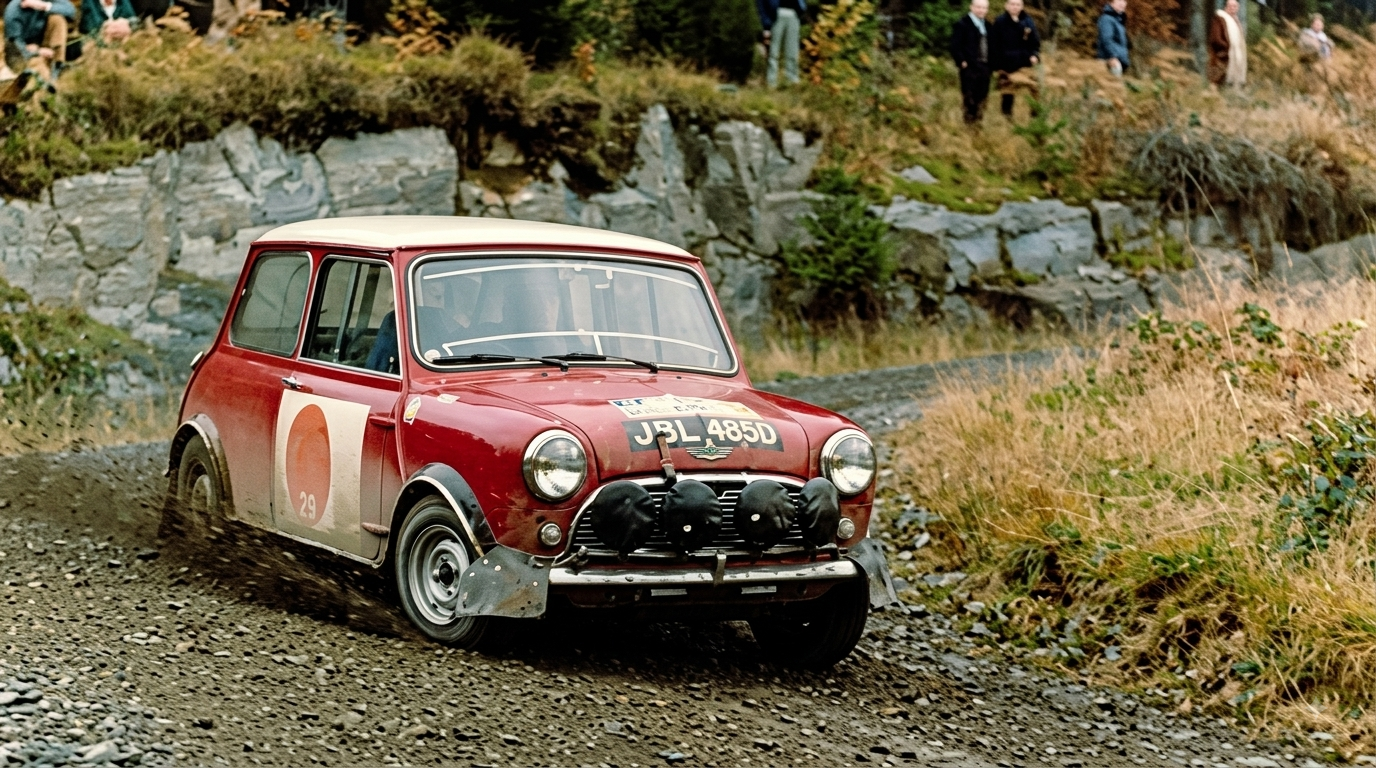
The World Rally Championship (WRC) is widely regarded as one of the toughest motorsport competitions on the planet. Unlike traditional circuit racing, WRC cars are not only built to be fast — they must also survive some of the most brutal surfaces and unpredictable conditions in motorsport.
During a single rally stage, drivers can face dry asphalt, deep mud, snow, gravel, and rough roads filled with massive bumps and jumps. Every component of a rally car must withstand extreme punishment while maintaining speed and control.
Because of these demanding conditions, fans are used to seeing compact sedans and hatchbacks dominating the WRC scene. Legendary machines such as the Subaru Impreza, Mitsubishi Lancer Evolution, Ford Focus WRC, Citroën C4 WRC, Volkswagen Polo R WRC, and Hyundai i20 Coupe WRC became icons of rally racing.
But throughout WRC history, some manufacturers dared to bring cars that looked completely out of place. From rear-wheel-drive sports cars and luxury GT machines to crossover-based rally cars and even a two-seat roadster, these vehicles challenged the traditional idea of what a rally car should be.
Here are four of the strangest rally cars ever to enter the world of WRC.
Porsche 911 GT3 R-GT: A Supercar That Went Rallying
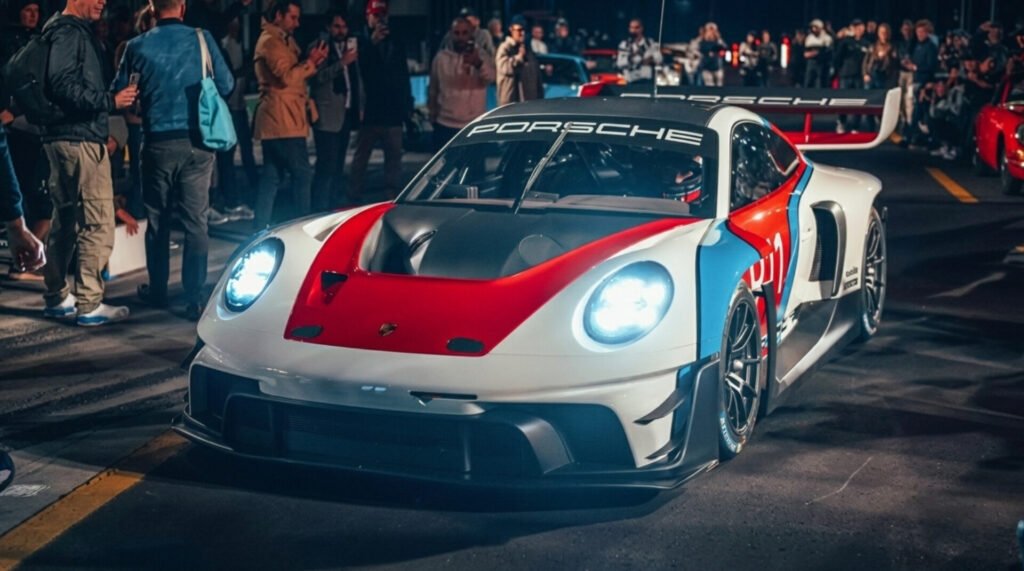
When people hear the name Porsche 911, they usually imagine a high-speed machine attacking a race circuit. Seeing a Porsche 911 flying through narrow forest roads and muddy rally stages sounds almost impossible.
But Porsche actually made it happen through the R-GT category.
Unlike the main WRC classes, the R-GT category was created for GT cars that were modified specifically for rally competition. Porsche 911 GT3 models became part of this unique category after FIA officially introduced modern R-GT regulations.
The Porsche 911 GT3 R-GT made its debut at Rally Monte Carlo 2014 with Marc Duez driving a Porsche 911 GT3 RS based on the 996 generation.
The car quickly proved its potential by achieving class victories and impressive results in European rally competitions. On asphalt stages, the Porsche became a serious challenger against lighter and more agile Rally2 machines.
Following its success, other Porsche rally projects appeared, including the Porsche 997 GT3 driven by Richard Tuthill and Romain Dumas.
However, the biggest challenge was Porsche’s decision to keep the rear-wheel-drive (RWD) layout.
Most modern WRC cars rely on all-wheel drive (AWD) to maximize traction on unpredictable surfaces. On gravel or snow, the Porsche’s RWD system could make the rear wheels lose grip easily, causing oversteer during cornering.
That unusual combination of a supercar shape and rear-wheel drive made the Porsche 911 GT3 R-GT one of the most unique rally cars ever created.
Mini John Cooper Works WRC: The “Boxy” Crossover Rally Car
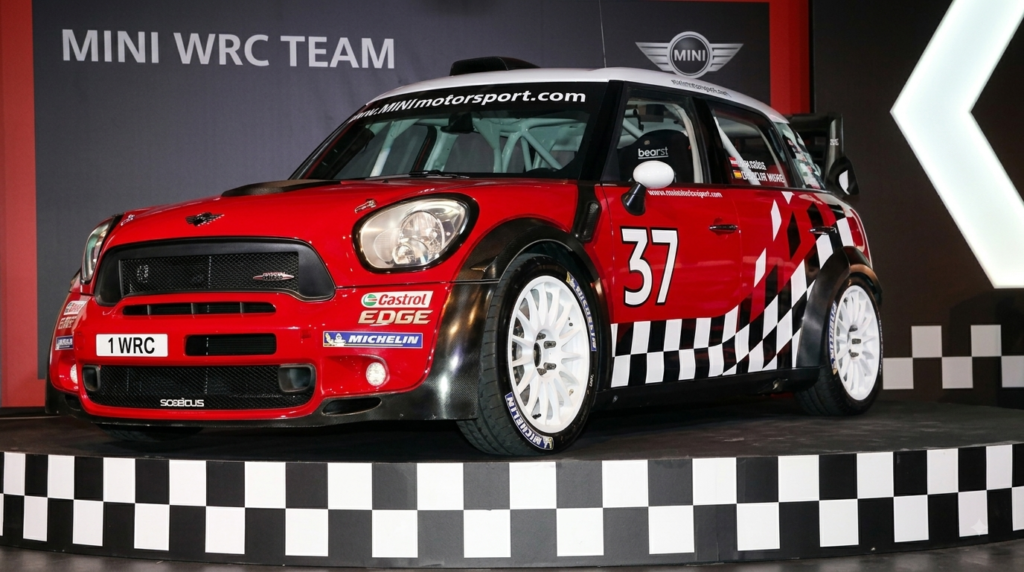
If the Porsche looked strange because it was too exotic, the Mini John Cooper Works WRC looked unusual because its basic shape was completely different from traditional rally cars.
Mini returned to rally competition with hopes of reviving its legendary Monte Carlo success from the 1960s.
However, instead of using the familiar Mini hatchback, the company selected the Mini Countryman as the foundation for its WRC project.
The decision actually made technical sense. When the project was developed, the Countryman was the first Mini model with all-wheel drive and provided enough space to meet WRC regulations.
The project was developed by Prodrive, the same team behind Subaru’s successful WRC campaigns. The Mini John Cooper Works WRC featured a 1.6-liter turbocharged four-cylinder engine and an all-wheel-drive system.
Despite its serious engineering, the car looked unusual compared with rivals such as the Citroën DS3 WRC and Ford Fiesta WRC.
Its taller crossover body made it appear more like a family vehicle that had just left a dealership before being transformed with a roll cage, rally suspension, aerodynamic upgrades, and a turbocharged racing engine.
Some fans even jokingly called it a “rallying box on wheels.”
Despite criticism of its design, the Mini WRC had genuine potential. The car entered the championship in 2011 with a limited campaign, and Dani Sordo helped secure several podium finishes.
Unfortunately, the program did not last long. In 2012, the project faced major changes after difficulties between Prodrive and manufacturer support affected its future.
Abarth 124 Rally: The Roadster That Became a Rally Weapon
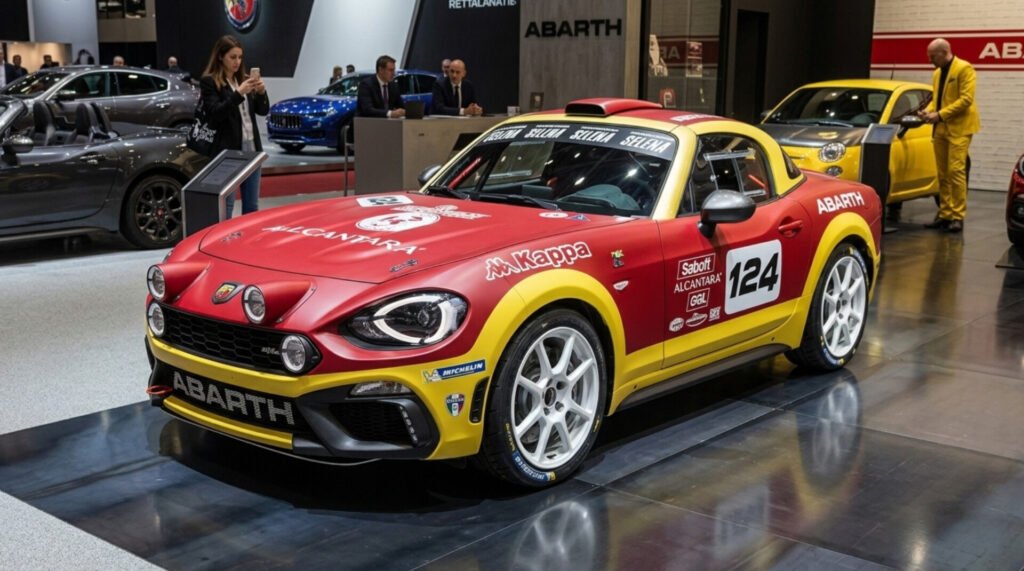
The Abarth 124 Rally might be one of the most unexpected cars ever built for rally competition.
While most rally cars are based on compact hatchbacks, Abarth brought a two-seat roadster into the dirt and gravel world.
Based on the Abarth 124 Spider, a small sports car designed for enjoying winding roads, the vehicle was transformed into an R-GT rally machine.
Under the hood, the Abarth 124 Rally used a 1.8-liter turbocharged four-cylinder engine producing around 300 horsepower. Power was delivered through a six-speed sequential gearbox and rear-wheel-drive system.
To make the roadster suitable for rally racing, the original fabric roof was replaced with a carbon-Kevlar hardtop. The interior was also completely redesigned with racing seats, a six-point harness, roll cage, and advanced safety equipment.
The result was a lightweight rally machine weighing around 1,000 kg.
The Abarth 124 Rally made its competitive debut at Rally Italia Sardegna in 2016 before entering full competition in 2017.
Surprisingly, the project was far more successful than many expected. The car won multiple R-GT events and even defeated its main rival, the Porsche 911 GT3 R-GT, at the 2019 Tour de Corse, a round of the WRC calendar.
Suzuki SX4 WRC: The Family Crossover With a Racing Heart
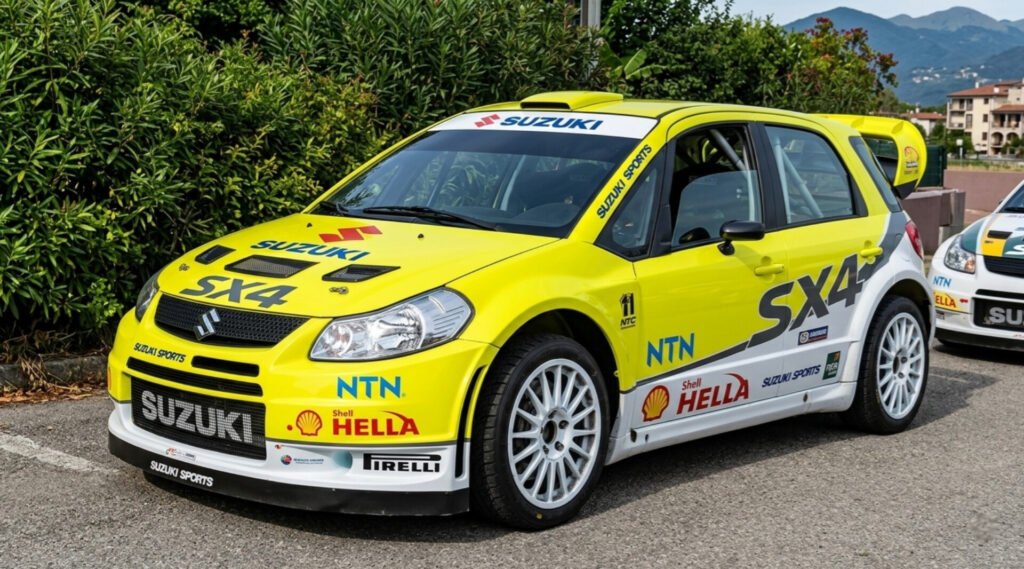
The final car on this list is the Suzuki SX4 WRC.
Originally designed as a compact crossover for everyday use, the SX4 became Suzuki’s ambitious project for entering the World Rally Championship.
In 2006, Suzuki announced plans to develop the SX4 into a WRC contender.
The company created a serious prototype featuring a J20 2.0-liter turbocharged engine producing around 320 horsepower and 637 Nm of torque.
The car also featured an all-wheel-drive system, mechanical front and rear differentials, an electronic center differential, and a five-speed sequential transmission.
Although its exterior looked like a family crossover, underneath was a purpose-built rally machine.
The SX4 WRC showed promising performance during its debut season in 2008. At Rally Japan, drivers Per-Gunnar Andersson and Toni Gardemeister finished fifth and sixth.
The car achieved another strong result at Rally Wales, again securing top-five pace.
However, Suzuki’s WRC adventure ended quickly. Due to the global economic crisis in late 2008, the company decided to withdraw from the championship in 2009 and focus resources on its core business and new technology development.
The WRC Cars That Broke Every Rule
The Porsche 911 GT3 R-GT, Mini John Cooper Works WRC, Abarth 124 Rally, and Suzuki SX4 WRC proved that rally racing is not always about building the most obvious rally car.
These machines looked strange, unusual, and sometimes completely out of place. But they showed that innovation, engineering, and determination can challenge traditional ideas.
In the world of WRC, success is not decided only by the shape of the car. Technology, driver skill, strategy, and the ability to survive the harshest conditions are what truly define a rally legend.

Adhe is part of the 88 Eight Box Editorial Team, covering JDM culture, motorsport, automotive technology, and industry news. The team focuses on delivering original automotive stories, reviews, and insights for enthusiasts worldwide.