
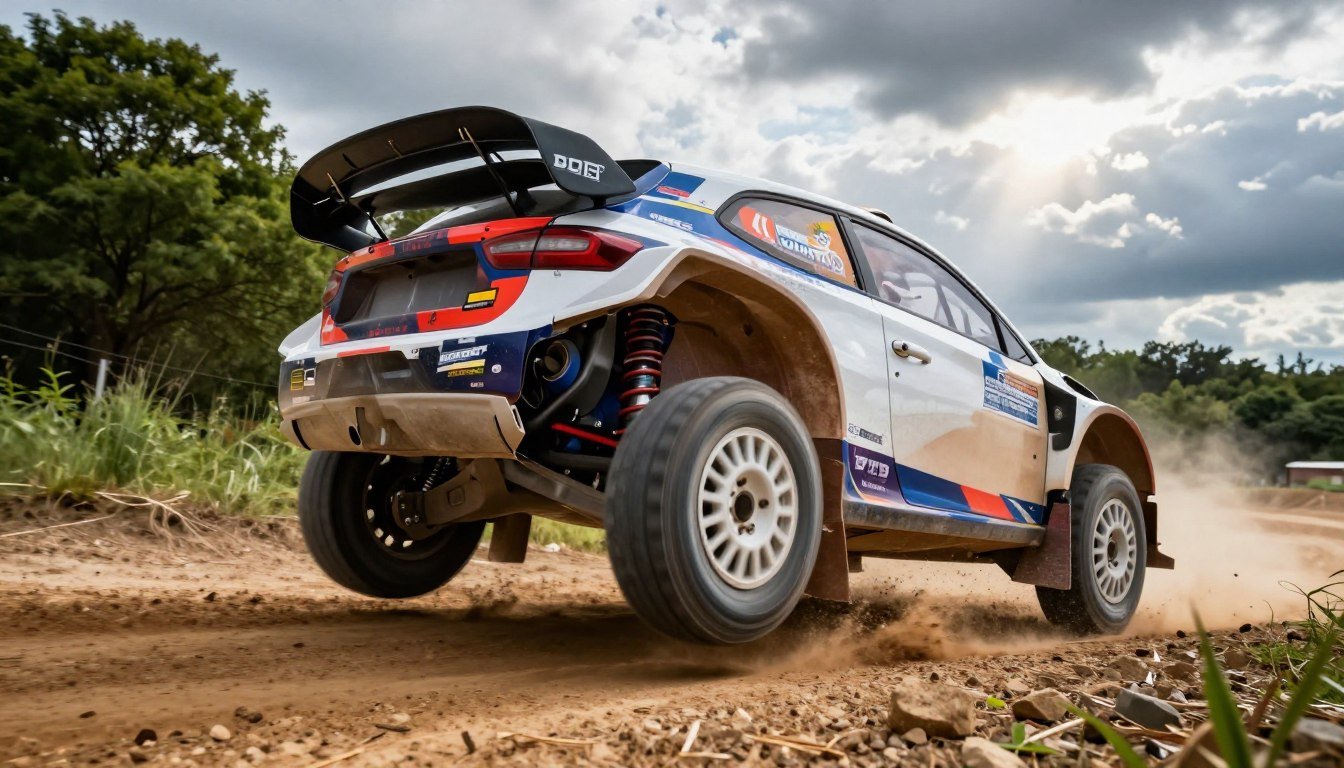
I’ve always been amazed by the toughness of professional off-road racing. Watching these cars jump over obstacles and hit deep ruts, I often think, how advanced is rally suspension? It’s the key link between the driver and the harsh ground.
These cars face extreme challenges that would wreck a regular car in seconds. Engineers must create parts that handle huge impacts and keep tires in contact with the ground. Precision engineering makes these harsh conditions a controlled dance of grip.
Without this special gear, the sport wouldn’t be possible. I think knowing about these complex systems shows the genius of modern car performance. Let’s dive into the wonders that keep these cars stuck to the road in the toughest conditions.
Key Takeaways
- Rally vehicles need special undercarriage tech to survive harsh terrain impacts.
- The main goal is to keep tires in contact for the best grip.
- Engineers balance strength with light materials for speed.
- These parts are tested hard to work on different surfaces like snow and gravel.
- Advanced damping tech lets drivers control the car during fast jumps.
Defining the Complexity of Modern Rally Suspension
Looking at a modern rally car, I see a true engineering marvel. It’s far from the car you drive to work. A standard car is made for comfort and efficiency. But a rally car is built to conquer tough terrain.
This is where rally suspension technology really stands out. It turns a simple chassis into a high-performance machine.
The Evolution from Stock to Specialized
In the early days, teams modified factory parts for dirt racing. But as speeds grew, these setups became too risky. Now, we focus on bespoke engineering, where every part is made for a specific task.
Today, upgrading from stock to specialized involves key changes. These define modern rally suspension technology:
- Custom-valved dampers that react fast.
- Reinforced control arms made from top-grade alloys.
- Adjustable geometry for better grip on different surfaces.
- High-pressure nitrogen to prevent fluid issues.
Why Standard Automotive Engineering Fails in Rally
Standard car engineering aims for comfort on smooth roads. But a stock car can’t handle the forces of a rally stage. The energy from jumps is too much for factory parts, leading to failure.
I say a rally car must withstand forces that would break a normal car. Standard parts are not made for the heat, impact, and constant movement of racing. Without our rally suspension technology, these cars wouldn’t last a mile on rough gravel.
How Advanced Is Rally Suspension?
Exploring rally suspension shows me the amazing precision engineering. These cars can jump huge distances and handle rough terrain. They keep perfect contact with the ground, thanks to a perfect balance of physics.
The Role of Hydraulic Bump Stops
The top features of rally suspension systems include hydraulic bump stops. They act as a soft cushion when the suspension hits its limit. Instead of a hard hit, the fluid absorbs the shock.
This tech stops the car from hitting the ground too hard during jumps. It keeps the car safe and lets drivers jump with absolute confidence.
Active vs. Passive Suspension Systems
Passive systems are fixed and tuned before racing. They’re reliable but can’t change with the road. Active systems, on the other hand, adjust in real-time using sensors.
Advanced rally suspension systems change how cars grip the road. This makes a big difference on unpredictable surfaces.
Understanding Electronic Valve Control
Electronic valve control is key in active systems. It changes the suspension’s stiffness fast. This is a crucial rally suspension feature for racing.
High-speed solenoids let the computer adjust the suspension. This makes the car stable on any terrain. It’s amazing how these systems control the car’s movement.
Core Components of High-Performance Rally Systems
A high-performance rally suspension is a complex puzzle of engineering. It’s not just parts bolted on; it’s a precision tool. It lets drivers control their cars at high speeds over rough terrain.
Choosing the right performance enhancements for rally suspensions is key. It makes all the difference between a weekend driver and a pro.
The Importance of Long-Travel Coil-Overs
Long-travel coil-overs are at the heart of any good setup. They handle huge vertical loads that would destroy regular shocks. The internal valving and strong shafts are crucial for handling jumps and deep ruts.
These coil-overs let the wheel move more, keeping the tire in maximum contact patch with the ground. This is key for traction, especially on loose surfaces. Without them, the car would bounce wildly, losing control.
Material Science in Suspension Arms and Links
The strength of suspension arms and links is key for handling lateral forces. I look for parts that are strong but light. This lets the car stay agile and quick in corners.
Using rally suspension components made from advanced materials helps. It lets me push the car harder without worrying about breaking it.
Titanium and Aerospace-Grade Aluminum Applications
Reducing unsprung weight improves handling. Titanium and aerospace-grade aluminum are lighter than steel. This makes the suspension react faster to bumps, improving handling.
Titanium is used for critical bolts and fasteners. It’s strong without adding weight. Aerospace-grade aluminum is great for control arms and uprights. It’s durable for racing but keeps the car agile.
The Physics of Dampening and Rebound Control
The magic of rally performance is in how a car handles energy. The suspension connects the car to the road. It’s all about dampening and rebound control to keep tires on the ground.
Managing Kinetic Energy on Jumps
When a car jumps, it gains a lot of energy. This energy must be released quickly to avoid damage. Precision engineering helps dampers turn this energy into heat, softening the landing.
Without this control, the car becomes unstable. I use high-performance valving to manage the suspension’s speed. This balance is key for a professional setup.
The Science of Heat Dissipation in Dampers
The suspension’s work makes the fluid inside hot. This heat can weaken the dampening. Engineers aim to remove this heat fast.
Why Remote Reservoirs Are Essential
Remote reservoirs are crucial for long stages. They hold more oil and keep temperatures down. This prevents the car’s performance from dropping.
- Consistent damping force throughout the entire race.
- Increased oil capacity to prevent overheating.
- Reduced risk of fluid aeration and cavitation.
- Improved longevity of internal seals and valves.
Managing these forces lets me keep speed on jumps and corners. When it’s right, the car feels like part of me.
Optimizing Rally Suspension Performance Through Tuning
Winning on loose surfaces often depends on the fine art of optimizing rally suspension performance. Professional teams spend hours tweaking settings to fit the driver’s style and the race course’s demands. Small adjustments can greatly change how a car handles on unpredictable rally stages.
Adjusting Compression and Rebound Settings
When tuning rally suspension, I start with compression and rebound. Compression controls how fast the shock absorber goes down on bumps. Rebound is how fast it comes back up. Fine-tuning these settings helps manage how much energy the chassis absorbs and transmits to the tires.
Too fast rebound makes the car bouncy and unstable over bumps. Too slow rebound means it won’t bounce back in time for the next bump. Finding the right balance is key for consistent rally suspension performance on long stages.
The Impact of Spring Rates on Handling
Spring rates are crucial for the car’s setup. I choose springs based on the car’s weight and the terrain. Stiffer springs are better for smooth, fast sections but can lose traction on rough ground.
By optimizing rally suspension with the right springs, the car handles better under heavy cornering. I aim for a balance that keeps tires in contact with the ground. This is essential for improving rally suspension performance when driving at the limit.
Balancing Grip and Stability on Loose Surfaces
Switching between surfaces like loose gravel and mud needs a light touch. On loose gravel, I choose a setup for better grip. In mud, I adjust damping to keep the car responsive.
“The goal of suspension tuning is not just to make the car stiff, but to make it communicate with the driver through every turn and jump.”
The ultimate goal is a car that feels stable yet agile. When the suspension is just right, drivers can take corners confidently. This precision is what makes a rally car truly competitive.
Testing Rally Suspension Capabilities in Extreme Conditions
Testing rally suspension is a high-stakes game. Every millisecond of performance is crucial. The difference between winning and failing often depends on preparation for the unknown.
Before a car hits the track, it must pass the engineering lab’s tough tests.
Simulated Stress Testing in Laboratory Environments
Engineers use hydraulic rigs to test components. These rigs mimic race impacts. They test dampers and arms for millions of cycles, simulating years of use in days.
Fatigue analysis is key. It finds weak points in metal before they fail.
“The laboratory is where we break things on purpose so that they don’t break by accident when it matters most.”
Real-World Data Acquisition and Telemetry
After lab tests, we test the car on the track. We use sensors to track damper velocity and chassis pitch. This telemetry data shows how the suspension handles different terrains.
By watching this data live, my team can tweak the setup between stages. This keeps the car competitive. It balances grip and durability.
Analyzing Suspension Travel During Competitive Stages
I watch suspension travel logs closely during races. If dampers hit limits, we adjust bump stops or spring rates. Proactive monitoring keeps speed up and car safe.
- Reviewing peak compression data after every stage.
- Comparing real-world travel against initial simulation models.
- Identifying heat-related performance drops in the dampers.
- Adjusting rebound settings to match the specific surface conditions.
Benefits of Upgrading Rally Suspension Components
High-quality suspension can greatly improve your rally car’s performance. The benefits of advanced rally suspension are clear. It goes from just surviving to actively attacking the stage with precision.
Improving Driver Confidence and Vehicle Control
Driving with professional-grade dampers is incredibly valuable. By upgrading rally suspension components, I get a predictable platform. It reacts exactly as I expect when hitting deep ruts or cresting jumps.
This control lets me push harder in corners without worrying about the chassis. The main benefits of rally suspension upgrades are:
- Increased tire contact patch consistency on loose surfaces.
- Reduced body roll during high-speed directional changes.
- Enhanced steering feedback that communicates road texture directly to my hands.
Longevity and Reliability Under Heavy Loads
Rallying is tough on mechanical parts, and standard components often fail. Professional-grade systems are made to handle heat and massive kinetic energy without fading.
These systems keep their damping characteristics even after hours of intense racing. This reliability is what keeps you from ending your race on the side of the road.
Cost-Benefit Analysis of Professional-Grade Upgrades
Many worry about the cost of improving rally suspension. But when you look at the long-term, the math is clear.
- Reduced Maintenance: High-end parts last longer and need fewer replacements than stock components pushed too far.
- Performance Value: You get more speed per dollar with suspension than with almost any engine modification.
- Safety Margin: Better control lowers the risk of costly accidents during competitive events.
Choosing rally suspension upgrades is an investment in your vehicle’s longevity and your driving success. Going for quality over cost upfront saves you from mid-race failures.
Conclusion
Rally suspension is the heart of a competitive vehicle. It connects raw engine power to the unpredictable terrain of a forest stage. Each part works together to control the car’s movement.
Engineering excellence can make all the difference. Brands like Öhlins and Reiger show that precision is key. They turn a standard chassis into a strong machine.
Safety and speed depend on your suspension’s ability to adapt. Look at your setup and think about small changes. These can greatly improve your driving experience.
Motorsport keeps getting better with new materials and control systems. I hope this guide motivates you to learn more about rally engineering. Share your favorite setups or ask about upgrades.