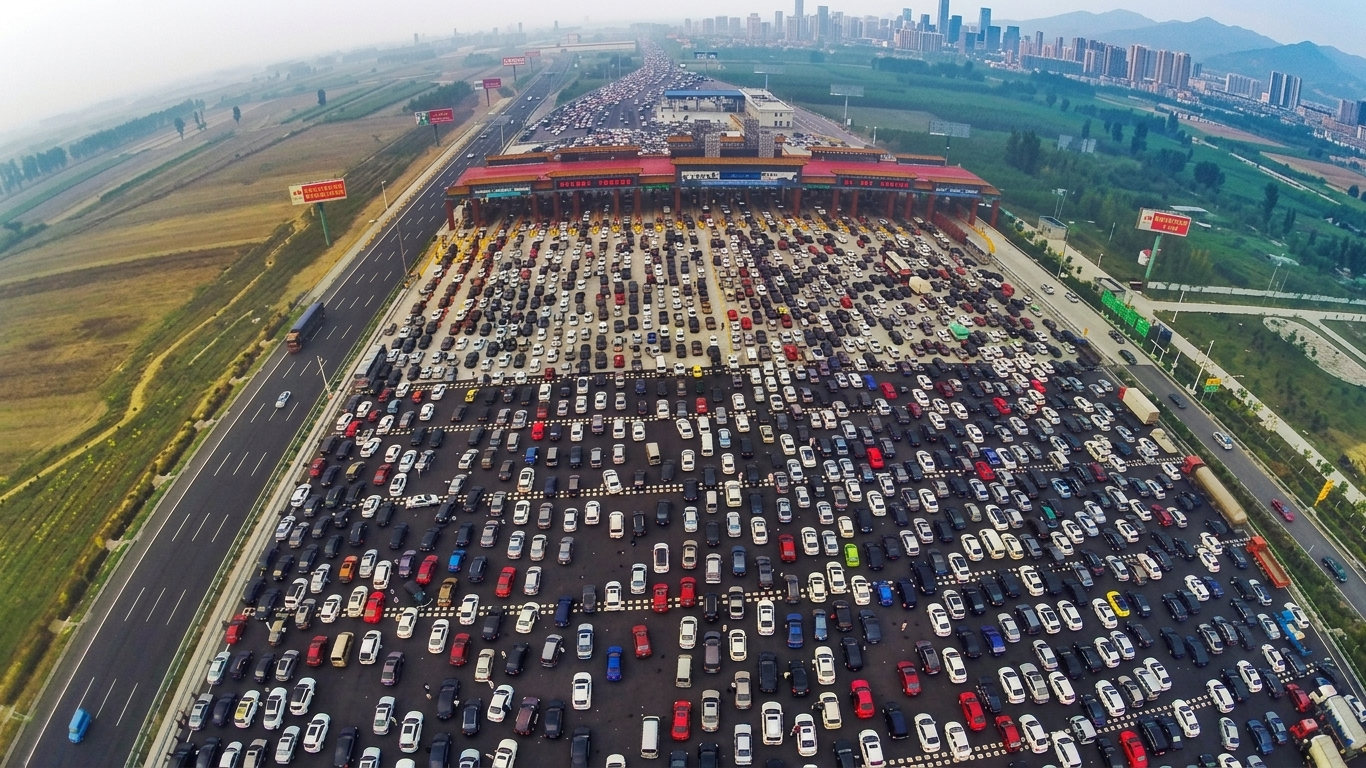
Imagine a world where every single person on Earth owns a car.
With the global population sitting at around 8 billion people, that would mean roughly 8 billion cars on the planet.
Sounds like heaven for the automotive industry, right?
Not quite.
Instead of giving humanity unlimited freedom to go wherever it wants, 8 billion cars could turn the planet into one enormous traffic jam. The consequences would stretch far beyond crowded roads, affecting cities, the environment, energy supplies, and the global economy.
Here’s what could happen if literally everyone had their own set of wheels.
The Roads Would Never Stop Being Jammed
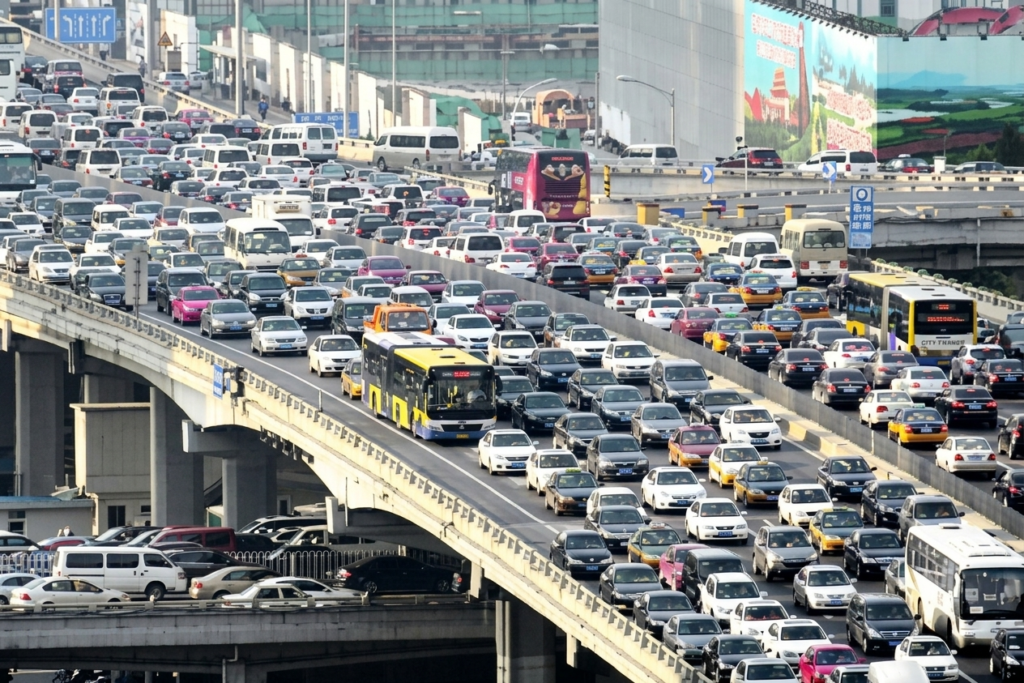
Let’s start with the obvious problem: infrastructure.
Modern road networks are already struggling to cope with traffic in many major cities. Now imagine adding billions more vehicles to the equation.
The result wouldn’t simply be a bad Monday morning commute.
Traffic could become a permanent feature of everyday life.
Even building more roads wouldn’t necessarily solve the problem. Cities have limited space, and expanding road networks requires huge amounts of land.
Then there’s the parking problem.
Eight billion cars have to go somewhere when they’re not moving.
The amount of land required to park them would be staggering. Green spaces, public areas and even residential land could increasingly be sacrificed to make room for parking.
At some point, cities could start looking less like places designed for people and more like giant car parks with buildings attached.
The Environmental Impact Would Be Massive
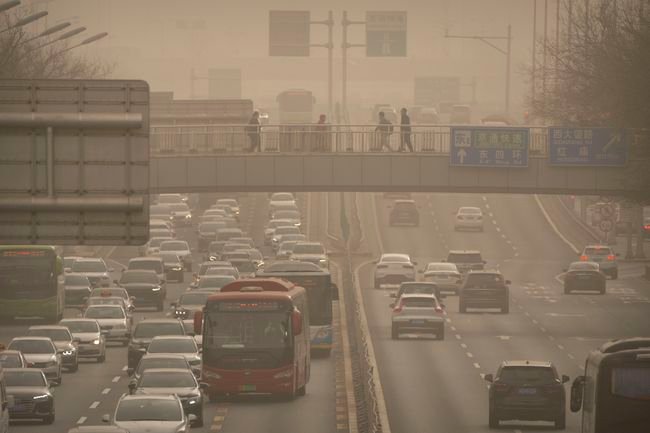
Then comes the environmental problem.
If most of those 8 billion cars were still powered by petrol and diesel engines, global fuel consumption and carbon emissions would increase dramatically.
One car might not seem particularly significant on its own. Multiply that by billions, however, and the numbers become rather frightening.
Air pollution would also become a much bigger problem, particularly in densely populated cities.
And it’s not just exhaust gases we have to worry about.
More cars also mean more brake and tyre wear, creating additional particulate pollution as billions of vehicles rack up kilometres.
In other words, putting 8 billion cars on the road wouldn’t just make the traffic louder. It could make the air considerably worse, too.
What If We Made All 8 Billion Cars Electric?
Ah, the obvious answer: electrification.
If every car on Earth were electric, we’d eliminate tailpipe emissions and dramatically reduce pollution directly coming from vehicle exhausts.
But that doesn’t mean the problem magically disappears.
It simply moves somewhere else.
Electric cars require batteries, and batteries require raw materials such as lithium, nickel and cobalt.
Now imagine producing enough batteries to power 8 billion cars.
The demand for these materials would explode.
Mining and processing would have to expand on an unprecedented scale, bringing additional challenges involving supply chains, resource availability, environmental impacts and battery recycling.
And then there’s the electricity.
Eight billion electric cars would need to be charged regularly.
That would put enormous pressure on the world’s electricity-generation, transmission and distribution infrastructure.
The question would no longer be simply whether we can build enough electric cars.
It would be whether we can power them all.
Petrol or Electricity, Neither Comes Without a Price
Stick with internal-combustion engines and the world would need vastly more oil.
Demand could surge, potentially putting enormous pressure on global supplies and pushing fuel prices higher.
Go fully electric and the pressure shifts towards electricity generation, grid infrastructure and battery materials.
Either way, putting a car in every person’s driveway creates an enormous resource problem.
Because building 8 billion cars is only half the challenge.
Keeping 8 billion cars running is the other half.
More Cars Could Also Mean More Crashes
There’s another unavoidable consequence: road safety.
More vehicles means more interactions between vehicles, pedestrians and other road users.
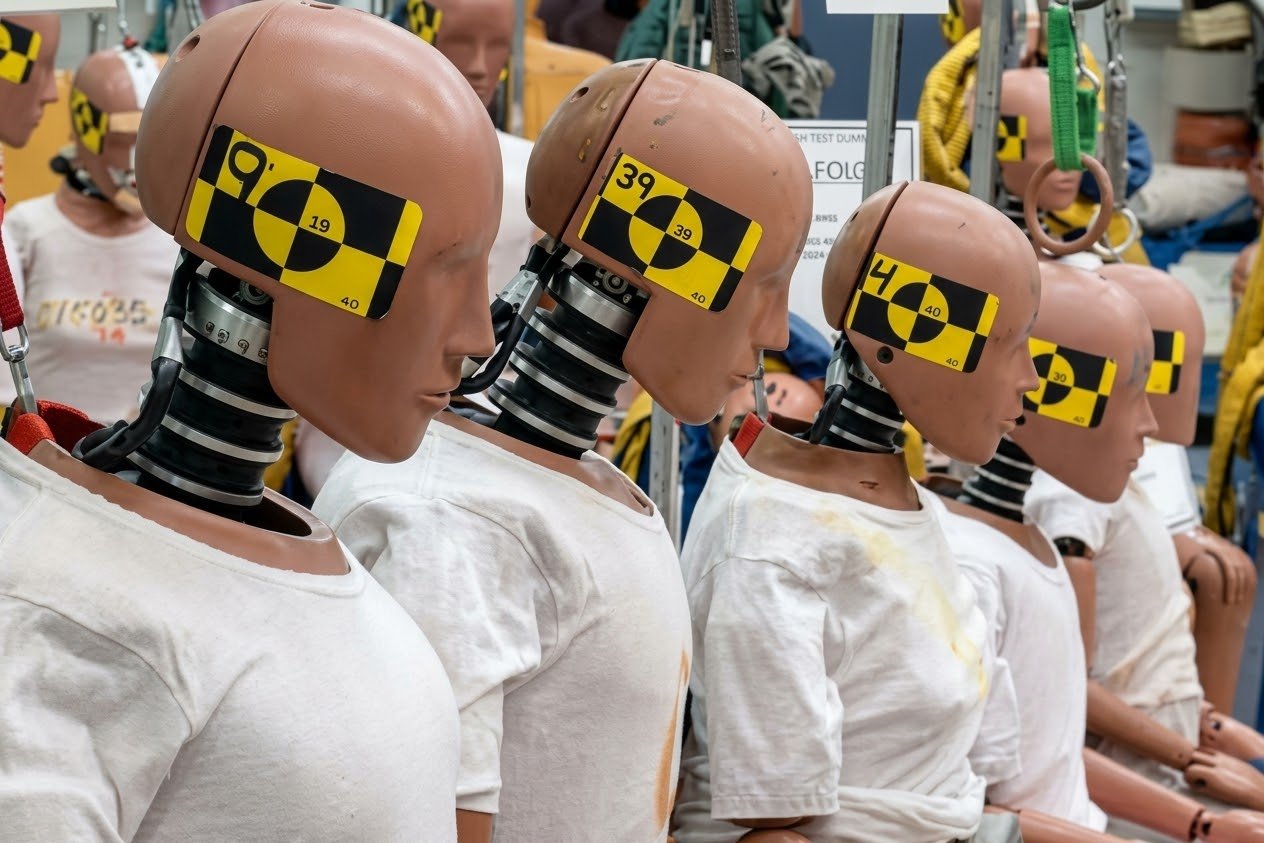
Statistically, a dramatic increase in the number of vehicles operating on roads could also increase the potential for traffic accidents, particularly in regions where infrastructure cannot keep pace with vehicle growth.
Modern safety technology could help.
Automatic emergency braking, cameras, sensors and increasingly sophisticated driver-assistance systems could reduce some risks.
Autonomous driving could potentially take things even further.
But when billions of vehicles are sharing the world’s roads, the sheer scale of the problem becomes difficult to ignore.
Owning a Car Would Become an Enormous Financial Commitment
And then there’s the money.
Owning a car isn’t simply a matter of buying it and putting fuel in the tank.
There’s servicing, tyres, brakes, insurance, taxes, parking, electricity or fuel and all the other little expenses that inevitably appear during ownership.
Multiply those costs across billions of people and you’ve created an enormous global economic ecosystem.
Automakers, energy companies, repair shops, insurers, mining companies and infrastructure providers could all benefit enormously.
But for individual households, running a car would become another major recurring expense.
Everyone would have a vehicle.
Everyone would also have a vehicle bill.
Public Transport Could Lose Its Purpose
Here’s the really strange part.
If everyone had a car, many people would probably use public transport less.
Buses, trains, metros and other mass-transit systems could lose passengers, potentially making them less economically efficient.
And that could create a rather spectacular irony.
Everyone owns a car because they want freedom.
But once everyone drives, the roads become so crowded that nobody can actually go anywhere quickly.
A train carrying hundreds of people might suddenly look like the cleverest vehicle on the planet.
8 Billion Cars Might Not Make the World More Free
Cars are supposed to give us freedom.
Freedom to leave whenever we want. Freedom to go wherever we want. Freedom from fixed routes and timetables.
But if every person on Earth had one, that freedom could become a global headache.
More traffic.
More parking.
More energy consumption.
More demand for raw materials.
More pollution.
More road infrastructure.
More maintenance costs.
And potentially more accidents.
The real question isn’t whether humanity could eventually manufacture 8 billion cars.
Given enough time and resources, perhaps we could.
The bigger question is whether Earth has enough space, energy, raw materials and infrastructure to support them.
And that’s where the dream starts to look rather less appealing.
The idea of one car for every human is a perfect example of why more cars don’t automatically mean better mobility.
The car remains one of the most important inventions in modern history, but cities and the planet have limits.
The future of mobility may therefore have less to do with putting a car in every driveway and more to do with moving more people using fewer vehicles.
Better public transport, car sharing, smarter urban planning, electric vehicles and eventually autonomous mobility could all play a role.
Because perhaps the ultimate automotive achievement isn’t building 8 billion cars.
It’s figuring out how to make sure we don’t need 8 billion cars in the first place.
What do you think? Would a world where every person owns a car be the ultimate expression of freedom or an 8 billion car traffic jam waiting to happen? Let us know in the comments.

Adhe is part of the 88 Eight Box Editorial Team, covering JDM culture, motorsport, automotive technology, and industry news. The team focuses on delivering original automotive stories, reviews, and insights for enthusiasts worldwide.