For nearly eight decades, Toyota has been known as one of the most self-reliant automakers in the world. The Japanese giant built its reputation through the legendary Kaizen philosophy, manufacturing efficiency, and the ability to develop much of its technology internally.
But the electric vehicle revolution has changed the rules of the game.
For the first time in Toyota’s modern history, the company is relying on a crucial technology component from a rival that is rapidly challenging its position in the world’s largest automotive market: BYD.
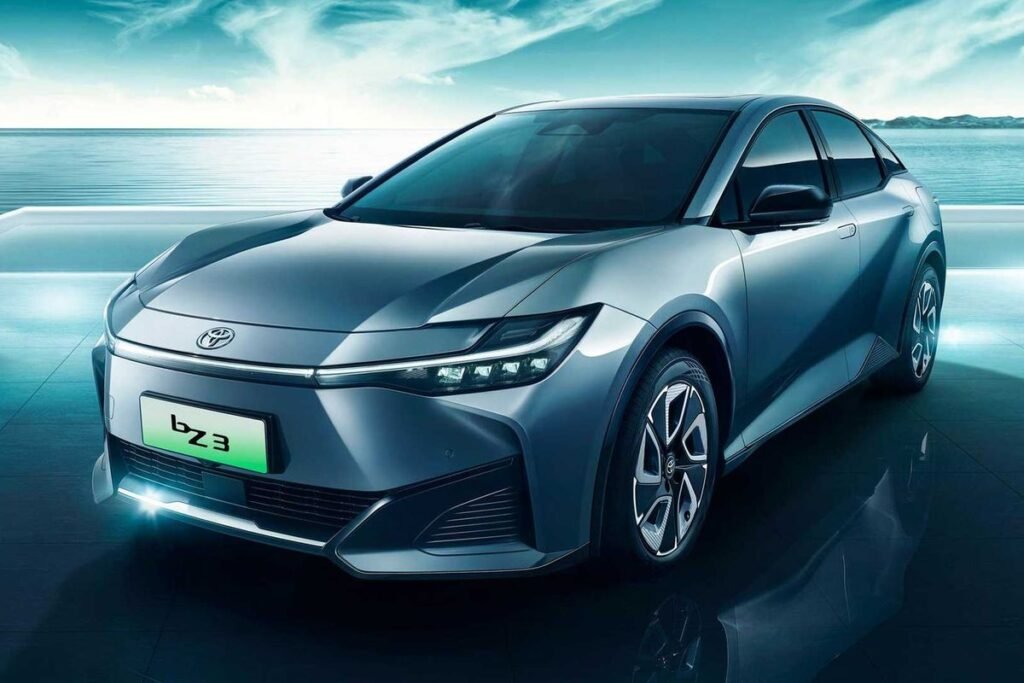
Through the Toyota bZ3 electric sedan sold in China, customers are buying a vehicle that combines two very different strengths. On the outside, it carries Toyota’s identity, including its build quality, safety standards, suspension tuning, and decades of engineering experience.
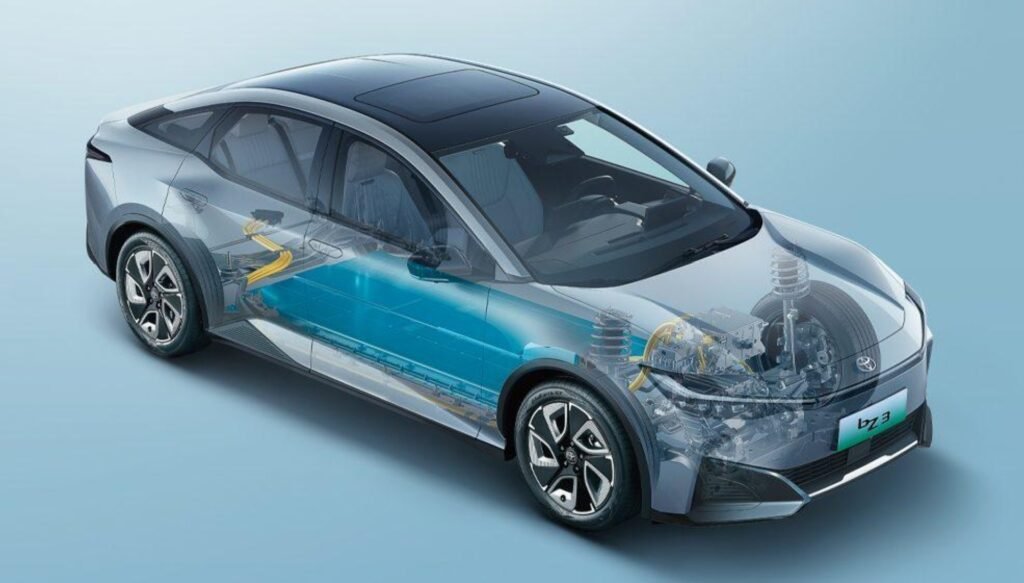
However, underneath the surface, some of the most important components, including the battery technology and electric powertrain, come from BYD.
To some observers, this looks like a sign of weakness. The company that dominated the hybrid era appears to have lost its crown in the electric vehicle race.
But the reality is far more strategic.
Toyota is not giving up. Instead, the company is making a calculated decision: using the best technology available today while quietly preparing its own breakthrough technologies for tomorrow.
Toyota Chooses Speed Over Pride
The automotive industry is changing faster than ever, and nowhere is that more obvious than China.
For years, Toyota believed hybrid technology was the most practical path toward reducing emissions. The success of the Prius helped establish Toyota as the global leader in hybrid vehicles and strengthened its belief that the world was not yet ready for a full transition to electric cars.
For a long time, that strategy worked.
But China moved in a different direction.
Electric vehicles and plug-in hybrids now represent more than half of new car sales in the country. Chinese consumers are rapidly moving away from traditional gasoline and hybrid vehicles, not because Toyota cars suddenly became bad, but because new EV manufacturers are offering cheaper vehicles with faster innovation cycles and more advanced technology.
Companies such as BYD are introducing cars with large digital displays, intelligent driving systems, smartphone integration, and software updates that make vehicles feel more like technology products than traditional automobiles.
The result has been a major challenge for global giants.
Toyota and Volkswagen have both suffered significant pressure in China, with sales declining by around 15 to 20 percent in a single year. For companies that dominated the market for decades, the decline represents a serious warning.
Why Did Toyota Choose BYD?
The answer lies in one of the most important parts of an electric vehicle: the battery.
In an EV, the battery can represent around 30 to 40 percent of total production costs. Whoever controls battery technology has a major advantage in pricing, efficiency, and competitiveness.
Toyota is certainly capable of developing its own batteries. The problem is not ability, it is time.
Building a complete battery supply chain from scratch requires billions of dollars, long-term agreements for raw materials, massive manufacturing facilities, and highly skilled engineers.
The process can take years.
Meanwhile, BYD already has large-scale battery production, proven technology, and millions of vehicles on the road.
For Toyota, working with BYD is not about admitting defeat.
It is about moving faster.
BYD’s Blade Battery Became the Key Attraction
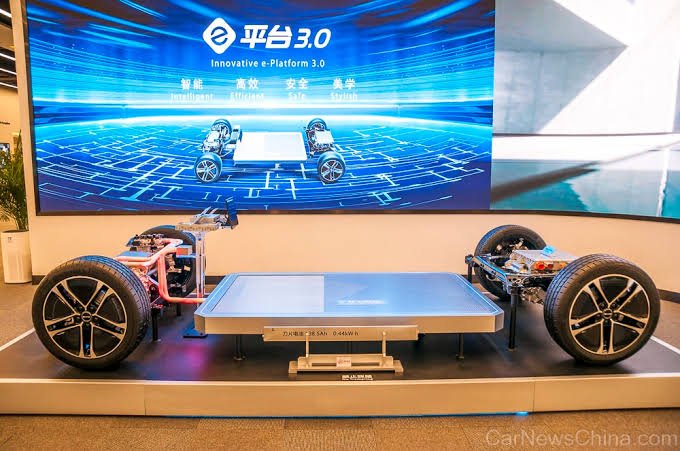
One of the biggest reasons Toyota became interested in BYD is its Blade Battery technology.
Unlike many conventional lithium-ion batteries that rely on nickel, manganese, and cobalt, BYD uses LFP (Lithium Iron Phosphate) chemistry.
LFP batteries offer several advantages: lower production costs, better thermal stability, and less dependence on expensive materials such as nickel and cobalt.
BYD also introduced a cell-to-pack design, removing traditional battery modules and allowing more cells to be packed into the same space.
The result is a battery system that is cheaper, more efficient, and highly durable.
One of the most famous demonstrations involved an extreme safety test where a fully charged Blade Battery was punctured with a metal nail.
While some conventional batteries can experience extreme temperature increases and potentially catch fire during such tests, BYD’s battery remained stable without flames, smoke, or explosions.
For Toyota, a company built on reliability and safety, that level of confidence was difficult to ignore.
Two Rivals Decide to Work Together
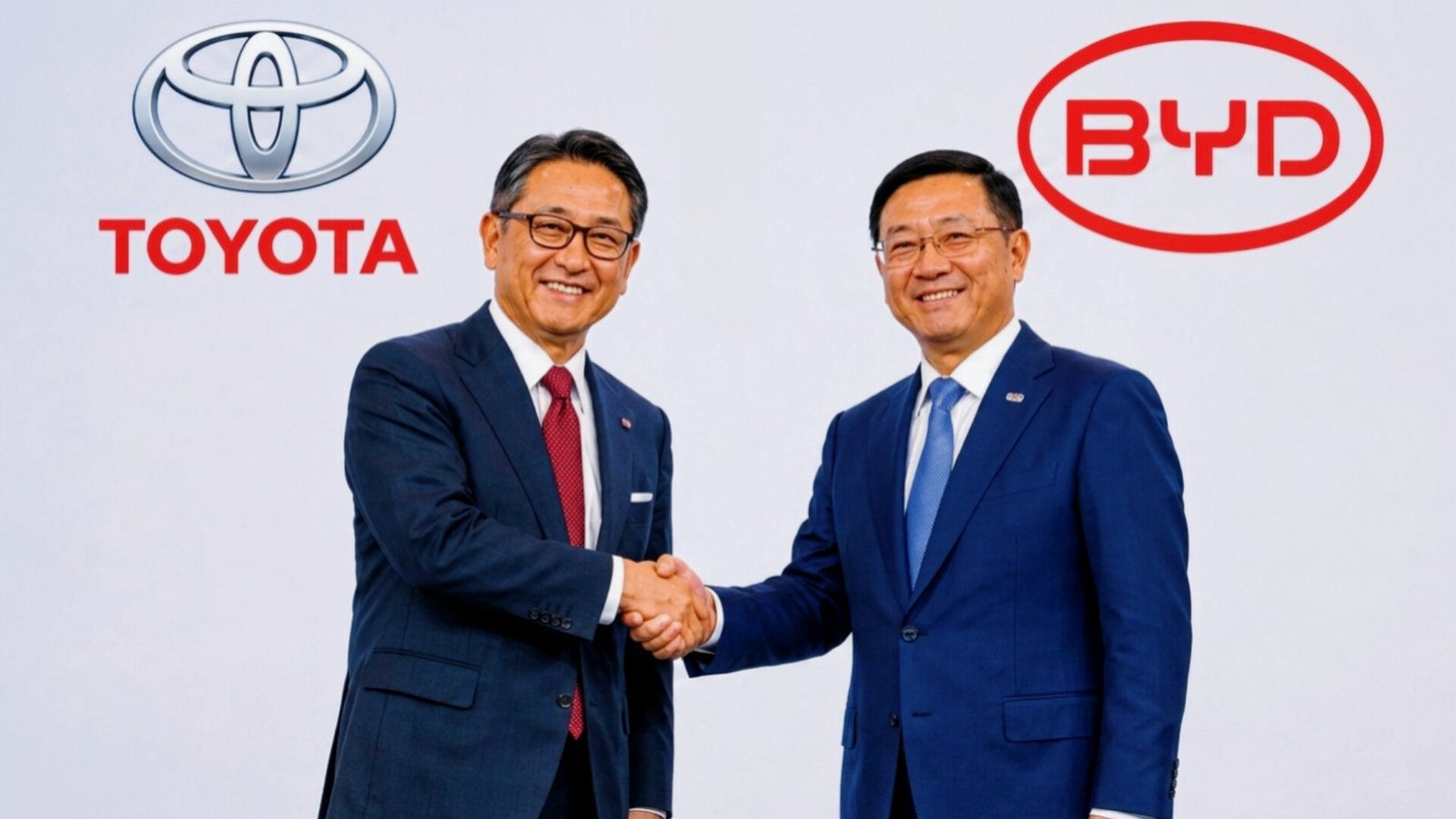
The Toyota-BYD relationship began in 2019 when both companies created a joint venture called BYD Toyota EV Technology.
Ownership was split equally between the two companies.
BYD contributed its expertise in batteries, electric motors, and EV technology.
Toyota contributed decades of experience in vehicle engineering, manufacturing quality, safety, and global customer trust.
The first major result of this partnership was the Toyota bZ3.
The electric sedan offers battery options of 49.9 kWh and 65.3 kWh, delivering a driving range of approximately 517 to 616 kilometers under China’s testing standards.
More importantly, the bZ3 proved that Toyota could enter the EV market faster without developing every component from zero.
Toyota was not buying a car from BYD.
Toyota was buying time.
BYD Gains Global Recognition
The partnership is also a major victory for BYD.
When Toyota — one of the most respected automakers in the world — chooses BYD technology, it sends a powerful message to the global industry.
BYD is no longer just seen as a Chinese EV manufacturer competing on price.
It has become a technology company capable of partnering with some of the biggest names in the automotive world.
Toyota’s Secret Weapon: Solid-State Batteries
Although Toyota is using BYD technology today, the Japanese company has not abandoned its ambition to lead the next generation of electric vehicles.
Toyota is investing heavily in solid-state battery technology, which many experts consider one of the biggest breakthroughs expected in the EV industry.
The company is targeting commercial applications around 2027 to 2028.
If successful, solid-state batteries could deliver more than 1,000 kilometers of driving range, significantly faster charging times, and improved safety compared with current lithium-ion batteries.
This means Toyota’s partnership with BYD is not a surrender.
It is a two-step strategy.
First, use the best technology available today to remain competitive.
Second, develop the next-generation technology that could define the future of mobility.
In the automotive industry, pride can become a company’s greatest weakness.
Many manufacturers fail because they refuse to accept that the world has changed.
Toyota has chosen a different path.
The company is willing to work with a rival, recognize BYD’s advantages, and make a decision that may look unusual for a company of its size and history.
But history shows that the winners are not always the companies that build everything themselves.
The winners are the companies that adapt the fastest.
Toyota is not giving away its crown.
It is making sure it still has a chance to wear it when the next era of automobiles truly begins.
What do you think? Is Toyota’s partnership with BYD a brilliant strategic move, or a sign that the Japanese giant is falling behind in the EV revolution? Share your thoughts in the comments.

Adhe is part of the 88 Eight Box Editorial Team, covering JDM culture, motorsport, automotive technology, and industry news. The team focuses on delivering original automotive stories, reviews, and insights for enthusiasts worldwide.