Automatic transmissions are designed to shift gears smoothly without requiring the driver to operate a clutch pedal. However, when something starts going wrong, the symptoms often appear gradually from harsh gear changes to an engine that revs loudly while the vehicle barely accelerates.
The important thing to remember is that not every transmission symptom means the entire transmission needs to be rebuilt or replaced. The Automatic Transmission Rebuilders Association (ATRA) emphasizes that symptoms such as slipping, harsh shifting, or abnormal gear changes can have multiple causes, so a proper diagnosis should be performed before deciding on a repair.
Here are the most common warning signs to watch for.
1. THE RPM RISES, BUT THE CAR DOESN’T ACCELERATE PROPERLY
This is one of the classic signs of transmission slipping.
You may notice the engine RPM suddenly climbing when you press the accelerator, while the vehicle fails to accelerate at the same rate. The symptom can become more obvious when climbing a hill, carrying a heavy load, or when the transmission is hot.
Possible causes include low or contaminated transmission fluid, worn internal clutch components, mechanical problems inside the transmission, or a failing torque converter.
The solution:
The first step is not necessarily to replace the transmission. A technician should inspect the ATF level and condition, look for leaks, scan for fault codes, and perform hydraulic pressure and shift-quality tests when necessary.
If the problem is simply low fluid caused by a leak, repairing the leak and restoring the fluid to the correct specification may solve the problem. However, if the clutch packs, torque converter, pump, or other internal components are worn, more extensive repairs may be required.
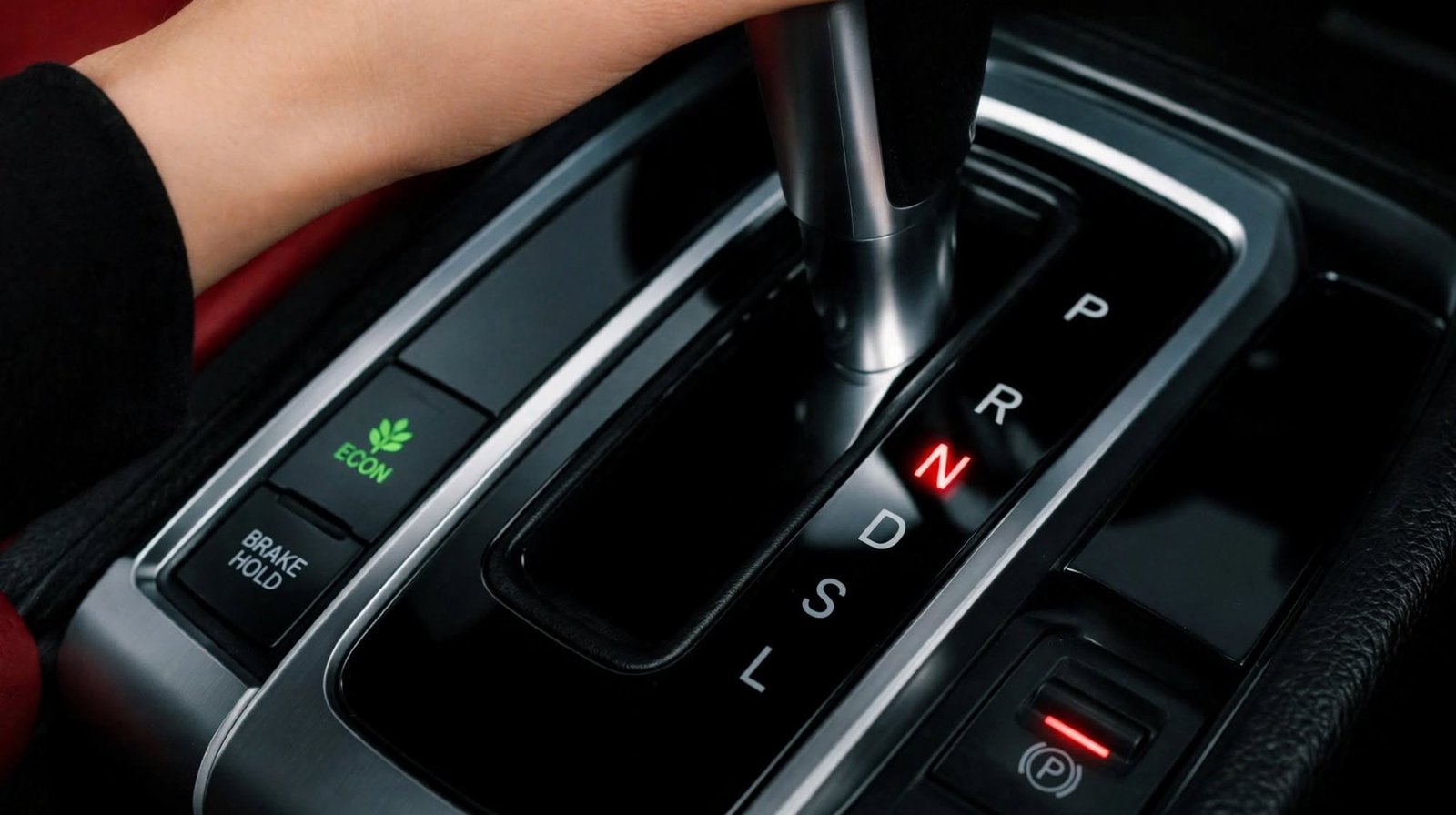
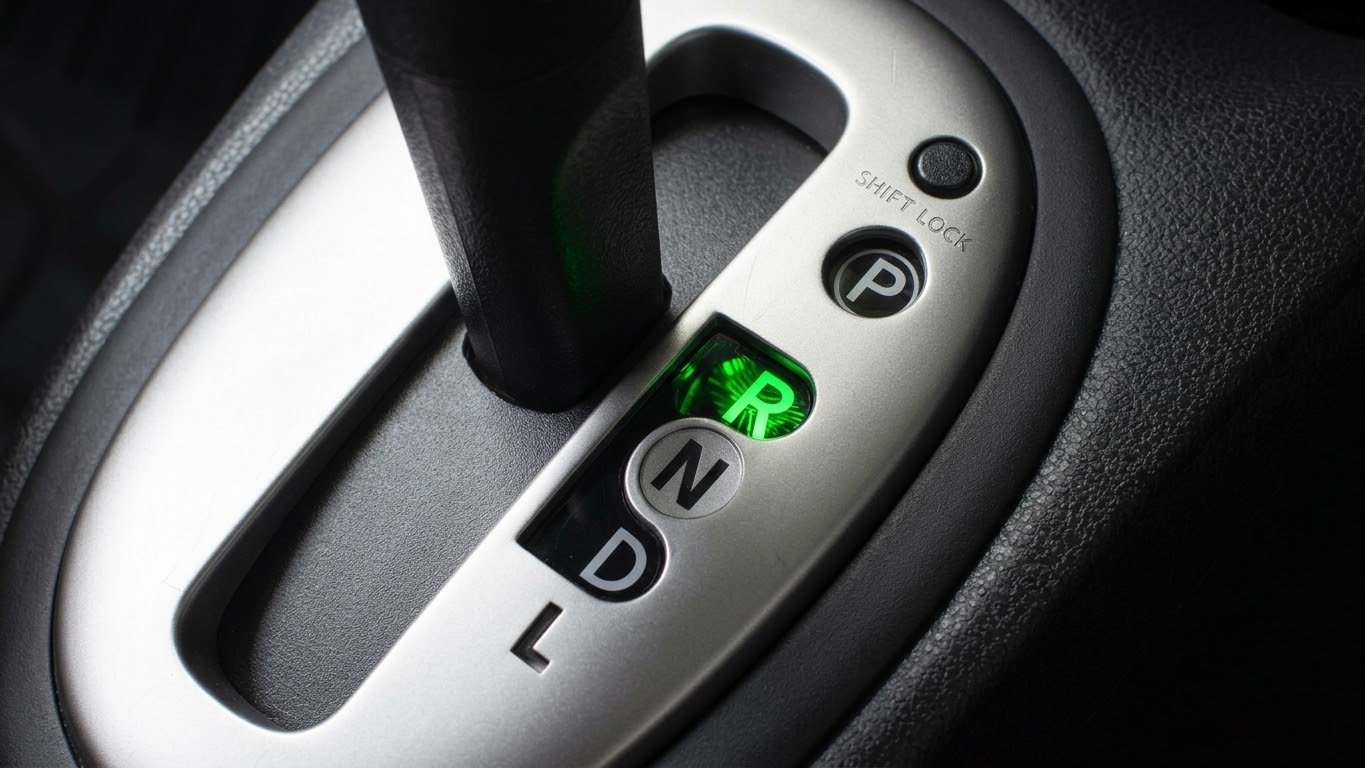
2. THE CAR TAKES TOO LONG TO MOVE AFTER SELECTING D OR R
You select D or R, release the brake, and the car takes several seconds before it starts moving.
This is known as delayed engagement. In a conventional automatic transmission, hydraulic pressure must build sufficiently to engage the appropriate clutch elements and transfer engine power.
Low ATF can contribute to delayed engagement because it can prevent the transmission from developing adequate hydraulic pressure. Other possible causes include a restricted filter, weak pump, faulty valve body, defective solenoids, or worn internal components.
The solution:
Check for leaks and verify the ATF level according to the manufacturer’s procedure. If the transmission uses a serviceable filter, its condition should also be inspected.
On electronically controlled transmissions, a diagnostic scanner can be used to examine solenoid operation, speed sensors, and transmission parameters.
Do not assume the entire transmission is failing simply because D or R takes longer than normal to engage.
3. THE TRANSMISSION SHIFTS WITH A HARSH THUMP OR BANG
A properly functioning automatic transmission should generally shift without excessive jolts.
If the vehicle suddenly feels as though it has been kicked when shifting from first to second, second to third, or when selecting D or R, the transmission should be inspected.
Possible causes include degraded or incorrect transmission fluid, incorrect hydraulic pressure, faulty solenoids, valve-body problems, sensors, electronic control issues, or internal wear.
Valve-body and solenoid problems can cause symptoms such as harsh shifts, flare shifts, incorrect gear starts, and poor shift quality on certain transmissions.
The solution:
A diagnostic scan should be performed first to identify any stored fault codes. The technician can then inspect fluid condition, hydraulic pressure, solenoids, the valve body, sensors, and transmission control systems.
On some vehicles, shift quality can also be affected by software or adaptive transmission learning. That means the solution is not always a mechanical repair.
4. THE CAR SHUDDERS OR VIBRATES AT A STEADY SPEED
Sometimes a vehicle feels as if it is driving over a series of small bumps even though the road is smooth.
The vibration may occur at a steady speed with light throttle input. One possible cause is a problem with the torque-converter clutch (TCC).
However, there is an important catch: not every shudder is caused by the transmission.
An engine misfire, for example, can feel very similar to a torque-converter problem because locking the converter clutch can make engine vibrations more noticeable through the drivetrain.
The solution:
Do not immediately replace the torque converter.
A technician should determine whether the vibration originates from the transmission or the engine. The diagnostic process may include scanning the ECU and transmission control module, checking misfire data, inspecting the ignition system, and monitoring torque-converter clutch operation.
5. THERE IS A BURNING SMELL COMING FROM THE TRANSMISSION AREA
A burning smell after driving is something that should never be ignored.
Automatic transmission fluid is not simply a lubricant. It also helps with cooling and hydraulic operation inside the transmission.
A burning smell may indicate excessive transmission temperature or slipping that is generating excessive heat.
The solution:
The transmission fluid level and condition should be checked along with the transmission cooling system and any possible source of excessive heat.
If a strong burning smell occurs together with severe slipping or loss of drive, avoid continuing to drive the vehicle. Continued operation can turn a relatively manageable problem into serious internal damage.
6. THERE IS TRANSMISSION FLUID UNDER THE CAR
A puddle or fresh fluid underneath the vehicle is one of the easiest warning signs to spot.
Depending on the transmission design, fluid can leak from seals, gaskets, cooler lines, connections, or other components.
A leak that is ignored can eventually lower the ATF level enough to reduce hydraulic pressure and cause poor engagement, slipping, or transmission damage.
The solution:
Do not simply keep adding fluid without finding the source of the leak.
The technician should identify where the fluid is escaping, repair the seal, gasket, line, or other affected component, and then refill the transmission with the correct fluid using the manufacturer’s specified procedure.
Fluid color should also not be used as the only diagnostic tool because modern transmission fluids vary significantly between applications.
7. THE TRANSMISSION MAKES A WHINING, HUMMING, OR GRINDING NOISE
New noises that change with vehicle speed, engine load, or transmission operation deserve attention.
Whining, humming, or grinding noises can be associated with transmission problems, although the exact cause can vary widely.
Potential causes include low fluid, a failing transmission pump, worn bearings, a damaged torque converter, or internal gear and bearing damage.
The solution:
Pay attention to exactly when the noise occurs.
Does it happen in D, R, or N? Does it appear during acceleration or deceleration? Does it become louder after the transmission warms up? Does it occur only in a particular gear?
These details can help a technician narrow down the source of the problem.
8. THE CHECK ENGINE OR TRANSMISSION WARNING LIGHT COMES ON
Modern automatic transmissions rely heavily on sensors, solenoids, control modules, and electronic communication.
Because of this, a warning light should not be ignored even if the vehicle still drives normally.
A faulty sensor, solenoid, wiring problem, hydraulic-pressure issue, torque converter problem, or incorrect gear ratio can trigger a fault code.
The solution:
Have the vehicle scanned with a proper diagnostic tool.
Do not simply erase the fault code. A diagnostic code is a clue that helps identify which system needs to be investigated—it does not automatically mean that the component named by the code must be replaced.
9. THE TRANSMISSION ENTERS LIMP MODE OR GETS STUCK IN ONE GEAR
If the transmission suddenly uses only one or a limited number of gears, refuses to shift normally, or displays a warning message, the vehicle may have entered fail-safe or limp mode.
This is generally designed to limit transmission operation and protect the drivetrain or allow the vehicle to reach a safe location.
The solution:
Avoid driving the vehicle long distances in this condition.
The transmission control module and engine computer should be scanned for stored fault codes, followed by the manufacturer’s recommended diagnostic procedure.
If the vehicle displays a transmission-temperature warning, stop somewhere safe and allow the transmission to cool. If the warning remains, the vehicle should be inspected by a qualified technician.
NEVER USE THE WRONG TRANSMISSION FLUID
One of the biggest mistakes owners can make is assuming that all automatic transmission fluids are interchangeable.
They are not.
Conventional automatic transmissions, CVTs, dual-clutch transmissions, and hybrid transmissions can require very different fluid specifications.
For example, Honda specifies particular transmission fluids for its vehicles and warns against using incompatible fluids. Toyota likewise warns that using an incorrect fluid can cause noise, vibration, poor shifting, and potentially transmission or CVT damage on certain models.
Even the method of checking the fluid level is not universal.
Some vehicles use a traditional dipstick, while others require the fluid to be checked at a specific temperature using a prescribed procedure. Certain ZF transmissions, for example, require specific oil-temperature ranges and filling procedures.
That means the owner’s manual or official service documentation should always be consulted before checking or adding transmission fluid.
SHOULD YOU FLUSH THE TRANSMISSION?
Not necessarily.
A conventional transmission service may replace only part of the fluid, while a fluid-exchange procedure can replace most of the old fluid using specialized equipment.
The correct procedure depends on the transmission design, vehicle manufacturer, transmission condition, filter accessibility, and service recommendations.
Most importantly, “changing the fluid” does not automatically mean “fixing the transmission.”
If the underlying problem is a failed solenoid, worn valve body, weak pump, damaged torque converter, or severely worn clutch pack, replacing the fluid cannot repair those components.
On the other hand, if the problem is caused by low fluid or a leak that is caught early, the repair may be considerably simpler.
WHEN SHOULD YOU STOP DRIVING?
There is a major difference between a minor transmission symptom that allows you to carefully drive to a workshop and a serious failure that requires the vehicle to be stopped immediately.
You should avoid driving the vehicle if the transmission is severely slipping, the vehicle loses the ability to move, there is a loud grinding noise, a large fluid leak is present, there is a strong burning smell, or a transmission-temperature warning remains illuminated.
Continuing to drive when the transmission is overheating can cause further damage.
In these situations, having the vehicle towed may ultimately be far cheaper than turning a repairable transmission problem into a complete transmission failure.
An automatic transmission rarely fails completely without giving some warning first.
Common signs include rising RPM without corresponding acceleration, harsh shifting, delayed engagement into D or R, shuddering, unusual noises, burning smells, fluid leaks, and warning lights.
However, one symptom does not necessarily point to one specific failure.
A vibration that feels like a transmission problem can actually originate from the engine, while a harsh shift may be caused by an electronic control problem rather than mechanical damage.
That is why the correct approach is to diagnose the symptom before replacing expensive parts.
A proper diagnosis may involve checking fluid level and condition, inspecting for leaks, scanning the ECU and transmission control module, monitoring sensor and solenoid data, measuring hydraulic pressure, and performing road tests.
Depending on the findings, the solution could be as simple as repairing a leak or servicing the fluid—or as extensive as replacing a solenoid, rebuilding a valve body, repairing a torque converter, rebuilding the transmission, or replacing the entire unit.
The earlier the warning signs are investigated, the greater the chance that a relatively small problem can be fixed before it develops into expensive internal transmission damage.

Adhe is part of the 88 Eight Box Editorial Team, covering JDM culture, motorsport, automotive technology, and industry news. The team focuses on delivering original automotive stories, reviews, and insights for enthusiasts worldwide.